CBR vs. VBR
ABR, CBR and VBR

CBR (constant bit rate) and VBR (variable bit rate)
Another parameter when compressing video with MPEG is CBR and VBR.
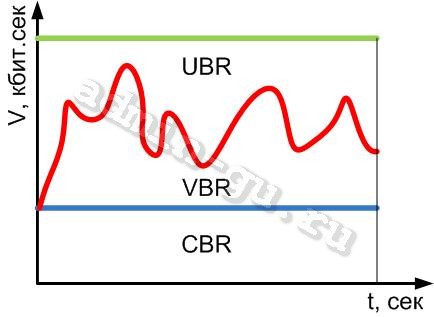
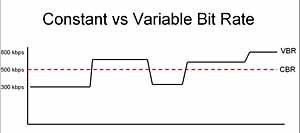
CBR is an abbreviation for Constant Bit Rate, which is one of the encoding methods for converting music and video to data. In the case of MPEG2 video compression, a method that always allocates a fixed number of bits. It’s CBR. On the other hand, there is also a method called Variable Bit Rate, or VBR for short, which allocates a large number of bits to the part where the movement or color changes drastically.
● VBR (variable bit rate)
MPEG generally requires more data to maintain the same image quality in fast moving/changing scenes. If the bitrate is fixed, noise will be more noticeable in a scene with a lot of movement than on a screen with little movement. To fix this, if the bitrate is set high in the scene where the motion is most intense and you normally want to give a lot of information, the amount of data will be excessive in other scenes. With VBR, the amount of data is automatically adjusted according to the scene, as much in a scene with a lot of movement that requires a lot of data, and less in the part where there is almost no movement on the screen, so the quality of the image is reduced. does not degrade. It is generally suitable for long-term recording because it saves space by minimizing file size.
● CBR (constant bit rate)
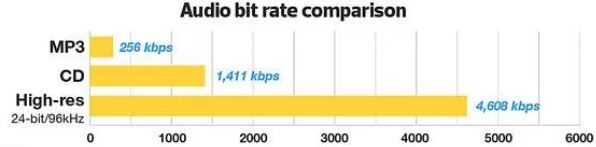
This is a method of consistently mapping the same data, regardless of how easy or difficult it is to compress the data. The advantage is that the size of the compressed file can be easily predicted (calculated) and if the upper limit of data transmission is limited, it will be of maximum quality in that frame. For example, in the case of DVD, CBR of 9.8 Mbps is the highest image quality in the DVD standard. The downside is that the sound quality and picture quality are not good (quality is not constant) for the amount of data. CBR is common for MP3s.
● ABR (average bit rate)
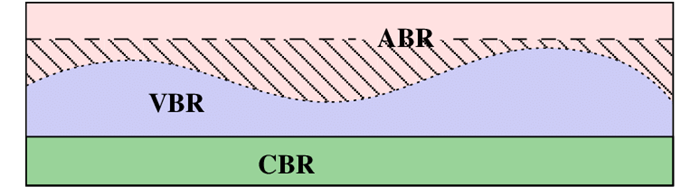
A type of VBR that is meaningful only when encoded. This is a method of setting the upper bound, average, and lower bound bitrates at encoding time, and encoding so that the final average bitrate is specified while observing the upper bound and lower bound. The overall quality remains the same to some extent, but the quality itself cannot be specified. The advantage is that you can reduce the amount of data while maintaining quality when the data transfer is limited to a certain extent. As an example, a DVD should be burned at an upper limit of 9.8 Mbps, and if it’s a single-sided layer, it should be stored at 4.7 GB, so you also need to specify the average rate (final file size ) .


/CBR-vs-VBR-069b3b5e6d554d53841e7e525092d25b.jpg)