MP3: Hybrid Transform Coding and Transform Domain Filtering


Free Download Mp4Gain
picture

MP3: Hybrid Transform Coding and Transform Domain Filtering

MP3: Hybrid Transform Coding and Transform Domain Filtering

Introduction

MP3 is a popular digital audio format that uses a variety of techniques to compress audio data. One of the most important techniques used in MP3 is hybrid transform coding. Hybrid transform coding is a combination of two different transform coding techniques: the Discrete Cosine Transform (DCT) and the Modified Discrete Cosine Transform (MDCT).

Discrete Cosine Transform (DCT)

The DCT is a lossless transform coding technique. This means that the original audio data can be perfectly reconstructed from the compressed data. The DCT works by converting the audio data from the time domain to the frequency domain. In the frequency domain, the audio data is represented by a series of coefficients. These coefficients represent the amplitude and frequency of the different frequencies that make up the audio signal.

Modified Discrete Cosine Transform (MDCT)

The MDCT is a lossy transform coding technique. This means that the original audio data cannot be perfectly reconstructed from the compressed data. The MDCT works by dividing the audio signal into smaller time windows. The DCT is then applied to each time window. This results in a series of coefficients for each time window. These coefficients are then compressed using a variety of techniques, such as Huffman coding.

Hybrid Transform Coding

Hybrid transform coding combines the DCT and MDCT to achieve a high compression ratio while maintaining good audio quality. The DCT is used to compress the audio data in the frequency domain. The MDCT is used to divide the audio signal into smaller time windows. This allows the DCT to be applied to each time window without introducing any artifacts.

Benefits of Hybrid Transform Coding

Hybrid transform coding has several benefits, including:

  • High compression ratio: Hybrid transform coding can achieve a high compression ratio without sacrificing audio quality.
  • Good audio quality: Hybrid transform coding can maintain good audio quality even at high compression ratios.
  • Efficient: Hybrid transform coding is an efficient method of compressing audio data.

Drawbacks of Hybrid Transform Coding

Hybrid transform coding has a few drawbacks, including:

  • Lossy compression: Hybrid transform coding is a lossy compression technique. This means that the original audio data cannot be perfectly reconstructed from the compressed data.
  • Complexity: Hybrid transform coding is a complex algorithm. This can make it difficult to implement and use.

Conclusion

Hybrid transform coding is a powerful technique for compressing audio data. It is used in a variety of applications, including MP3. Hybrid transform coding has several benefits, including high compression ratio, good audio quality, and efficiency. However, it is also a lossy compression technique and can be complex to implement.

Frequently Asked Questions

What are the different types of transform coding?

There are two main types of transform coding: lossless and lossy. Lossless transform coding techniques can perfectly reconstruct the original audio data from the compressed data. Lossy transform coding techniques cannot perfectly reconstruct the original audio data from the compressed data.

What is the difference between the DCT and the MDCT?

The DCT is a lossless transform coding technique, while the MDCT is a lossy transform coding technique. The DCT works by converting the audio data from the time domain to the frequency domain. The MDCT works by dividing the audio signal into smaller time windows and then applying the DCT to each time window.

What are some of the other applications of hybrid transform coding?

Hybrid transform coding is used in a variety of applications, including:

  • Audio compression: Hybrid transform coding is used in a variety of audio compression formats, including MP3, AAC, and WMA.
  • Video compression: Hybrid transform coding is used in a variety of video compression formats, including MPEG-2, MPEG-4, and H.264.
  • Speech recognition: Hybrid transform coding is used in speech recognition systems to convert audio signals into text.

Free Download Mp4Gain
picture


Mp4Gain Main Window
picture


Mp4Gain Features
picture


Free Download Mp4Gain
picture

MP3: Error Detection and Error Concealment Methods

MP3: Error Detection and Error Concealment Methods

MP3: Error Detection and Error Concealment Methods


Introduction

MP3 is a popular digital audio format that uses a variety of techniques to compress audio data. One of the most important techniques used in MP3 is error detection and error concealment. Error detection is used to identify errors that have occurred in the audio data, and error concealment is used to try to recover from these errors.

Error Detection

Error detection is used to identify errors that have occurred in the audio data. This is done by adding a checksum to the audio data. The checksum is a value that is calculated from the audio data, and it is used to verify that the data has not been corrupted. If the checksum does not match, then an error has occurred.

Error Concealment

Error concealment is used to try to recover from errors that have occurred in the audio data. This is done by using the surrounding audio data to estimate what the corrupted data should be. There are a variety of different error concealment methods, and the best method to use depends on the type of error that has occurred.

Common Errors

There are a variety of different errors that can occur in audio data. Some of the most common errors include:

  • Bit errors: These errors occur when a single bit in the audio data is flipped.
  • Block errors: These errors occur when a whole block of audio data is corrupted.
  • Packet loss: This occurs when a packet of data is lost during transmission.

Error Concealment Methods

There are a variety of different error concealment methods. Some of the most common methods include:

  • Zero insertion: This method inserts a zero value in place of the corrupted data.
  • Interpolation: This method uses the surrounding audio data to estimate what the corrupted data should be.
  • Error diffusion: This method spreads the error over a number of samples.

Conclusion

Error detection and error concealment are important techniques that are used in MP3 to improve the quality of the audio data. Error detection helps to identify errors that have occurred, and error concealment helps to recover from these errors.

Frequently Asked Questions

What are the benefits of using error detection and error concealment?

Error detection and error concealment can improve the quality of the audio data by reducing the number of errors that are audible. This is especially important for streaming audio, where errors can occur during transmission.

What are the drawbacks of using error detection and error concealment?

Error detection and error concealment can add some overhead to the audio data. This can reduce the compression ratio, which means that the audio data will be larger.

What are some tips for improving the effectiveness of error detection and error concealment?

The effectiveness of error detection and error concealment can be improved by using a good quality encoder. The encoder should use a high-quality error detection algorithm, and it should use a good error concealment method.

MP3: Huffman Tables and Variable Length Coding

MP3: Huffman Tables and Variable Length Coding

MP3: Huffman Tables and Variable Length Coding
MP3: Huffman Tables and Variable Length Coding)
MP3: Huffman Tables and Variable Length Coding

What is Huffman Coding?

Huffman coding is a lossless data compression algorithm. It works by assigning shorter codes to more frequently occurring symbols and longer codes to less frequently occurring symbols. This allows the data to be represented in a more compact form without losing any information.

How does Huffman Coding work?

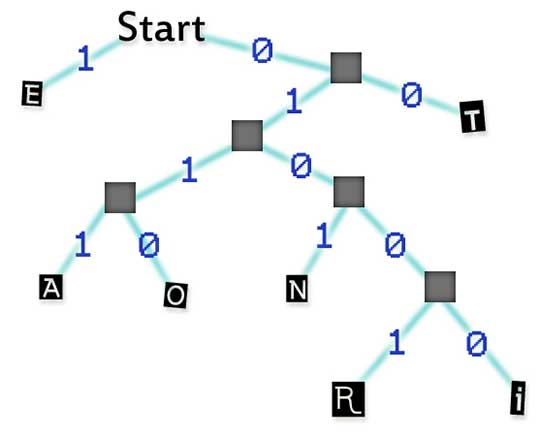
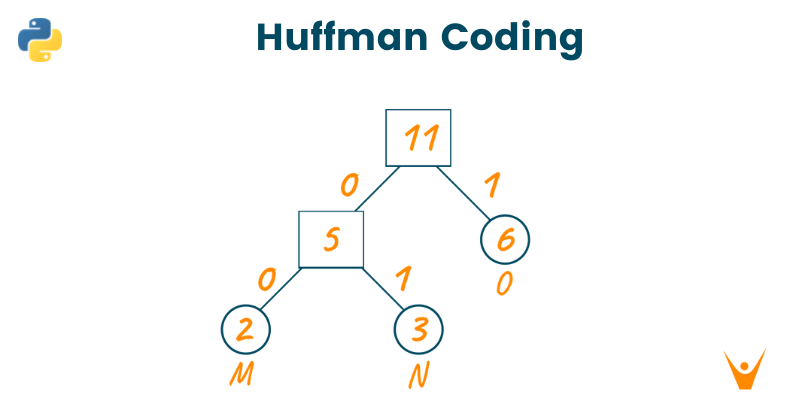
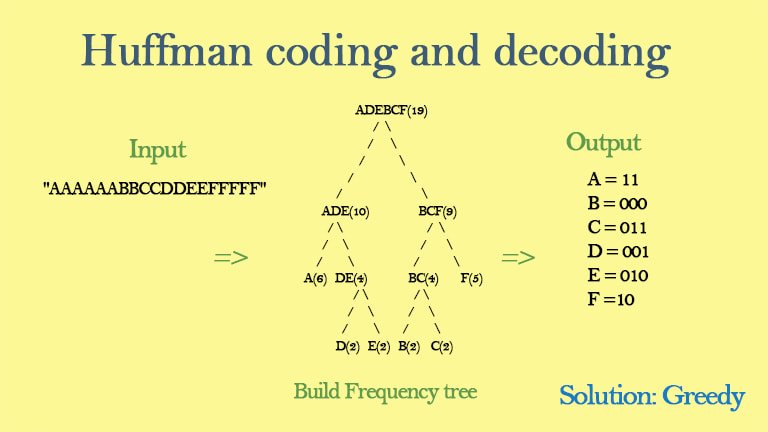
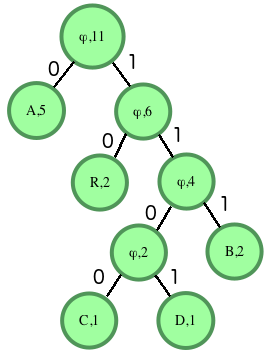
Huffman coding works by creating a Huffman tree. A Huffman tree is a binary tree where each node represents a symbol and the weight of each node represents the probability of that symbol occurring. The leaves of the tree represent the symbols themselves, and the internal nodes represent the combinations of symbols.

To encode a message, the encoder starts at the root of the tree and follows the path down to the leaf node that represents the symbol that is being encoded. The number of bits that are used to represent the symbol is the number of edges that are on the path from the root to the leaf node.

To decode a message, the decoder starts at the root of the tree and follows the path down to a leaf node. The symbol that is represented by the leaf node is the symbol that is being decoded.

How is Huffman Coding used in MP3?

Huffman coding is used in MP3 to compress audio data. The audio data is first converted into a sequence of numbers that represent the amplitude of the sound waves. These numbers are then compressed using Huffman coding.

The Huffman tables for MP3 are created by analyzing the frequency of occurrence of different numbers in the audio data. The more frequently a number occurs, the shorter its code will be. This allows the audio data to be compressed significantly without losing any information.

What are the benefits of using Huffman Coding?

Huffman coding has several benefits, including:

  • It is a lossless compression algorithm, which means that the original data can be reconstructed perfectly from the compressed data.
  • It is very efficient, and can achieve high compression ratios.
  • It is relatively simple to implement.

What are the drawbacks of using Huffman Coding?

Huffman coding has a few drawbacks, including:

  • It can be slow for compressing large amounts of data.
  • It requires a table to be created for each type of data that is being compressed.

Conclusion

Huffman coding is a powerful lossless data compression algorithm that is used in a variety of applications, including MP3. It is efficient and relatively simple to implement, but it can be slow for compressing large amounts of data.

Huffman Decoding Algorithm

MP3 Decoding: Huffman Decoding Algorithm

Huffman Decoding Algorithm

MP3 Decoding

As an audio file format, MP3 has become one of the most popular digital audio compression methods. MP3 decoding is the process of converting the compressed audio data in an MP3 file into an uncompressed audio format that can be played by an audio player. Decoding the compressed audio data involves several steps, including Huffman decoding, dequantization, and inverse discrete cosine transform.
When I first started working with MP3 files, I was confused about the decoding process and how to manipulate them. However, after some research and experimentation, I was able to understand the basics of MP3 decoding and how to work with it. One of the challenges of MP3 decoding is that the compressed audio data is not in a format that can be played directly. Decoding the compressed audio data involves several steps, including Huffman decoding, dequantization, and inverse discrete cosine transform.
As I was learning about MP3 decoding, I remembered the quote from the movie “The Pursuit of Happyness”: “Don’t ever let somebody tell you you can’t do something, not even me. Alright? You dream, you gotta protect it. People can’t do something themselves, they wanna tell you you can’t do it. If you want something, go get it. Period.”

Huffman Decoding Algorithm

Huffman decoding is a key step in MP3 decoding. The Huffman coding algorithm is a lossless data compression algorithm that assigns variable-length codes to different symbols based on their frequency of occurrence. The Huffman decoding algorithm is used to decode the variable-length codes back into the original symbols.
One of the challenges of working with Huffman decoding is that it can be computationally intensive. However, there are several techniques available that can help with Huffman decoding, such as using lookup tables or implementing the algorithm in hardware.
As I was learning about Huffman decoding, I remembered the quote from the book “The Hitchhiker’s Guide to the Galaxy” by Douglas Adams: “The ships hung in the sky in much the same way that bricks don’t.” Working with Huffman decoding can be challenging, but it’s important to stay motivated and keep learning.

Final Words

Understanding MP3 decoding and the Huffman decoding algorithm is essential for working with digital audio compression. Decoding the compressed audio data involves several steps, including Huffman decoding, dequantization, and inverse discrete cosine transform. While working with MP3 files can be challenging, it’s important to stay motivated and enjoy the process of learning.
At MP4Gain, we understand the importance of audio quality and file size. Our software is designed to normalize and convert audio files to the most popular formats, with an integrated equalizer for fine-tuning the audio. If you’re looking for a solution to your audio needs, give MP4Gain a try.
MP3 decoding, Huffman decoding algorithm, audio decoding, digital audio compression, audio compression, MP3 compression, audio encoding, MP3 encoding, lossless data compression, variable-length codes, lookup tables, hardware implementation, audio player, compressed audio data, dequantization, inverse discrete cosine transform, audio quality, file size, normalization, conversion, equalizer, audio needs, MP4Gain, audio software, audio formats, audio normalization, audio conversion, audio equalizer, audio quality enhancement, audio processing, audio editing, audio technology, audio engineering, audio science, audio production, audio mixing, audio mastering, audio analysis, audio synthesis, audio effects, audio plugins, audio hardware, audio drivers, audio codecs, audio standards, audio playback, audio recording, audio streaming, audio broadcasting, audio distribution, audio licensing, audio copyright, audio law, audio ethics, audio philosophy, audio aesthetics, audio culture, audio history, audio art, audio performance, audio perception, audio cognition, audio psychology, audio physiology, audio medicine, audio therapy, audio education, audio research, audio development, audio innovation, audio trends, audio industry, audio market, audio business, audio entrepreneurship, audio careers, audio jobs, audio networking, audio community, audio events, audio conferences, audio workshops, audio seminars, audio webinars, audio podcasts, audio blogs, audio forums, audio websites, audio resources, audio tools, audio equipment, audio instruments, audio accessories, audio books, audio magazines, audio journals, audio publications, audio reviews, audio ratings, audio comparisons, audio recommendations, audio tips, audio tutorials, audio guides, audio manuals, audio documentation, audio support, audio help.