Bit allocation in MP3 layers


Free Download Mp4Gain
picture

Bit allocation in MP3 layers}
Bit allocation in MP3 layers

Let’s talk about bit allocation in MP3 layers

Bit allocation in MP3 layers is the backbone of its efficient audio compression. It determines how data is distributed across frequency bands based on psychoacoustic principles. Imagine trying to pack a suitcase for a long trip; you focus on essentials while minimizing space for less critical items. MP3 compression works similarly, focusing bits on sounds most critical to human hearing and economizing elsewhere.

Understanding this concept helps explain why MP3s are smaller yet still deliver good audio quality. Let’s delve into how MP3 layers allocate bits, why it matters, and what sets this process apart.

How MP3 layers handle bit allocation

Each MP3 layer—Layer I, Layer II, and Layer III—uses unique bit allocation strategies. These layers aim to optimize sound quality while keeping file sizes manageable. The focus is on perceptually important data while discarding redundant information.

Layer I employs a straightforward bit allocation technique suitable for simpler audio applications. Layer II enhances compression by refining bit distribution, focusing on more complex audio signals. Layer III, commonly known as MP3, uses the most advanced algorithms, including Huffman coding, to achieve the highest compression levels.

Role of psychoacoustic models in bit allocation

Psychoacoustic models guide MP3 layers in deciding which sounds matter most to the human ear. These models predict auditory masking, where louder sounds drown out softer ones. This allows MP3 encoders to allocate fewer bits to less audible components.

For example, if a loud drum beat overshadows a faint whisper in a song, the encoder prioritizes the drum while economizing on the whisper. This smart allocation ensures efficient compression without noticeable quality loss.

Challenges in balancing quality and size

Balancing audio quality and file size is a complex task in MP3 bit allocation. Too few bits lead to distortion, while excessive bits waste space. Engineers developed sophisticated algorithms to tackle this trade-off.

Imagine juggling priorities with a limited budget. You focus on high-priority expenses while trimming unnecessary costs. MP3 encoders do the same with sound data, ensuring a balance between fidelity and efficiency.

Advanced techniques in Layer III

Layer III takes bit allocation to the next level with features like variable bit rate (VBR) encoding. VBR adjusts bit allocation dynamically, dedicating more bits to complex audio passages and fewer to simpler ones. This results in a more efficient and adaptable compression process.

For instance, during a quiet piano solo, fewer bits are needed, while a dynamic orchestra demands more. This adaptability is why MP3s often sound so natural despite their compact size.

Real-life examples of bit allocation in action

Think of bit allocation as organizing your grocery shopping. You might spend more on high-quality items like fresh produce while saving on less critical products. Similarly, MP3 layers allocate more bits to crucial audio frequencies and economize elsewhere.

This approach ensures the listener perceives the audio as clear and full, even though much of the original data has been removed.

Comparing bit allocation across MP3 layers

Each MP3 layer has a distinct approach to bit allocation. Layer I uses fixed bit rates, prioritizing simplicity over flexibility. Layer II improves compression with more efficient allocation across multiple channels. Layer III stands out with its advanced algorithms and support for both fixed and variable bit rates.

This progression reflects the evolution of audio compression technology, catering to diverse needs from basic to high-fidelity applications.

Impact of bit allocation on audio quality

Bit allocation directly affects how we perceive audio quality. Proper allocation ensures clarity and depth, while poor allocation results in artifacts like distortion or muffled sound. Understanding this is crucial for audio engineers and enthusiasts.

Imagine watching a blurry video. The lack of clarity frustrates and distracts. Similarly, improper bit allocation undermines the listening experience, emphasizing the importance of getting it right.

How MP3 encoders use bit allocation algorithms

MP3 encoders analyze audio data to determine bit distribution. They consider factors like frequency range, masking effects, and dynamic complexity. These decisions are guided by psychoacoustic models and implemented through precise algorithms.

It’s like designing a custom suit. The tailor assesses measurements and fabric requirements to create a perfect fit. MP3 encoders tailor bit allocation to fit the audio data optimally.

Bit allocation and modern MP3 applications

In today’s digital landscape, MP3 bit allocation remains critical for applications like streaming, podcasts, and portable audio devices. Compact files with good sound quality are essential for bandwidth efficiency and user satisfaction.

For example, streaming platforms rely on MP3’s efficient bit allocation to deliver high-quality audio over varying internet speeds. This balance keeps users engaged without overwhelming network resources.

Future innovations in bit allocation

As technology advances, bit allocation techniques continue to evolve. Emerging audio formats and AI-driven algorithms promise even greater efficiency and quality. These innovations aim to push the boundaries of what MP3 compression can achieve.

Think of it as upgrading from a manual typewriter to a smart word processor. The principles remain, but the tools are more sophisticated and capable, offering exciting possibilities for the future.

Latest words on bit allocation in MP3 layers

Bit allocation in MP3 layers is a fascinating interplay of science, art, and engineering. It reflects decades of innovation aimed at delivering compact, high-quality audio. By understanding its principles, we gain a deeper appreciation for the technology that powers our favorite tunes.

If you’re working with MP3 files and want to optimize their quality, consider tools like Mp4Gain to achieve the best results. It offers practical solutions for enhancing your audio experience.

}

FAQs about Bit Allocation in MP3 Layers

What is bit allocation in MP3 layers?

Bit allocation in MP3 layers is the process of distributing bits across frequency bands based on psychoacoustic models. This ensures that more bits are assigned to sounds most critical to human hearing, while less significant sounds receive fewer bits, optimizing audio quality and file size.

Why is bit allocation important in MP3 compression?

Bit allocation is vital because it balances audio quality and file size. By prioritizing perceptually important sounds and reducing redundancy, MP3 files can maintain good sound quality while remaining compact and efficient for storage and streaming.

How does psychoacoustic modeling influence bit allocation?

Psychoacoustic modeling predicts what sounds the human ear is less likely to perceive, such as softer sounds masked by louder ones. This information guides bit allocation, allowing the MP3 encoder to focus on audible frequencies and save space on less noticeable details.

What is the difference between Layer I, II, and III in MP3 compression?

Layer I uses simpler bit allocation techniques and is suitable for basic audio compression. Layer II improves efficiency by refining bit distribution, making it better for more complex signals. Layer III, or MP3, employs advanced algorithms, including variable bit rate encoding and Huffman coding, for the highest compression efficiency and audio quality.

How does variable bit rate (VBR) affect bit allocation?

Variable bit rate adjusts the bit allocation dynamically based on the complexity of the audio. This means more bits are used for complex sections, like orchestral music, and fewer for simpler parts, such as silence or steady tones, resulting in more efficient compression and better sound quality.

Can improper bit allocation affect audio quality?

Yes, improper bit allocation can lead to artifacts like distortion, muffled sounds, or loss of detail in audio. Accurate allocation is critical to maintain a balance between compact file sizes and clear, high-quality sound.

Why is MP3 Layer III widely used compared to Layers I and II?

MP3 Layer III is preferred because it provides the best compression efficiency and audio quality. Its advanced algorithms, like psychoacoustic modeling, variable bit rate, and Huffman coding, make it ideal for streaming, portable devices, and storage applications where size and quality are critical.

How does bit allocation impact streaming services?

Streaming services rely on efficient bit allocation to deliver high-quality audio over varying bandwidths. By optimizing file sizes and maintaining fidelity, MP3 compression ensures seamless playback, even on slower internet connections.

Comments:

I didn’t know bit allocation was so complex! This article broke it down really well, thanks for that.

Interesting read! I wonder if there’s more detail on how these psychoacoustic models are developed.

This was super helpful for my project. I’ve always wondered why MP3s sound so good for their size.

The grocery shopping analogy really hit home for me. Makes it so much easier to understand how bit allocation works.

I’d love to see a deeper dive into variable bit rate encoding. That part is still a bit confusing for me.

Great explanation! Now I finally understand why Layer III is so popular for music streaming.

This helped me a lot! But I wish there were more technical diagrams to visualize the process better.

The comparison across layers was eye-opening. I didn’t realize how much they differ in complexity.

Very informative article! Made me curious about how future formats will handle compression.

I feel like I learned more from this article than some of the college lectures I’ve attended!

The future innovations section got me excited. AI-driven compression sounds like a game-changer.

Bit allocation makes so much sense now. Thanks for breaking it down in a relatable way!

I’ve always been curious about the science behind MP3 compression. This answered so many of my questions.

Wow, I didn’t realize how advanced Layer III is compared to the others. Makes me appreciate MP3s more.

This was great, but I’d love a follow-up article about how other audio formats compare to MP3.


Free Download Mp4Gain
picture


Mp4Gain Main Window
picture


Mp4Gain Features
picture


Free Download Mp4Gain
picture

MP3: Hybrid Transform Coding and Transform Domain Filtering

MP3: Hybrid Transform Coding and Transform Domain Filtering

MP3: Hybrid Transform Coding and Transform Domain Filtering

Introduction

MP3 is a popular digital audio format that uses a variety of techniques to compress audio data. One of the most important techniques used in MP3 is hybrid transform coding. Hybrid transform coding is a combination of two different transform coding techniques: the Discrete Cosine Transform (DCT) and the Modified Discrete Cosine Transform (MDCT).

Discrete Cosine Transform (DCT)

The DCT is a lossless transform coding technique. This means that the original audio data can be perfectly reconstructed from the compressed data. The DCT works by converting the audio data from the time domain to the frequency domain. In the frequency domain, the audio data is represented by a series of coefficients. These coefficients represent the amplitude and frequency of the different frequencies that make up the audio signal.

Modified Discrete Cosine Transform (MDCT)

The MDCT is a lossy transform coding technique. This means that the original audio data cannot be perfectly reconstructed from the compressed data. The MDCT works by dividing the audio signal into smaller time windows. The DCT is then applied to each time window. This results in a series of coefficients for each time window. These coefficients are then compressed using a variety of techniques, such as Huffman coding.

Hybrid Transform Coding

Hybrid transform coding combines the DCT and MDCT to achieve a high compression ratio while maintaining good audio quality. The DCT is used to compress the audio data in the frequency domain. The MDCT is used to divide the audio signal into smaller time windows. This allows the DCT to be applied to each time window without introducing any artifacts.

Benefits of Hybrid Transform Coding

Hybrid transform coding has several benefits, including:

  • High compression ratio: Hybrid transform coding can achieve a high compression ratio without sacrificing audio quality.
  • Good audio quality: Hybrid transform coding can maintain good audio quality even at high compression ratios.
  • Efficient: Hybrid transform coding is an efficient method of compressing audio data.

Drawbacks of Hybrid Transform Coding

Hybrid transform coding has a few drawbacks, including:

  • Lossy compression: Hybrid transform coding is a lossy compression technique. This means that the original audio data cannot be perfectly reconstructed from the compressed data.
  • Complexity: Hybrid transform coding is a complex algorithm. This can make it difficult to implement and use.

Conclusion

Hybrid transform coding is a powerful technique for compressing audio data. It is used in a variety of applications, including MP3. Hybrid transform coding has several benefits, including high compression ratio, good audio quality, and efficiency. However, it is also a lossy compression technique and can be complex to implement.

Frequently Asked Questions

What are the different types of transform coding?

There are two main types of transform coding: lossless and lossy. Lossless transform coding techniques can perfectly reconstruct the original audio data from the compressed data. Lossy transform coding techniques cannot perfectly reconstruct the original audio data from the compressed data.

What is the difference between the DCT and the MDCT?

The DCT is a lossless transform coding technique, while the MDCT is a lossy transform coding technique. The DCT works by converting the audio data from the time domain to the frequency domain. The MDCT works by dividing the audio signal into smaller time windows and then applying the DCT to each time window.

What are some of the other applications of hybrid transform coding?

Hybrid transform coding is used in a variety of applications, including:

  • Audio compression: Hybrid transform coding is used in a variety of audio compression formats, including MP3, AAC, and WMA.
  • Video compression: Hybrid transform coding is used in a variety of video compression formats, including MPEG-2, MPEG-4, and H.264.
  • Speech recognition: Hybrid transform coding is used in speech recognition systems to convert audio signals into text.

MP3: Error Detection and Error Concealment Methods

MP3: Error Detection and Error Concealment Methods

MP3: Error Detection and Error Concealment Methods


Introduction

MP3 is a popular digital audio format that uses a variety of techniques to compress audio data. One of the most important techniques used in MP3 is error detection and error concealment. Error detection is used to identify errors that have occurred in the audio data, and error concealment is used to try to recover from these errors.

Error Detection

Error detection is used to identify errors that have occurred in the audio data. This is done by adding a checksum to the audio data. The checksum is a value that is calculated from the audio data, and it is used to verify that the data has not been corrupted. If the checksum does not match, then an error has occurred.

Error Concealment

Error concealment is used to try to recover from errors that have occurred in the audio data. This is done by using the surrounding audio data to estimate what the corrupted data should be. There are a variety of different error concealment methods, and the best method to use depends on the type of error that has occurred.

Common Errors

There are a variety of different errors that can occur in audio data. Some of the most common errors include:

  • Bit errors: These errors occur when a single bit in the audio data is flipped.
  • Block errors: These errors occur when a whole block of audio data is corrupted.
  • Packet loss: This occurs when a packet of data is lost during transmission.

Error Concealment Methods

There are a variety of different error concealment methods. Some of the most common methods include:

  • Zero insertion: This method inserts a zero value in place of the corrupted data.
  • Interpolation: This method uses the surrounding audio data to estimate what the corrupted data should be.
  • Error diffusion: This method spreads the error over a number of samples.

Conclusion

Error detection and error concealment are important techniques that are used in MP3 to improve the quality of the audio data. Error detection helps to identify errors that have occurred, and error concealment helps to recover from these errors.

Frequently Asked Questions

What are the benefits of using error detection and error concealment?

Error detection and error concealment can improve the quality of the audio data by reducing the number of errors that are audible. This is especially important for streaming audio, where errors can occur during transmission.

What are the drawbacks of using error detection and error concealment?

Error detection and error concealment can add some overhead to the audio data. This can reduce the compression ratio, which means that the audio data will be larger.

What are some tips for improving the effectiveness of error detection and error concealment?

The effectiveness of error detection and error concealment can be improved by using a good quality encoder. The encoder should use a high-quality error detection algorithm, and it should use a good error concealment method.

MP3: Huffman Tables and Variable Length Coding

MP3: Huffman Tables and Variable Length Coding

MP3: Huffman Tables and Variable Length Coding
MP3: Huffman Tables and Variable Length Coding)
MP3: Huffman Tables and Variable Length Coding

What is Huffman Coding?

Huffman coding is a lossless data compression algorithm. It works by assigning shorter codes to more frequently occurring symbols and longer codes to less frequently occurring symbols. This allows the data to be represented in a more compact form without losing any information.

How does Huffman Coding work?

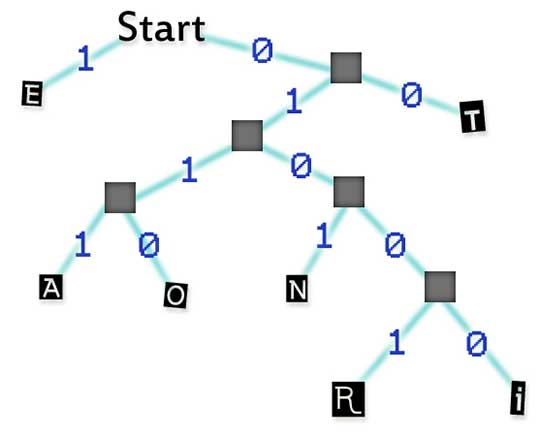
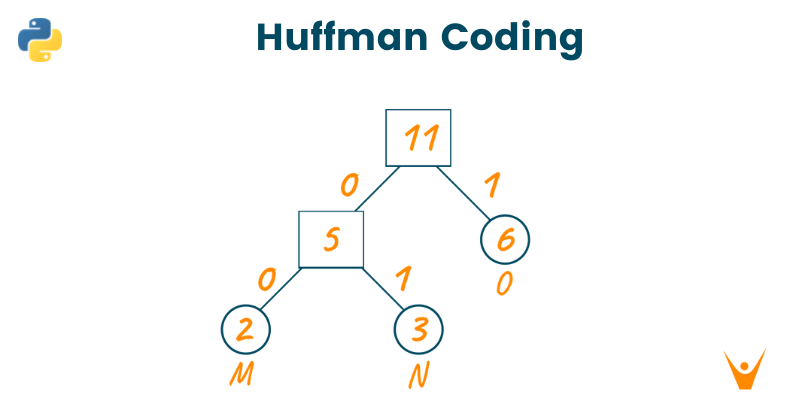
Huffman coding works by creating a Huffman tree. A Huffman tree is a binary tree where each node represents a symbol and the weight of each node represents the probability of that symbol occurring. The leaves of the tree represent the symbols themselves, and the internal nodes represent the combinations of symbols.

To encode a message, the encoder starts at the root of the tree and follows the path down to the leaf node that represents the symbol that is being encoded. The number of bits that are used to represent the symbol is the number of edges that are on the path from the root to the leaf node.

To decode a message, the decoder starts at the root of the tree and follows the path down to a leaf node. The symbol that is represented by the leaf node is the symbol that is being decoded.

How is Huffman Coding used in MP3?

Huffman coding is used in MP3 to compress audio data. The audio data is first converted into a sequence of numbers that represent the amplitude of the sound waves. These numbers are then compressed using Huffman coding.

The Huffman tables for MP3 are created by analyzing the frequency of occurrence of different numbers in the audio data. The more frequently a number occurs, the shorter its code will be. This allows the audio data to be compressed significantly without losing any information.

What are the benefits of using Huffman Coding?

Huffman coding has several benefits, including:

  • It is a lossless compression algorithm, which means that the original data can be reconstructed perfectly from the compressed data.
  • It is very efficient, and can achieve high compression ratios.
  • It is relatively simple to implement.

What are the drawbacks of using Huffman Coding?

Huffman coding has a few drawbacks, including:

  • It can be slow for compressing large amounts of data.
  • It requires a table to be created for each type of data that is being compressed.

Conclusion

Huffman coding is a powerful lossless data compression algorithm that is used in a variety of applications, including MP3. It is efficient and relatively simple to implement, but it can be slow for compressing large amounts of data.