MP3: Hybrid Transform Coding and Transform Domain Filtering

Introduction
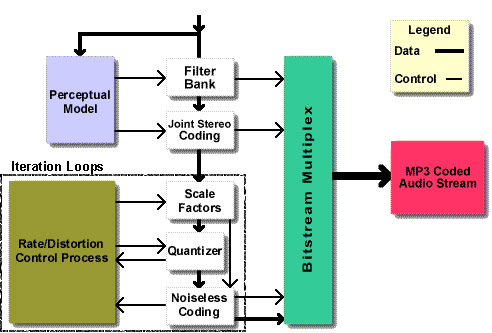
MP3 is a popular digital audio format that uses a variety of techniques to compress audio data. One of the most important techniques used in MP3 is hybrid transform coding. Hybrid transform coding is a combination of two different transform coding techniques: the Discrete Cosine Transform (DCT) and the Modified Discrete Cosine Transform (MDCT).
Discrete Cosine Transform (DCT)
The DCT is a lossless transform coding technique. This means that the original audio data can be perfectly reconstructed from the compressed data. The DCT works by converting the audio data from the time domain to the frequency domain. In the frequency domain, the audio data is represented by a series of coefficients. These coefficients represent the amplitude and frequency of the different frequencies that make up the audio signal.
Modified Discrete Cosine Transform (MDCT)
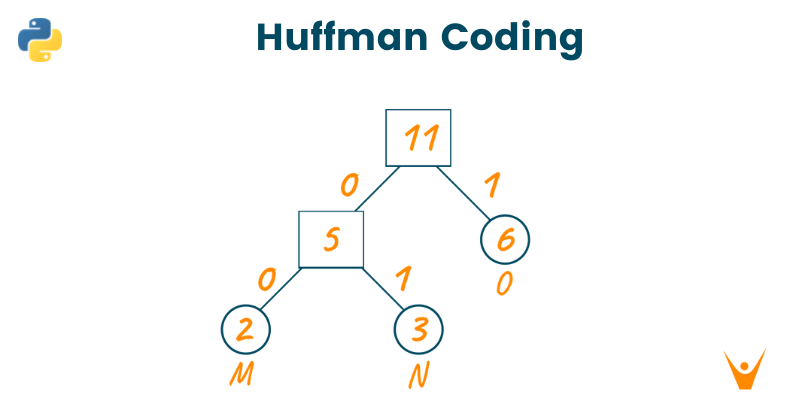
The MDCT is a lossy transform coding technique. This means that the original audio data cannot be perfectly reconstructed from the compressed data. The MDCT works by dividing the audio signal into smaller time windows. The DCT is then applied to each time window. This results in a series of coefficients for each time window. These coefficients are then compressed using a variety of techniques, such as Huffman coding.
Hybrid Transform Coding
Hybrid transform coding combines the DCT and MDCT to achieve a high compression ratio while maintaining good audio quality. The DCT is used to compress the audio data in the frequency domain. The MDCT is used to divide the audio signal into smaller time windows. This allows the DCT to be applied to each time window without introducing any artifacts.
Benefits of Hybrid Transform Coding
Hybrid transform coding has several benefits, including:
- High compression ratio: Hybrid transform coding can achieve a high compression ratio without sacrificing audio quality.
- Good audio quality: Hybrid transform coding can maintain good audio quality even at high compression ratios.
- Efficient: Hybrid transform coding is an efficient method of compressing audio data.
Drawbacks of Hybrid Transform Coding
Hybrid transform coding has a few drawbacks, including:
- Lossy compression: Hybrid transform coding is a lossy compression technique. This means that the original audio data cannot be perfectly reconstructed from the compressed data.
- Complexity: Hybrid transform coding is a complex algorithm. This can make it difficult to implement and use.
Conclusion
Hybrid transform coding is a powerful technique for compressing audio data. It is used in a variety of applications, including MP3. Hybrid transform coding has several benefits, including high compression ratio, good audio quality, and efficiency. However, it is also a lossy compression technique and can be complex to implement.
Frequently Asked Questions
What are the different types of transform coding?
There are two main types of transform coding: lossless and lossy. Lossless transform coding techniques can perfectly reconstruct the original audio data from the compressed data. Lossy transform coding techniques cannot perfectly reconstruct the original audio data from the compressed data.
What is the difference between the DCT and the MDCT?
The DCT is a lossless transform coding technique, while the MDCT is a lossy transform coding technique. The DCT works by converting the audio data from the time domain to the frequency domain. The MDCT works by dividing the audio signal into smaller time windows and then applying the DCT to each time window.
What are some of the other applications of hybrid transform coding?
Hybrid transform coding is used in a variety of applications, including:
- Audio compression: Hybrid transform coding is used in a variety of audio compression formats, including MP3, AAC, and WMA.
- Video compression: Hybrid transform coding is used in a variety of video compression formats, including MPEG-2, MPEG-4, and H.264.
- Speech recognition: Hybrid transform coding is used in speech recognition systems to convert audio signals into text.