Compressors and how to use them, explained.
Compression is one of your most powerful mixing tools. It is the essential element behind any good mix.
But for your compressors to work, you must first understand what compression is.
It can seem intimidating to start learning such a broad subject, especially when the controls and how they affect the signal are difficult to understand in relation to the sound.
This article will help you understand what compression does, how to choose the perfect compressor setting, and some common mistakes to avoid.
But before…
What is compression in music?
Compression in music is the process of reducing the dynamic range of a signal. Dynamic range is the difference between the loudest and quietest parts of an audio signal.
You must reduce the dynamic range of most audio signals to sound natural to a recording.
For example: imagine a whisper and a scream on the same audio track. If they had the same volume difference as they do in real life, it would be very annoying!
Compressors fix all of this by attenuating the loudest parts of the signal and boosting what is output so that the quieter parts are more noticeable.
Imagine a whisper and a scream on the same audio track. If they had the same volume difference as they do in real life, it would be very annoying!
Using compression
Experienced engineers often talk about how one compressor is more “musical” than another.
It is an important concept. Its dynamics is one of the fundamental aspects for its sound to be unique.
When you use a compressor to change the dynamics, the sound engineer becomes part of the musical performance.
If your compressors work properly, they will positively contribute to performance and improve recordings.
Transients: understanding high energy moments.
To understand compression, you need to know what transients are.
Transients are the first high-energy moments of a certain sound in its waveform. These explosions give our brain a lot of information about the quality of a sound.
Since transients are usually louder than the rest of the waveform, they are greatly influenced by compressors.
For example: think of a nice roaring trap. As soon as the trap enters, there is an initial peak in the waveform that narrows slowly. That initial energy spike is your transient.
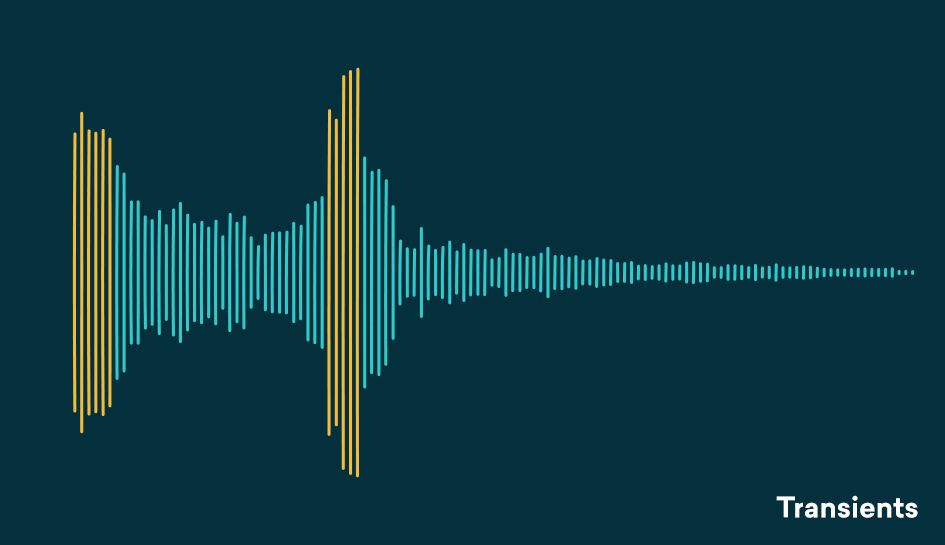
Compression helps you find the perfect balance for a track that has good dynamic range with a beautiful, full body.
A waveform with good dynamics will have a lot of transients when some sounds hit and then decay in the composition. Transients and their final decay are what make a waveform similar to a fish bone.
There is even an overly dynamic trail. If your song is transient without a body, its sound will not be of interest to your ear.
The reverse is also true, no dynamics can lead to lifeless, exhausting sound for the human ear and a waveform that looks like a big brick.
Compression helps you find the perfect balance for a track that has good dynamic range with a beautiful, full body.
Limiter
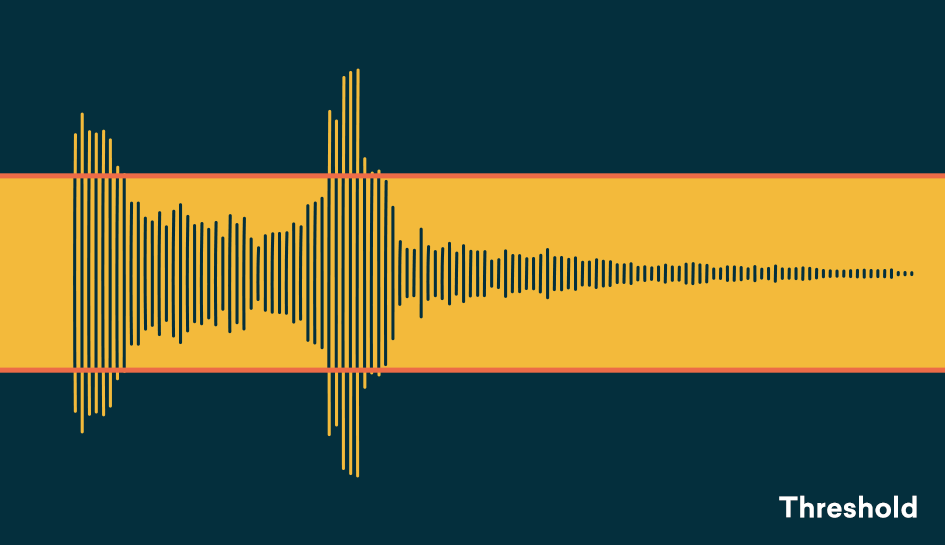
The threshold determines the signal level at which the compressor will start operating. The threshold is measured in dB, therefore any signal above the set threshold will be compressed.
When setting the threshold, decide what part of the signal you want to reduce.
With the threshold low, the compressor gain reduction is applied to a larger portion of the signal. Setting it higher affects only the most aggressive peaks and leaves the rest intact.
To determine what the perfect threshold is, think about what you’re trying to accomplish by compressing the audio and which parts of the signal are the most troublesome.
Are strong signal transients distracting you from the rest of your mix? Or maybe your final decadence is imperceptible in the mix?
A good rule of thumb for compression is “do no harm.”
Set the threshold to hear compressor operation on the part of the signal that needs to be addressed and not lowered.
Setting the perfect threshold will depend on your needs. Play the track and tweak it on the go to find the perfect amount.
Relationship
The ratio determines the amount of gain reduction applied by the compressor when the signal exceeds the threshold. It is called a relationship because it is expressed in comparison with the unaffected signal.
The higher the first number in the report, the greater the gain reduction factor.
For example, we can say that an uncompressed signal would have a 1: 1 ratio