Main features of the sound card
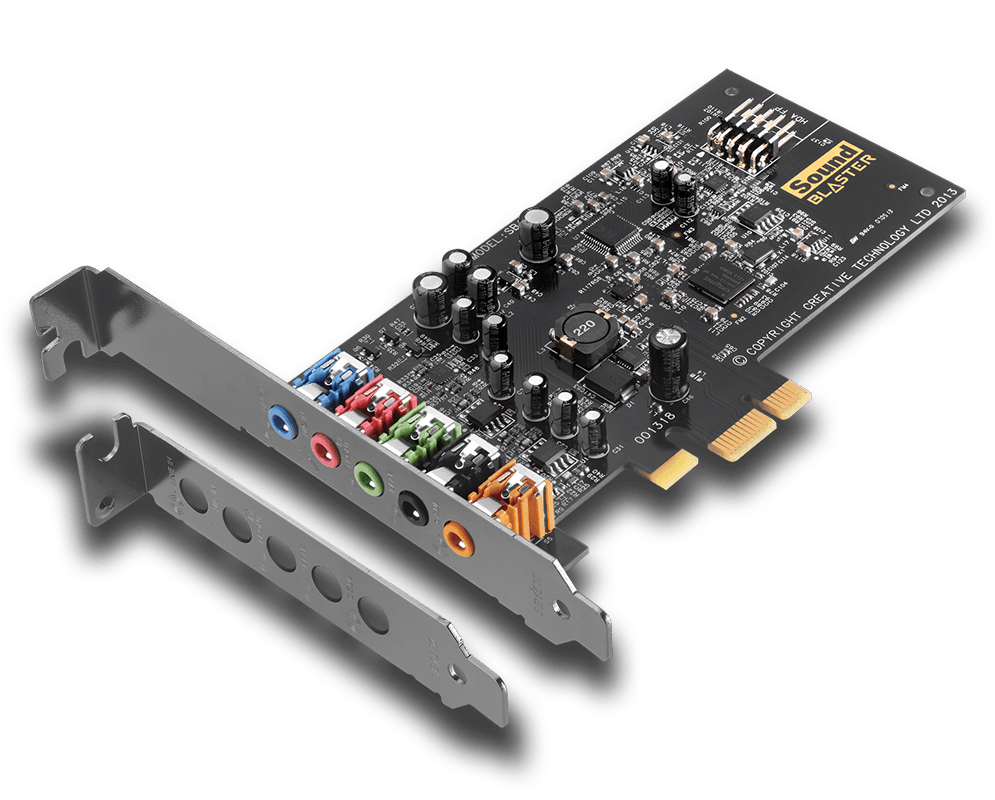
An audio card has a number of basic characteristics: location type, connection interface, a list of parameters for digital-to-analog and analog-to-digital converters (DAC, ADC), the number of supported sound processing standards, and the number of special inputs and outputs.
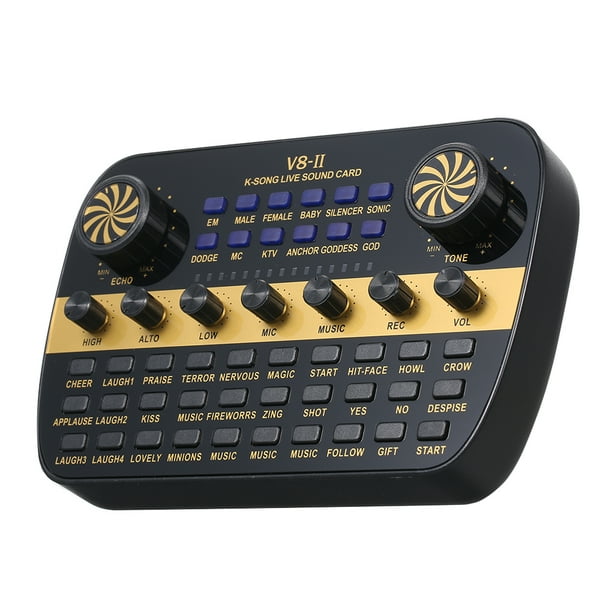
Mapping Type Even though a sound card has a large number of parameters that are worth paying attention to in the first place, the choice should start with its type of location. There are two types of sound cards per type of location: internal – installed directly in the system unit, which is quite practical, but not for professional use; These sound cards are subject to interference from other equipment installed inside the PC; external: the sound card is connected to the computer via an interface cable and is completely protected against interference.
There are internal sound cards with an additional control unit, which is installed in the five-inch bay on the front panel of the system unit.
This block can contain not only controls, but also inputs / outputs, which provides comfortable work with a sound card. PCI connection interface: the sound card is installed in a free PCI bus slot on the motherboard. PCI-E: the sound card is inserted into a free PCI-Express slot. This bus has good bandwidth and has replaced the PCI bus. USB is a standard interface connector for connecting external devices, in this case an external sound card. FireWire (IEEE 1394) is a high-speed standard for connecting external multimedia devices, another alternative way of connecting an external sound card. PCMCIA (PC Card) is a special interface for connecting compact peripheral devices.
Often used in laptops. ExpressCard, a laptop expansion card standard that replaces PCMCIA (PC Card), outperforms them in data transfer rates. ExpressCard uses the high-speed PCI-Express bus. Digital to Analog Converter, DAC Parameters Bit Depth – The number of bits in the digital to analog converter. The higher the number of bits, the better the signal at the sound card output. Most modern sound cards have a 24-bit DAC.
For example, Audio CD contains 16-bit audio, while DVD-Audio stores 24-bit audio. Dynamic range: ranges from 87 to 123 dB. The wide dynamic range allows you to accurately convey all the nuances of natural sound and provides higher quality sound to the output of your sound card. Signal-to-noise ratio: indicates the noise level and determines the quality of the sound output from the sound card.
Maximum frequency: the higher the frequency of the digital-to-analog converter, the better the signal at the sound card output. For example, on a normal audio CD, the sound is recorded at a sampling rate of 44.1 kHz, while on a DVD audio, 192 kHz. THD (Total Harmonic Distortion): range from 3.0E-4 to 0.013%. The lower the THD value, the clearer and more transparent sound will be obtained from the sound card output.




 r Integrated Circuits in Germany, which developed the popular MP3 (MPEG-1 Layer 3) audio encoding format, as well as AVC and HEVC, announced a new video compression format: H.266 / VVC, or Encoding. versatile video player. Someday it should completely replace the current H.265 / HEVC.


 ssible to receive broadcast quality standard definition video at a rate of 1.5 Mbps. This compression ratio allows the transmission of approximately 12 compressed TV channels in the frequency band previously occupied by an analog TV channel. Additionally, the introduction of AVC enabled television operators to provide new video services in places where they were not previously available and opened up the ability to “pack” more video channels into a narrow and expensive frequency range for transmission. Advantages in encoding efficiency, such as good video quality at low bit rates, have made AVC the undisputed leader in Internet TV systems and have taken the industry to a whole new level. AVC has also significantly improved the quality of digital television and made HDTV high definition television widely available.