Frame rate


Free Download Mp4Gain
picture

Frame rate

Frame Rate

Frame rate is an important setting factor that affects the “smoothness” and file size of a video.

frame rate

The unit is fps (frames / second). You can also tell how many still image frames are embedded per second.

A moving image uses the image persistence phenomenon of the human eye to display still images continuously so that they can be recognized as a moving image. It is said that the ability of the human eye can recognize up to 60 fps. So if you create a video at 60fps, you can tell that the video doesn’t look jerky.
On the other hand, this frame rate has a great effect on file size. Since it is necessary to save 60 still images in 1 second at 60 fps and 1 still image in 1 second at 1 fps, the file size varies greatly depending on the frame rate.
Generally, TVs and DVDs use 30 fps (29.97 fps) and most of them are set to 30 fps (29.97 fps) or less.
Unless you really need to reduce the file size, specify 30 fps (29.97 fps).
For reference when setting less than 30fps (29.97fps), the movie is 24fps and the 1Seg TV is 15fps. It is said that it can be lowered to 15 fps for videos with little movement, such as a person sitting and talking. If you set it to 10fps or less, it will no longer be a video but a slideshow level, and it will definitely look jerky. The minimum line for video is around 15 fps.

On the other hand, for videos with a lot of motion, such as sports and action, you may feel that 30 fps (29.97 fps) at the TV or DVD level is not enough. The file size will be large and it will be difficult to send and receive it over the Internet, but if image quality is prioritized, it is worth setting it to 60fps.
Current playback devices that support 120 fps are still rare, but next-gen TV streaming standards, 4K and 8K streams are specified up to 120 fps.
2. 2. Resolution (angle of view)
It can also be said that it is the size of the area to display videos. In terms of TV streaming,
1Seg → SD → HD → Full HD → 2K → 4K → 8K How much
The higher the resolution, the larger the rendering area, so naturally the video file size will increase accordingly.

Resolution (angle of view) TV broadcast Compatible storage devices
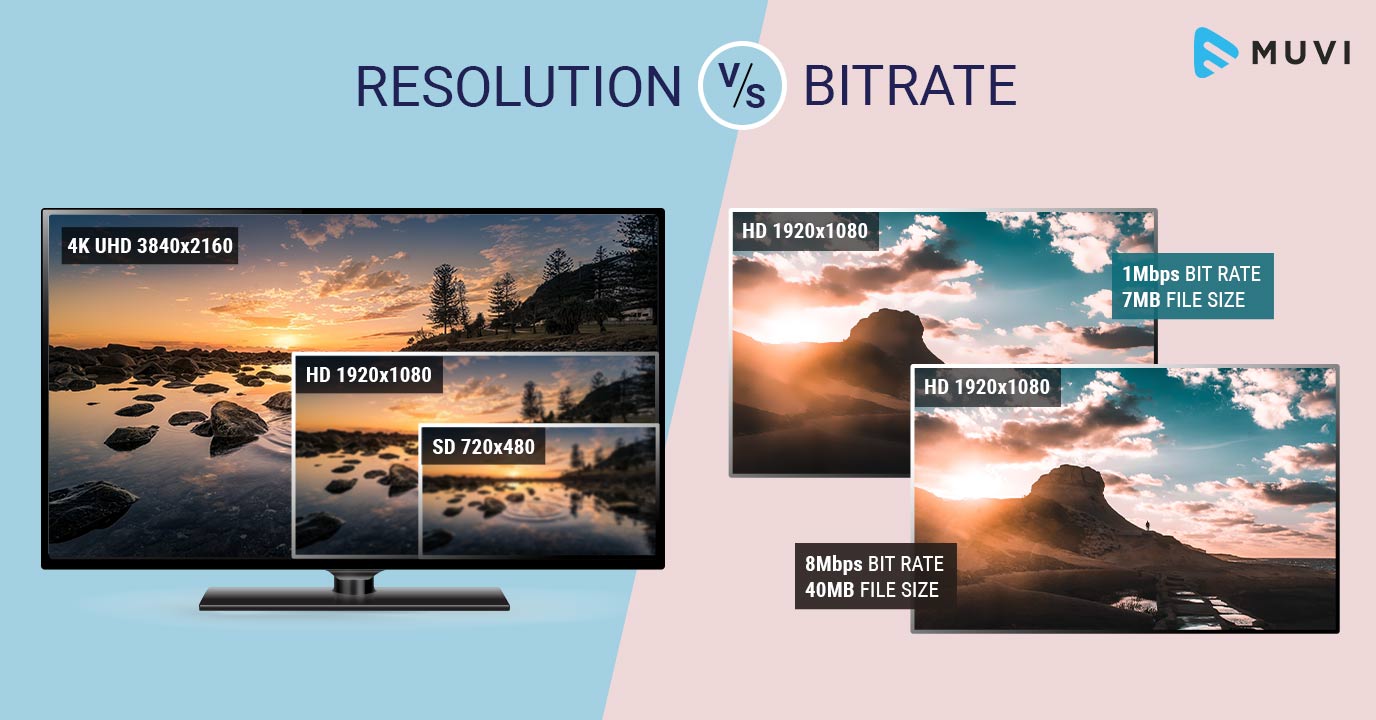
SD (720 px x 480 px) Analog broadcast DVD
HD (1280px x 720px) HDTV broadcast
* mainly in Europe —
Full HD (1920px x 1080px) High definition transmission
* Japan, strictly speaking,
High Definition BS: 1920px x 1080px Transmission
digital terrestrial: 1440px x 1080px Blu-ray Disc
(BD)
4K UHD (3840px x 2160px) 4K UHD streaming means Ultra HD.
Streaming started on December 1, 2018 with the Next Generation Streaming Standard. Ultra HD Blu-ray Disc
(UHD BD)
8K UHD (7680px x 4320px) 8K Transmission As with
4K, streaming started on December 1, 2018. Unknown current status

When considering Internet video usage, YouTube’s maximum resolution is Full HD (HD1080). With reference to this, if resolution is prioritized, it is set to Full HD, and if file size is prioritized, it is set to SD or less.

aspect ratio
It is the aspect ratio of the resolution (angle of view). 16: 9 is the standard for televisions, and 16: 9 monitors have become mainstream for personal computers, but there are still products with aspect ratios such as 16:10 and 4: 3, iPhone 3: 2, and Andoroid 16. : is not unified like 9.
Therefore, if the prepared video file has an aspect ratio of 16: 9 and the aspect ratio of the playback device is different, it will be played back by adjusting, expanding or contracting it on the side of the playback device.
When uploaded to YouTube, videos other than 16: 9 are automatically rendered with black frames at the top, bottom, left, and right.
For those who create and prepare videos, it is very kind to prepare video files with every aspect ratio, but if you can’t take the trouble, it’s usually fine to just create a 16: 9 aspect ratio.


Free Download Mp4Gain
picture


Mp4Gain Main Window
picture


Mp4Gain Features
picture


Free Download Mp4Gain
picture

Video Compression: Bit rate

Video Compression: Bit rate

Video Bitrates

It is not good to increase the bitrate too much
Bit rate = it is useless to rise above a certain level
It does not mean that you need to increase the bit rate.

Video Bitrate

For example, even if you encode a video with an original image quality of 100 at an ultra-high bit rate, the image quality will not exceed 100. (If possible, 99, etc.)

It is often the case that the image quality is 95 at a 5 Mbps bit rate, but the image quality is only 96 even if a 10 Mbps bit rate is assigned.

In such cases, it is useless to assign a bit rate of 10 Mbps.

The bit rate is to maintain the image and sound quality of the original video. It is not intended to raise the bottom.

High bit rate = high playback load
The higher the bitrate, the more playback load will be placed on the PC.

If you use a unnecessarily high bit rate, you will end up with the worst video, “Although the image quality is normal, the playback load is extremely high and the file size is a huge waste.”

So if you want to encode it for your own storage,

Video resolution
Video content
Let’s think about the bitrate to be assigned.

Related: How to Calculate Video Bitrate [Ratio to File Size]

However, if you want to post to Youtube, it will be encoded on the Youtube side and set to a suitable bitrate, so it’s okay if you encode at an ultra-high bitrate for now.

Related: Enco conditions and methods for videos published on Youtube


Video Compression: Relationship to Resolution

Video Compression: Relationship to Resolution

Video Bitrate

Higher resolution videos require higher bit rates. (Because it increases the amount of information per frame / second)

Video Bitrate

For example

Video “1280 x 720”
Video “1920 x 1080”
If you have two videos, the latter requires more bitrate. “1280 x 720” may be sufficient bit rate, but “1920 x 1080” is not sufficient.

For “Recommended bit rate” for “Resolution”, see Youtube recommended bit rate.

Recommended encoding settings for uploaded videos (details) – YouTube Help
→ https://support.google.com/youtube/answer/1722171?hl=ja

Relationship to frame rate
If the frame rate doubles, the bit rate will inevitably double.

This is because “the number of frames per second” is doubled.

For example

30 fps (2 Mbps)
60 fps (2 Mbps)
If there are two videos,

For 60 fps, “60 sheets at 2 Mbps” should be displayed, while

For 30fps, you only need to display “30 sheets at 2Mbps”, so the bitrate is actually half.

Reference: What is the frame rate? Difference between VFR (variable) and CFR (fixed)

It is not good to increase the bitrate too much
Bit rate = it is useless to rise above a certain level
It does not mean that you need to increase the bit rate.

For example, even if you encode a video with an original image quality of 100 at an ultra-high bit rate, the image quality will not exceed 100. (If possible, 99, etc.)

It is often the case that the image quality is 95 at a 5 Mbps bit rate, but the image quality is only 96 even if a 10 Mbps bit rate is assigned.

In such cases, it is useless to assign a bit rate of 10 Mbps.

The bit rate is to maintain the image and sound quality of the original video. It is not intended to raise the bottom.

High bit rate = high playback load
The higher the bitrate, the more playback load will be placed on the PC.

If you use a unnecessarily high bit rate, you will end up with the worst video, “Although the image quality is normal, the playback load is extremely high and the file size is a huge waste.”

So if you want to encode it for your own storage,

Video resolution
Video content
Let’s think about the bitrate to be assigned.

Related: How to Calculate Video Bitrate [Ratio to File Size]

However, if you want to post to Youtube, it will be encoded on the Youtube side and set to a suitable bitrate, so it’s okay if you encode at an ultra-high bitrate for now.

Related: Enco conditions and methods for videos published on Youtube

Resume
In short, it looks like the following.

If you want to make a video that emphasizes the quality of the image
→ Increase the video bit rate

If you want to make a video that emphasizes the sound quality
→ Increase the audio bit rate (increase the sample rate and bit depth)

When you want to make a video that emphasizes movement (smoothness)
→ Increase the frame rate of the video (simply doubling the frame rate requires doubling the bit rate)

Reference: What is the frame rate? Difference between VFR (variable) and CFR (fixed)
Reference: How to Change the Frame Rate (fps) of a Video

By the way, it is a bit rate encoding method.

CBR
Vbr
APR
The “image quality” and the “sound quality” also depend on this, so be careful with this as well.

Reference: Difference between CBR (fixed), VBR (variable) and ABR (average) [bit rate]


Video compression: Relationship to codec

Video compression: Relationship to codec

Video Bitrate

I mentioned earlier that “the higher the bit rate, the better the image quality and sound quality”, but the image quality and sound quality are closely related to the “codec”.

A “codec” is something like a “compression algorithm” for compressing “video” and “audio”.

Reference: What is video format? Codec difference

For example, the video codec “H.264” It is a very famous codec that is also used on Youtube and Nico Nico Douga,

(Addendum: Not used now …)

There is a codec called “H.265” that improves the “image quality per file size” of “H.264”.

“H.265” is “H.264 at about half the bit rate of”, “H.264 will get the equivalent of image quality and”. (The compression rate is double)

For example

Using “2Mbps” video bit rate with “H.264 codec”
Video with a bit rate of “2 Mbps” with the codec “H.265”
If there are two videos, the image quality of “H.265” is twice as beautiful even though the bit rate (file size) is the same.

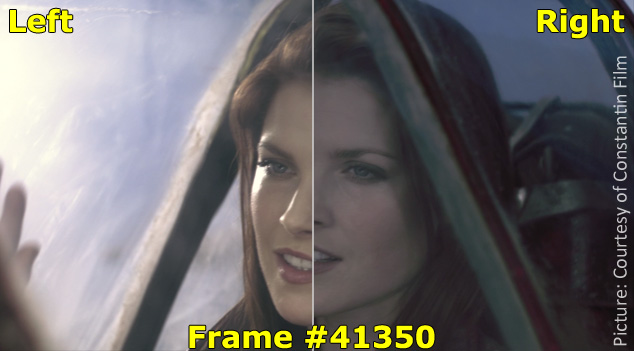
s-25-11-2015_14h09_08
▲ Image comparing H.264 and H.265
(the character part etc. is quite different)
In addition, there is an almost four times difference in picture quality between videos using the “MPEG-2” codec used in DVDs and videos using “H.265”.

Also, the image quality is almost eight times different from that of “MPEG-1”, which is the predecessor of “MPEG-2”.

In other words, if you want to achieve the same image quality as “H.265” video with “MPEG-1”, you need 8 times the bit rate of “H.265”.

By the way, the video in unzipped state without using the codec
Uncompressed video
Uncompressed video
Is named. (Also called “raw video”)

The intro has gotten long, but what I mean after all is

“If you use a codec with a good compression rate, you can maintain reasonable picture and sound quality even at low bit rates.”

That’s why

In other words, the picture and sound quality are good.

Image quality (sound quality) = high bit rate x codec type
It is decided by the formula.

Reference: Different from the type of video codec (H.264, VP9, ​​MPEG, Xvid, DivX, WMV, etc.)

Reference: Different from the type of voice codec (MP3, AAC, WMA, WAV, Vorbis, FLAC, etc.)

Reference: Difference Between Lossy Compression and Lossless Compression [codec]

What is a bit rate?

What is a bit rate?

Video Bitrate

The bit rate in a video is “how much information is packed in one second”.

What if the bit rate is high?
Basically, the higher the bit rate, the better the picture and sound quality.

* Although it is closely related to the “codec” described later, it will basically improve.

There are two types of bit rates
Bit rates are assigned separately for “video” and “audio”.

The higher the bitrate assigned to “video”, the better the “image quality”.
The higher the bit rate assigned to “voice”, the better the “sound quality”.
Also, the sum of the two bit rates is called the “oval bit rate (total bit rate)”. (This oval bit rate is called “video bit rate”)

screenshot_2952
▲ If you open the video file properties and open the “Details” tab, you can see “What is the bit rate?”

(However, this Windows function is unreliable, so it is better to use video analysis software like MediaInfo)

In other words

Oval bit rate = video bit rate + audio bit rate
It becomes the calculation formula.

So even if it says “bit rate is high!”, It may mean “bit rate of video is high” and “bit rate of audio is not high”.

In other words, in such a case, the video will be “Image quality is good, but sound quality is not good …”.

Basically, the file size of “audio” is much smaller than that of “video”, so even if you increase the bit rate of “audio” significantly, the overall size of the file will not change as much.

Therefore, “speech” is often encoded uncompressed (linear PCM).

Relationship to image quality
The higher the “video” bit rate, the more accurate the color information that can be assigned to all pixels.

as a result

High bit rates improve image quality and
If the bit rate is low, the image quality will deteriorate.
koubittore-to
teibittore-to-to
▲ High bit rate (12 Mbps, 2.57 MB) ▲ Low bit rate (90 kbps, 20 KB)
* Actually, it is a gif video, so the bit rate is not accurate.

Bit rate difference

Also, in the case of a low bitrate, if you allocate bits evenly to all pixels, you will run out of bits, so in scenes where similar colors are continuous (such as a scene where the blue sky stretches without end), etc. Try to reduce the bits preferably.

As a result, “block noise” ↓ is likely to occur in such scenes.

Block noise
▲ Example of block noise (block noise)

Relationship to sound quality
The audio bit rate is

Sampling rate (Hz) x bit depth (bit) = bit rate (bps)
It can be expressed by the formula.

For example, when recording sound as digital data

How often do you record (= sample rate)
How much data is stored per interval (= bit depth)
Decide and register.

For example

Sampling rate: 44000Hz
Bit depth: 24 bit
If so, the sound is divided and recorded 44,000 times per second, and the sound is recorded using 24 bits for every 44,000 times.

In other words, if you want to improve the sound quality, you can increase the “sample rate” or the “bit depth”.

Increase the sample rate → Soft sound
Increase the bit depth → Increase the expressiveness of the sound, such as finesse and volume
Reference: Meaning and Relationship of Sample Rate, Bit Depth, and Bit Rate

What is the video and audio bit rate?

What is the video and audio bit rate?

Bit Rate

Do you like video production or do you value high quality in movies? You’ve probably come across something like bitrate. It always accompanies the technical characteristics of video recordings and its value determines the quality of the image in the file. When working with converters, you will come across this feature more than once, so it is advisable to fully understand what it is responsible for and how it affects the final product: a video or an audio file.

bitrate

To find out what bit rate is, it is worth understanding how video information transmission works. Any video is a rotating sequence of images. In order not to have a “slideshow feel”, the image change speed must be at least 24 frames / sec. Each box has parameters: width and height. The higher they are, the more pixels are placed in an image, the higher the quality.

Each “point” that makes up a frame has a weight and is equal to 1 byte. Let’s take a Full HD picture and calculate its weight – about two megabytes will be released (1920 x 1080 = 2073 600). So one second of video, containing 24 frames, would weigh 48MB. This is where the concept of bitrate comes in: it is the power to compress a video.

Those. the required file, being encoded, loses weight. But due to strong compression, it may also lose quality. Of course, in reality, not everything is so simple; Much depends on the codec used for encoding. This is the name of the direct compression method. So videos in different formats, but with the same bitrate, can produce images of different quality. The concept of “audio bit rate”, denoting the strength of compression, is also applicable, but for an audio stream.

Bit rate types
Delving into the topic, it is worth noting that the bitrate is not always the same. And now we are not talking about a quantitative indicator, but about a division into types. To work competently with media conversion, read about three types of bitrate: constant, variable, and average, which is a hybrid of the first two.

Constant Bit Rate (CBR)
As the name implies, this type of bit rate does not change during file playback. This compression method allows you to fairly accurately determine the size of the output file and ensure consistent quality throughout your listening or viewing session. But in the entertainment industry, constant bitrate is rarely used due to the impossibility of adjusting it. for dynamic playback, because the files get bigger than they could be.

Variable Bit Rate (VBR)
This type of bit rate is flexible and resistant to change, as a result of which it can be adjusted to the playback object and produce an optimal size / quality indicator. For example, for pictures or musical pieces with a reduced information density, the bit rate will decrease, thus reducing the weight of the object.

Average bit rate
This view is a compromise between the previous ones. The problem with variable bitrate is that changes are automated, and sometimes overcompression can occur. Average bitrate allows the user to set the range in which compression variation will occur. True, the technique of its use is not so simple and is mainly used in professional studios when working on serious projects. An additional advantage of the average bitrate is that it allows you to more accurately calculate the file weight even when the compression force changes.

What does “bit rate” mean in a video?

When downloading videos from the Internet or copying videos from disc to your computer, you may have the option of choosing a different bitrate. Even DVDs have specific bit rates. As technology has advanced, video media are able to achieve higher quality, such as high definition DVD, and this is achieved by increasing the video bit rate.

Bitrate

Definition

Bit rate, sometimes referred to as “bit rate”, is the term used to define compression of audio, video, or other multimedia compression in terms of the amount of data, measured in bits, per unit of time in the printed material. Bit rate is the ratio of quality to time. Bit rate is also often measured in kilobits or megabits per second.

Bitrate

Sense

Videos with a higher bit rate will have a larger file size. For example, it will take longer to download or stream from the Internet and upload to a device or computer, and you can burn fewer videos to DVD. However, a higher bit rate usually indicates a higher quality. In this way, your video can be clearer and sharper. When browsing for video or importing it to computer from DVD or camera, choose the highest bit rate for higher quality. However, if space is your main concern, choose the lowest bitrate when downloading or compressing video files.

bit rate factors

Programs will have different bit rates depending on different factors. For example, the output material may have more depth and quality, thus producing a higher bit rate. High definition movies have a higher bit rate than standard definition, for example. Different types of video files have different bit rates and you can also choose different bit rates for the same file. For example, iTunes allows you to compress audio files with a bit rate greater than 128 kilobytes per second to save space on your iPod.

Standard bit rates

Most standard definition DVDs have a maximum bit rate of 9.8 megabits. High definition television has a bit rate range between eight and 15 megabits per second, while the standard for 720p high definition video is approximately 19 megabits per second. At the time of publication, Blu-Ray DVDs have the highest bit rate of all consumer videos with a maximum of 40 megabits per second. This makes the content of Blu-Ray DVDs more than four times that of standard DVDs.

Understanding the bit rate

When you start to make comparisons between video cameras you are faced with a series of aspects to take into account: numbers, characteristics, options … One of the lesser known but no less important issues is the bit rate. Let’s find out what it is, once and for all.

Bit rate

What is the bit rate?

Bit rate is the amount of digital information (bits) that is transferred or recorded in the unit of time.
In the case of video, the bitrate is generally expressed in bits per second, and the amounts being played to date are Mbps (Megabit, that is, millions of bits, per second) or kbps (kilobits, thousands of bits per second).

Bit rate

Because it is important

The bit rate is a parameter to take into account because it affects many aspects of digital production, both technical and more practical (ie economic).
First of all, it affects the quality of the video and the size of the single file: obviously, the more data is transmitted in the unit of time, the higher the quality of the recording. And at the same time, it will increase the size of the recorded file.
However, this should not lead us to think that a very high bit rate is always necessary: ​​in fact, we must bear in mind that as the bit rate increases, the difference becomes more and more marginal.
Basically, bit rate variations made from already high values ​​to reach higher values ​​are less visible than variations made from low values.

Then there is the question of file accessibility on the network: if the bit rate is very high, it will take a long time to download a video and watch it (for example, YouTube recommends not very high bit rates).

Finally, the bit rate also influences our portfolio: if we want to record at very high bit rates, we must first have a higher performance equipment, and then we will have to have more capable and higher performance media. Hence, larger SD, with high write speeds and consequently higher costs.

This is why you need to know what bitrate is, especially if you are serious about creating videos.

Bitrate, framerate and resolution

To get an idea of ​​the concept of framerate you can read this article that talks about 24 fps and the cinema effect. Instead, resolution is simply the number of pixels the camera uses to “describe” the scene – more pixels means more resolution and therefore more detail (up to a certain limit).

Why are we talking about these other two concepts? Because the bit rate is a bottleneck that can make you lose part of the information we want to record.

A little math

Let’s imagine that we have our machine and we set it to 4K and choose a frame rate of 60 frames per second.
Now let’s take the same machine and set it up in HD choosing a frame rate of 30 frames per second.

How will the bit rate change?

Since the bit rate is bit / second, let’s try to calculate the bits to transfer in each case.

-In the first case we will have 4096 × 2160 pixels, all multiplied by the 60 times in one second that the frame is recorded: a total of 530841600 pixels.
In the second case, however, 1920 × 1080 pixels multiplied by 30 frames: a total of 62,208,000 pixels.

That is why the bit rate can be a bottleneck: each pixel is represented by a certain number of bits, and if we record with resolution and framerate parameters that exceed the bit rate possible with a certain machine, this will have to apply compression to the file. And we know that the more compressed a file is, the lower its quality.

What is the bit rate and how does it influence the quality of the videos?

Amid the pandemic we are facing and authorities increasingly asking people to stay home, the use of the Internet, especially broadcast services, is skyrocketing. Amazon Prime Video, Netflix, YouTube, Twitch and others have already announced measures to try to ensure everyone accesses their videos without gagging, but there are differences between the measures on some platforms.

bitrate

YouTube reduces standard video quality to SD worldwide

Netflix, for example, opted for a reduction in the data rate or bit rate without lowering the resolution of the video itself. YouTube is already one of the platforms that now forces you to load at a lower resolution while maintaining the data rate, that is, the final quality, and allows you to increase the image size manually by the user.

bitrate

Oops wait! So does reducing resolution not reduce the quality and quantity of data to transfer? Not quite. Resolution is not the only thing that defines the quality of a video image, or even a JPG image, audio and the like, there are a number of factors. Among them, in addition to the image size, the bit rate that will be transferred from a server to a device, for example.

Data rate versus bandwidth

Reducing the amount of data sent to each user can help guarantee the service for everyone (Photo: Pixabay)
To understand metering on Netflix, you first need to understand the difference between the data rate of a media file and the bandwidth of the connection. Both can be called bitrate and throughput, and whether those terms are correct or not matters little. What matters is that it confuses, so it is necessary to clarify it.

The data rate of a media file refers to the maximum size of a second of the video. A video, as you may already know, is divided into frames, the most common speed is 30 fps (30 frames per second). Each table has its own set of information, and the total of 30 (or 24, 60, 120, and the like) forms the bitrate.

The bandwidth of the connection is the speed of your internet. Brazilian 4G, for example, has an average of 20 Mbps. Some fixed broadband operators offer packages of 100 Mbps, 200 Mbps or even more. This rate is the maximum amount of data that your Internet can receive from a central server.

Data volume

YouTube chose to lower the standard resolution without decreasing the volume of data (Photo: Pixabay)
The bit rate of a media file, therefore, is the amount of data it has each second. Netflix reduced this rate to decrease the amount of information that its servers need to send to each user connected to the platform. This reduces the quality of the image because it is less data, which can slightly reduce sharpness and cause noise, which some call “pixelization”, especially in very dark areas of the frame.

The resolution is not the lowest: it is that this image has less information. When loaded onto a large screen such as a TV, details are missing to display. On smaller screens, you will hardly notice the difference.

Facebook and Instagram will reduce the quality of video in Brazil
Globoplay will reduce video quality to meet demand
In short, Netflix’s decision ensures resolution, keeping sharpness a little closer than the user is used to, but reducing the amount of data transferred, resulting in images with a lower level of detail and sometimes , even more noise, even.

By sending less information to each user, Netflix, as well as Facebook, Globoplay and other services with similar measures, the platform avoids what we call server bottlenecks. This could cause suffocation and connection failures. YouTube’s measure also alleviates traffic because not everyone will manually increase the resolution, which in itself already reduces the amount of information to be transferred.

What is a video bit rate? What is mp3

The bit rate is of two types:

internal: the number of bits transmitted per second;

external: data rate and its value for real-time transmission (to watch a movie or listen to music).

Bitrate

Let me remind you that high bitrate usually means better quality, however this may depend on the source file.

How to find out the bit rate of a specific file?

It can usually be found right inside

And what is the difference, let’s see?

There is said to be little difference. 🙂 In my opinion)) (hearing), it is necessary to listen to music not through the speakers for 100 rubles, and certainly not through a portable speaker. C and everything fits immediately: it does not sound, but cacophony, if the bit rate is less than 120 kbps.

Bitrate

Different bit rates for people who work with sound. Well, to listen at home, any bitrate, even the lowest bitrate, will. Here it is, as the saying goes, an amateur.

Incidentally, one of the “representatives” of music with a high bit rate is the .flac format. . , the bit rate weighs less than 800-1000 kbps, however it takes up more space, such a song can weigh 30mb, and the album less than 400.

I hope this explanation of “What is the bit rate in music” has helped me a little? Please leave the comments below so I can reply to you.
Don’t be afraid of me and add

With the concept of “bit rate” we are faced with the mention of files in audio and video format. To understand the essence of this term, you must master file compression and encoding. German scientists have established the general principle of compressing files with minimal loss. Using the MP3 encoding example, the source audio file is cut into chunks lasting 50 milliseconds, each of which is analyzed separately. In the analysis, the fragment is broken down into harmonics according to the Fourier method, of which, according to the theory of sound perception, the harmonics that the person perceives worse than the rest are expelled from the human ear. These are quieter harmonics in the context of the stronger ones. As a result, sounds masked by hearing inertia are ejected (for example, if a very short beep sounds at once, with a delay of a fraction of a second, some other short-term signal is heard, then it will not be heard. ) The remaining harmonic information after filtering is recorded in an MP3 file, which results in a much smaller size than the original WAV. The WAV file stores complete information about the original sound, digitized and quantized at a frequency of 44 kHz. This information is stored on normal audio CDs. During playback, a reverse transformation is performed, in which the remaining harmonics are converted back into a sound wave. Some information about the original signal has disappeared, therefore the sound is not the same as the original. But insignificant sounds have been thrown, so the human ear cannot distinguish the signal from the original, which it was before packaging in MP3.

Bit rate is the amount of information per unit of time. Its essence: how much information about each second of the registry can we spend. Of course, the smaller it is, the smaller the files are with the same duration over time, so they have to throw more “extra” harmonics. Bit rates have units of measure: kilobits per second (Kbps) and megabits per second (Mbps). The MP3 audio compression algorithm is often used with 128 kbps compression. They are of two types: fixed and variable. So with video compression, if a constant bit rate is applied, a fixed amount of data is used to encode a second of a movie. In the case of variable bitrate, the codec sets its own bitrate value based on the scene in the movie. For example, when encoding in MPEG, in practice, the compression gain is obtained by saving only the difference between adjacent frames. With a slow scene change, the difference between the frames is small, and therefore it is possible to reduce the bit rate required to reproduce these scenes.