There are several types such as WAV, MP3 and FLAC, but what is the difference? Part 3
Relationship between the depth of bits, the sampling frequency and the frequency of bits

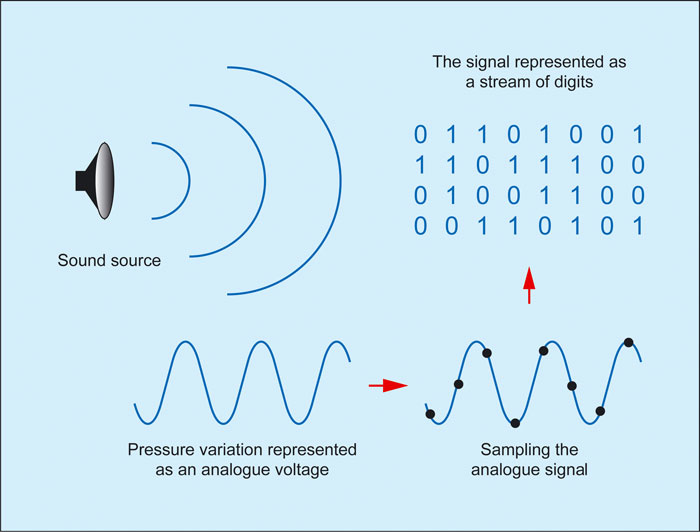
The musical data has numbers such as the depth of bits and the sampling frequency indicating the amount of musical data per second.
And the product of the two is the “bit rate”.
· Sampling rate
Also known as sampling frequency. It shows how many tens of thousands of sounds are collected per second.
The higher the value, the greater the number of divisions, which translates into a softer sound and an improved sound quality.
By the way, the CD is 44100Hz.
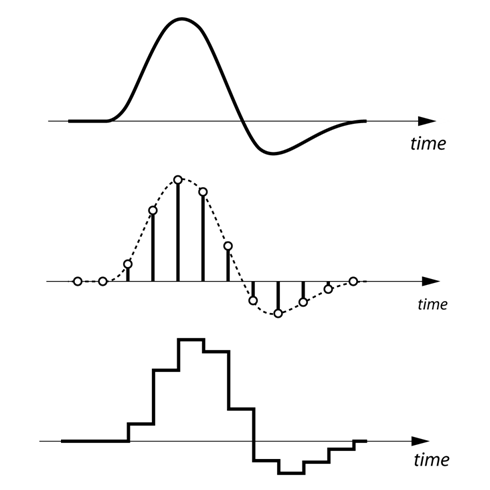
· Bit depth
Also known as quantification bits, bid reduction, sample bits count.
This shows how much capacity is given to divided data.
The greater the sound, the better the sound will be and the quality of the sound will be improved.
The CD is 16 bits.
· Bit rate
It is shown as BPS and shows the amount of data per second.
It is the product of the “sampling frequency” and the “bits depth” mentioned above.
In the case of a stereo file, there are two sounds, so if you formulate it …
Sampling rate (Hz) x Bit depth (bits) x 2 = Bit rate (BPS)
A large “bit rate” means a “sampling rate” and a large large bits depth, which means that sound quality is good.
By the way, in the case of CD,
44100 (Hz) x 16 (bits) x 2 = 1411200 (BPS)
This means that.
In this article, I specifically compared the difference in the file size.
cheep
Marker
Share
Pocket
Update: 2020.07.15 Published: 2018.08.14
Technology | Included in the Hall of Fame
There are several types such as WAV, MP3 and FLAC, but what is the difference? Comprehensive research on music file formats
keyword
Data and music
INDEX
I compared file sizes
So, what is the call frequency?
Is “dead mp3”?
Why are there so many formats in the first place?
I compared file sizes
Then, I compared what kind of difference is made from the point of view of the file size and if there is a difference in Hz that sounds depending on each file format. In comparison, Tucson Repertory Orchestra and Sierra Vista Symphony Orchestra were listening to the opinion of Japanese Director Toru Tagawa, who serves as musical director and director of the (Sierra Vista Symphony Orchestra), is the ninth of Beethoven is good advised me to play The Berlin Philharmonic directed by Karajan, one of the most famous recordings.
I compared file sizes
So, what is the call frequency?
Is “dead mp3”?
Why are there so many formats in the first place?
I compared file sizes
Then, I compared what kind of difference is made from the point of view of the file size and if there is a difference in Hz that sounds depending on each file format. In comparison, Tucson Repertory Orchestra and Sierra Vista Symphony Orchestra were listening to the opinion of Japanese Director Toru Tagawa, who serves as musical director and director of the (Sierra Vista Symphony Orchestra), is the ninth of Beethoven is good advised me to play The Berlin Philharmonic directed by Karajan, one of the most famous recordings.
Then, here is the CD used for this comparison.
Symphony n. ° 9 by Beethoven (choir) from director Herbert von Karajan released by Universal Music. In fact, it is said that the Ninth of Beethoven was the origin of the unit of a CD. (There are several theories about this).
When I really verified it, there was still a remarkable difference in the size of the file.
OLA 701.5 MB.
ALAC 308.6 MB.
MP3.
160 kbps 79.4 MB
256 Kbps 127 MB
320 kbps 158.8 MB
CAA.
160 kbps 80.2 MB
256 Kbps 127.8 MB
320 kbps 159.5 MB
However, for “MP3” and “AAC”, none of the bit rates appeared around 1 MB.
So, what is the call frequency?
With respect to the frequency, I tried to verify showing the waveform. The image above is in WAV format.
Compared to “WAV”, there were almost no changes in the frequency of acute and only a slight change in the bass was observed.
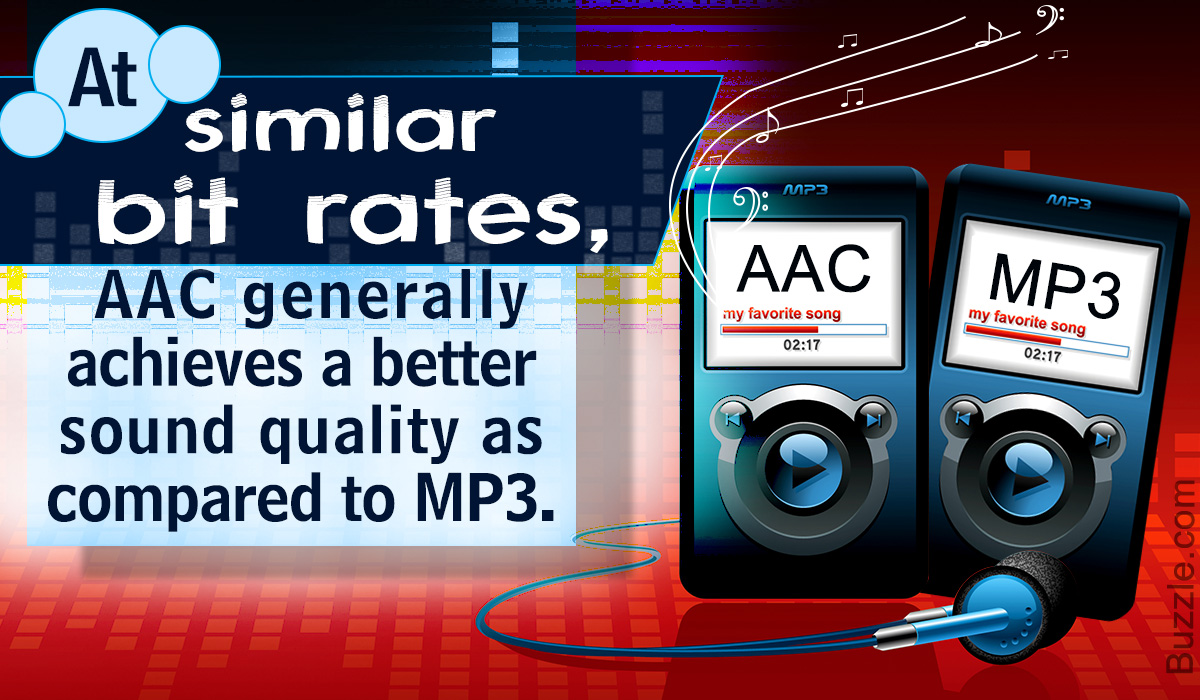
Comparing “MP3” and “AAC”, which have almost the same file size, you can see that “AAC” has a lower tone. In terms of frequency, “AAC” seems to have a better sound quality. In other words, the result of the verification shows that AAC, which is a more recent compression technology, is higher.