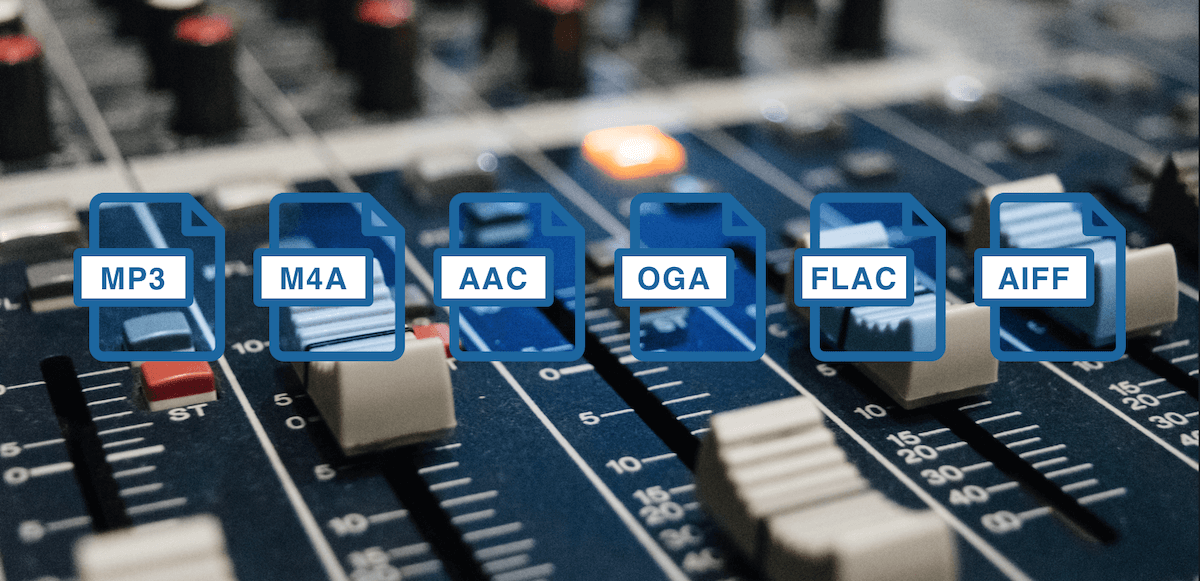
Digital audio formats

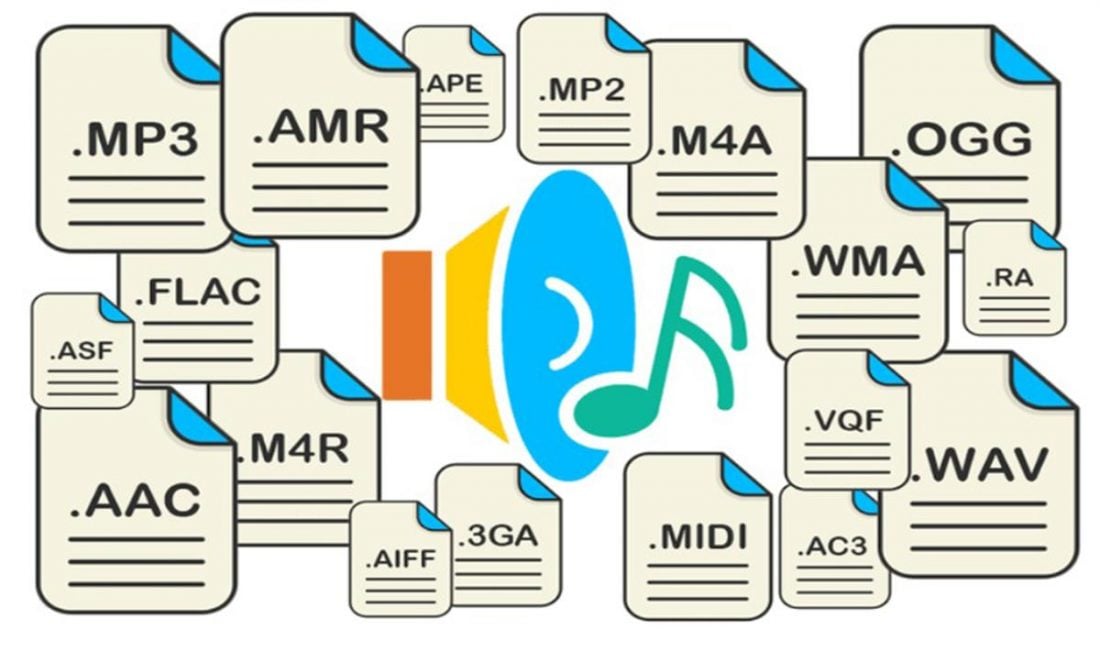
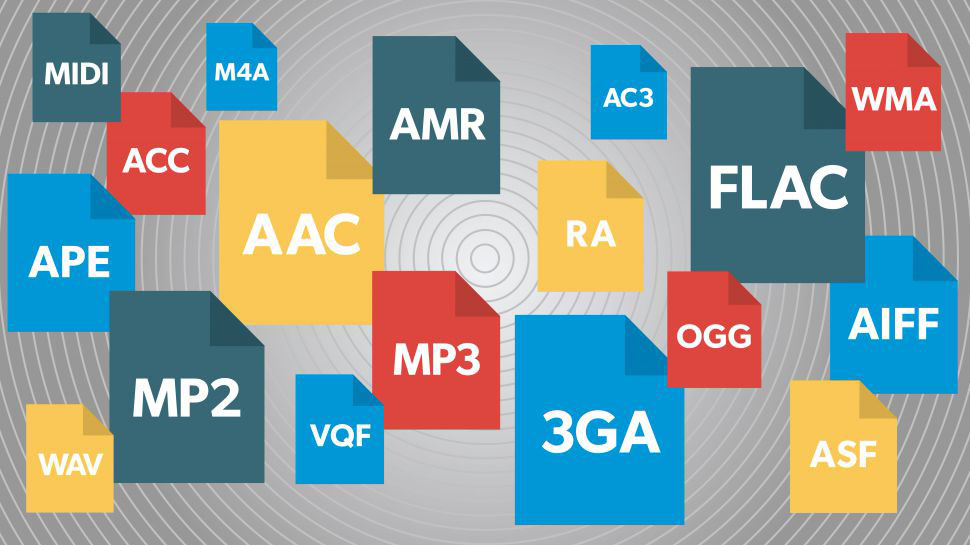
Digital sound “format” means not only the format of the audio file (which can be determined by its extension), but also, for example, the data presentation format, which depends on the digitization method and parameters. In addition to the computer file formats of various operating systems, there are audio media formats, streaming audio formats, and multi-channel audio formats.
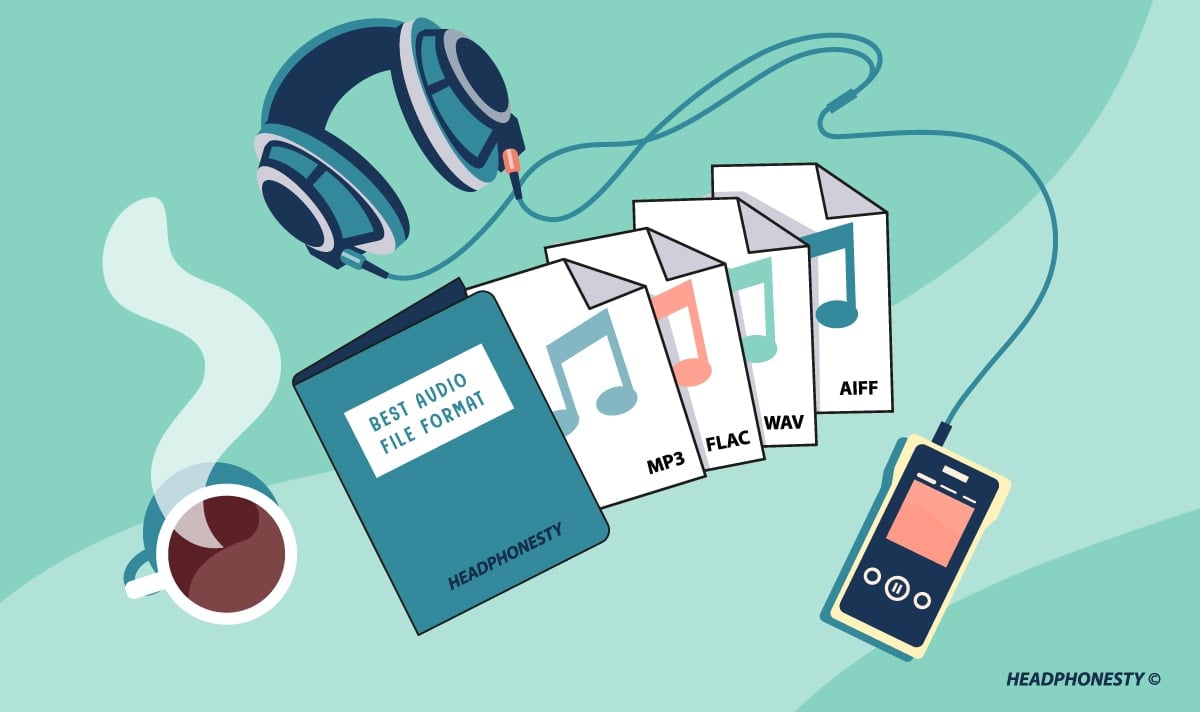
Furthermore, the “sound” file can be not only an audio recording, but also a project file from an audio editor, DAW, or any other program for working with sound. The project file can contain embedded audio and only links to multimedia data.
A standard MIDI file does not contain any audio data, it is a set of commands that control synthesizers and other devices.
There are also several patch and sample formats that are used on synthesizers.
Presentation format
The format for representing audio data in digital form depends on how the analog-to-digital converter (ADC) quantizes. There are two types of quantization that are commonly used:
pulse code modulation
sigma delta modulation
Bit depth and sampling frequency (quantization) are also indicated for various audio recording and playback devices as the format for representing digital audio (24-bit / 192 kHz; 16-bit / 48 kHz).
Digital audio file formats
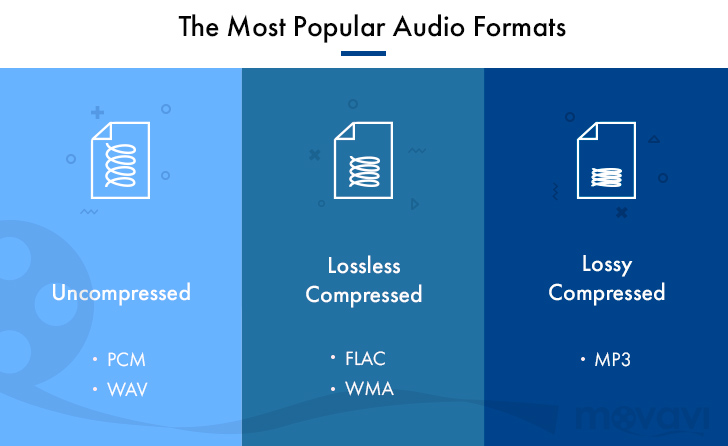
There are three groups of file formats:
uncompressed audio formats like WAV, AIFF, RAW (raw (unprocessed) measurements without any header or sync)
lossless compressed audio formats (APE, FLAC)
lossy compressed audio formats (MP3, AAC, Ogg, WMA (lossless version available))
Comparison of digital audio formats
Lossless data compression is a data compression method by which encoded data can be recovered unambiguously with bit precision. This type of compression is fundamentally different from lossy data compression.
When lossy compression is used, the decompressed data differs from the original, but the degree of difference is not significant from the point of view of its perception or later use. The advantage of lossy compression is that it allows a higher compression ratio with acceptable distortion. When using lossy compression, be aware that recompression tends to degrade quality. However, if the recompression is done using the same algorithm and without changes to the compressed data, the quality does not change. But in general, when editing the decoded data, it is advisable to save the original uncompressed (or compress without data loss).