Uncompressed audio formats


Free Download Mp4Gain
picture

Uncompressed audio formats

Uncompressed audio formats

Below, we list the various types of uncompressed linear audio formats. The first three are the ones that have become the main ones supported by most of today’s professional audio applications and are: audio swap file format :

-AIF, AIFF The audio exchange file format is of Apple (1985) origin and allows the storage of mono or multichannel samples of 8 or 16 bits and various sampling rates. Being a format designed to be portable, it can also be easily converted (as we will see, Microsoft RIFF is similar) and is therefore often used. Extensions RIFF WAVE :


-WAV Developed by Microsoft and IBM in 1992, the RIFF WAVE (whose full name is Resource Sharing File Format Waveform Audio Format) follows the specifications of the more general rich information file format. It was introduced starting with Windows 3.1 and quickly became the most popular format for PC applications. WAV files support various types of sampling: they are single or multi-channel, 8 or 16 bits at different sampling rates with various encoding systems, even if the most common are PCM and ADPCM. Extensions TRANSMISSION WAVE FORMAT (BWF) :

Uncompressed audio formats


-WAV It is an extension of the popular WAVE format and was created by the European Broadcasting Union (EBU) in 1997 and updated in 2001 and 2003. The purpose of this format is to add to the normal .WAV metadata format to facilitate the exchange of data between different platforms and different audio applications, allowing the files thus encoded to identify themselves autonomously and allow synchronization with other recordings. Since the only difference from “normal” WAVE files is in the extended information written in the file header area, the two formats are absolutely compatible and a particular player is not required for playback. In order to overcome the limitation on the maximum size of the WAVE file (2 Gb) in 2006, it was specified as an extension of the BWF l! RF-64, SD2 Sound Designer II Format SD2f file extension The Sound Designer 2 format is proprietary to Digidesign and is the evolution of the original Sound Designer 1 format, unlike which it structures the data so that all audio samples are stored in the file’s data fork and all parameters in place . resource holder. This is extremely convenient in files where the data fork can become hundreds of Mb and more, because it is possible to modify, add, cut the parameters of the audio file without having to modify the sample data, a feature that saves a lot of time, especially at a time when computers and hard drives were vastly smaller in capacity and slower in data processing and writing. It can also be monophonic or multichannel (interleaved), Sampling depth of up to 24 bits at different sampling frequencies of up to 192 KHz, as in the case of Pro Tools HD. It should be noted that in multitrack applications such as Pro Tools, the standard professional market software created for a DSP based card system, each track is recorded in a separate mono file, even for stereo or multi-channel tracks. In the case of a stereo track, the “split stereo” file is used, which consists of two monophonic files with the same name but with the two suffixes .L and .R (or in previous versions (L) and (R) ), that remain physically separated but that the application treats as a single stereophonic file, operating all the editing operations on both files simultaneously in perfect phase coherence; In native applications (ie fully dependent on CPU processing power), all those in practice outside of Pro Tools software (not Pro Tools LE or Pro Tools M-Powered who are also “native” even if they depend of specific Digidesign software or M-Audio production hardware), instead, the use of “interleaved” files is generalized, that is, stereo or multichannel files in which all the channels are stored in a single file. The stereo track is represented by a single file containing the two channels, which are “written” in blocks (first a number n of blocks from the left channel followed by an equal number n of blocks from the right channel, and so on). This type of file, created to dominate applications, used in multitrack applications still generates a bit of confusion, because although it is more practical (in theory) to be used within the native application, it needs to become a “split” file when imported into Pro Tools.


Free Download Mp4Gain
picture


Mp4Gain Main Window
picture


Mp4Gain Features
picture


Free Download Mp4Gain
picture

What is the difference between the different audio formats, and which one should I choose?

There are two types of sound quality: lossless and lossless. Lossless music preserves the sound quality of the original source – in most cases, CD – intact, on the other hand, lossy music compresses the file to save space (in exchange for decreasing quality). The following formats are included in lossless formats:

loseless formats

Formats WITHOUT loss of quality:

WAV and AIFF: Both are uncompressed formats, which are exact copies of the original sound source. The two formats have essentially the same quality; They simply store the data differently. AIFF was created by Apple – you’ll see it often in its products – but WAV is much more universal. However, since they are not compressed, they take up too much unnecessary space. Unless you’re editing sound, we don’t need to use this format.

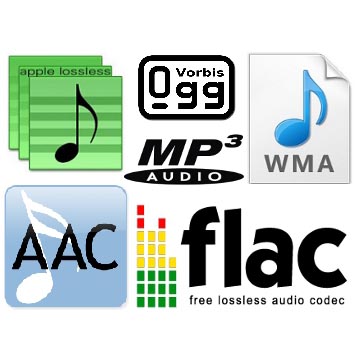
FLAC: Free lossless sound codec – Free Lossless Audio Codec (FLAC). It is the most used lossless codec, it is a good option if we seek to store our music without losing quality. Unlike WAV and AIFF, it uses compression, taking up less space. However, it is still a lossless format, which means that the sound quality is the same as the original source, so it is better to listen to than WAV and AIFF. It is also free and free software, which is useful if you like to take a look at how it works.

Apple lossless (Apple Lossless): Also known as ALAC, it is similar to FLAC. Use compression, although it is made by Apple. Its compression is not as efficient as that of FLAC, so the files will be a bit larger, but it is compatible with iTunes and iOS (FLAC not). Therefore, if you use iTunes or iOS as the main software for listening to music, you should choose this format.

APE: It is a file of very high compression without losses, which means that you will save more space. The quality is the same as FLAC, ALAC and other lossless files, but it is not compatible with most players. On the other hand, it makes the processor work harder to decode when it is so compressed. Generally, I would not recommend using this format unless you are very concerned about space and have a compatible player.

Formats with losses: MP3, AAC, OGG and more

MP3: MPEG Audio Layer III, or MP3 for short, is the most common lossy format. So much that it has become synonymous with music downloads on the internet. It is not the most efficient format of all, but it is undoubtedly the most compatible, making this the first option to choose between lost sounds.

AAC: Advanced Audio Coding, also known as AAC, is similar to MP3, although a bit more efficient. Which means that the files take up less space and with the same sound quality as MP3. And, with Apple’s iTunes making it so popular, it’s as compatible as MP3.

Ogg Vorbis: The Vorbis format, often known as Ogg Vorbis due to the use of the Ogg container, is the free software version to MP3 and AAC. Its main attraction is that it is not restricted by patents, but that does not affect you as a user – in fact, despite being open it is of similar quality, and much less popular than MP3 and AAC, so not all players support it . I do not recommend it unless you are interested in the fact of being open source.

WMA: Windows Media Audio. The proprietary format of Microsoft, similar to MP3 or AAC. It really offers no advantage over the other formats, and is not very well supported.

So which audio format should you use?

Now that we have seen the differences between each format, which one should we use for our music? In general, we recommend using MP3 or AAC. They are compatible with most players, and the quality of both is very similar to that of the original source if it is encoded with a high bit rate. Unless you have specific needs, MP3 and AAc are the most recommended options.

However, there is something to say to store music in lossless formats such as FLAC. Although we probably don’t notice a higher quality, it is good to store music if you plan to convert it to other formats later – since converting from one format with losses to another Lossy (eg, from AAC to MP3) will produce lower quality files. In that case we recommend FLAC. In addition, we can choose the lossless format we want, since converting between formats without losses does not degrade the quality of the file.

As a final conclusion, we can say that one should not become obsessed with the subject. We just have to be sure to choose something widely compatible, not convert between two formats with losses, and enjoy music.

An advantage is that Mp4Gain works with all these fromatos (and more) and you can convert from one to another, without problems or loss of quality, on the contrary, with tools like the Equalizer, you can improve the sound to your liking.