Digital audio storage methods

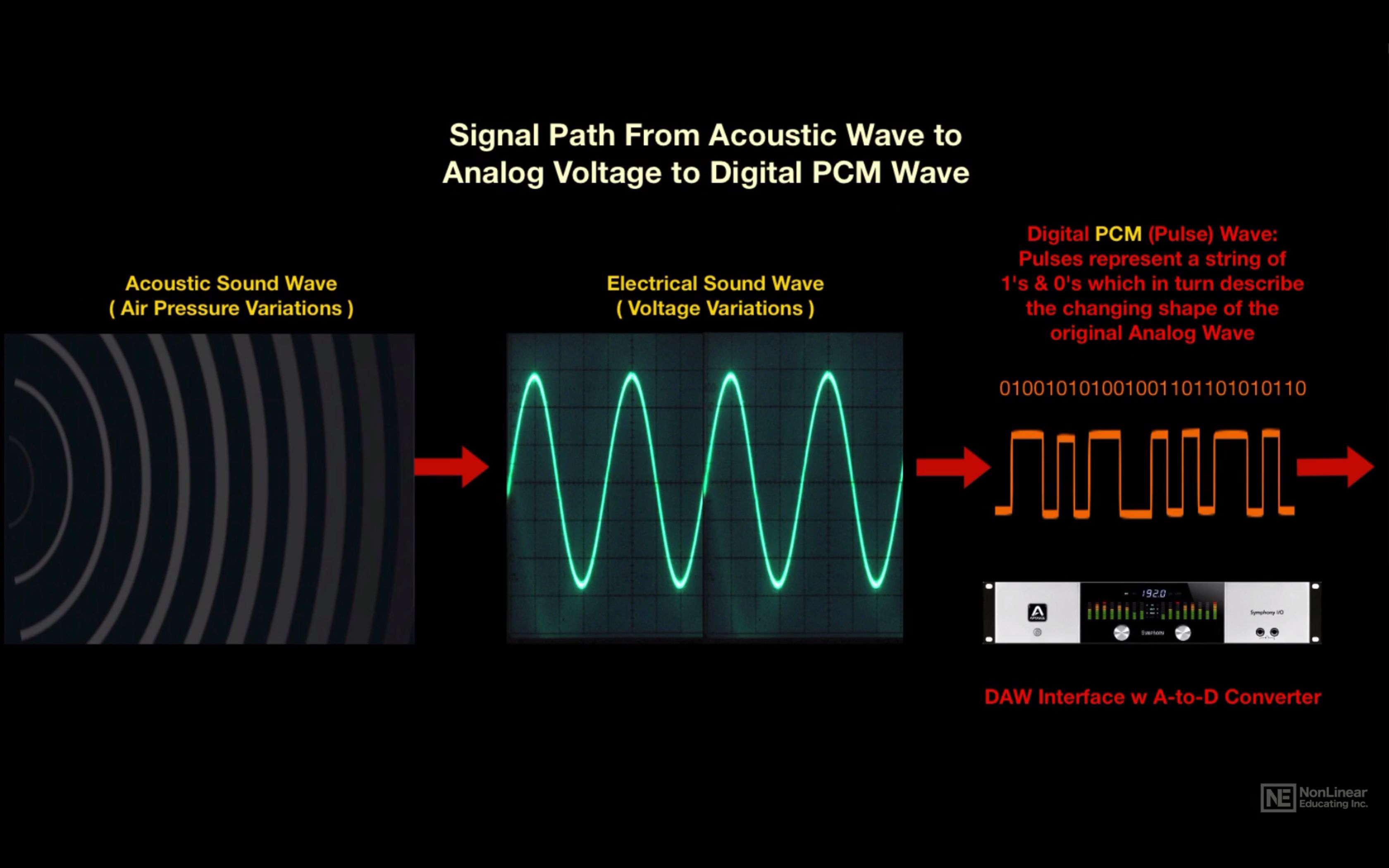
There are many different ways to store digital audio. As we said, digitized sound is a set of signal amplitude values taken at regular intervals. Thus, first, a block of digitized audio information can be written to a file “as is”, that is, a sequence of numbers (amplitude values). In this case, there are two ways to store information.
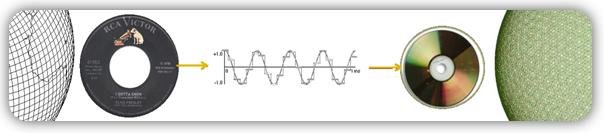
The first is PCM (Pulse Code Modulation), a method of digitally encoding a signal by recording the absolute values of the amplitudes (there are signed or unsigned representations). In this way, the data is recorded on all audio CDs.
The second method – ADPCM (Adaptive Delta PCM – adaptive relative pulse code modulation) – records signal values not at all, but in relative changes in amplitudes (increments). Second, you can compress or simplify the data so that it takes up less memory than when it was written “as is.” There are also two ways here.
Lossless Data Encoding (Lossless Encoding) – is an audio encoding method that enables data recovery from a fully compressed stream. This method of data compaction is used when it is essential to maintain the quality of the original data. For example, after mixing sound in a recording studio, the data should be saved to the file in its original quality for possible later use. Today’s lossless encoding algorithms (for example, Monkeys Audio) can reduce the volume of data occupied by 20-50%, but at the same time ensure one hundred percent recovery of the original data from the data obtained after compression. Such encoders are a kind of data archivers (such as ZIP, RAR and others), only designed for audio compression.
There is also a second encoding path, which we will dwell on in a little more detail, lossy data encoding (lossy encoding). The purpose of such encoding is to achieve the sound similarity of the reconstructed signal to the original by any means with the least possible amount of packed data. This is achieved through the use of various algorithms that “simplify” the original signal (eliminating “unnecessary” details for the hearing impaired), leading to the fact that the decoded signal is no longer identical to the original, but only sounds similar. There are many compression methods, as well as programs that implement these methods. The most famous are MPEG-1 Layer I, II, III (the latter is the well-known MP3), MPEG-2 AAC (advanced audio encoding), Ogg Vorbis, Windows Media Audio (WMA), TwinVQ (VQF), MPEGPlus, TAC and others. On average, the compression ratio provided by such encoders is in the range of 10-14 (times). It should be noted that at the heart of all lossy encoders is the use of the so-called psychoacoustic model, which is simply involved in “simplifying” the original signal. More precisely, the mechanism of such encoders analyzes the coded signal, in the process of which the signal sections are determined, in certain frequency regions of which there are nuances inaudible to the human ear (masked or inaudible frequencies), after which are removed. of the original signal. Therefore, the degree of compression of the original signal depends on the degree of its “simplification”; Strong compression is achieved by “aggressive simplification” (when the encoder “considers” various nuances unnecessary), such compression naturally leads to strong quality degradation, as not only imperceptible but also significant sound details can be removed .
As we said, there are a lot of modern lossy encoders. The most common format is MPEG-1 Layer III (known as MP3). The format gained its popularity quite deservedly: it was the first widespread codec of its kind, achieving such a high level of compression with excellent sound quality. Today, there are many alternatives to this codec, the choice is up to the user. Unfortunately, the scope of the article does not allow us to provide tests and comparisons of existing codecs here, however, the authors of the article will allow themselves to provide some information that is useful when choosing a codec.
So the advantages of MP3 are the widespread use and a fairly high encoding quality, which is objectively improved thanks to the development of various MP3 encoders by enthusiasts (for example, the Lame encoder). A powerful alternative to MP3 is the Microsoft Windows Media Audio codec (.WMA and .ASF files).







/bitstream-binary-5807f60f3df78cbc28b94614-a90cf1c6655b4a29b047234bfcdf9892.jpg)