What is the sample rate?
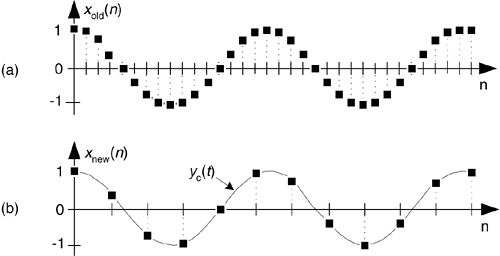
Frequency is defined as the number of cycles of periodic motion per unit of time. The SI unit of frequency is called hertz (Hz, after its inventor Heinrich Hertz). One hertz corresponds to one cycle (or complete oscillation) per second.

Example. Sound waves have a frequency in the range of approximately 20 to 20,000 Hz. This means that at any point along the path of the sound wave, the pressure will fluctuate from high to low, 20 to 20,000 times per second.
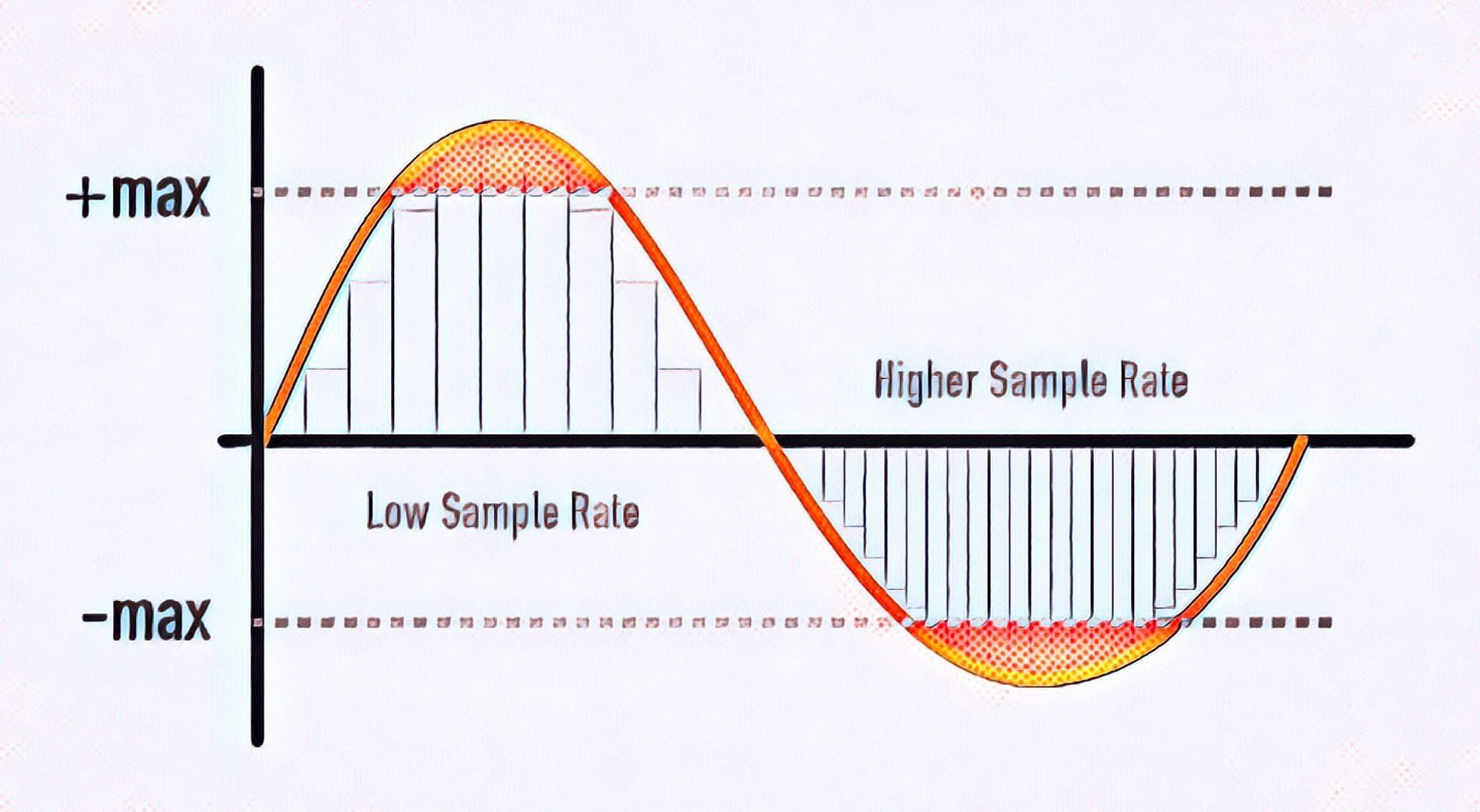
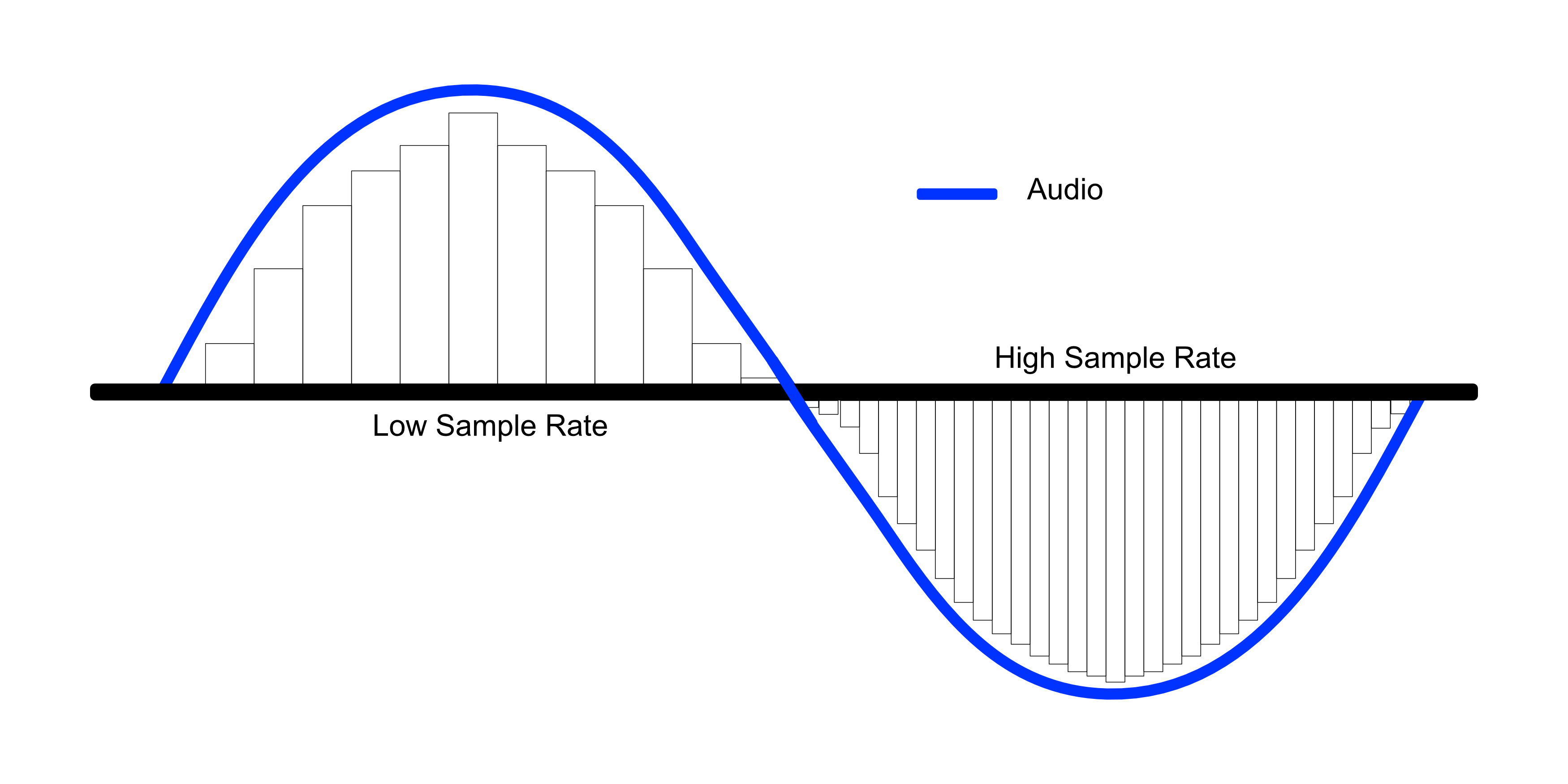
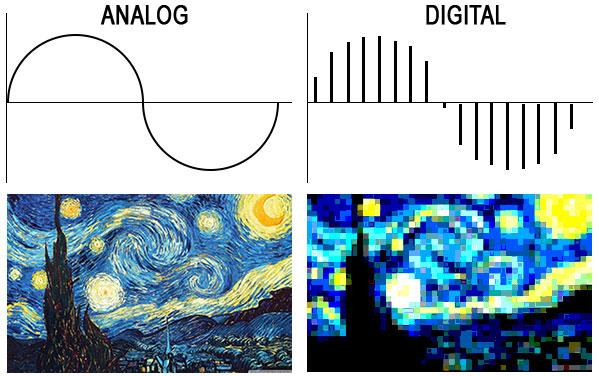
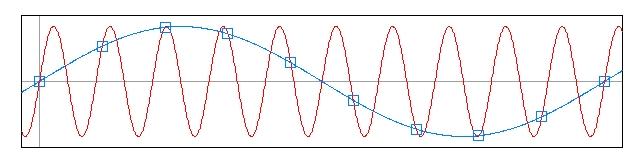
In digital audio, the maximum frequency that can be successfully recreated is half the sample rate. Therefore, with a sample rate of 44.1 kHz, frequencies up to 22.05 kHz can be recreated. Wave frequency refers to how many times per second a wave moves from its highest point to its lowest point and vice versa. It is usually measured in hertz (Hz) or cycles per second. The frequency of the wave determines its height. High-frequency waves have a high pitch, while lower frequencies have a lower pitch. The average person can hear frequencies from 15 or 20 Hz to about 20,000 Hz (20 kHz).
Analog wave The wave amplitude refers to half the distance between the highest point of the wave and the lowest point. The greater the amplitude of the wave, the greater its volume, which is generally measured in decibels (dB). The decibel range for human hearing is complex and depends on the frequency of the sound in question, the age of the person and the listening environment, but varies from approximately 0 to 120 dB, with each 10 dB change corresponding to a doubling of the perceived volume.
Absolute Threshold: ATH is the volume level at which a certain sound can be detected 50% of the time.
What is the bit rate?
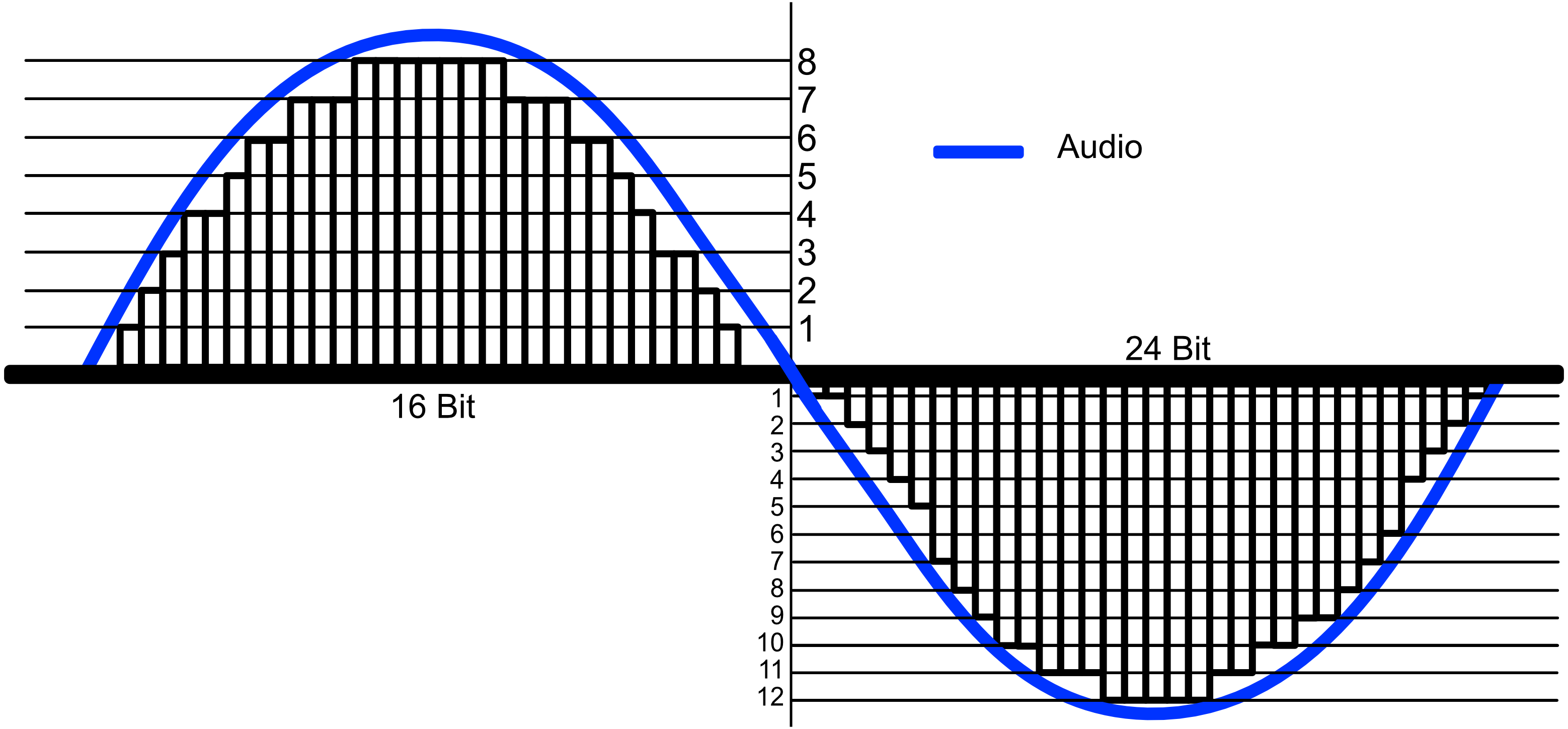
Bit rate refers to the data transfer rate (that is, how many bits are transmitted in a given time), generally expressed in bits per second. Common units of bit rate are kilobits per second (Kbps) and megabits per second (Mbps). The term is also commonly used when talking about digital sampling and sample rates. For example, the MP3 audio compression algorithm is often configured to output files at a bit rate of 128 kbps. This means that the file contains an average of 128 kilobits for every second of audio (960 KB per minute). This is in contrast to CD audio, which is encoded as 44,100 16-bit stereo samples per second: 1411.2 kbps (16-bit x 44100 Hz x 2ch).
Often times, bytes are written in uppercase and are multipliers (for example, “KB” for kilobytes) and lowercase factors are bits (for example, “kb” for kilobytes). All modern computers use 8-bit bytes.
MP3 bit rate
The MP3 bit rate can be misleading. For example, an MP3 “constant bit rate” (CBR) of 128 kbps will use approximately 128 kilobits for every second of encoded audio (so the file size in bits divided by the length of the audio is approximately 128,000), and Your frame headers will appear at regular intervals, but internally, frame-by-frame, you can encode audio at bit rates higher or lower than 128 kbps by using a bit pool (the ability of a frame to use spare bits from a previous block). However, the size of this bucket, and thus the amount of variability, is limited, so 128 kbps will be very close to the effective bit rate throughout the file.
See also: 8D surround sound and how to do it
As another example, “128 kbps VBR MP3” is often incorrect, as the purpose of VBR is to allow each of the internal MP3 sectors to have its own bit rate. When people refer to the VBR MP3 bit rate, they are generally referring to the actual average bit rate of their frames. If the length of the encoded audio is known, then the “bit rate” can be the data size of the file divided by its duration, which will be fairly close to the same number. However, the length of an MP3 VBR cannot be accurately determined without scanning all the frames.