TRUTHS ABOUT ANALOGUE VS. DIGITAL: VINYL VS. CD


Free Download Mp4Gain
picture

Experts report on the topic of analog vs. Digital
Analog vs Digital

Which is better: the vinyl record or the CD, analog or digital? Generations of music lovers argue on this topic, but so do self-proclaimed experts. At this point, I’d like to let some real experts in your field speak up: sound engineers or sound engineers, people who deal with the subject on a daily basis. Here are some truths about record technology and how it really came about.

Analog vs digital audio

ABOUT DISCS, CDS AND RECORDINGS
First of all, a short note that the question asked at the beginning cannot be answered in this way. On the one hand, it has to be structured from a technical point of view, and on the other hand, it makes no sense to seriously compare two fundamentally different systems. However, there are approaches by many music lovers to compare the end results as a sound carrier.
In the end, I would like to return to the fact that there are many obstacles, most of which you have no idea. First, however, I will let the experts express their opinion, who know much more about the subject than the consumers. And in doing so, amazing aspects come to light that mainly illuminate the development of a vinyl recording, right from the beginning!

“The analog vs. digital discussion has been with me for many years, to be precise since 1982. That was when the CD was introduced. There was probably no sound engineer at the time who was not relieved that the CD arrived. Because in almost all technical respects, digital recording, assuming reasonable sampling accuracy, is clearly better.

Let’s take the signal-to-noise ratio: with the LP, you can consider yourself lucky to achieve 50 dB, with the CD – 80 dB. Or the wow and flutter: with the LP, it’s enough that the center hole is a bit too large (but still within the norm!), And a clear egg can be heard. With CD: neither measurable nor audible. Or take the channel separation: with the LP maybe 30 dB, with the CD 80 dB. And so. The exception may be the frequency response, the CD cuts hard at 20 kHz, the LP comes out “soft” and transmits perhaps up to 30 or 40 kHz, but much quieter.

The fact that many listeners and, meanwhile, many sound professionals, from musicians to sound engineers / technicians / teachers, turn to the LP again, has aesthetic and fundamental reasons, also philosophical. And there are many good ones. Digital is, for example, B. much more manipulable. Up to 100 cuts were found on an analog recording, mostly less, rarely more. 500 cuts are not uncommon on CD. Pitch correction, velocity change, sound manipulation, post-processing of individual tracks, synthetic spaces or even natural spaces, but artificially added, etc. etc.

It is also digitally interchangeable. An LP is unique, due to supposedly damaging technical weaknesses like creak, eggs, and noise. But what does technical weakness really mean in something like art? Isn’t it rather an advantage that not everything is so smooth and reproducible and that you have to fight hard to get a good result? The “clinical, sterile” sound of the CD is often criticized, it is not the weakness of the CD, but that of the LP, only that this incorruptibility also means lack of life.

Digital also means zack – track 17 and zack – track 9, while LP first means holding record in hand (haptic!), Admiring the cover / maybe running fingers over it, carefully removing record ( music is vulnerable and precious!), the hanging ceremony, taking your time and listening. In contrast, digital: next door, in the car, without emotions and without love.

Still, I find it difficult to say that one is better than the other. Like many others, I feel at home in both worlds. Digital can be intoxicating and addictive (if done right), analog too, just completely different. When it comes to my TACET label, we are pursuing a twofold approach: Producing with fervor and devotion to satisfy LP listeners. And equally fascinated and enthusiastic, working in a completely different way, suitable for digital sound carriers. “


Free Download Mp4Gain
picture


Mp4Gain Main Window
picture


Mp4Gain Features
picture


Free Download Mp4Gain
picture

What is meant by analog and digital?

The terms “analog” and “digital” are used to distinguish two
large families of electronic circuits.

Analog and digital

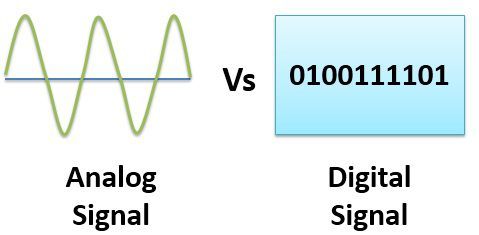
Analog circuits are those that handle signals that vary
continuously and must be reproduced as accurately as possible
possible. For example, a vocal amplifier is a typical device
fully analog in which the signal produced by the microphone
is processed and amplified but should not be modified in its
essential components to ensure “fidelity” of reproduction.

Analog Music in a Digital World

Digital circuits (from the English word “digit” which can be translated as
digit or number, and therefore are also called “numeric”),
instead, they deal with signals that can only have two states, usually indicated
by the numerical values ​​0 and 1, which in within the circuits correspond
two clearly differentiable signal values:
for example, 0 may correspond to a voltage
between 0 and 0.2 volts, while the value 1 at a voltage between 4.5 and 5 volts.
An element that can assume only two states represents a “bit” of information.
Most of the components of a common personal computer are made
with digital circuits.

In reality, many of today’s electronic devices
They adopt mixed technologies, part analog and part digital.
Consider, for example, a compact disc player. The sign that
represents the engraved piece is stored in the form typically
digital: a succession of microscopic areas that can be opaque
or reflective, each area corresponds to a value of 0 or 1 depending on whether
it is opaque or reflective.
The sequence of values ​​0/1 constitutes a digital representation
the acoustic signal, so the first part of the reproduction circuit
uses digital techniques.

To play the original sound,
the sequence of bits must first be transformed into an analog signal and this step is done
a particular circuit called a “digital / analog converter” that has
the purpose of translating the sequence of bits into an electrical signal
which is “Analogous” to the acoustic signal originally produced by the instruments
that played the piece that is being recorded.

Then the analog signal can be amplified (by a circuit
analog, of course) and sent to the speakers for playback
acoustics.

Rather, consider a
fully analog recording and playback system: a magnetic recorder.
In this case, the magnetic tape in the cassette “stores” the signal
acoustics in the form of variations in the intensity of magnetization,
that is, the intensity of
magnetization along the magnetic tape is proportional to the signal
original acoustics. In this sense, the trend of
magnetization is “analogous” to the trend of the acoustic signal.

The player simply transforms the variation in the magnetic field
“read” on tape in a “similar” variation of an electrical signal
which is then amplified and reproduced as an acoustic signal.

Analog – Digital

Analog  Digital

When we talk about the Internet and the current technological “machines” (mobile phone, camera, tablet, computer) we always speak of “digital” and, sometimes, we contrast this term with “analog”. But what exactly these words mean and what they refer to, many times we ignore, perhaps also because it is not relevant for us and is based on being able to use “digital” for what we need without investigating it so much.

Analog Digital

“Analog” and “digital” are terms that are constantly encountered when talking about technologies (old and new). In common sense, “analog” is associated with a meaning of “old” or “past” or “low quality”; “Digital”, on the other hand, is synonymous with “new” or “innovative” or “quality”. This common sense distinction is not true.
One thing to keep in mind when addressing these issues is that the definitions of the two terms are one thing (what do they mean, where do they come from, …) and the operational implications they have (because we use one and not the other, as the consequences, implications, results …). As if to say, one thing is the universal law of gravity (with which the sun also has to do) and another is to stay in the sun to warm up and tan.
Another thing to keep in mind is that everything that is under the Digital / Analog issue is not something of our days, its essence was not born with the advent of “new” technologies; here it is one of the oldest problems in human thought and refers to philosophical disquisitions and to the issue of “continuous” and “discrete” variables. But we won’t dwell on these.

As for the definitions. ..
First of all, we must bear in mind that when we talk about Analogue and Digital we refer to ways of representing the measure of a quantity (they are “attributes of a quantity”), to ways in which the quantities we are considering vary (such as a audio signal, a video signal, color,….).

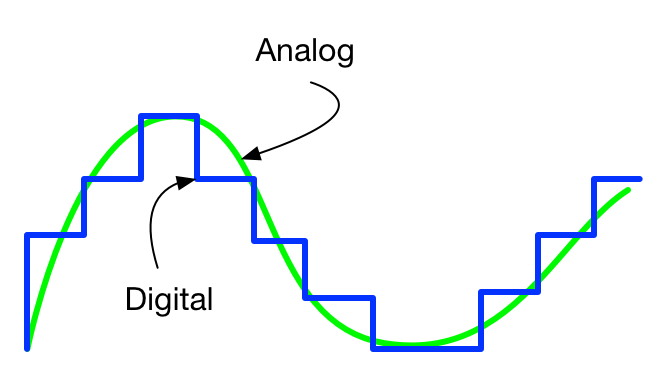
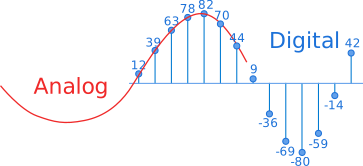
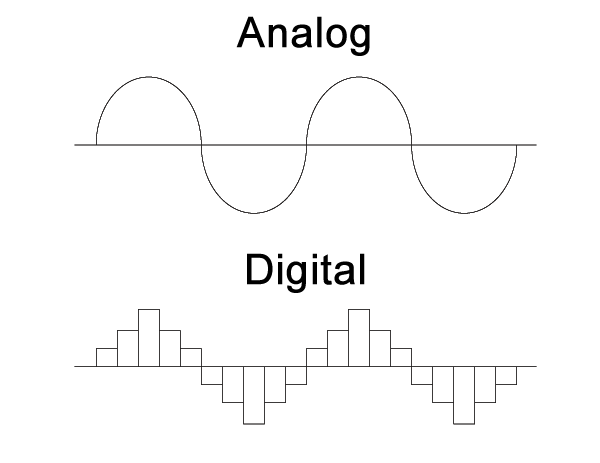
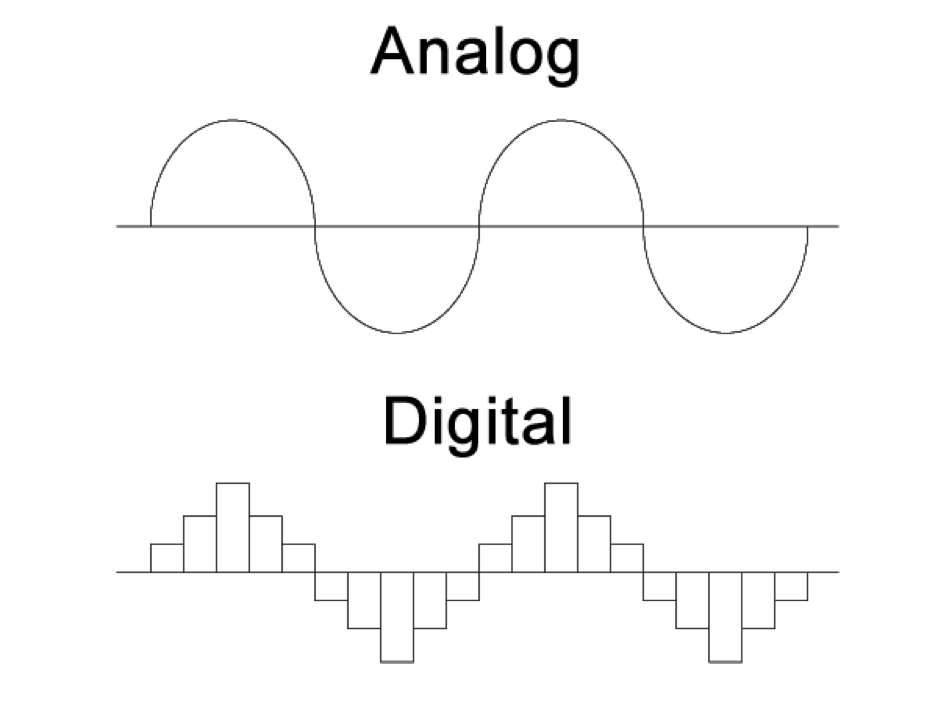
Analogous thing is a continuously varying quantity: an analog variable can take an infinite number of values ​​(for example, the distance between two points in space can take an infinite number of values).

Digital is a quantity that varies “step by step”: a digital variable can take only a finite number of values ​​(the duration of a day; for example, it can take only one of the 85,000 values ​​if we use the “second” unit, a of the 850 thousand values ​​if we use tenths of a second or one of the 8 million and 500 thousand if we use hundredths of a second; many possibilities but still finite, determined).

We can deduce that the concept of analog can be associated with a condition of continuity, that is, in a probable path something moves by changing its location through infinite positions and defining them as infinite we exclude the possibility of being able to number them.
With digital instead, the same path would be divided into stages (steps) and even if it is very small and numerous, it would always be possible to determine the amount.

Practice

Let us now turn to the practical implications of these two ways of representing physical quantities.
Until recently, all the data with which they organized audio or video recordings, static images, data transmissions such as radio, television, telephone were organized in the form of analog signals because the instruments that detected them “. The surfaces” on which they were recorded and the channels through which they were transported were mechanical and made specifically for that type of signal, in fact, they were the same as that signal.
Let’s think about color: the colors we see in a landscape are nothing more than a well-organized set of blue, red and green lights in their infinite shades; its representation through a photograph is based on the combination of blue, red and green pigments (therefore physical objects). We can say that the representation of a landscape through a photographic print is an analog representation of reality.

With the arrival of electronics (which has to do with physical quantities transformed and processed into electrical signals), physical quantities begin to be represented through electrical signals. Initially, these electrical signals were of the analog type (electronics that use continuous signals, signals that can assume an infinite range of possible values, that is, analog signals); later and a special type of signal has been used that can assume only some values ​​among the infinitely possible, in fact it can only assume two values: the presence or absence of the signal. If we look at the basic level of any computer application we will realize that we have a very long series of numbers “one” and “zero” where “one” is the presence of the signal and “zero” its absence.
This is “digital” electronics; digital because it uses signals that are not continuous but “in jumps”.