Analog or digital audio?


Free Download Mp4Gain
picture

Analog or digital audio?
Analog vs. Digital Audio

Mechanical, electromechanical, optical, and magnetic recording were originally analog recording methods: recording and reproducing sound vibrations in their natural form (waves).
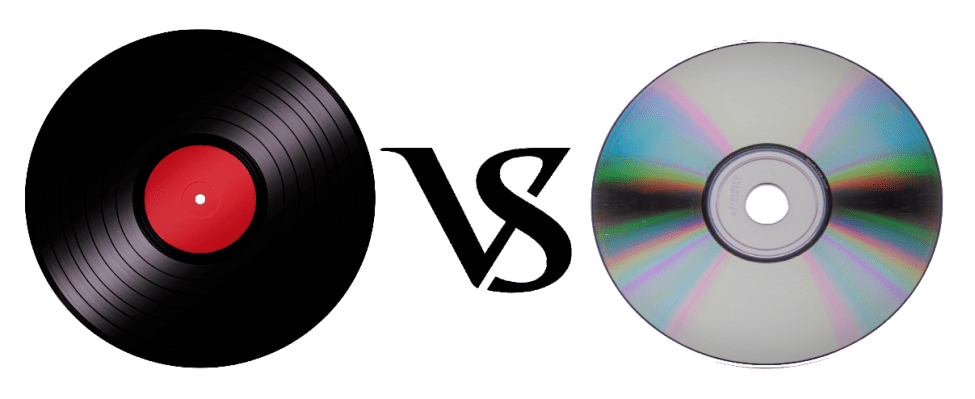
ANALOG vs. DIGITAL AUDIO

Many people believe that there is no better sound recording than analog. The warm analog sound of the magnetic tape is the standard of the best audio recordings for all mankind. Everyone from Elvis Presley and the Beatles to the latest electronic musicians have used and are using analog tape recording or emulation to create their music.

But analog recording is not the most accurate way to record sound. Rather the most beautiful. Analog sound is pleasant to the human ear due to the presence of “warm” harmonics, which are, in fact, distortions of sound. The most accurate sound recording principle today is digital recording.

The father of digital sound was 25-year-old Volodya Kotelnikov, who created it in 1933. The famous “report theorem” (also known as “Kotelnikov’s theorem” or “Nyquist-Shannon theorem). This theorem was the beginning of the creation of the principle of digitizing sound: encoding an audio signal into bits, that is, converting an analog signal into digital. It only took 49 years to create the CDs we know about. the world, it was only adopted in 1982.

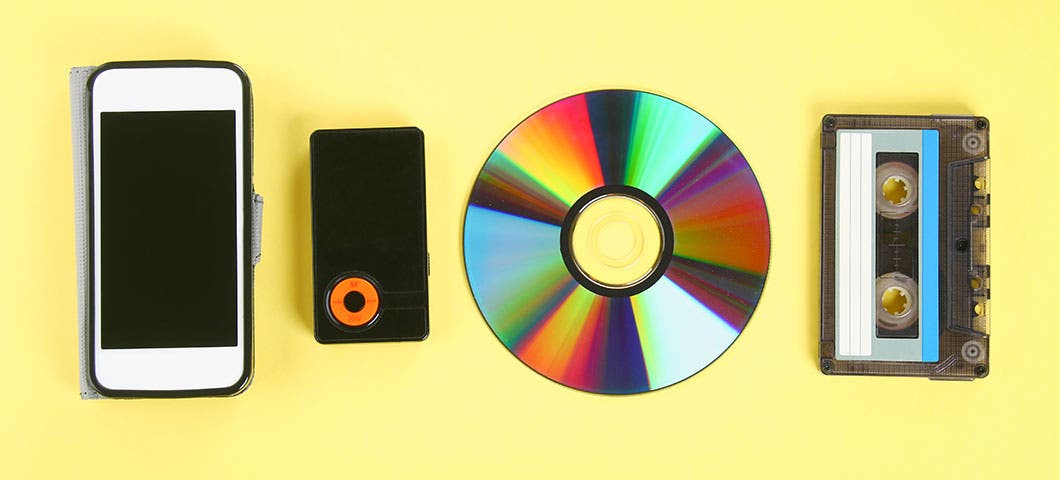
A complete list of the types of digital sound recording in use today is digital magnetic recording (format: DAT cassette), magneto-optical recording (miniDisc format), laser recording (CD, SACD formats), digital recording optical (dolby digital)

The development of computers and digital technology has opened up enormous possibilities for processing and recording sound. Huge analog studios with countless multi-kilogram recording equipment, consoles, and sound processors are being replaced by virtual studios that fit into the computer’s system unit.

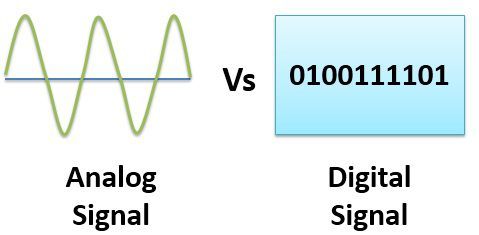
To process sound on a computer, it must first be recorded in digital, encoded format. The analog signal is encoded by an analog-to-digital converter (ADC). To play back the recording, you must reverse the digital-to-analog audio conversion using a digital-to-analog converter (DAC). The DAC and ADC are part of the computer sound card and other digital audio equipment. The quality of sound recording and playback is highly dependent on the quality of the DAC and ADC.

DAC and ADC

The main parameters of digital sound are sample rate and bit depth. Both the quality of the digitized sound and the size of the recorded file depend directly on them.

Sampling rate (sampling)

Analog recording begins by pressing the “record” button and ends by pressing the “stop” button. Digital recording is discreet. It consists of many recording fragments (samples) that follow one after another. The number of samples logged per second is the sample rate. It is calculated in hertz. The 44 100 Hz sampling rate (standard for CD) means that the audio signal is measured 44 100 times per second. The lower the sampling frequency, the smaller the frequency spectrum that is recorded. The higher the sampling frequency of the source material, the higher the quality and the larger the file size. When you talk on the phone, you only hear a small mid-range range. This is because the sample rate for phone calls is only 8,000 Hz. To transmit a range of frequencies that the average person’s ear hears and transmits home stereos: 40,000 Hz is sufficient. If the difference in sound quality between 32 and 44.1 kHz is obvious, then the higher the sampling frequency, the less perceptible or not at all perceptible to the ear the difference in quality between the two different frequencies will be. A higher sample rate describes sound more precisely, but at the same time describes those frequencies that the human ear can no longer hear, although changes in sound in the inaudible frequency range can still affect audible frequencies, so that studio recording is performed at a higher sample rate. Since consumer equipment is primarily designed to reproduce sound with a sample rate of 44.1 kHz, when the recording is ready, it is re-encoded to a generally accepted standard. If the difference in sound quality between 32 and 44.1 kHz is obvious, then the higher the sampling frequency, the less perceptible or not at all perceptible to the ear the difference in quality between the two different frequencies will be.


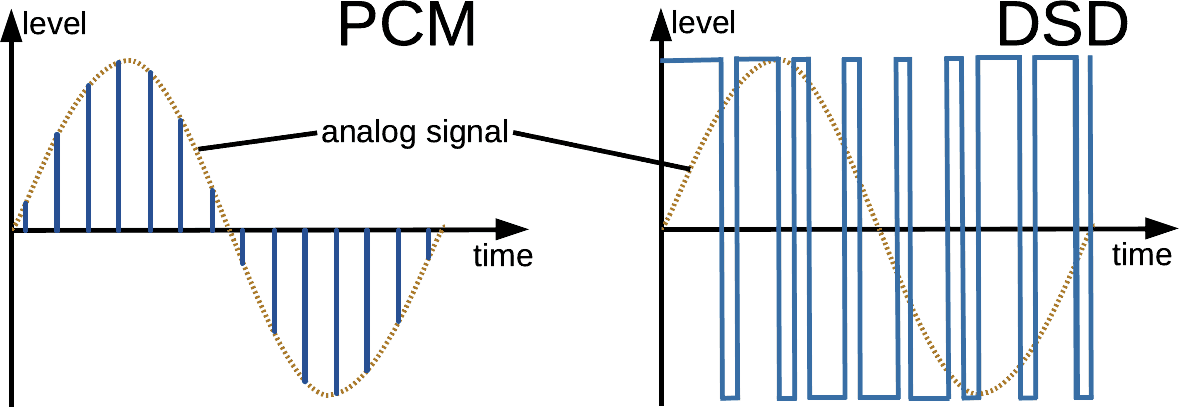
Free Download Mp4Gain
picture


Mp4Gain Main Window
picture


Mp4Gain Features
picture


Free Download Mp4Gain
picture

Analog Audio and Digital Audio

Analog Audio and Digital Audio

Analog vs Digital Audio

A sound wave is a kind of complex function, the dependence of the amplitude of a sound wave on time.

Analog Audio vs. Digital Audio

The information contained in the acoustic wave is not determined by the parameters of the medium in which the elastic wave propagates, and the oscillation parameters (amplitude and frequency, tone and harmonics).

Any form of recording (mechanical and Skye, magnetic, optical, laser) is based on the previous conversion of the sound wave into an alternating electrical current with the same parameters of the oscillations (via microphone).

Analog sound is represented on the device as a continuous electrical signal.

Sound quality depends on the fidelity of the waveform, which is very difficult to maintain.

Until 1982, the world was consuming “canned music” only from analog media: vinyl records and magnetic tapes.

Good vinyl records, played with good equipment, offered excellent sound quality, which unfortunately deteriorated a little with each listening due to mechanical wear as the stylus moved along the sound groove and into the dust that permeated everything.

Tape recorders required precision read heads and high tape feed speeds to reproduce smoothly. Over time, the tape demagnetized, the magnetic layer crumbled.

But the main disadvantage of analog audio recording is the inevitable loss of quality when copying.

The mystery of trigonometry

According to the theory of the mathematician Jean Baptiste Fourier, a sound wave can be represented as a spectrum of frequencies included in it.

The frequency components of the spectrum are sinusoidal oscillations (pure tones), each of which has its own amplitude and frequency.

According to Kotelnikov’s theorem, any vibration, even the most complex shape (for example, a human voice), can be recovered unambiguously and without loss from its discrete samples taken with a frequency equal to its doubled maximum frequency.

Vladimir Aleksandrovich Kotelnikov (1908-2005) – a prominent Soviet and Russian scientist in the field of radio engineering, radiocommunication and radio astronomy.

Observation . The finite duration signal has an infinitely wide spectrum. Therefore, when a signal with a finite duration is sampled, it is impossible to recover it from the samples without loss of quality.

Digitization of audio information

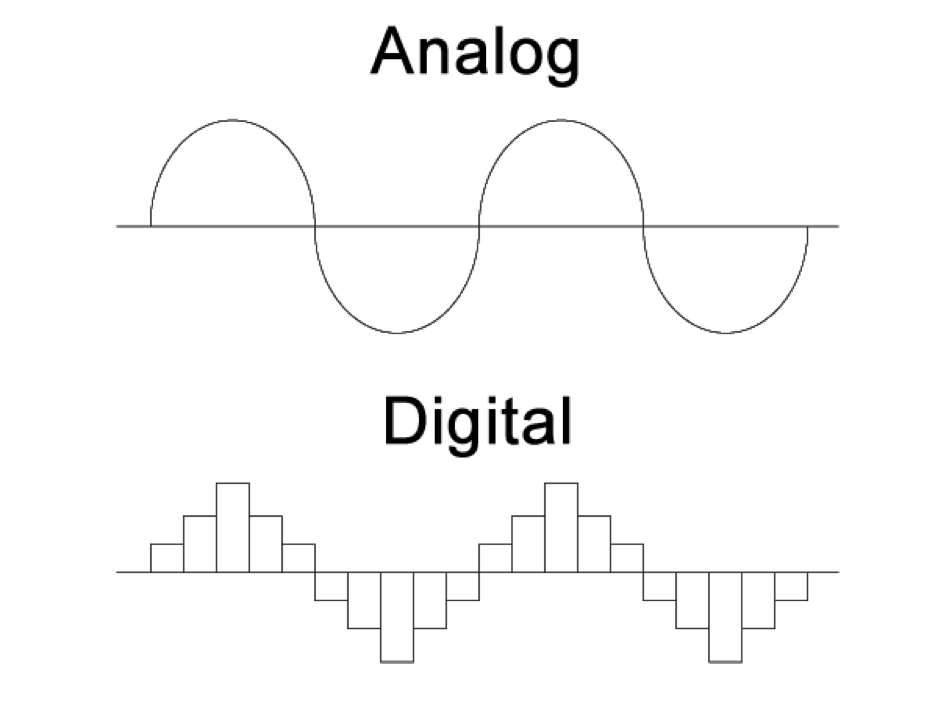
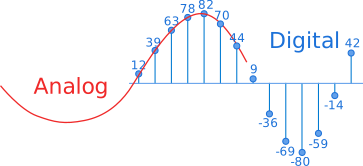
The digitization of sound is the recording of the amplitude of the signal at certain intervals and the recording of the amplitude values ​​obtained in the form of rounded digital values.
Any computer includes a motherboard, an audio adapter (sound card).

Sound cards include: ADC (analog to digital converter), synthesizer, mixer, DAC (digital to analog converter) amplifier s, MIDI interface port for gaming devices.

To record digital sound, the ADC produces:

temporal sampling of a continuous signal (determines the value of the amplitude of the signal with the frequency necessary to recreate its original shape = twice the maximum frequency of the sound wave);

quantization by the levels of the measured signal values ​​(determines the number of fixed values ​​(levels, gradations) of the amplitude of the signal);

signal coding (writing in a binary number system).

The reverse operation is performed by the DAC (digital to analog converter).

Bitrate

Bit rate (bit rate): literally bits of information of the transmission rate.

The bit rate is the effective information transmission rate through the channel (the transmission rate of “useful information”, in addition to the service information) expressed in kilobits per second (kilobits per second, kbps).

In lossy compression video and audio transmission formats, the bit rate parameter expresses the degree of compression of the stream and thus determines the size of the channel for which the data stream is compressed.

P-mode compression data stream:

with constant bit rate (constant bit rate, CBR) – The required bit rate is initially set, which does not change throughout the file. It makes it possible to predict the final file size quite accurately, but it does not provide an optimal size / quality ratio for musical works, the sound of which changes dynamically over time.

with variable bit rate (VBR): the codec changes the value of the bit rate based on the desired quality level according to the psychoacoustic model. It offers the best quality of the output file, but its size is unpredictable (it may differ several times).

with an average bit rate (ABR): a hybrid of constant and variable bit rates: the user sets the bit rate in kbit / s and the program varies it within certain limits.

TRUTHS ABOUT ANALOGUE VS. DIGITAL: VINYL VS. CD

Experts report on the topic of analog vs. Digital

Analog vs Digital

Which is better: the vinyl record or the CD, analog or digital? Generations of music lovers argue on this topic, but so do self-proclaimed experts. At this point, I’d like to let some real experts in your field speak up: sound engineers or sound engineers, people who deal with the subject on a daily basis. Here are some truths about record technology and how it really came about.

Analog vs digital audio

ABOUT DISCS, CDS AND RECORDINGS
First of all, a short note that the question asked at the beginning cannot be answered in this way. On the one hand, it has to be structured from a technical point of view, and on the other hand, it makes no sense to seriously compare two fundamentally different systems. However, there are approaches by many music lovers to compare the end results as a sound carrier.
In the end, I would like to return to the fact that there are many obstacles, most of which you have no idea. First, however, I will let the experts express their opinion, who know much more about the subject than the consumers. And in doing so, amazing aspects come to light that mainly illuminate the development of a vinyl recording, right from the beginning!

“The analog vs. digital discussion has been with me for many years, to be precise since 1982. That was when the CD was introduced. There was probably no sound engineer at the time who was not relieved that the CD arrived. Because in almost all technical respects, digital recording, assuming reasonable sampling accuracy, is clearly better.

Let’s take the signal-to-noise ratio: with the LP, you can consider yourself lucky to achieve 50 dB, with the CD – 80 dB. Or the wow and flutter: with the LP, it’s enough that the center hole is a bit too large (but still within the norm!), And a clear egg can be heard. With CD: neither measurable nor audible. Or take the channel separation: with the LP maybe 30 dB, with the CD 80 dB. And so. The exception may be the frequency response, the CD cuts hard at 20 kHz, the LP comes out “soft” and transmits perhaps up to 30 or 40 kHz, but much quieter.

The fact that many listeners and, meanwhile, many sound professionals, from musicians to sound engineers / technicians / teachers, turn to the LP again, has aesthetic and fundamental reasons, also philosophical. And there are many good ones. Digital is, for example, B. much more manipulable. Up to 100 cuts were found on an analog recording, mostly less, rarely more. 500 cuts are not uncommon on CD. Pitch correction, velocity change, sound manipulation, post-processing of individual tracks, synthetic spaces or even natural spaces, but artificially added, etc. etc.

It is also digitally interchangeable. An LP is unique, due to supposedly damaging technical weaknesses like creak, eggs, and noise. But what does technical weakness really mean in something like art? Isn’t it rather an advantage that not everything is so smooth and reproducible and that you have to fight hard to get a good result? The “clinical, sterile” sound of the CD is often criticized, it is not the weakness of the CD, but that of the LP, only that this incorruptibility also means lack of life.

Digital also means zack – track 17 and zack – track 9, while LP first means holding record in hand (haptic!), Admiring the cover / maybe running fingers over it, carefully removing record ( music is vulnerable and precious!), the hanging ceremony, taking your time and listening. In contrast, digital: next door, in the car, without emotions and without love.

Still, I find it difficult to say that one is better than the other. Like many others, I feel at home in both worlds. Digital can be intoxicating and addictive (if done right), analog too, just completely different. When it comes to my TACET label, we are pursuing a twofold approach: Producing with fervor and devotion to satisfy LP listeners. And equally fascinated and enthusiastic, working in a completely different way, suitable for digital sound carriers. “

Analog vs. Digital: Does vinyl sound better?

Music stored on vinyl is making a big comeback. The question of whether CDs, files, or music saved on vinyl sound “better” divides music fans. Sometimes the feeling arises that the toughest commentary battles on the web take place not between political camps, but between listeners of analog and digital music.

Analogversus Digital

It’s a shame, because almost everyone involved in these battles, which were fought with incredible vehemence, are united by their love of music. They belong to the minority of those who spend a lot of money on music, regardless of the medium they prefer. This battle is completely unnecessary and is mainly based on a misunderstanding or two different interpretations of what “good sound” means.

Analog vs Digital

“Good sound”: one expression, two meanings

Some say that something “sounds good” when the sound suits them. That is the musician’s point of view. A good example of this is the sound of a distorted electric guitar, a constituent element of rock music. It originated from the fact that a guitar amp was so loud that the actual sound of the guitar was destroyed beyond recognition by the overdriven amp. The result no longer sounds like a guitar, but the sound has been and continues to be liked by millions of people because it just “sounds good.”

Distorted but pleasing to the ears: the sound of a classic rock guitar.

Others use the term “good sound” as a synonym for “high fidelity,” meaning the most realistic reproduction of what the sound engineer heard when mixing a recording in the studio. This is what we call “high fidelity”.
By this definition, “good sound” means, at best, that the playback chain does not sound at all and that the sound changes as little as possible on its way from recording to playback. It’s called “High Fidelity”, not “Perfect Fidelity” because there can only be an approximation of the original sound.
And it is precisely this point that is the axis of the whole discussion. Logs were never a particularly good medium for hi-fi, but for decades they were the best medium that end users had access to. Until the CD arrived.

In terms of measurement technology, the record falls short
If one compares the CD and the disc under the criteria of “high fidelity”, the disc not only drops the straw, but is completely outperformed by the CD in terms of all the relevant criteria. Here are some examples.
Dynamic is the difference between the softest and loudest sound of a piece of music. While all digital media, including MP3, easily go up to 90 dB and can therefore even map the dynamic range of a large symphony orchestra, in practice the record barely achieves more than 40 dB. Enough for pop music, but even a well-received little jazz band like the one in our sound sample becomes a problem for the record. In quiet places, typical vinyl noise would be clearly audible.

Speaking of background noise: Typical vinyl noise, low-frequency rumble, and creaking caused by dust grains in the groove are also noticeable because they occur unevenly. The noise from a compact cassette is more constant, so the brain can filter it better. Digital recordings are virtually noise-free.
To present the purest music possible, all frequencies in the audible spectrum between 20 Hz and 20 kilohertz should be played at the same volume. With digital media, the frequency responses appear to have been drawn with a ruler. As a general rule of thumb, registers can linearly reproduce frequencies up to a maximum of 12 kilohertz and this only applies to the outermost slots at the beginning of a page. Due to the slowing down of the path speed towards the end of the groove, the highest transmission frequency drops more and more during the playing time of a disc, which, by the way, can be heard clearly. For the lower end of the spectrum, the deeper and louder the bass, the more space it needs in the groove, shortening the possible playing time. With LPs, you always have to find a compromise between bass level and playing time.

An important measure of the fidelity of a reproduction medium to sound is the distortion that is added to actual music. Especially in the low range, the register reaches values ​​that significantly change the original signal.
In principle, a pick-up system works like a microphone. Converts mechanical energy into electrical energy. This mechanical energy comes not only from the grooves of the record, but also from the sound of the speakers. The louder you listen to the music from the turntable, the more feedback you will hear. And feedback blurs impulses in music, like the sound of drums. At home with moderate volume it is more likely to be neglected, at a club not.
Thanks to these (and a few other) technical shortcomings, the record doesn’t even meet the requirements of the traditional DIN No. 45500 standard on all points, which has defined the official hi-fi standard since the 1960s.

Don’t die: rumors about digital technology

On the contrary, rumors and false statements about digital technology are still circulating, for which the problems of the beginnings of the compact disc and the blatant misunderstandings about how digitization works are responsible.
Over and over again you can read that digital technology covers a smaller frequency range than analog. That’s actually true in theory, because CDs, for example, are limited to the range between 20 Hertz and 20 Kilohertz with filters.
However, on the one hand this is exactly the range that our hearing can cover in principle, and on the other hand it is pure theory that analog technology can represent a higher frequency range. In practice, for example, the cutting tools with which music is scraped into the matrices that vinyl is made of, heat up very quickly to high frequencies with a high level and thus limit the frequency response upward.
Friends of analog music storage like to deny digital technology the ability to display music correctly and that’s because of the discrete sampling. The waves that make up sounds are continuous events, whereas computers know only discrete states. The popular misunderstanding is that you can never fully capture the airwaves. After digitization, the waveforms would no longer be round, but staggered. But that is not right. The Niyquist-Shannon sampling theorem clearly states that the original signal can be restored exactly and not just roughly.
If all these facts are true and the record is so hopelessly inferior to the CD, why do so many people claim that the record “sounds better”?