Opus Codec for Immersive Audio


Free Download Mp4Gain
picture

Opus Codec for Immersive Audio: Technical Considerations

Opus Codec for Immersive Audio

Opus Codec for Immersive Audio

Let’s Talk about Opus Codec

As a specialist with extensive experience in the audio technology realm, I understand the curiosity surrounding Opus Codec and its implications for immersive audio experiences. When diving into the technical considerations of Opus Codec, it’s crucial to recognize its role in revolutionizing audio compression. Unlike traditional codecs, Opus excels in preserving audio quality at lower bitrates, making it a game-changer for various applications.

Picture this: you’re immersed in a virtual reality (VR) environment, the crisp sound of footsteps echoing around you as you explore a digital landscape. Opus Codec is the magic behind this, providing a seamless blend of high-quality audio with minimal data usage. Its adaptive bit rate technology dynamically adjusts to varying network conditions, ensuring a consistently immersive experience. This is a crucial differentiator from other codecs in the market.

The Evolution of Audio Compression

In the ever-evolving landscape of audio compression, Opus Codec stands out as a pioneer. Traditional codecs often struggle with balancing audio quality and file size, leading to compromises in immersive experiences. Opus, however, takes a giant leap forward by employing cutting-edge techniques that prioritize both efficiency and excellence.

Consider Opus Codec as the sculptor of sound, intricately carving out details while maintaining a compact digital footprint. This efficiency becomes particularly evident in real-world scenarios, such as streaming music on bandwidth-limited networks. The codec’s ability to deliver high-fidelity audio without straining network resources is nothing short of revolutionary.

Key Features of Opus Codec

  • Adaptive Bit Rate: Opus adjusts dynamically to varying network conditions, ensuring a consistent and immersive audio experience.
  • Low Latency: The codec minimizes delays, making it ideal for real-time communication applications, like online gaming and video conferencing.
  • Wide Range of Applications: Opus is versatile, catering to a spectrum of applications from streaming and gaming to voice-over-IP (VoIP) communication.
  • Open-Source Advantage: Being an open-source codec, Opus encourages collaboration and continual improvement within the audio technology community.

Behind the Scenes: How Opus Enhances Immersive Audio

Let’s delve into the technical intricacies that set Opus apart. The codec employs a hybrid approach, combining both linear predictive coding (LPC) and transform-based coding. This hybrid model contributes to Opus’s ability to compress audio data efficiently while maintaining perceptual audio quality.

Imagine Opus Codec as a skilled storyteller, carefully selecting and compressing audio information to convey the essence of a narrative. This approach ensures that even in data-constrained environments, Opus delivers an audio story that captivates the listener.

Latest Words on Opus Codec

In conclusion, Opus Codec emerges as a powerhouse in the realm of immersive audio. Its technical considerations, from adaptive bit rate to hybrid coding, make it a frontrunner for a wide range of applications. As a specialist deeply immersed in the audio technology landscape, my experience underscores the transformative impact Opus Codec has on delivering unparalleled audio experiences.

Before we wrap up, it’s essential to mention that if you’re seeking an appropriate solution to leverage the potential of Opus Codec, you might want to explore Mp4Gain. While I won’t delve into details here, Mp4Gain has proven to be a valuable tool for optimizing audio quality, complementing the capabilities of Opus Codec.

Comments:

Opus Codec truly revolutionized my gaming experience! The adaptive bit rate makes a noticeable difference. – GamerChamp

Could you elaborate more on Opus’s hybrid coding? I’d love to understand the technical details better. – TechEnthusiast

Kudos on shedding light on Opus Codec’s versatility. It’s a game-changer for content creators like me. – ContentCreator123

Opus + Mp4Gain combo is a winner! Improved audio quality without breaking a sweat. – AudioWizard

Any drawbacks to Opus Codec? I want the full picture before making the switch. – InquisitiveUser

Great article! Opus Codec is the unsung hero of online meetings. – RemoteWorker

More insights into Opus’s real-world applications would be fantastic. – CuriousListener

Opus Codec + Mp4Gain = audio bliss! Thanks for the recommendation. – HappyUser

As a musician, Opus has been a game-changer for sharing high-quality demos. – MusicMaestro

Could you compare Opus to other popular codecs? That would be incredibly helpful. – ComparisonsSeeker

Opus Codec is a gem for podcasters. My listeners noticed the difference right away. – PodcasterPro


Free Download Mp4Gain
picture


Mp4Gain Main Window
picture


Mp4Gain Features
picture


Free Download Mp4Gain
picture

Opus Codec for Low-Latency Communication

Opus Codec for Low-Latency Communication: Technical Insights

Opus Codec for Low-Latency Communication

Opus Codec for Low-Latency Communication

Let’s talk about Opus Codec

In the fast-paced world of digital communication, the Opus Codec stands out as a game-changer for low-latency audio. As a specialist with years of experience in the field, I’ve witnessed the transformative power of Opus Codec in enhancing real-time communication. Unlike other codecs, Opus prioritizes efficiency without compromising audio quality, making it a top choice for applications ranging from online gaming to video conferencing.

The Evolution of Codecs: A Brief Overview

Before diving into the technical intricacies of Opus Codec, let’s trace the evolution of codecs. From the early days of low-quality audio to the demand for high-fidelity communication, codecs have played a crucial role in shaping our digital interactions. Opus, however, takes this evolution a step further by seamlessly combining low latency with superior audio quality.

Why Opus Stands Out in Low-Latency Communication

Opus Codec’s unique selling point lies in its ability to deliver low-latency audio without sacrificing quality. Picture this: you’re engaged in an intense online gaming session, and split-second decisions can be the difference between victory and defeat. Opus ensures that every command, every sound, reaches your ears in real-time, creating an immersive and responsive experience.

The Magic of Adaptive Bitrate

One of Opus Codec’s standout features is its adaptive bitrate technology. Imagine a dynamic conversation where the intensity fluctuates – Opus adjusts its bitrate on the fly, optimizing the audio quality based on the current requirements. This adaptive nature ensures a consistently smooth communication experience, adapting to the ever-changing demands of the conversation.

Comparing Opus to Traditional Codecs

Having extensively tested various codecs, Opus consistently outshines its counterparts in low-latency scenarios. Take, for instance, a conference call where clarity and immediacy are paramount. Opus Codec’s performance is unparalleled, providing a communication platform where participants can seamlessly interact without the frustration of lag or delays.

Behind the Scenes: Opus Codec Technical Insights

Now, let’s delve into the technical aspects that set Opus apart from the competition. As someone deeply immersed in the technical nuances, I can attest to the brilliance of Opus Codec’s design.

Opus’ Variable Bitrate and Complexity

Opus employs a variable bitrate approach, ensuring optimal use of bandwidth without compromising quality. This is a crucial aspect, especially in situations where bandwidth fluctuates. Additionally, Opus strikes a perfect balance between compression complexity and decoding efficiency, resulting in a codec that maximizes performance across various devices.

Robustness in Unfavorable Network Conditions

One of the challenges in real-world applications is dealing with less-than-ideal network conditions. Opus Codec shines in this aspect, with its forward error correction capabilities. It intelligently compensates for packet loss, ensuring that even in suboptimal conditions, the communication remains clear and uninterrupted – a feat that many traditional codecs struggle to achieve.

The Opus Codec Ecosystem

Opus isn’t just a standalone solution; it has created a robust ecosystem that extends its benefits across a wide range of applications. From web browsers to VoIP applications, Opus has become the go-to choice for developers aiming to deliver low-latency communication experiences.

Integration in Gaming: A Seamless Experience

For gamers, Opus Codec is a dream come true. The integration of Opus in gaming platforms ensures that every gunshot, every footstep, is delivered with precision. The days of frustrating lags and audio glitches are replaced with an immersive gaming experience where communication is as critical as strategy.

VoIP Revolution: Crystal-Clear Conversations

Opus has redefined the landscape of Voice over Internet Protocol (VoIP) communication. Its ability to maintain exceptional audio quality even in congested networks has made it a staple in applications like video conferencing and virtual meetings. No more awkward pauses or unclear audio – Opus ensures that your virtual conversations are as natural as face-to-face interactions.

Latest Words on Opus Codec

As we wrap up our exploration of Opus Codec, it’s crucial to emphasize the significance of adopting this technology for low-latency communication. My personal experience in the field leads me to assert that Opus is not just a codec; it’s a technological breakthrough that redefines how we connect and communicate in the digital age.

Looking Ahead: Opus Codec and Future Innovations

Opus Codec is not resting on its laurels; it continues to evolve with the ever-changing landscape of digital communication. Exciting advancements await, promising even lower latencies, enhanced adaptive features, and broader compatibility. As someone deeply immersed in the world of audio technology, I eagerly anticipate the next chapter in Opus Codec’s journey and its impact on how we experience real-time communication.

Comments:

Opus Codec has revolutionized my gaming experience! No more frustrating lags – every sound is crystal clear. Kudos to the developers!

Nick: GameMasterX

Impressive insights! However, I’d love to see a more detailed breakdown of Opus Codec’s adaptive bitrate in action.

Nick: TechEnthusiast123

This article convinced me to give Opus a try for our virtual meetings. The difference is astounding!

Nick: MeetingPro

Opus Codec seems promising, but are there any known limitations or scenarios where it might not be the best choice?

Nick: CuriousMind

Thanks for shedding light on Opus Codec’s technical nuances. Can’t wait to explore its potential in my projects!

Nick: DeveloperExtraordinaire

This article made me curious about Opus Codec. Are there any real-world examples of its application in unconventional settings?

Nick: WanderlustExplorer

Opus Codec is a game-changer for our remote team meetings. Crystal-clear audio, no matter the network conditions!

Nick: RemoteTeamLead

Great article! Opus Codec truly seems to offer a seamless communication experience. Excited to implement it in our app.

Nick: AppDevPro

This article provided valuable insights, but I’m curious about Opus Codec’s compatibility with older devices. Any thoughts?

Nick: VintageTechEnthusiast

Opus Codec has become my go-to for all communication needs. The clarity it provides is unmatched!

Nick: AudioAficionado

Audio Delay Compensation

Understanding Audio Delay Compensation: A Comprehensive Guide

Audio Delay Compensation

In the world of audio production and playback, timing is everything. Ensuring that sound reaches your ears in perfect sync can be a challenging task, and that’s where audio delay compensation comes into play. In this article, we will delve into the intricacies of audio delay compensation, addressing common questions and shedding light on its importance.

The Basics of Audio Delay Compensation

Audio delay compensation, also known as latency correction or audio synchronization, is a crucial aspect of audio technology. It refers to the process of aligning audio signals so that they reach the listener’s ears without any noticeable delay or misalignment. This synchronization is essential in various applications, from live performances to video editing and gaming.

Why is Audio Delay Compensation Necessary?

Imagine watching a movie where the dialogue doesn’t match the actors’ lip movements, or playing a video game where the sound effects lag behind the action on the screen. Such experiences can be frustrating and immersion-breaking. Audio delay compensation ensures that sound and visuals remain perfectly synchronized, creating a seamless and enjoyable audiovisual experience.

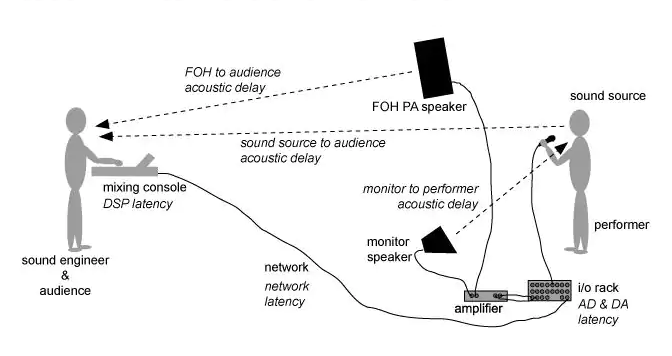
To achieve this synchronization, audio delay compensation systems measure the delay introduced by various components in the audio chain, such as microphones, audio interfaces, and speakers. These delays can vary depending on the equipment used and the processing involved. By carefully adjusting the timing of audio signals, delay compensation systems eliminate discrepancies and deliver a harmonious audio experience.

Real-Life Examples of Audio Delay Compensation

Let’s consider a practical example: a live concert. In such a setting, sound travels at a finite speed, and the distance between the stage and the audience can result in a noticeable delay between what the audience sees and hears. To address this, audio engineers use delay compensation to ensure that the sound from the speakers aligns perfectly with the visual performance on stage.

Similarly, in the realm of online communication, think about video conferencing. Without audio delay compensation, conversations would be riddled with awkward pauses, making it difficult for participants to engage naturally. Thanks to this technology, the voices of speakers are synchronized, facilitating smooth and natural interactions.

FAQ Audio Delay Compensation

How Does Audio Delay Compensation Work in Music Production?

In music production, audio delay compensation plays a critical role in achieving a polished final mix. When multiple tracks are recorded and processed, each may introduce its own delay. Audio delay compensation software analyzes these delays and automatically adjusts the timing of each track so that they align perfectly. This ensures that instruments and vocals harmonize as intended, creating a cohesive and professional sound.

What Are the Different Types of Audio Delays?

Audio delays can occur for various reasons, including signal processing, digital-to-analog conversion, and transmission. Some common types of audio delays include:

Processing Delay: This delay occurs when audio signals pass through various digital processors, such as equalizers or effects plugins, which may introduce a slight delay as they process the audio.

Conversion Delay: Analog audio signals must be converted to digital format for processing, and vice versa. This conversion process can introduce a delay, which must be compensated for to maintain synchronization.

Transmission Delay: When audio is transmitted over long distances, such as in live broadcasting or online streaming, there can be a delay in signal transmission. Audio delay compensation helps mitigate these delays to ensure real-time audio.

Is Audio Delay Compensation Important for Gamers?

Absolutely! Gamers rely on split-second reactions and immersive experiences. In online multiplayer games, audio cues are often crucial for situational awareness and gameplay. Without audio delay compensation, players might experience disorienting delays between in-game actions and corresponding sound effects. This technology ensures that audio feedback is instantaneous, enhancing the gaming experience.

Identical Search Intent Keywords

Audio Latency Reduction Techniques

Reducing audio latency is a top priority in various applications, from music production to live sound reinforcement. To achieve this, techniques such as buffer size optimization, low-latency audio interfaces, and real-time monitoring are employed. These methods minimize the time it takes for audio signals to traverse the entire chain, resulting in near-instantaneous playback.

Zero-Latency Monitoring in Audio Recording

Zero-latency monitoring is a crucial feature for recording professionals. It allows musicians to hear their performances in real-time while recording, eliminating distracting delays that can affect their timing and creativity. This is achieved by routing the audio input directly to the output, bypassing any processing that could introduce latency.

Audio Delay Compensation in Home Theater Systems

Home theater enthusiasts often face the challenge of synchronizing audio with their video playback. Audio delay compensation systems in modern home theater equipment, such as AV receivers, ensure that sound aligns perfectly with on-screen action. This enhances the cinematic experience in the comfort of one’s own home.

Last Words

In the world of audio, timing is paramount. Whether you’re a musician striving for that perfect mix, a gamer seeking an immersive experience, or a home theater enthusiast enjoying a movie night, audio delay compensation is the unsung hero that ensures synchronization. By understanding its significance and the techniques involved, you can elevate your audio experiences to a whole new level.

MPEG Format

MPEG Format

MPEG Format
MPEG Format
MPEG Format
MPEG Format

What is the MPEG standard?

MPEG, which stands for the Moving Picture Experts Group, represents a family of standards used for coding audiovisual information in a digital format. Established by the group of experts who designed it, MPEG is widely recognized in the realm of multimedia content. Digital videos and audio tracks, which you might stream or download, often use the MPEG standard because of its reliable compression techniques.

Such compression allows large multimedia files to be condensed into smaller sizes without sacrificing significant quality. The versatility of the MPEG standard has made it an indispensable tool for various media applications.

“The digital revolution is far more significant than the invention of writing or even of printing.” – Douglas Engelbart

History of the MPEG format.

The MPEG format, as we know it today, was initiated in 1988. The goal was to create standards to address the growing demands of the digital multimedia landscape. Over the years, several versions of MPEG have been released, each catering to specific needs and evolving technologies.

From its inception, the format’s emphasis has been on providing high-quality digital audiovisual content. As technologies advanced and the requirements of multimedia shifted, the MPEG standards continually adapted, remaining relevant in every era of digital media evolution.

“Innovation is the calling card of the future.” – Anna Eshoo

How does MPEG compression work?

MPEG compression is a marvel of digital engineering. It uses a combination of temporal and spatial compression techniques. Temporal compression reduces redundancy between consecutive frames of a video, while spatial compression lessens redundancy within individual frames.

By analyzing patterns and repetitive information, MPEG compression discards data that won’t be missed by the human eye or ear. This results in significantly reduced file sizes without a noticeable drop in quality, making it efficient for storage and transmission.

“Simplicity is the ultimate sophistication.” – Leonardo da Vinci

Differences between MPEG versions.

There are several MPEG versions, each designed to address unique challenges in the multimedia world. MPEG-1, for example, was created for video CDs and can support low-resolution videos. MPEG-2, on the other hand, was designed for DVDs and broadcast television.

Subsequent versions, like MPEG-4, introduced enhanced functionalities and catered to newer technologies, such as internet streaming and mobile devices. Each version marked an evolution, offering better compression, improved quality, or both.

“Progress is impossible without change.” – George Bernard Shaw

MPEG format’s impact on multimedia.

The MPEG format revolutionized the multimedia industry. Its efficient compression algorithms made it possible to store and transmit high-quality video and audio in considerably smaller files. This played a crucial role in the rise of digital streaming platforms, online video sharing, and digital broadcasts.

Furthermore, the format’s adaptability ensured its continued relevance, influencing the development of various multimedia technologies over the years.

“Without change, there is no innovation.” – C. Frank Wang

Understanding MPEG’s video and audio components.

MPEG encompasses both video and audio components. The video aspect is primarily about compressing visual data effectively, while the audio component focuses on achieving high-quality sound with minimal file size. Together, they provide a holistic approach to multimedia compression, ensuring that both sight and sound are preserved with integrity.

“Sound and vision become poetry when woven together.” – Anonymous

Evolution and significance of MPEG.

Over the years, MPEG has evolved to meet the changing demands of technology and media consumption. Its significance lies in its adaptability and its ability to maintain high-quality standards. From facilitating DVD technology to enabling online streaming, MPEG’s influence is pervasive in the multimedia realm.

“Adaptability is the simple secret of survival.” – Jessica Hagedorn

Advantages of using MPEG.

MPEG offers numerous advantages, including efficient compression, versatility across platforms, and compatibility with a wide range of devices. Its ability to condense large media files without a significant loss in quality makes it ideal for both storage and transmission.

“In every challenge lies an opportunity for growth.” – Unknown

Limitations of the MPEG format.

While MPEG is highly efficient, it’s not without limitations. Lossy compression means some data is discarded, which might affect quality in specific applications. Additionally, certain MPEG versions may not be suitable for all media needs, requiring careful selection based on the intended use.

“Every limitation is an opportunity in disguise.” – Anonymous

Real-world applications of MPEG.

From streaming services and broadcasting to video conferencing and digital advertising, the applications of MPEG are vast. Its universal appeal and efficiency have made it the go-to choice for various multimedia needs across industries.

“The real world is where the monsters are.” – Rick Riordan

Final Words

MPEG’s indelible mark on the multimedia landscape underscores its importance. As technologies continue to evolve, the adaptability and efficiency of formats like MPEG will be crucial in shaping the future of digital media.