16-bit PCM WAV: Unraveling the Depths of Digital Audio Precision
16-bit PCM WAV16-bit PCM WAV
Let’s Talk about 16-bit PCM WAV4
16-bit PCM WAV
In the realm of digital audio, the term “16-bit PCM WAV” holds a crucial role. As an expert in audio technology, I’ve navigated the intricacies of this format and witnessed its impact on sound quality. Today, let’s delve into the nuances of 16-bit PCM WAV and explore why it’s a cornerstone in the world of digital audio recording and playback.
The Essence of 16-bit Precision
Imagine a digital audio world where each sound is meticulously represented by 16 bits of data. These bits serve as the building blocks of audio precision, capturing the subtleties and dynamics of every note. Much like a painter using fine brushes to create detailed strokes, 16-bit PCM WAV ensures a rich canvas for sound reproduction.
The Bit Depth Dilemma: Why 16 Matters
Bit depth plays a pivotal role in determining the dynamic range of audio. In the case of 16-bit PCM WAV, the format provides a dynamic range wide enough to capture both the whisper of a breeze and the thunderous roar of a drum solo. This versatility makes it a go-to choice for recording and playback in various musical genres and audio applications.
Unveiling the WAV Format: A Digital Sound Odyssey
WAV, or Waveform Audio File Format, is the vessel that carries the precision of 16-bit PCM audio. Picture it as a sonic spaceship, transporting the listener into the heart of the artist’s creation. Unlike compressed formats, WAV preserves the full audio spectrum, making it an ideal choice for audiophiles and recording professionals.
Mastering the Art of Recording with 16-bit PCM
As a specialist who has spent countless hours in recording studios, I can attest to the significance of 16-bit PCM WAV in the mastering process. It acts as a trustworthy ally, faithfully capturing the nuances of a performance. Whether it’s the delicate pluck of a guitar string or the resonance of a singer’s voice, 16-bit PCM WAV preserves the essence of the recording.
The Science Behind Lossless Audio
Unlike lossy compression formats, 16-bit PCM WAV is synonymous with lossless audio. It retains every detail of the original recording, ensuring that what you hear is an authentic representation of the artist’s intent. It’s like looking at a high-definition photograph where every pixel contributes to the clarity of the image.
Latest Words on 16-bit PCM WAV
As we explore the evolving landscape of audio technology, 16-bit PCM WAV remains a stalwart companion for those who seek uncompromised sound quality. Its prevalence in professional audio production and its role in preserving the authenticity of music make it a format that stands the test of time.
Comments:
This article provided a clear understanding of why 16-bit PCM WAV is crucial in audio recording. Kudos!
– AudioExplorer
Would love to see a follow-up article on the impact of 16-bit on different genres. Great read!
– MusicDabbler
Can you delve deeper into the technical aspects of 16-bit PCM WAV? More details would be appreciated!
– TechAudioGeek
Finally, an article that breaks down the science behind lossless audio. Very informative!
– SoundAficionado
As a musician, I appreciate the emphasis on how 16-bit PCM WAV preserves the essence of a recording. Spot on!
Understanding Audio Delay Compensation: A Comprehensive Guide
Audio Delay Compensation
In the world of audio production and playback, timing is everything. Ensuring that sound reaches your ears in perfect sync can be a challenging task, and that’s where audio delay compensation comes into play. In this article, we will delve into the intricacies of audio delay compensation, addressing common questions and shedding light on its importance.
The Basics of Audio Delay Compensation
Audio delay compensation, also known as latency correction or audio synchronization, is a crucial aspect of audio technology. It refers to the process of aligning audio signals so that they reach the listener’s ears without any noticeable delay or misalignment. This synchronization is essential in various applications, from live performances to video editing and gaming.
Why is Audio Delay Compensation Necessary?
Imagine watching a movie where the dialogue doesn’t match the actors’ lip movements, or playing a video game where the sound effects lag behind the action on the screen. Such experiences can be frustrating and immersion-breaking. Audio delay compensation ensures that sound and visuals remain perfectly synchronized, creating a seamless and enjoyable audiovisual experience.
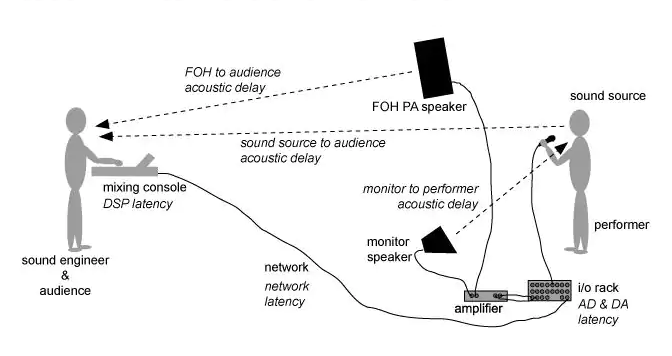
To achieve this synchronization, audio delay compensation systems measure the delay introduced by various components in the audio chain, such as microphones, audio interfaces, and speakers. These delays can vary depending on the equipment used and the processing involved. By carefully adjusting the timing of audio signals, delay compensation systems eliminate discrepancies and deliver a harmonious audio experience.
Real-Life Examples of Audio Delay Compensation
Let’s consider a practical example: a live concert. In such a setting, sound travels at a finite speed, and the distance between the stage and the audience can result in a noticeable delay between what the audience sees and hears. To address this, audio engineers use delay compensation to ensure that the sound from the speakers aligns perfectly with the visual performance on stage.
Similarly, in the realm of online communication, think about video conferencing. Without audio delay compensation, conversations would be riddled with awkward pauses, making it difficult for participants to engage naturally. Thanks to this technology, the voices of speakers are synchronized, facilitating smooth and natural interactions.
FAQ Audio Delay Compensation
How Does Audio Delay Compensation Work in Music Production?
In music production, audio delay compensation plays a critical role in achieving a polished final mix. When multiple tracks are recorded and processed, each may introduce its own delay. Audio delay compensation software analyzes these delays and automatically adjusts the timing of each track so that they align perfectly. This ensures that instruments and vocals harmonize as intended, creating a cohesive and professional sound.
What Are the Different Types of Audio Delays?
Audio delays can occur for various reasons, including signal processing, digital-to-analog conversion, and transmission. Some common types of audio delays include:
Processing Delay: This delay occurs when audio signals pass through various digital processors, such as equalizers or effects plugins, which may introduce a slight delay as they process the audio.
Conversion Delay: Analog audio signals must be converted to digital format for processing, and vice versa. This conversion process can introduce a delay, which must be compensated for to maintain synchronization.
Transmission Delay: When audio is transmitted over long distances, such as in live broadcasting or online streaming, there can be a delay in signal transmission. Audio delay compensation helps mitigate these delays to ensure real-time audio.
Is Audio Delay Compensation Important for Gamers?
Absolutely! Gamers rely on split-second reactions and immersive experiences. In online multiplayer games, audio cues are often crucial for situational awareness and gameplay. Without audio delay compensation, players might experience disorienting delays between in-game actions and corresponding sound effects. This technology ensures that audio feedback is instantaneous, enhancing the gaming experience.
Identical Search Intent Keywords
Audio Latency Reduction Techniques
Reducing audio latency is a top priority in various applications, from music production to live sound reinforcement. To achieve this, techniques such as buffer size optimization, low-latency audio interfaces, and real-time monitoring are employed. These methods minimize the time it takes for audio signals to traverse the entire chain, resulting in near-instantaneous playback.
Zero-Latency Monitoring in Audio Recording
Zero-latency monitoring is a crucial feature for recording professionals. It allows musicians to hear their performances in real-time while recording, eliminating distracting delays that can affect their timing and creativity. This is achieved by routing the audio input directly to the output, bypassing any processing that could introduce latency.
Audio Delay Compensation in Home Theater Systems
Home theater enthusiasts often face the challenge of synchronizing audio with their video playback. Audio delay compensation systems in modern home theater equipment, such as AV receivers, ensure that sound aligns perfectly with on-screen action. This enhances the cinematic experience in the comfort of one’s own home.
Last Words
In the world of audio, timing is paramount. Whether you’re a musician striving for that perfect mix, a gamer seeking an immersive experience, or a home theater enthusiast enjoying a movie night, audio delay compensation is the unsung hero that ensures synchronization. By understanding its significance and the techniques involved, you can elevate your audio experiences to a whole new level.


Comments:
This article provided a clear understanding of why 16-bit PCM WAV is crucial in audio recording. Kudos!
– AudioExplorer
Would love to see a follow-up article on the impact of 16-bit on different genres. Great read!
– MusicDabbler
Can you delve deeper into the technical aspects of 16-bit PCM WAV? More details would be appreciated!
– TechAudioGeek
Finally, an article that breaks down the science behind lossless audio. Very informative!
– SoundAficionado
As a musician, I appreciate the emphasis on how 16-bit PCM WAV preserves the essence of a recording. Spot on!
– MusicalSoul