MP3 Sound Quality Part 3


Free Download Mp4Gain
picture

MP3 Sound Quality Part 3

MP3 Sound Quality

MP3 goes to the masses

MP3 Sound Quality Part 3

To generate bit-compliant (layer 1, layer 2, layer 3) MPEG audio files, members of the ISO MPEG audio committee developed reference simulation software in C called ISO 11172-5. It can demonstrate the first real-time DSP-based hardware decoding of compressed audio on some non-real-time operating systems. Several other MPEG audios were developed in real time for digital broadcasting (DAB radio and DVB TV) for consumer receivers and set-top boxes.
Later on July 7, 1994, Fraunhofer-Gesellschaft released the first MP3 encoder called l3enc.
The Fraunhofer development team selected the .mp3 extension on July 14, 1995 (previously the extension was .bit). Using Winplay3 (released September 9, 1995), the first real-time software MP3 player, many people were able to encode and play MP3 files on their own personal computers. Since hard drives at the time were relatively small (such as 500MB), this technology was essential for storing entertainment music on computers.
MP2, MP3 and Internet
In October 1993, MP2 (MPEG-1 Audio Layer 2) files appeared on the Internet, which were often played by Xing MPEG Audio Player, and later MAPlay developed by Tobias Bading for Unix appeared. MAPy was first released on February 22, 1999 and has now been ported to the Microsoft Windows platform.
The only MP2 encoder products at first were Xing Encoder and CDDA2WAV, a CD ripper that converts audio tracks from CDs to WAV format.
Often considered the father of the online music revolution, the Internet Underground Music Archive (IUMA) was the first hi-fi music site on the Internet, with thousands of licensed MP2 recordings before MP3 and the web became popular. .
From the first half of 1995 to the end of the 1990s, MP3 began to flourish on the Internet. MP3’s popularity is largely due to the success of companies and software packages such as Winamp released by Nullsoft in 1997 and Napster released by Napster in 1999, and they are mutually reinforcing. These programs make it easy for normal users to play, create, share and collect MP3 files.
The debate about sharing MP3 files between peers has spread rapidly in recent years, mainly because compression makes file sharing possible, uncompressed files are too large to share. As MP3 files spread widely across the Internet, Napster has been sued by some of the major record labels to protect their copyright (see Intellectual Property Rights).
Commercial online music distribution services, such as the iTunes Music Store, often choose other proprietary or DRM-enabled music file formats to control and limit the use of digital music. Formats that support DRM are used to protect copyrighted material from copyright infringement, but most protection mechanisms can be broken in some way. Computer experts can use these methods to generate unlocked files that can be freely copied. One notable exception is Microsoft’s Windows Media Audio 10 format, which has yet to be cracked. If a compressed audio file is desired, the recorded audio stream must be compressed, resulting in a reduction in sound quality.
audio quality
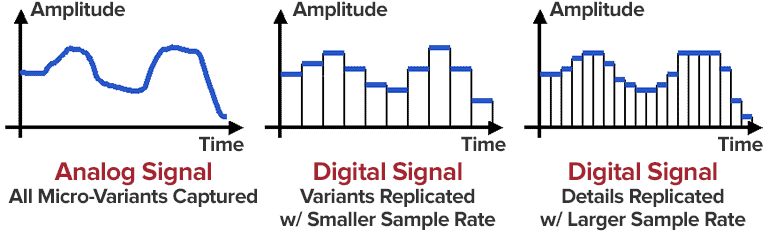
in MP3 Because MP3 is a lossy format, it offers a variety of options for different “bit rates,” that is, the number of encoded data bits needed to represent the audio per second. Typical speeds are between 128 and 320 kb per second. In contrast, the bit rate of uncompressed audio on a CD is 1411.2 kbit/s (16 bits/sample × 44100 samples/second × 2 channels).
MP3 files encoded with a lower bit rate generally play at a lower quality. If you use a bit rate that is too low, “compression artifact (:en:compression artifact)” (sounds that are not present in the original recording) will appear during playback. A good example of compression noise is the sound of compressed cheers: due to its randomness and abrupt changes, encoder errors are more pronounced and sound like echoes.


Free Download Mp4Gain
picture


Mp4Gain Main Window
picture


Mp4Gain Features
picture


Free Download Mp4Gain
picture

MP3 Sound Quality Part 2

MP3 Sound Quality Part 2

MP3 Sound Quality

The MP3 format uses a hybrid conversion mechanism to convert the time domain signal to the frequency domain signal:
* 32 band polyphase integrator filter (PQF)
* 36- or 12-lead Modified Discrete Cosine (MDCT) filter; each subband size can be set to 0 Independently selectable between …1 and 2…31
* alias attenuation post-processing

MP3 Sound Quality

According to the MPEG specification, AAC (Advanced Audio Coding) in MPEG-4 will be the next generation of the MP3 format, although there are many significant efforts to create and promote other formats. However, due to the unprecedented popularity of MP3, the success of any other format is currently unlikely. MP3 not only has extensive client software support, but also has a lot of hardware support, such as portable media players (referring to MP3 players), DVD and CD players. Developing
historical MPEG-1 Audio Layer 2 encoding began as Digital Audio Broadcasting (DAB) managed by Egon Meier-Engelen at the German Deutsche Forschungs- und Versuchsanstalt für Luft- und Raumfahrt (later known as Deutsches Zentrum für Luft- und Raumfahrt, German Space Center). )Project. This project is funded by the European Union as a EUREKA research project, and its name is commonly known as EU-147. The study period for EU-147 was from 1987 to 1994. By 1991 there were already two proposals: Musicam (called Layer 2) and ASPEC (Adaptive Spectrum Sensing Entropy Coding). The Musicam method proposed by Philips of the Netherlands, CCETT of France, and the Institut für Rundfunktechnik of Germany was chosen due to its simplicity, robustness against errors, and lower computational effort in high-quality compression. The Musicam format based on subband coding is a key factor in determining the MPEG audio compression format (sample rate, frame structure, header, sample points per frame). This technology and its design philosophy are fully integrated into the definition of ISO MPEG Audio Layer I, II and later Layer III (MP3) formats. The standard was developed by Leon van de Kerkhof (Layer I) and Gerhard Stoll (Layer II) under the auspices of Prof. Mussmann (University of Hannover).
A working group consisting of Leon Van de Kerkhof from the Netherlands, Gerhard Stoll from Germany, Yves-François Dehery from France and Karlheinz Brandenburg from Germany absorbed design ideas from Musicam and ASPEC and added their own design ideas to develop MP3 , which can play MP2. Sound quality from 192kbit/s to 128kbit/s.
All of these algorithms eventually became part of the first group of MPEG standards, MPEG-1, in 1992, resulting in the international standard ISO/IEC 11172-3 published in 1993. Further work on MPEG audio eventually became part of the MPEG-2 standard, a second group of MPEG standards developed in 1994, officially known as ISO/IEC 13818-3, first published in 1995.
The compression efficiency of an encoder is usually defined by the bit rate, since the compression rate depends on the number of bits (:in:bit depth) and the sampling rate of the input signal. However, there are often products that use CD parameters (44.1 kHz, two channels, 16 bits per channel, or 2×16 bits) as the compression ratio reference, and the compression ratio using this reference is usually higher, which which also shows that the compression ratio is very important for lossy compression problems.
Karlheinz Brandenburg used Suzanne Vega’s song Tom’s Diner on CD to test MP3 compression algorithms. This song is used because the song’s smooth and simple melody makes it easier to hear glitches in the compressed format during playback. Some jokingly refer to Suzanne Vega as “the mother of MP3”. The most serious and critical audio extracts (glockenspiel, triangle, accordion, …) from the EBU V3/SQAM Reference CD are used by professional audio engineers to assess the subjective perceived quality of the MPEG audio format.

MP3 sound quality

MP3 sound quality

MP3 sound quality

How to distinguish the sound quality of MP3? Those MP3 brands have good sound quality.

MP3 sound quality

Does MP3 sound quality have something to do with headphones? I want to buy an MP3 that can listen to songs. Is MP3 good or practical MP4?

1. Common name for portable MP3 player. a portable player
used to play music in MP3 format (now compatible with wma, wav and other formats). Portable MP3 players were originally developed by South Koreans Kwang Soo and Huang Dingxia (Moon & Hwang) was invented in 1997 and applied for related patents.
2. MP3 as music format
MPEG-1 Audio Layer 3, often called MP3, is today’s most popular lossy compression and digital audio encoding format. It is used to drastically reduce the amount of audio. data, while for most users the playback quality is not significantly degraded compared to the original uncompressed audio. It was invented and standardized in 1991 by a group of engineers at the Fraunhofer-Gesellschaft research organization in Erlangen, Germany.
General information
MP3 is a data compression format. It discards pulse code modulation (PCM) audio data that is not important to the human ear (similar to how JPEG is lossy image compression), resulting in a much smaller file size.
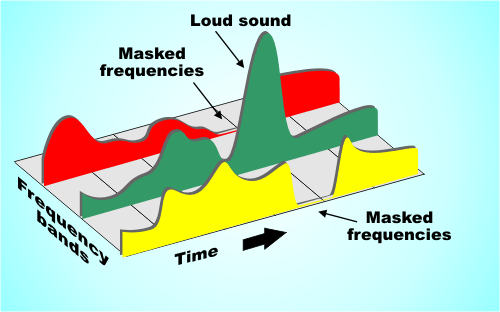
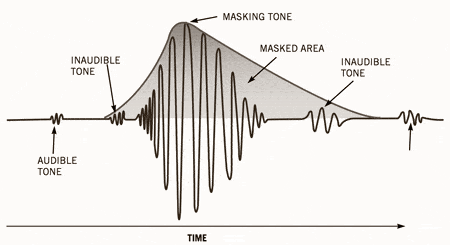
Various techniques are used in MP3, including psychoacoustics, to determine which parts of the audio can be discarded. MP3 audio can be compressed at different bit rates, providing a variety of trade-offs between data size and sound quality.

Mp3 Louder – increase volume

Mp3 Louder – increase volume

mp3 louder

Some people wonder why they hear differences in the volume gain of their mp3 files or even their videos.

MP3 LOUDER

Because you have diligently searched for many mp3s and find the problem that when you play them, they have different volume level from each other. Not all mp3s play at the same volume and that’s a problem.

Same thing now that many people download mp4 and find volume difference and want to fix it.

Mp4Gain is really the only software that manages to solve this problem efficiently and the one that offers the best results, for something many FM radio producers. and television stations use it.

The matter is simple to explain: there are a whole series of factors that affect that level of volume. We do not want to get technical, because precisely there is perhaps the main part of the problem.

Now a lot of people are encoding wav files to mp3, for example, and choose the settings without knowing exactly what they mean.

The same thing happens when people export their mp4s from a video editor… guess the settings and you get mixed results.

And to this we could add other factors, the fact is that the result is that people find noticeable differences in the volume levels of their music (mp3, flac, etc.) or videos.

Mp4Gain is, without a doubt, the best normalizer on the market… we could almost say that it is the only one and it is also a converter. That is, one can normalize, for example, an mp3 and get a FLAC, if desired, with the audio perfectly normalized.

What’s more, it can take an mp4 video and extract an mp3 with perfect sound normalization.

Mp3 (an audio encoding method) Part 3

Mp3 (an audio encoding method) Part 3

MP3 ENCODING

To generate bit-compliant (Layer 1.Layer 2.Layer 3) MPEGAudio files, ISO MPEG Audio committee members developed reference simulation software in C called ISO 11172-5.

MP3 ENCODING

It can demonstrate the first real-time DSP-based hardware decoding of compressed audio on some non-real-time operating systems. Various other MPEG audio was developed in real time for digital broadcasting (DAB radio and DVB TV) for consumer receivers and set-top boxes.
Later on July 7, 1994, Fraunhofer-Gesellschaft released the first MP3 encoder called l3enc.
The Fraunhofer development team selected the .mp3 extension on July 14, 1995 (previously the extension was .bit). Using Winplay3 (released September 9, 1995), the first real-time software MP3 player, many people were able to encode and play MP3 files on their own personal computers. Since hard drives at the time were relatively small (such as 500MB), this technology was essential for storing entertainment music on computers.
MP2, MP3 and Internet
In October 1993, MP2 (MPEG-1 Audio Layer 2) files appeared on the Internet and were often played by Xing MPEG Audio Player and later MAPlay developed by Tobias Bading for Unix. MAPplay was first released on February 22, 1994 and ported to the Microsoft Windows platform.
The only MP2 encoder products at first were Xing Encoder and CDDA2WAV, a CD ripper that converts audio tracks from CDs to WAV format.
Often considered the father of the online music revolution, the Internet Underground Music Archive (IUMA) was the first hi-fi music site on the Internet, with thousands of licensed MP2 recordings before MP3 and the web became popular. .
From the first half of 1995 to the end of the 1990s, MP3 began to flourish on the Internet. MP3’s popularity is largely due to the success of companies and software packages such as Winamp released by Nullsoft in 1997 and Napster released by Napster in 1999, and they are mutually reinforcing. These programs make it easy for normal users to play, create, share and collect MP3 files.
The debate about sharing MP3 files between peers has spread rapidly in recent years, mainly because compression makes file sharing possible, uncompressed files are too large to share. Since MP3 files are widely spread over the Internet, Napster has been sued by some of the major record labels to protect their copyright (see Copyright).
Commercial online music distribution services, such as the iTunes Music Store, often choose other proprietary or DRM-enabled music file formats to control and limit the use of digital music. Formats that support DRM are used to protect copyrighted material from copyright infringement, but most protection mechanisms can be broken in some way. Computer experts can use these methods to generate unlocked files that can be freely copied. One notable exception is Microsoft’s Windows Media Audio 10 format, which has yet to be cracked. If a compressed audio file is desired, the recorded audio stream must be compressed and the sound quality will be degraded.
streaming audio quality
Because MP3 is a lossy compression format, it offers a variety of options for different “bit rates,” that is, the number of encoded data bits needed to represent the audio per second. Typical speeds are between 128 kbps and 320 kbps (kbit/s). In contrast, the uncompressed audio bitrate on a CD is 1411.2 kbps (16 bits/sample × 44100 samples/sec × 2 channels).
MP3 files encoded with lower bit rates generally play at a lower quality. If you use too low a bitrate, “compression artifact” (sounds not present in the original recording) will appear during playback. A good example of compression noise is the sound of compressed cheering; due to its randomness and sharp changes, encoder errors are more pronounced and sound like echoes.

Mp3 (an audio encoding method) Part 2

Mp3 (an audio encoding method) Part 2

mp3 3ncoding

MPEG-1 Audio Layer 2 encoding began as a digital audio broadcast (DAB) managed by Egon Meier-Engelen at the German Deutsche Forschungs- und Versuchsanstalt für Luft- und Raumfahrt (later known as Deutsches Zentrum für Luft- und Raumfahrt, German Space Center). )draft.

mp3 encoding

This project is funded by the European Union as a EUREKA research project, and its name is commonly known as EU-147. The study period for EU-147 was from 1987 to 1994.
2. By 1991, two proposals had emerged: Musicam (called Layer 2) and ASPEC (Adaptive Spectrum Sensing Entropy Coding). The Musicam method proposed by Philips of the Netherlands, CCETT of France, and the Institut für Rundfunktechnik of Germany was chosen due to its simplicity, error robustness, and lower computational effort in high-quality compression. The Musicam format based on subband coding is a key factor in determining the MPEG audio compression format (sample rate, frame structure, header, sample points per frame). This technology and its design philosophy are fully integrated into the definition of ISO MPEG Audio Layer I, II and later Layer III (MP3) formats. The standard was developed by Leon van de Kerkhof (Layer I) and Gerhard Stoll (Layer II) under the auspices of Prof. Mussmann (University of Hannover).
3. A working group consisting of Leon Van de Kerkhof from the Netherlands, Gerhard Stoll from Germany, Yves-François Dehery from France and Karlheinz Brandenburg from Germany absorbed design ideas from Musicam and ASPEC and added their own design ideas to develop an MP3. MP3 can achieve MP2 sound quality from 192 kbit/s to 128 kbit/s.
4. All of these algorithms eventually became part of the first group of MPEG standards, MPEG-1, in 1992, resulting in the international standard ISO/IEC 11172-3 published in 1993. Further work on MPEG audio was eventually became part of the MPEG-2 standard, a second group of MPEG standards developed in 1994, officially known as ISO/IEC 13818-3, first published in 1995.
5. The compression efficiency of the encoder is generally defined by the bit rate, because the compression rate depends on the number of bits (: in: bit depth) and the sampling rate of the input signal. However, there are often products that use CD parameters (44.1 kHz, two channels, 16 bits per channel, or 2×16 bits) as the compression ratio reference, and the compression ratio using this reference is usually higher, which which also shows that the compression ratio is very important for lossy compression problems.
6. Karlheinz Brandenburg used Suzanne Vega’s song Tom’s Diner on CD to test MP3 compression algorithms. This song is used because the song’s smooth and simple melody makes it easier to hear glitches in the compressed format during playback. Some jokingly refer to Suzanne Vega as “the mother of MP3”. Some more serious and critical audio extracts (glockenspiel, triangle, accordion…) from the EBU V3/SQAM reference CD are used by professional audio engineers to assess the subjective perceived quality of the MPEG audio format.

Mp3 (an audio encoding method)

Mp3 (an audio encoding method)

Mp3 encxoding

MP3 is an audio compression technology, its full name is Moving Picture Experts Group Audio Layer III, called MP3.

mp3 encoding

It is designed to drastically reduce the amount of audio data. Using MPEG Audio Layer 3 technology, music is compressed into a smaller capacity file with a compression ratio of 1:10 or even 1:12, and for most users, playback quality is not as good as the original uncompressed. audio Significant decrease. It was invented and standardized in 1991 by a group of engineers at the Fraunhofer-Gesellschaft research organization in Erlangen, Germany. Music stored in the form of MP3 is called MP3 music, and a machine that can play MP3 music is called an MP3 player.

Motion Picture Expert Compression Standard Audio Layer 3 foreign name Moving Picture Expert Group Audio Layer III research organization Fraunhofer-Gesellschaft type audio coding advantage Drastically reduce the amount of audio data defect sound quality loss
content
1 Features
2 story
▪ origin
▪ go to the masses
3 audio quality
4 patent issues
transmission characteristics
MP3 converts the time-domain waveform signal to a frequency-domain signal by taking advantage of the human ear’s insensitivity to high-frequency sound signals and splits it into multiple frequency bands, using different compression rates. for different frequency bands and increasing the compression ratio for high frequencies (even ignoring the signal) Use a small compression ratio for low frequency signals to ensure that the signal is not distorted. In this way, it is equivalent to discarding the high-frequency sound that is basically inaudible to the human ear [1], keeping only the audible low-frequency part, thus compressing the sound with a compression ratio of 1:10 or even 1: 12. Because the full name of this compression method is called MPEG Audio Player3, people call it MP3 for short.
According to the MPEG specification, AAC (Advanced Audio Coding) in MPEG-4 will be the next generation of the MP3 format.
Compared to CD, FLAC and APE lossless compression formats, the sound quality of the highest parameter MP3 (320 Kbps) is not much different.
MP3 players are dying
When they first came out, MP3 players were at the forefront of the digital revolution. However, sales of iPods and other MP3 players in the UK fell sharply in 2012 as consumers turned to other digital products such as smartphones.
In 2012, sales of MP3 players in the UK market were £110m ($178m), just 29% of the £381m in 2011, according to market research firm Mintel. Mintel expects total MP3 player sales in the UK market to halve by 2017. In the worst case scenario, total MP3 player sales in the UK market will be just 25 million dollars five years later. [23]
1. MP3 is a data compression format;
2. Discards pulse code modulation (PCM) audio data that is not important to the human ear (similar to JPEG is a lossy image compression), resulting in a much smaller file size;
3. MP3 audio can be compressed according to different bit rates, providing a variety of trade-offs between data size and sound quality. The MP3 format uses a mixed conversion mechanism to convert audio domain signals. time in frequency domain signals;
4. 32 band polyphase integral filter (PQF);
Modified discrete cosine filter (MDCT) of 5, 36 or 12 taps; each subband size can be independently selected between 0…1 and 2…31;
6. MP3 not only has extensive client software support, but also has a lot of hardware support, such as portable media players (referring to MP3 players), DVD and CD players, outgoing calls

How many KB is the best sound quality for mp3? Part 3

How many KB is the best sound quality for mp3? Part 3

Mp3 AUDIO QUALITY

At present, the most famous mp3 decoder is of course the free LAME mp3 encoder software, and most of the users have affirmed the sound quality of the mp3 encoded by it.

mp3 audio quality

The first MP3 encoding used fixed code rate (CBR), and now it’s slowly starting to use variable code rate (VBR) compression. Nice balance. It is worth noting that older mp3s are not compatible with VBR encoded mp3s.
WMA is a digital music format promoted by Microsoft, under the premise of the same sound quality as mp3, the volume can be reduced by half, which almost doubles the capacity of the mp3 player.

You can easily transcribe CD to WMA through the media player that comes with Window. However, WMA has a disadvantage: Due to the music copyright issue, some WMA files cannot be simply copied to the mp3 player for playback. Of course, the higher the sound quality, the larger the file size. 320kb mp3 files are as large as 9m, and an mp3 with 128m of memory can only hold about 12 songs, which is highly impractical.

The size is the ideal choice. Of course, if you have the money, it would be better to buy an mp3 hard drive, even if you put 320kb files on it, it will be easier to enjoy high quality music.
2. Quality of music playback files
The decoder chip is important, but in order to enjoy high-quality music, the factor that affects the sound source itself is very large. In turn, the quality of the audio source depends on the music file format and compression ratio. Nowadays, the most popular music formats are of course mp3 and wma, almost all mp3 players support these two formats.

MP3 should be considered as the most lossy compressed digital audio format used by users today. The mp3 files that we usually listen to have a bit compression rate of 128kbps, the compression rate is about 1:10, and the file size is usually only 4m. what can be achieved in terms of volume and sound quality a more balanced position. The compression rate of the songs we download from the Internet is usually relatively low, often only 96kbps or even less, and the effect is not very ideal.

This is a practice where websites deliberately lower the compression rate due to download speed and copyright issues. To enjoy real sound quality, the best way is to find a better quality CD disc and compress it yourself. Generally speaking, the sound quality of an mp3 file with a compression ratio of 192 kbps is relatively good. When played with a good mp3 player, the effect is very similar to md. If compressed to 320 kbps, the sound quality is very good. similar to that of a CD player Hard to tell the difference. (Excluding those with golden ears, of course)

The most famous mp3 decoder is of course the free LAME mp3 encoding software, and most of the users have affirmed the sound quality of the mp3 encoded by it. The first MP3 encoding used fixed code rate (CBR), and now it’s slowly starting to use variable code rate (VBR) compression. Nice balance. It is worth noting that older mp3s are not compatible with VBR encoded mp3s.
WMA is a digital music format promoted by Microsoft, under the premise of the same sound quality as mp3, the volume can be reduced by half, which almost doubles the capacity of the mp3 player. You can easily transcribe CD to WMA through the media player that comes with Window. However, WMA has a disadvantage: Due to the music copyright issue, some WMA files cannot be simply copied to the mp3 player for playback. Of course, the higher the sound quality, the larger the file size. 320kb mp3 files are as large as 9m, and an mp3 with 128m of memory can only hold about 12 songs, which is highly impractical. The size is the ideal choice. Of course, if you have the money, it would be better to buy an mp3 hard drive, even if you put 320kb files on it, it will be easier to enjoy high quality music.

How many KB is the best sound quality for mp3? Part 2

How many KB is the best sound quality for mp3? Part 2

mp3 audio quality

What’s more, there are some unscrupulous manufacturers on the market who use discarded or recycled second-hand FLASH chips, coupled with inferior circuit design, quickly made an mp3 and sold it to the market.

Mp3 Audio Quality

Usually the price of this kind of mp3 is very low, and the 128m memory is sometimes cheaper than the same capacity U disk, and the sound quality can be described as rubbish. Come to think of it, we all know that manufacturers have to survive on such a small profit, unless there is something in the mp3, who will make it for free?

So when you come across this kind of mp3, you should pay more attention, no matter how good the sound quality is, it can’t be better. Other decoder chips such as Sigmatel’s STMP1342, Telechip’s TCC730, Samsung’s S3C2410, etc. will not be discussed in detail due to their similar performance.

With the deepening of the market, some powerful manufacturers are also constantly exploring to dedicate the best sound quality to consumers. JNC’s new SSF-800 machine uses the SIGMATEL3420 chip, and the sound quality is very impressive. The next new mp3 just released by iriver uses the most powerful SIGMATEL3520, which is worth waiting for. The good news is that the Meizu me launched by the national brand Meizu also uses the SIGMATEL3520 decoder chip, which is the first time for a national brand. It appears that the national brand is slowly creeping into the ranks of premium sound effects as well.

Second, the quality of music playback files The
decoding chip is important, but in order to enjoy high-quality music, the factor that affects the sound source itself is very large.

In turn, the quality of the audio source depends on the music file format and compression ratio. Nowadays, the most popular music formats are of course mp3 and wma, almost all mp3 players support these two formats. MP3 should be considered as the most lossy compressed digital audio format currently used by users. The mp3 files that we usually listen to have a bit compression rate of 128kbps, the compression rate is about 1:10, and the file size is usually only 4m. to a more balanced position. The compression rate of the songs we download from the Internet is usually relatively low, often only 96kbps or even less, and the effect is not very ideal.

This is a practice where websites deliberately lower the compression rate due to download speed and copyright issues. To enjoy real sound quality, the best way is to find a better quality CD disc and compress it yourself. Generally speaking, the sound quality of mp3 files with a compression ratio of 192 kbps is relatively good. When played with a good mp3 player, the effect is very similar to md. If compressed to 320 kbps, the sound quality is very similar. to the CD player It’s hard to tell the difference. (Of course, those with golden ears are excluded)

How many KB is the best sound quality for mp3?

How many KB is the best sound quality for mp3?

mp3 sound quality

Four factors that determine the sound quality of MP3 Walkman

MP3 AUDIO QUALITY

The current mp3 market is full of flowers and the competition between the major manufacturers is splendid. In order to take the lead and gain the most market share, various manufacturers, especially those with strength, have their own unique tricks. In terms of appearance, mpio’s fl200 has won the award with its mini round cake design. unique pendant. The latest mp3 title, Truly’s mp379, also created the trend of big screen mp3, and Samsung also released its sports mp3 concept, which is absolutely amazing in the market.

Some small manufacturers have also adopted imitation methods, making all kinds of mp3 on the market like a sky full of stars, countless. Simple repeat, record and fm functions can also meet the needs of the market.

Line-in, features, e-book reading, gaming, and colorful backlights are slowly creeping into the new mp3 design. However, the author believes that no matter how cool it looks and how perfect its functions are, the mp3 is used to enjoy music in the final analysis. An mp3 without good sound quality is at least not a qualified mp3. If you are just looking for the appearance and function (actually, we rarely use some functions), and if you ignore the performance of sound quality, you will feel a bit like buying a scorpion. Currently, there are many types of mp3.

A decoder chip inherent in mp3

The decoder chip used by the Mp3 itself is the key to its sound quality. The sound quality displayed by high quality decoder chips is unmatched by those of the poorest. Friends who have listened to the famous iriver series of mp3s will know that its sound quality is very obvious, the bass is strong and powerful, the vocals are restored to truth, the high-frequency field is wide, and the boost is sufficient. , which is very pleasing to the ears. This series mp3 adopts Philips SAA7750, the most advanced decoder chip in the market, and its quality and performance are excellent. The major Korean manufacturer MPIPO (Dewei Technology) also uses this decoder chip. The reputation and market feedback of these two mp3 sound quality brands are very good, and they are highly praised by the industry and outside the industry.

It proves that mp3 sound quality is better than md’s ace gun. Due to the relatively high cost of the chip and the control chip, it is rarely used except for some brands. The cost is high, and the price is of course expensive. This is also the threshold that restricts many mp3 lovers from enjoying the beautiful sound quality.
The most widely used decoder chip on the market today is, of course, the well-known STMP3410 from Sigmatel. Whenever you disassemble your mp3, you will find that your mp3 uses STMP3410 decoder chip. The decoder chip is highly integrated and has concentrated functions. It is easy for manufacturers to develop or add new features such as letter display and electronic dictionary. All brands that cannot be called are used, the sound quality is quite satisfactory, the low frequency is a bit weak, the voices and musical instruments are not bad. Of course, the sound quality performance of mp3 using STMP3410 decoder chip is not the same and sometimes even very different. The reason lies in the internal circuit design of the mp3, the soldering process, the material of the circuit board, and the difference between various manufacturers, especially There is a big difference between the big manufacturers and some non-brand manufacturers. These are also the key factors that affect the work of the decoding chip and the sound quality output. Take two high-end machines that also use the STMP3410 chip and compare the unbranded machines to understand. Therefore, due to many factors within the mp3, the price of the mp3 that also uses the STMP3410 chip varies.