Audio files, which is better?
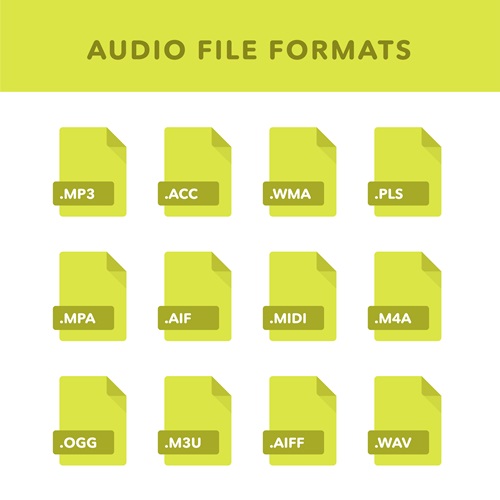
There are various types of audio files on the market today, and even though we are all familiar with MP3, what about AAC, FLAC, OGG or WMA?
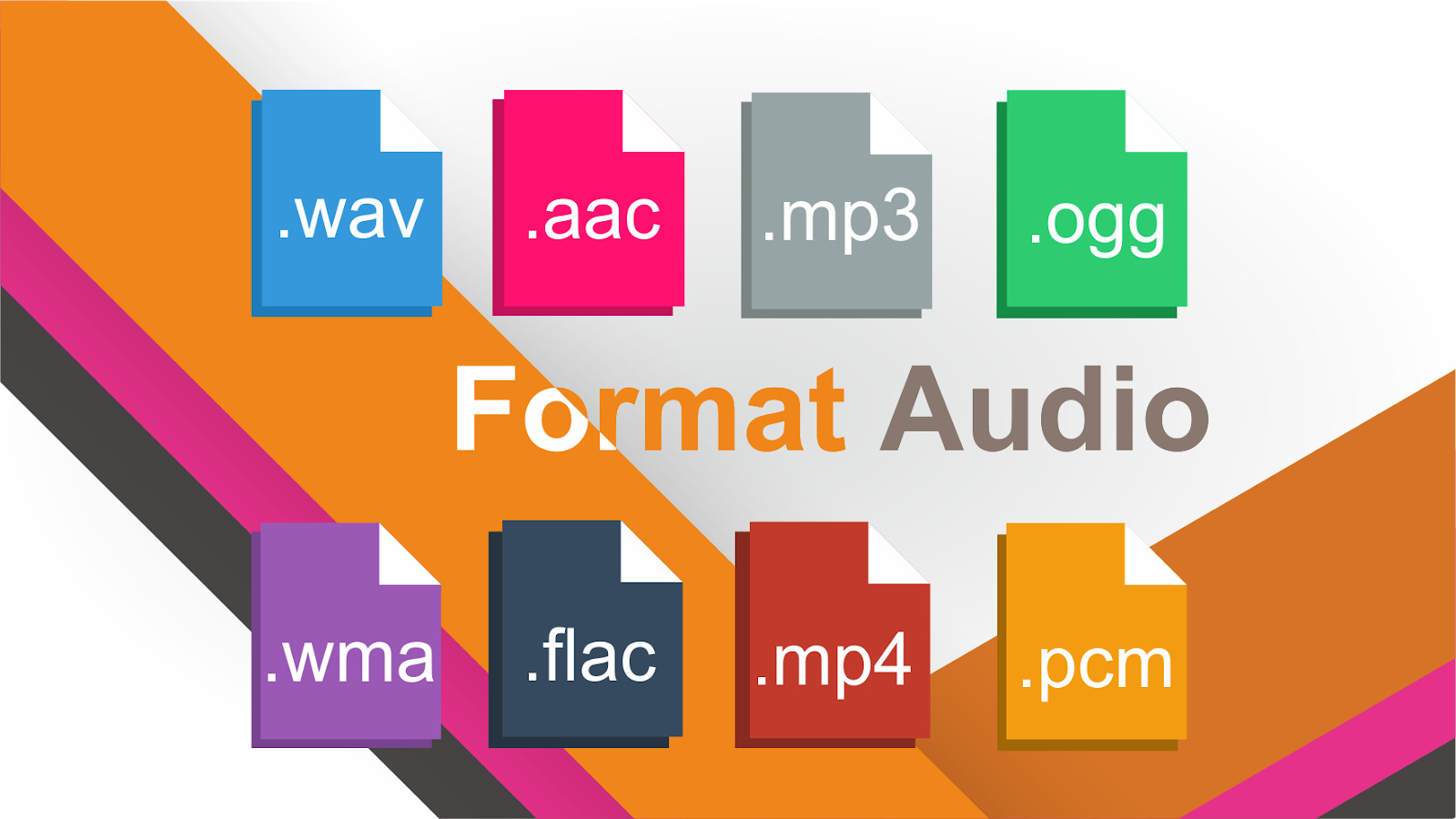
Why are there so many audio standards? Is there a better audio format? Which ones are important and which ones can be ignored? This is pretty straightforward once you realize that all audio formats fall into three broad categories. If you know what the categories mean, you can choose the format within the categories that best suits your needs. Today 2T will take you familiar with ten common audio file formats.
uncompressed audio format
Uncompressed audio consists of actual sound waves that have been captured and converted to a digital format without any additional processing. So uncompressed audio files tend to be the most accurate, but they take up a lot of disk space, around 34MB per minute for 24-bit 96KHz stereo.
Audio File Format: PCM
PCM stands for pulse code modulation, a digital representation of the original analog audio signal. Analog sounds exist as waveforms. To convert a waveform to digital bits, the sound must be sampled and recorded at specific intervals (or pulses).
This digital audio format has a “sample rate” (how often the samples are taken) and a “bit depth” (how many bits are used to represent each sample). There is no compression involved. A digital recording is an almost exact representation of an analog sound.
PCM is the most widely used audio format on CDs and DVDs. There is a subtype of PCM called linear pulse code modulation, where samples are taken at linear intervals. LPCM is the most common form of PCM, which is why the two terms are pretty much interchangeable at this point.
Audio File Format: WAV
WAV stands for Waveform Audio File Format (also known as Windows Audio at some point). This is a standard established in 1991 by Microsoft and IBM.
Many people think that all WAV files are uncompressed audio files, but this is not the case. WAV is a Windows container for different audio formats. This means that WAV files can contain compressed audio, but they are rarely used for this purpose.
Most WAV files contain uncompressed audio in the PCM format. WAV files are simply wrappers around the PCM encoding to make them more suitable for use on Windows systems. However, Mac systems can usually open WAV files without any problem.