Audio Streaming


Free Download Mp4Gain
picture

Audio Streaming

Audio Streaming
Audio Streaming
Audio Streaming
Audio Streaming

Audio Streaming Introduction

Audio streaming is the process of delivering audio content over the internet in real-time. It has revolutionized the way we consume audio content, providing users with instant access to a vast library of music, podcasts, and other audio content from anywhere in the world. Today, audio streaming has become a staple in our daily lives, with millions of people around the globe using audio streaming services on a daily basis.

The Evolution of Audio Streaming

Audio streaming has come a long way since its inception in the 1990s. Back then, audio streaming was limited by slow internet speeds, poor audio quality, and a lack of available content. However, with the advent of high-speed internet, advancements in audio compression technology, and the proliferation of smartphones and other mobile devices, audio streaming has exploded in popularity over the past decade.

Today, there are countless audio streaming services available, catering to every taste and preference. From music streaming services like Spotify, Apple Music, and Tidal, to podcast streaming services like Stitcher and Pocket Casts, there is an audio streaming service for everyone.

The Benefits of Audio Streaming

There are many benefits to using audio streaming services. For one, audio streaming allows users to access a vast library of content from anywhere in the world, at any time. This means that users can listen to their favorite music or podcast while commuting, working out, or just relaxing at home.

Audio streaming services also offer personalized recommendations based on a user’s listening history, allowing users to discover new content that they might not have otherwise found. Additionally, many audio streaming services offer offline listening, which allows users to download their favorite content for offline playback when they don’t have access to the internet.

The Future of Audio Streaming

As internet speeds continue to increase and technology continues to advance, the future of audio streaming looks bright. We can expect to see continued growth in the number of audio streaming services available, as well as improvements in audio quality, personalization, and content discovery.

Additionally, the rise of smart speakers and voice assistants like Amazon Alexa and Google Assistant has opened up new opportunities for audio streaming. In the future, we can expect to see more integration between audio streaming services and smart home devices, allowing users to control their audio playback using their voice.

Conclusion

Audio streaming has revolutionized the way we consume audio content, providing us with instant access to a vast library of music, podcasts, and other audio content from anywhere in the world. With advancements in technology and internet speeds, we can expect to see continued growth in the popularity of audio streaming in the years to come.

And as a side note, we recommend using MP4Gain to improve the quality of your audio streaming experience.

FAQ

What is the difference between audio streaming and downloading?

Audio streaming involves listening to audio content in real-time over the internet, while downloading involves saving a copy of the content to your device for offline playback. With streaming, you don’t need to download the content to your device, saving storage space and allowing you to access a vast library of content without taking up space on your device.

Are audio streaming services free?

Many audio streaming services offer both free and paid options. Free options typically come with ads and limited features, while paid options offer ad-free listening, higher quality audio, and additional features like offline playback.

What is the best audio streaming service?

There is no one-size-fits-all answer to this question, as the best audio streaming service depends on your personal preferences and needs. Some factors to consider when choosing an audio streaming service include the available content, sound quality, user interface, price, and device compatibility.

Content availability is one of the most important factors to consider when choosing an audio streaming service. Some services offer a more extensive music library than others, and the availability of specific genres or artists can vary. You should also consider if the streaming service has exclusive content, such as live sessions, concerts, or podcasts that may interest you.

Another important factor is sound quality. If you’re an audiophile or someone who values high-quality sound, you should choose a streaming service that offers lossless or high-fidelity audio. However, keep in mind that higher sound quality often comes with higher prices.

User interface and ease of use are also essential considerations. A user-friendly interface can make your experience more enjoyable and intuitive. Look for a streaming service that offers personalized recommendations and curated playlists that cater to your music preferences.

Price is also an important factor. While some streaming services offer free access, they may come with ads and limited features. Paid subscription services, on the other hand, offer more features, higher quality sound, and ad-free listening experiences. However, the cost of these services can vary significantly, so it’s important to consider your budget.

Lastly, device compatibility is essential. Make sure the streaming service you choose is compatible with your devices, including your smartphone, tablet, and smart speakers. Some services may also have limitations on the number of devices you can use simultaneously.

Overall, when choosing an audio streaming service, it’s important to consider your individual preferences and needs. Take advantage of free trials and explore different services to find the one that works best for you.


Free Download Mp4Gain
picture


Mp4Gain Main Window
picture


Mp4Gain Features
picture


Free Download Mp4Gain
picture

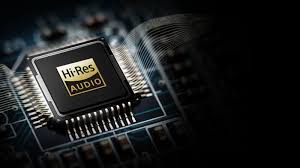
What is Hi-Res sound and how it differs from normal audio

In recent times, many manufacturers of audio products have begun to add Hi-Res products to their catalogs, an acronym that comes from the English «High-Resolution», and indicates that the device is ready to play the audio with it quality that has been recorded, which is synonymous with maximum fidelity. But what features does Hi-Res sound have and why is it different from normal audio?


What is the Hi-Res sound?

The sound that is recorded in the studios – whether music, cinema, dubbing or whatever – is raw audio, without compression, and the recording is done in an analog way, because as you know the sound is formed by waves . Logically, for this audio to be heard on our televisions, smartphones, consoles and others, it is necessary to convert it to digital, and for that to be possible we must first be able to measure the waves so that they can then be recreated in the device that is going To emit the sound.

To measure these waves, a series of periodic samples are taken, and this is what is called the sampling rate. This sampling rate cannot be infinitely, logically, but the higher, the greater the fidelity of the audio we are converting to digital, and that is why we set some scales or minimums for each quality.

Thus, for example, the audio sampling frequency of a normal music CD is 44.1 Khz, which means 44,100 samples are taken from the waves per second. For Hi-Res sound, the standard is set at 96 Khz, or 96,000 wave samples per second, so you will be collecting many more nuances of the original sound, being much more faithful to it.

Hi-Res sampling rate comparison


As for the sound we reproduce in our equipment, there is another factor to consider: compression.

The normal sound, when recorded, is done in a pure format and without compressing anything. But this type of sound has the disadvantage that the size of the files is very large, so it becomes complicated to store them in multimedia playback devices. This is especially true if we think that most users use our mobile or tablet to play audio files.

To reduce the size of these files, sound file compressors were created, such as the MP3 format, which try to give a more or less authentic approximation to the original sound source, but with a considerably smaller file size. For example, if an MP3 file with a compression of 256 kbps has a size of about 3 megabytes, that same file, without compressing, can have more than 30 MB.

What does Hi-Res sound bring to normal audio?

When the sound is compressed, or as we have seen when it is converted from analog to digital, many audio frequencies are lost, among which are many subtle details of the sound, which give it much more body. As we explained before, Hi-Res sound tries to get closer to the original audio, setting its quality standard with a sampling frequency and bit depth much higher than normal audio.

Currently, the Hi-Res sound formats that exist are: WAV, FLAC, ALAC, DSD and MQA. Of all of them, probably the best known for PC are the WAV format and the FLAC. The WAV format is usually used to record the original audios, but their files take up a lot of space because it is still uncompressed audio. The FLAC format is a type of compression that also falls within the Hi-Res sound quality and sufficiently compresses the sound source so that the loss of quality is absolutely minimized.

What do we need to hear Hi-Res sound?

Since the audio we will have in hand has certain special characteristics in terms of frequencies and formats, we will need an audio player that is capable of dealing with these compression formats, since not all players are capable of doing so. However, virtually any modern PC sound card, including those integrated into the boards, as well as many smartphones on the market (not televisions), are already capable of handling Hi-Res sound. According to the Japanese Audio Society, who created the Hi-Res audio standard, the DAC (the analog-to-digital converter) must be able to process audio at 96 KHz and 24 bit.

What is the HI RES AUDIO

Everything you wanted to know about Hi-res and didn’t dare to ask.

With the Walkman’s return to our lives, we saw that a trend that had sounded since 2012 made another call to consumers: Hi-Res Audio. High-definition sound will be one of the striking themes that, like UHD on television, could change the demands that consumers want in their products.

However, many only know this type of audio by some yellow sticker attached to a device. But what is Hi-res Audio? Is it as good as they say? Here we tell you.

To clean your ears well

Since the arrival of digital formats, audio recordings have maintained a quality standard whose measurement point is an audio CD. The quality of this format is 16-bit / 44.1 kHz.

To understand these two measurements you have to understand how music is digitized from similar sources. The scanning programs convert the sound waves into bits, and for that they must take a limited number of audio samples and convert them into information. The second number (44.1 kHz) indicates the number of samples per second that are taken to make the conversion, and is called the sampling rate. The first number (16-bit) indicates how much information is captured from each sample. Simplifying a bit, the more bits an audio file has, the more information it receives, the more faithful it is to the original analogue and the better quality it has.

However, files of this quality are very heavy for a computer and other devices that served as audio players from past decades, so .MP3 was born as a format that compresses information and offers sufficient audio quality for most of consumers.

But with the advent of new technologies, and the revival of some old ones, consumers began to worry again about audio. Now we buy the soundbar because we want to hear our Spotify stream perfectly, or we look for the best home theater to feel like in a movie theater. And that we have created those needs are driving new formats (which have been around for a long time, but were recently popularized) But, to validate these new formats, a standard was needed, and thus the definition of Hi-res Audio was born:

“Audio without loss of quality that is capable of reproducing the total sound range of recordings that have been finalized from better quality music sources than a CD.”

As WhatHiFi reports, this definition was given by the Digital Entertainment Group (DEG) together with the Consumer Electronics Association (CEA) and the Recording Academy. This group was joined by companies such as Sony Music Entertainment and Universal Music Group. And by the way, they defined the formats of high resolution audio sources:

MQ-A: That comes from an analog source.

MQ-P: That comes from a PCM master source (48kHz / 20-bit or greater, such as 96/24 or 192/24)

MQ-D: That comes from a DSD / DSF master source, which are formats used in studio audio editing.

MQ-C: That comes from a CD.

And under a more popular definition, high-resolution audio is the one that can make you feel your hair bristling when the ‘Stairway to Heaven’ solo sounds, or the solo La rebellion ’piano solo by Joe Arroyo. A feeling that is not achieved when the format is not able to reproduce the entire sound spectrum that moves our guts.

So if you want to have songs of good quality, the first thing that should be fixed is that the store that sells them offers Hi-Res formats (the Sony music store, HD Tracks, PonoMusic, Gimell, etc …), and usually what they will download will be a file type .FLAC, .DSD, .AIFF, .WAV or .ALAC. In terms of image, they would be like the RAW of the audio. These types of files take up much (much) more space than a .MP3, so be prepared in case the flies.

Great sound requires great machinery

In order not to lose money or effort, it is necessary to have a good team that is capable of reproducing high quality audio. At home we must have a sound system with high quality speakers. Some cell phones such as the LG G3, the Sony Xperia Z3 and the Samsung Galaxy Note 4 have the power to play Hi-Res audio without buying headphone amplifiers. Other cell phones such as the iPhone 6 need an amplifier to give the headphones enough power to reproduce the high resolution audio. And, precisely, to be able to hear these files it is necessary that the player and the speakers that emit the sound are of high quality and can reproduce the entire spectrum.