Video formats and video standards
First, let’s decide the video standards. They should be taken into account when creating a video movie or video.
PAL and NTSC standards
PAL is a video standard for analog color television used in Europe and Russia: 720×576 video size, 25 fps (25 frames per second).
NTSC is a standard for analog color television, developed in the USA, with a resolution of 720×480, 29.97 fps.
There is also the SECAM standard developed in France.
When creating a video in the editing program, converting it, burning it to a disc, make sure that the PAL standard is selected in our settings (if you live in Europe). Learn more about video standards.
At the time of writing this article (2010) this was very relevant, but now analog television is actively being replaced by digital and will soon be completely supplanted.
VHS – Analog Video is the format of video tapes, which was (and still is) seen on the VCR.
DV (Digital Video) is a video format jointly developed by the world’s leading video companies for digital recording. This format has a low video compression ratio (5: 1) and provides high quality video recording. In this format, video is recorded with MiniDV cameras.
The DV format is characterized by a large video stream and consequently has a large output video file. An hourly recording on a MiniDV cassette will have a volume of approximately 12-13 GB, or 1 minute – 200 MB.
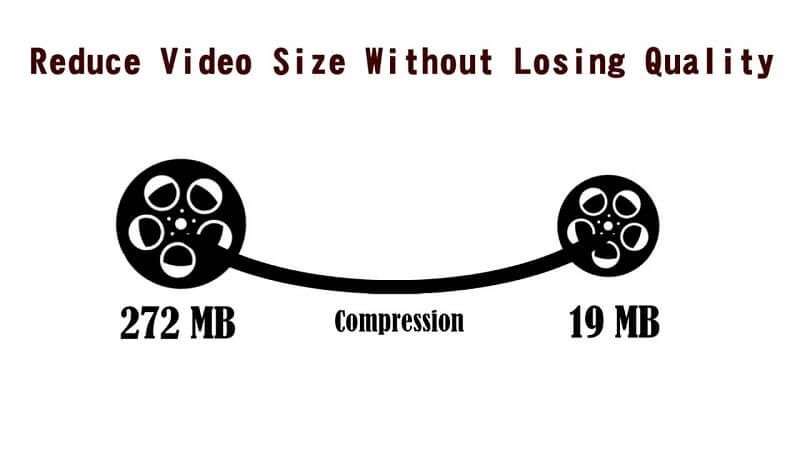
The resulting video must be compressed for later viewing on a computer, projector, DVD player, on the Internet. Those. From the resulting high-quality video, we can obtain any format we need with the appropriate quality.
Attention! It should not be confused with the DVD (Digital Video Disc – DVD), a disc with digital information, what we call in the life of the DVD-ROM.
AVCHD – high definition video format, means: advanced video coding – advanced video coding, HD – high definition – high definition. This is the most modern format used in HD cameras. More >>
Compression standards
MPEG is one of the main compression standards. The abbreviation MPEG (Moving Pictures Expert Group) is the name of the international committee that develops this compression standard. Its varieties:
MPEG-1 – a compression format for compact discs (CD-ROM). The video quality is the same as that of a normal VCR, the resolution is 352×240, a disc with a movie in this format is usually designated as VCD (VideoCD). It is rarely used now.
MPEG-2 is a format for DVD, digital television. In this format, video is recorded with DVD, HDD and Flash cameras.
MPEG-3: not currently used. Do not confuse it with MP3 (MPEG Audio Layer 3) – audio compression technology.
MPEG-4 is a format obtained using the popular DivX, XviD, H.264, etc. codecs. It is often simply called MP4. It reduces the video stream even more than MPEG-2, but the picture is of decent quality, so this format is compatible with most modern DVD players. Of particular note is the high-quality video compressed with the latest-generation H.264 codec.
Yandex.Direct
Free Vov Sirus server
Unique content. Promotions for beginners. More than 15,000 online. Ahead!
Learn more
sirus.one
18+
HD (high definition) is a high definition format, a new format for high definition images. Currently, two varieties are used: with a resolution of 1280×720 and 1920×1080, both are designed for a frame with an aspect ratio of 16: 9 and a square pixel.
There is also the so-called anamorphic version of HD video with a resolution of 1440 x 1080 and an aspect ratio of 16: 9, which is explained by a rectangular pixel (1.33 aspect ratio).
Recently, most consumer cameras have been recording in HD format based on the MPEG-2 codec. The video quality is high, but to watch HD videos, you need to have the appropriate display equipment (for example, an LCD or plasma TV with a large diagonal), otherwise you will not be able to appreciate the video quality (watch and edit HD videos).).
Video file extensions
AVI
AVI (Audio-Video Interleaved) is an extension of a large number of video files, but it is not a format or codec. It is a container developed by Microsoft that can store 4 types of transmissions: video, audio, text and midi.
This container can contain video of any format from mpeg1 to mpeg-4, sounds of different formats, any combination of codecs is possible.