What are “bit depth” and “sample rate”?


Free Download Mp4Gain
picture

What are “bit depth” and “sample rate”?

Bit Depth

What are “bit depth” and “sample rate”?
What are “bit rate” and “sample rate”?
I wrote it in the DTM project file settings and audio interface specs, but I don’t understand the meaning …

Bit Depth

This time, we will answer those questions.

Here’s a quick rundown of “What is a Bit Rate / Sample Rate ?,” Explained by Professional Drummer / Engineer / Producer Ed Thorne.

Once you know this, you will be able to export the sound source in the appropriate format and you will be able to understand the standards for the equipment that you will buy in the future.

Please take a look to the end!

What is bit-deapth?

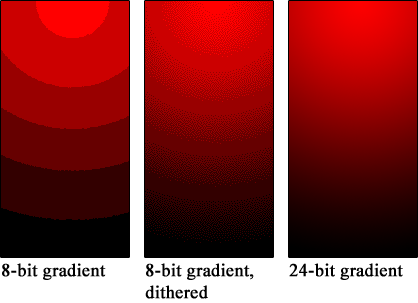
Bit depth refers to the range in which the dynamics (inflection) of the sound can be processed.

For example, if the bit depth is “16-bit”, the range of up to 96 dB can be reproduced and processed from the silent state.

96dB is all about the volume when the audience is excited at the live venue.

On the other hand, if the bit depth is “24 bit”, the 144 dB dynamics can be reproduced and processed.

144dB is roughly the volume of a jet airplane.

Dynamics in the age of streaming

Not long ago, there was no volume limit like current streaming services like YouTube and Spotify.

The louder the sound, the better the music itself, which is why the producers always wanted to make the song louder and bigger than any other music.

Today, many platforms where you can listen to music have volume restrictions, so the idea that “the more music you can play loud sounds, the better” has changed, and times have changed.

So, in this age, 16-bit or 24-bit might not make much of a difference.

The amount of data also changes

By the way, if the bit depth is high, the amount of data will change as well.

When recording a lot, it may be better to consider this a bit.


Free Download Mp4Gain
picture


Mp4Gain Main Window
picture


Mp4Gain Features
picture


Free Download Mp4Gain
picture

Video bit rate basics

Video bit rate basics

Video Bitrate

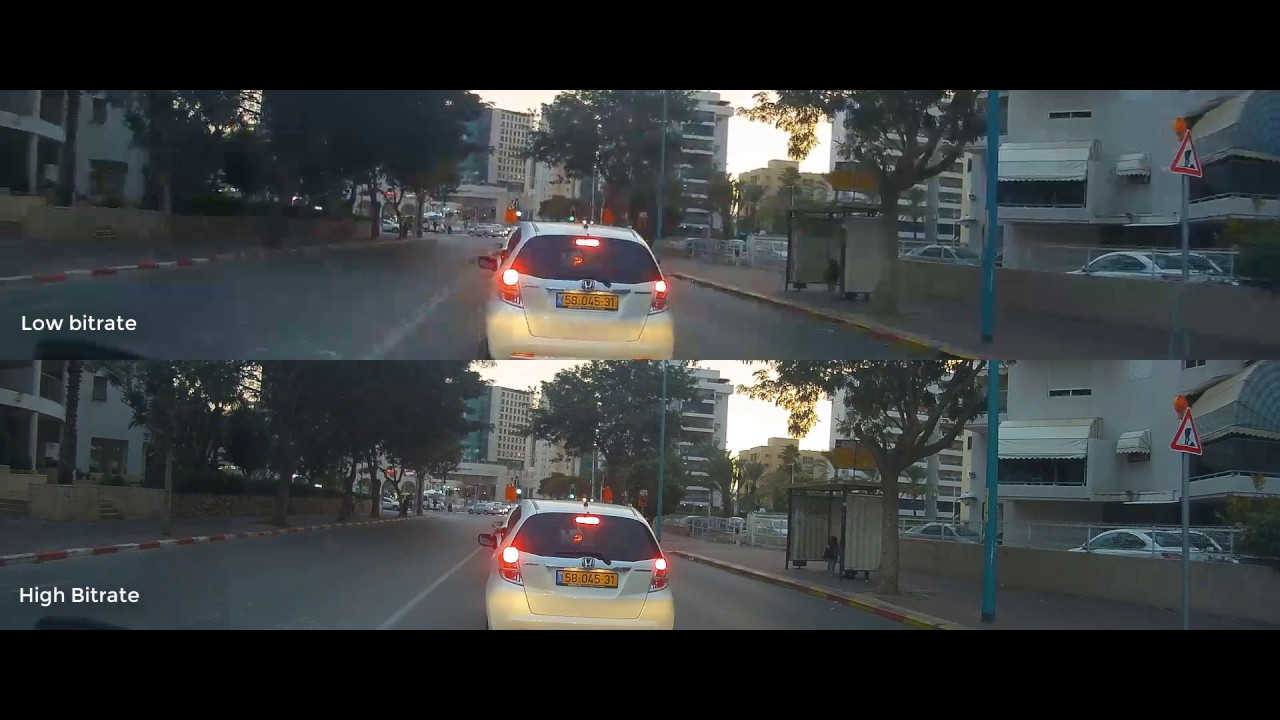
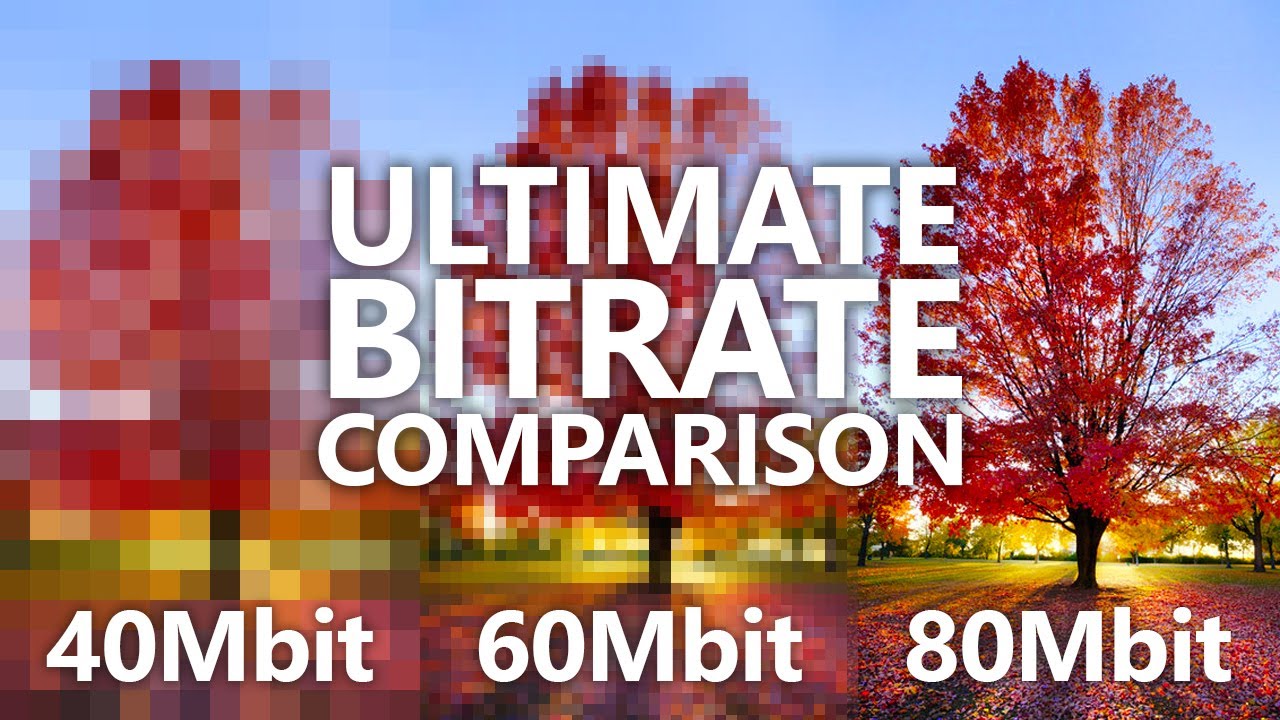
Video bitrate is simply the amount of video data, and in principle the higher the value, the higher the image quality.

high bitrate vs low bitrate

The image is like the “effective pixel count” of a digital camera.
For example, the image quality of a camera with 6 million pixels is better than that of a camera with 1 million effective pixels.
Also, the higher the video bit rate, the larger the file size.
This is also the same as the number of pixels.
A camera with 6 million pixels can shoot larger (size here is horizontal length or vertical length) than a camera with 1 million effective pixels, so the file will naturally be larger.
DVD-Video does not support high definition because the video bit rate is determined to be approximately 9.6 Mbps maximum and 720 x 480 pixels in height and width.
Therefore, to save to DVD with high picture quality like HDTV, you need to save to a new standard like AVCHD.
With VideoStudio 12 Plus, you can save to DVD-R with AVCHD, and DVDs created with this software can be viewed on PlayStation 3 and Blu-ray recorders.

Even if the video bit rate is high
However, it should be noted that if the number of effective pixels and the video bit rate are large, the image quality will always be high.
For example, if you compare the image from a camera connected to a mobile phone with 3 million effective pixels to a digital camera with 3 million pixels, it will be completely different.
It is simply the value of the amount of data packed, the performance of the image sensor (Satsuzososhi), which is also a sensor for the light-catching part, a camera with a good lens and a high-performance CPU, etc. It depends on.

This time, I would like to write about what I have researched or understood about video bit rates.

What is the video bit rate?
What makes it difficult
First of all, “bit” is an element that hinders the bit rate of the video.
If it was a video byte rate it would have been a bit easier to understand. When.
In fact, the “bytes” of the size of files and hard drives used in personal computers, etc. they are deeply related to bits, and “1 byte” means “8 bits”.

In the computer world, “a” or “not” Kano binary is there to root.
If you are making a program (especially in C language, etc.), you will feel awkward in this area, but 1 byte is a set of 8 bits. Please understand.

So, let’s go back to bitrate.
In general, no one talks about file size or hard drive size in bits.
“HDD that I bought this time, I am 960G bit”,
the person I say is not.
By the way, 960Gbit becomes 120GB when converted to bytes.

Bps unit
The unit is “bps”.
b = bit (1 byte = 8 bits)
p = even (in Japanese, it means “○ minutes”)
s = second (seconds) In other
words, if you translate it into Japanese, “1” The number of bits per second. ”

When capturing images from Sony HDR-HC3 high definition camcorder By the way, DVD-Videos, such as rental DVDs, have a maximum of 10.08 Mbps (however, the value includes audio, etc.), digital terrestrial transmission is 15 Mbps (higher image quality than DVD?), and mini DV tapes like Handycam. The video camera that records is 25Mbps.
The image on the left is the property of the file created when the image shot by the Sony HDR-HC3 high definition camcorder was imported to a computer.
The video data rate is 25000 kbps or 25 Mbps.
High definition BS digital transmission is approximately 23 Mbps.
Also, I think that Blu-ray discs, which are called Next Generation DVDs, could record up to 36 Mbps.
VHS is said to be 2 Mbps.

If you look at it this way, you can see that the DVD that I thought was high quality is not that high in reality.
However, from the point of view of older standards such as VHS, the image quality is very high.

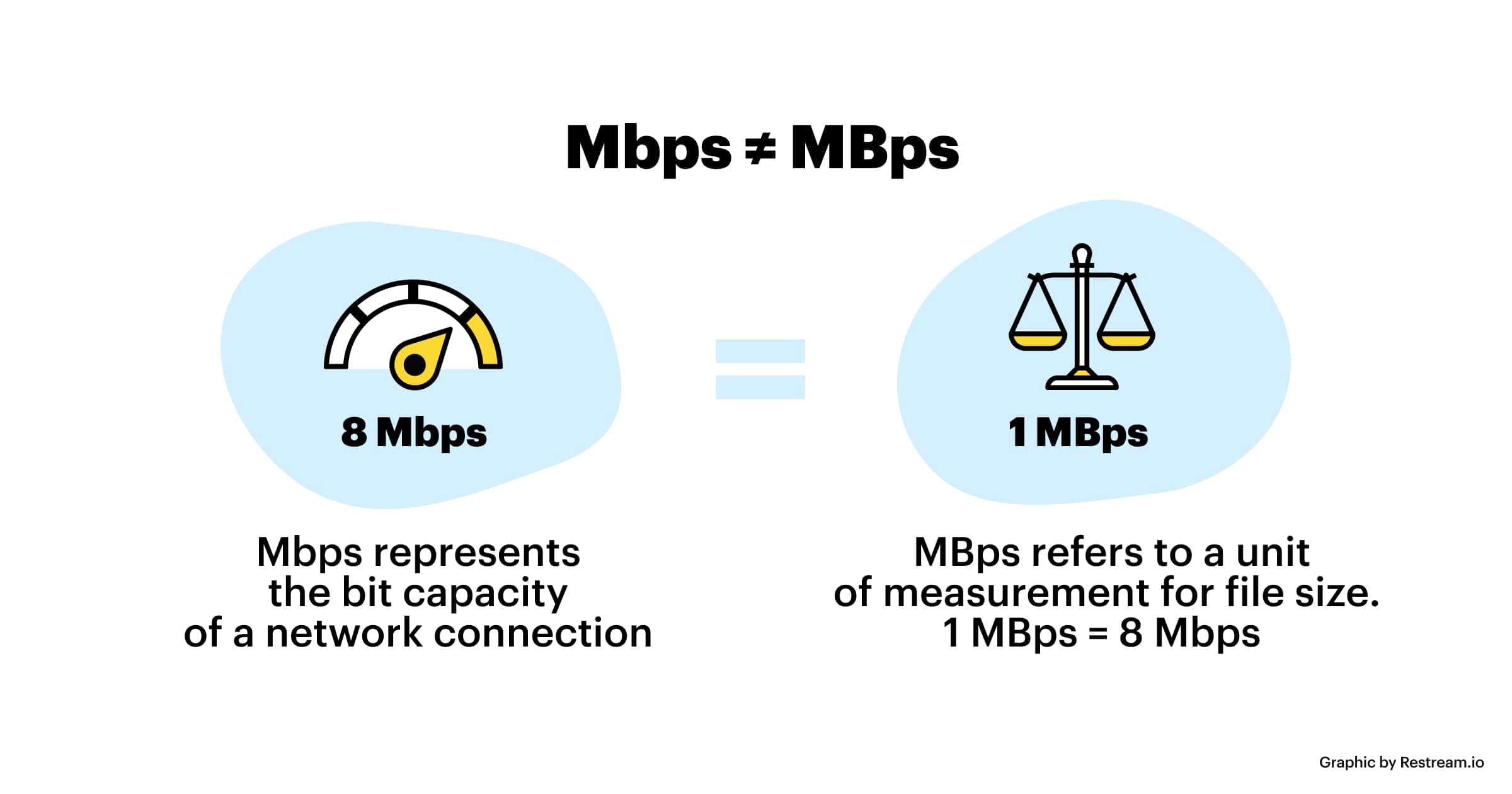
By the way, 100 Mbps or 8 Mbps, which is used for the speed of ADSL and fiber optic lines, is also a bit rate.

[YouTube] Here’s how to check the bitrate of videos!

[YouTube] Here’s how to check the bitrate of videos!

Bitratet Video

Have you ever had a problem with choppy YouTube playback? Checking the video bit rate can improve the playback environment. This time, I will show you how to check the bitrate of videos posted on YouTube.

bitrate youtube

Table of Contents

What is a bit rate?
How to find out the bitrate of YouTube videos
resume

What is a bit rate?

Regarding the “bitrate (bitrate)”, I think some people say, “I heard the name, but I don’t know what it means …”.

Generally speaking, the bit rate is “the amount of information (amount of data) sent and received every second”.

The unit is expressed as “bps”. For example, 1 second is displayed as 1 bps.

I don’t think there are many opportunities to be aware of this, but when you watch a video on the Internet, you may see it in a beautiful state in terms of image quality and sound quality due to the difference in each bit rate. or it may be spasmodic.

Is it better to have a higher bit rate?

A high bit rate means that you can send a large amount of data at one time.

As you can see by comparing raw video and beautiful video in terms of image quality and sound quality, the higher the image quality, the higher the bit rate.

On the other hand, the higher the bit rate, the better, and the server and electronic media used can be overloaded when doing a large amount of communication.

If you’re having trouble with choppy video, it’s a good idea to check the video playback player settings once.

How to find out the bitrate of YouTube videos
This time, I will show you how to check the bitrate of videos posted on YouTube.

The procedure to check it is very simple.
Go to the page of the video whose bit rate you want to check and right-click on the video.

Video Bitrate

Video Bitrate

Video Bitrate

When encoding with a higher resolution than the original video resolution, the bit rate is also set according to the resolution, isn’t it?

Bit-Rate

Is it just when you select and encode the same codec as the original video? For example, suppose the video codec is xvid, the resolution is 640×360, and the video bit rate is 2000. When increasing the resolution to HD 1280 x 720, it is okay if the bit rate is at least 8000. This bit rate calculation is only if the selected video codec when encoding is the same as the original video codec? By the way, even if you change the xvid codec of this original video to AVC / H.264 and encode it ((The resolution is enlarged to the same size as the previous HD) Is it ok to set the bitrate with the same calculation? AVC / H.264 codec has higher compression rate than original video xvid, so the calculation came out. Isn’t it okay to set it a little lower than bit rate? If you can set it lower, tell me how much you can lower it.If the bit rate is set unnecessarily high, the capacity will naturally increase so I wanted to clarify this point.

Answer:

The bit rate at which block noise does not appear varies depending on the codec used, the screen size, and the video content. Even with the same screen size, the bit rate without block noise is completely different between a picture that does not change at all as shown in the picture and a vigorous moving sports picture. Basically, it is derived from test-based experience to some extent, but depending on the software used, it has a function that automatically calculates the bit rate called “fixed quality”. Multipath is one of them. The variable bit rate is the same, right? There should be a maximum bitrate in the encoding settings, but variable bitrate and multipath (and combinations thereof) are optimal so that deterioration in image quality, such as block noise, does not occur within the maximum bit rate in a scene with a lot of movement. Set to bit rate. With a fixed bit rate, the file size will inevitably increase because the bit rate will be the same for both still images and images with vigorous motion. With TMPGEncVMW5 that I use, if you set “1 fixed quality pass” to 3-5, there is no problem with XviD or DivX. In H.264, select “0 (lowest) to 100 (highest)” and the default is 50. If you increase it to 80, the file will be too large, so I think a little more research is needed . * H.264 requires high processing power, so I don’t use it much. In H.264 “VBR Average Bit Rate”, you can specify the file size after encoding, but depending on the video, the image quality may deteriorate even if you intend to increase the file size, so consider the balance with other parameters. for study. Also, this software has a parameter called “performance”, and even if other parameters, such as bit rate, are the same, the file size after encoding will change. The file size will be smaller (although negligible) if the performance is set to “best quality”. In other words, the bit rate is not the only factor that determines the quality of the image.

Basic knowledge of video files.

Basic knowledge of video files.

Video Encoding

.
The terms codec, resolution, frame rate, and bit rate you often see when creating videos.

VIDEO ECNCODING

This is essential basic knowledge for creators whose livelihood is video-related work.

Basic terms frequently used in video creation
1. Image quality (unit: px)
Video quality means the number of pixels.

The next four are the overall image quality. The numbers represent the number of pixels. (Number of pixels: number of pixels (points) that make up the image)

SD image quality: 720 x 480
HD image quality: 1280 x 720
Full HD: 1920 x 1080
4K: 4096 x 2160
8K: 7680 x 4320
The higher the number of pixels, the more beautiful the image will be, but the heavier the data will be. Considering the number of pixels and the amount of data, HD image quality is standard at the moment.

YouTube displays 1080p, which is Full HD, as standard. Since 1080p is compatible with the progressive 1920 x 1080 high definition picture quality used in other TV receivers, it is said to take progressive p.

YouTube provides images with different resolutions depending on the viewer’s device. Also, if you play a video in an environment with a slow line, the image quality will automatically decrease.

Bit rate (unit: bps)
Bit rate means the amount of data per second. Since the amount of data includes video and audio, the higher the bit rate, the higher the image quality and sound quality. Also, the higher the frame rate (explained below), the higher the bit rate.

The higher the bit rate, the better the picture and sound quality.
If the bit rate is high, the network and the playback terminal will be overloaded.
Even if you increase the bit rate, the image quality and sound quality will not be higher than the original video material.
The bit rate unit is as follows.

Kilobits per second (kbps, kb / s, 10 bps at third power)
Megabits per second (Mbps, Mb / s, 10 bps to the sixth power)
Gigabit per second (Gbps, Gb / s, 10 bps to the 9th power))
Terabit per second (Tbps, Tb / s, 10 bps to 12)

Frame rate (unit: fps)
Frame rate means how many still images are used in one second video. For example, 30 fps means “30 still images are used per second”. Recently, 60fps has been added to cameras. If you duplicate the image taken, the image that is comparable to the general 30fps will have the image quality that you can see if the image is stable even in slow motion. The higher the frame rate, the more still images will be used per second and the smoother the movement will be when viewed in video.

On the iPhone 6S, it’s 30fps when shooting in 4k and 60fps when shooting in Full HD. In the case of a movie, 24 frames per second are played, making it 24 fps.

The higher the frame rate, the higher the data, but since the frame rate of the screen playing the video is fixed, even if you increase the frame rate of the video itself, it will not be drawn at that rate.

What is the audio bit rate?

What is the audio bit rate?

BITRATRE

Relationship between “bit depth” and “sample rate” and sound quality

BITRATE

Bit rate is one of the factors that determines the quality of a video job.

Among them, the audio bit rate determines the end of the audio. Understanding the bit rate will allow you to control the sound quality and create higher quality audio.

So on this occasion, I will explain bit depth and sample rate, which are essential to talk about sound quality.

What is a bit rate?
What is a bit rate?
■ Bit rate represents high quality

Bit rate is a numerical value that represents the amount of information in the data, and the height of the bit rate is proportional to the quality of the data.

By looking at the bit rate, you can see how much data is packed in one second. Generally, the higher the bit rate, the higher the sound quality and the more realistic the sound and video are.

■ Audio bit rate and video bit rate

In the case of video, the bit rate is divided into two types, video and audio, and the overall quality of the video is determined by the height of each bit rate.

The “video data rate” shown in the video properties is the video bit rate and the bit rate assigned to “audio” is the audio bit rate. The “total bit rate” is the total of the two types of bit rates, video and audio, and is the bit rate of all video.

However, high bit rate audio is not always good sound. This is because if the quality of the original audio data or the equipment used for recording is poor, poor quality audio will be played. For example, if the original voice contains noise, the noise part will be reproduced realistically and the voice will be difficult to hear. Similarly, if the video bit rate is low, the movement will be choppy and unnatural, or the video will be uneven.

What is the bit depth that determines the sound quality?
The bit rate is calculated by multiplying the two factors of bit depth and sample rate. Bit depth represents the amount of data per divided sample and is an element that affects the quality and expressiveness of the sound.

The sample rate is the finely divided horizontal axis and the bit depth is the one that overlaps the vertical axis. By providing a large amount of data (bit depth) to each sample, it is possible to create finer and more accurate audio data.

Bit depth is the precision of each image in animation production. The higher the bit depth, the more expressive the sound and effects will be, and the higher the sound quality will feel.

What is the sample rate that determines the smoothness?
Of the bit rates that determine audio quality, the sample rate is an element that represents the number of data divisions per second on the horizontal axis. It shows how many tens of thousands of data are divided per second, and the greater the number of divisions, the higher the sound reproducibility and sound quality.

It is even easier to understand if you consider it a mechanism similar to animation production. The more images you use per second, the smoother your character will move, and the higher the sample rate (the number of data divisions), the smoother the sound. Also, the amount of data increases according to the size of the sample rate.

in conclusion
To improve sound quality, it is important to increase the audio bit rate. The audio bit rate is determined by two factors: the bit depth, which determines the expressiveness of the sound, and the sampling rate, which determines the smoothness of the sound.

However, it should be noted that the higher the audio bit rate, the more beautiful the audio will be and it will also be affected by the original sound source. If you want to create high-quality data from the moment of recording, why not ask a production company that has high-quality recording equipment?

I think a lot of people are concerned about the balance between capacity and sound quality when it comes to a computer-mounted audio system. Professional engineers and mixers will come up with the best balance, so don’t hesitate to contact us on these points.

What is a bit rate?

What is a bit rate?

Encoding

What is the relationship between image quality and sound quality?

Video Encoding

Video conversion
Video video format conversion

When you burn video to DVD, rip DVD, or use video-related software, you will often hear the word “bit rate”. What is a bit rate? What is the relationship between video quality and sound quality? This article describes the relationship between bit rate and video quality and sound quality.

Part 1. What is a bit rate?
Part 2. Relationship between bit rate and image quality / sound quality
Part 3. Adjust video bitrate with Leawo Video Pro

Part 1. What is bit rate?
Bit rate is the number of bits transferred or processed per unit of time in telecommunications and computing. Simply put, it is the amount of data that can be sent and received per second. It can also be called bit rate. It is represented as the variable R.

In digital multimedia, bit rate often refers to the number of bits used per unit of playback time to represent continuous media such as audio and video after source encoding (data compression). The media file encoding bit rate is the size of the media file in bytes divided by the playback time (seconds) of the recording multiplied by 8.

In digital multimedia, the bit rate represents the amount of information recorded per unit of time. The bit rate depends on several factors.

The source material can be sampled at different frequencies.
The sample can use a different number of bits.
The data can be encoded using different schemes.
Information can be digitally compressed with different algorithms or different degrees.

Part 2. Relationship between bit rate and image quality / sound quality
Simply put, the higher the bit rate, the better the picture and sound quality.

The sum of the video and audio bit rates is called the oval bit rate (total bit rate). Oval bit rate = video bit rate + audio bit rate

The higher the bitrate, the better the picture and sound quality, but it consumes a lot of net bandwidth and requires PC specs. Here are some points about bit rates.

What is the bit rate of “video / audio”?

What is the bit rate of “video / audio”?

Video Encoding

Bitrate-min

Encoding Video

The bit rate in a video is the amount of data that can be sent and received per second.

Since the amount of data increases, the quality of the video improvement as it is used as video / audio data and increases the bit rate. On the contrary, the lower the bit rate, the worse the quality will be.

The unit is BPS. This is an abbreviation of bits per second. A 1 BPS, you can send and receive 1 data bit per second.

To make it easier to understand, it is the amount of data that is packaged in a video of a second.

How to check the “Windows” bits rate
Right-click on the video file you want to verify → Click on “Properties” → “Details”. The “Total Bit Rate” Here is the total bit rate included in the video.

Bit rate 2 min

“Data Speed” … Video Bit Speed
“Total bit rate” … All bits rates
“Frame rate” … Frame rate (FPS)
“Bit rate” … Audio Bit Rate
By the way, the “frame rate” is the rate of frames. At 60 fps, the image becomes viscous.

What is the optimum number of bit rates for video?
The quality of the video is proportional to this bit rate. So, it is not like that if we must increase this number. The higher the number, the greater the file size.
If the purpose is to give it to YouTube, the recommended bit rate is published, so it is good to consult it. (To August 2016)

Bit rate 3 min
Reference: Recommended coding configuration for loaded videos | YouTube help

Kbps and Mbps.
Both units refer to the amount of data that can be sent per second, but Kbps is a unit called KILOBIT per second Mbps is a unit called megabit per second.

1 kbps = 1000bps
1 Mbps = 1000 Kbps
is. Use as a reference when coding. That’s all for this time.

What is video coding? Explain how to generate video distribution and basic knowledge files. Part 2

What is video coding? Explain how to generate video distribution and basic knowledge files. Part 2

Video Encoding

What are the four points that must be checked before coding work?

Encoding

Although the size of the video file becomes clearer when the encoding process is done, there are some things to consider, such as the quality of the video image becomes lower. From here, I will explain 5 points to be taken into account before coding work.

1. Convert to a compatible file format
The appropriate file format change depending on the purpose of use of the video. Generally, MP4 and FLV versatile are suitable for creating videos for distribution of videos.
If you already have a video distribution service you are considering using, we recommend that you check what file format is recommended.

2. Terminate coding rarely
If the encoding process is done, the quality of picture and sound quality will deteriorate as the amount of data becomes clearer, it will be impossible to restore the original quality. With experience, you can understand what bit rate and resolution should be used for conversion to get quality picture and sound appropriate.
If you are a beginner, you can leave the original data separately as a countermeasure, so even if a video is not code, you can start again, so you can be sure.
Bit rate represents the amount of data that can be sent and received per second. The higher the bit rate, the better the picture quality and sound. However, the higher the bit rate, the larger the file size, so we recommend changing the bit rate according to whether you want to encode the video must have a high image quality.

Resolution: shows the number of pixels called pixels contained in the video frame and is usually expressed as the number of horizontal pixels x vertical.
Example. 4K: 2160p (3840 x 2160) HD: 1080p (1,920 x 1,080), HD 720p (1,280 x 720), etc. The
the file size increases as you increase the resolution, which is adequate considering that. We recommend changing the resolution.

3. Note that coding time-consuming.
The time it takes to encode depends on many factors. Encoding time will vary with the frame rate, resolution, effects used for video, the encoder used and the use of encryption software, such as CPU performance computer.
For video files that have a time and a fixed delivery period, it is a good idea to codify enough time to prepare.

4. Do not lay too time video.
The longer the video is, the greater the data of the video file, which can affect encoding time. If possible, divide the video that is too long in two or cut unnecessary scenes for the video time is not too long.
If you try to encode a long video, it will be a heavy burden depending on the specifications of your PC, and there is the possibility that the work is not complete.

It is important to codify according to the purpose of the video.
Coding work is needed to create and distribute video with ease.

If the frame rate are emphasized, the resolution of the image quality, bit rate, etc., the size of the file will be huge, which will be a burden on both the side of the poster as that of the viewer, and the viewer can not play the video. comfortably and will go halfway. It is possible that you do.
However, the video encode, you can convert a video with quality picture and sound suitable.

This is a must for anyone who wants to make a video for training of the company or an open campus. We crastream recommend a platform video distribution system based on the cloud provided by us.
Crastream is a platform video distribution system high performance for limited objectives, members and employees. Thanks to high security, you can edit and post videos with ease without worrying about filtering external information to the outside. You can request materials for free, so do not hesitate to contact us if you are interested.

What is video coding? Explain how to generate video distribution and basic knowledge files.

What is video coding? Explain how to generate video distribution and basic knowledge files.

Video Encoding

What is the reason for the
coding?

Encoding

What are the four points to take into account before coding work? Is
important to perform the coding according to the purpose of the video.

Recently, many people publish videos in video distribution services such as YouTube. Have you ever heard the word encoding in such a situation?
The coding refers to compressing and encrypting format data, such as video and audio, according to certain rules, and converting them to another data format.
If a video file taken with a video camera is distributed online as it is through a video distribution service, the amount of data will be too large and it can be difficult to see it comfortably depending on the viewer’s Internet environment.
When coding the video he recorded and created, he can turn it into adequate data for his purpose and purpose, and he can see it comfortably.
On this occasion, for those who want to publish a video, I will explain the importance and necessary of the coding work.

What is the reason for coding?
Coding is the conversion of signals and data according to certain rules. It mainly has the meaning of “coding”, “encrypted”, “data compression”, etc. Coding is a necessary task when creating a video. First, I will explain the reason for coding.

A video is like an animated book, and dozens of images per second are recorded, and the data is processed so that they seem to move when connecting them. The frame rate (FPS) indicates how many images are projected per second and, at 20 fps, it means that 20 frame frames per second are used.

Depending on how it records and creates the video, the value of the frame speed can increase, which makes it difficult to see it comfortably. The coders, which are hardware or software to convert data into several formats, are necessary for coding.

Coders are distributed abundantly and some programs can be downloaded free of charge. “XMedia Recode” and “Handbrake” are relatively well known as free software. Try it and find an encoder that is easy to use.