“High resolution” basics. What is the difference between DSD, FLAC, MQA, etc.?

There are several formats, even if it says “high resolution”.
If the format changes, the amount of sound information and thus the sound quality will change, the file size will also change, and whether the playback device / software will support it or not, it will also change, so choose a format is important. We will explain the main formats incorporating common technologies and unique pieces.
There are several high-resolution formats, but …
What is the sampling frequency?
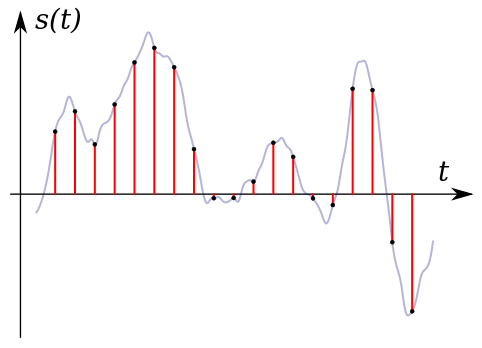
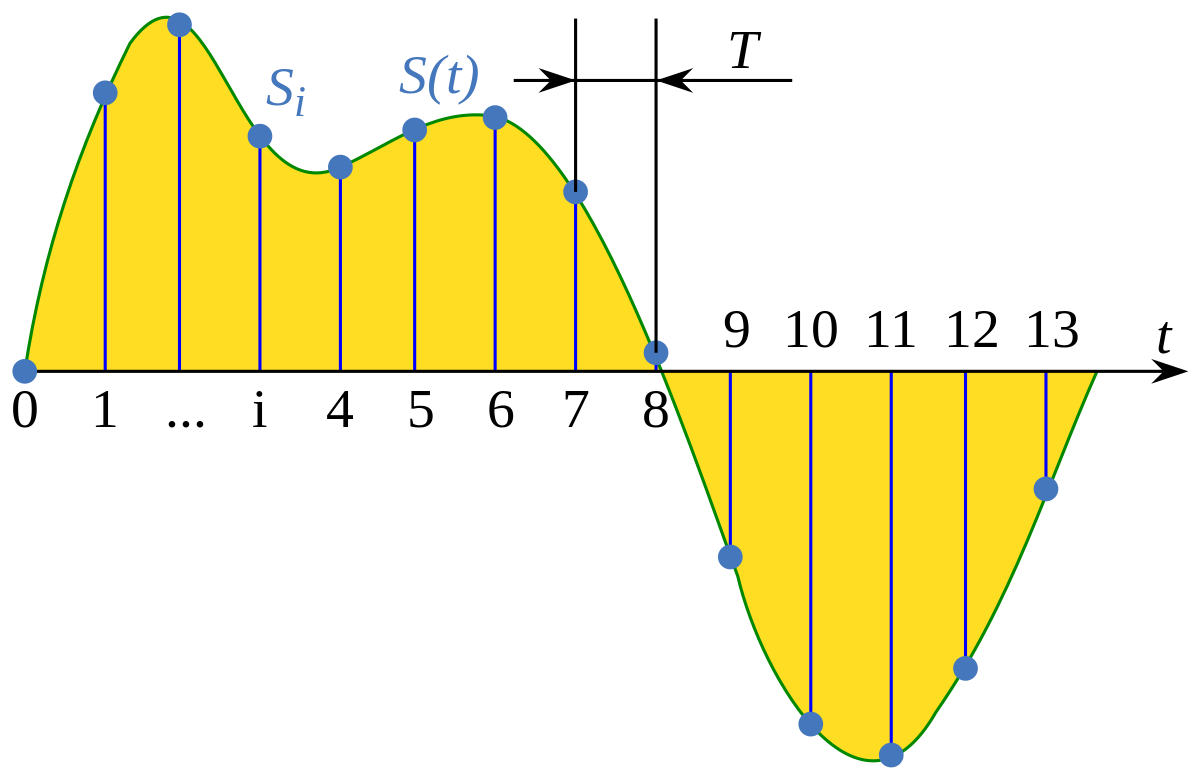
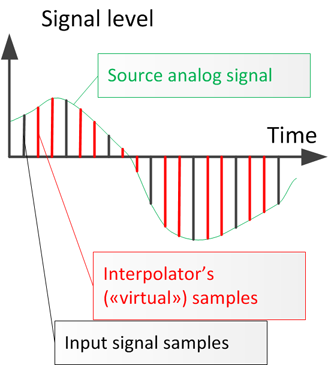
Most digital sound sources are “linear PCM”. This is data obtained by digitizing (sampling) the sound waveform (analog signal) in a canned cycle, and that cycle is called the “sample rate.” If sampling is done every 1/44100 of a second it will be “44.1 kHz”, if it is 1/96000 of a second it will be “96 kHz”, if it is 1/192000 of a second it will be “192kHz”. This means that the implementation cycle of is shorter and the amount of information is greater. In other words, if you look at this number, you can see “how finely the sound was measured with respect to time.”
What is the number of quantization bits?
Value indicating the number of steps in which the amplitude of a signal is expressed when an analog signal is converted to a digital signal (AD conversion) for linear PCM generation. The higher the value, the finer the amplitude of the sound can be captured, and the closer the waveform is to the original sound (analog signal), the more accurately the sound can be reproduced with high resolution.
The large number of quantization bits is directly related to the resolution of the data. For example, when the number of quantization bits is 1 (1 bit), the width of the expression is 2 steps of “0 or 1”, but in 2 bits, there are 4 steps of “00” and “01”, ” 10 “and” 11 “. They can be expressed. Similarly, 4-bit has 16 steps, 8-bit has 256 steps, 16-bit has 65,536 steps, and 24-bit has 16,777,216 steps, allowing for detailed expression.
The “dynamic range” of the maximum / minimum sound ratio that can be handled with the sound waveform data is determined by the number of quantization bits. The dynamic range of human hearing is about 120 dB, but when the number of quantization bits is 16 bits, it reaches 96 dB, but when it is 24 bits, it reaches 144 dB, and when it is 32 bits, reaches 192 dB. (increases by 6 dB for each additional bit) If it is a high resolution sound source, it can handle tiny sounds to powerful sounds with a margin.
Original waveform data. The vertical axis is the sample rate and the horizontal axis is the number of quantization bits.
The higher the sampling frequency (finer the horizontal axis) and the greater the number of quantization bits (finer the vertical axis), the richer in information the “high resolution” sound becomes.
Definition of “high resolution”
High-resolution quality audio sources (hereinafter referred to as high-resolution sound sources) excluding DSD are distinguished by the sample rate and number of quantization bits described above. The term “more than CD specifications” is often used, which means that it is based on the sampling frequency (44.1 kHz) and the number of quantization bits (16 bits) of the CD.
As defined by the Japan Electronics and Information Technology Industries Association (JEITA), high-resolution audio must “either the sampling rate or the number of quantization bits exceed CD specifications”, and sources high resolution sound will follow this.
On the other hand, the Japan Audio Association also defines high resolution, and the recommended high resolution logo is given to audio equipment that guarantees its playability. This standard is divided into analog and digital systems, and the file format is also mentioned, such as setting the standard for high-resolution sound sources to be “96 kHz / 24-bit FLAC and WAV compliant.”