
The difference between 44,100 Hz (music industry) and 48,000 Hz (video industry)

In video production, record the frame rate for shooting and the sample rate for recording. Remember this is one of the basics for shooting and recording.
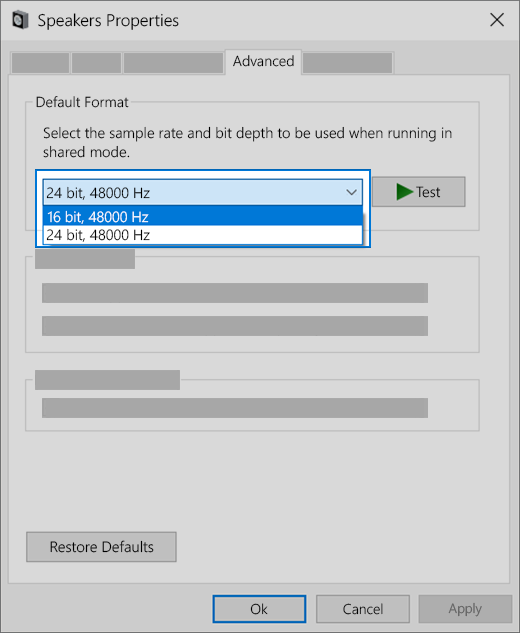
First, about the difference in sampling frequency. Generally speaking
44,100Hz (44.1kHz) is the standard in the music industry
48,000Hz (48kHz) is the sound standard in the video industry
The difference between the two sample rates is just that. I spoke of the sample rate as
the frame rate in video in another article, “Sound Principles Required for Video Production,” Sample Rate and Bit Depth. ”
In other words, the higher the sample rate in Hz, the softer the sound will be.
There are several theories about the historical background of 44,100Hz.
I would like to introduce you to one of the most logical.
First, when sampling sound, you need a sample rate that is at least twice the highest frequency you are recording. This is the sample rate required to obtain a minimum of the waveform. This is because it is not possible to record a sound that has the character of a wave if there is only one place to take a sample. Most people say that the audible range is 50 Hz to 16,000 Hz. Double is 32 kHz, but it seems that the harmonic components that make up the tone need to be recorded in order to record the voice correctly. Only when this is taken into account does it appear that up to 44,100Hz is required. Click here for more details.
Sound Processing “I want to hear my voice clearly” (link outside Vook’s site)
What happens when the sample rate is low?
When digitizing analog information, if the sample rate is not high, the high-frequency information will be hidden in the low-frequency information.
Then the high-frequency sound will be recorded as low-frequency sound. Specifically, see the following illustration.
This is called aliasing.
See also: Wikipedia https://en.wikipedia.org/wiki/Aliasing#/media/File:AliasingSines.svg
In any case, by definition, 48,000 Hz has better sound quality than 44,100 Hz. The video industry has introduced 48,000 Hz.
One problem that sometimes occurs is that “I was recording a video at 48 kHz and the separately recorded microphone was set to 44.1 kHz.” At first I thought that different sample rates would be a big deal, but it doesn’t really seem to be the case.
Audio recorded at a small sample rate just has a small number of samples per second, but since there is almost no difference between 44.1 kHz and 48 kHz, I think the difference is barely noticeable when listening to the sound regularly. At 96 kHz, the sound quality is even higher, but the number of samples is so large that ordinary people cannot hear it at all.
In some cases, the sample rate is really important.
1) By writing the audio actually recorded with a different sample number as a video file. This is because the sample rate must be converted to a video sample rate that is different from the conventional 44.1 kHz and 96 kHz sample rates, that is, 48 kHz. Software that specializes in video editing seems to have sound distortion at this point.


