What is the difference between bitrate 128 and 320.


Free Download Mp4Gain
picture

What is the difference between bitrate 128 and 320.

128 kbps vs 320 kbps MP3

Have you ever wondered what exactly you lose by compressing from lossless to 128kbps or 320kbps mp3?

128 kbps and 320 kbps MP3

I checked it and the result seemed interesting to me. First of all, I propose to take a survey to understand for yourself if you hear the difference. If you are not sure what you are hearing or you are sure you are not listening, then I bring you a simple and elegant idea: you should take and collide with your forehead two sound waves, one of which will be in antiphase, respectively, when you mix two. tracks, you will mainly hear what is not extinguished. I don’t promise cool graphics yet, but on your own system you can hear exactly what sounds were lost when compressed from flac to mp3 128 \ 320 kbps, file with examples at the end of the article.

You need to download and listen to 12 tracks for 30 seconds. Then specify one of the 3 options for each of the 4 songs (128 kbps, 320 kbps, or lossless).
The survey is anonymous, but you can specify a unique hash and tell me, as a last resort, post your opinion here, but always under the spoiler. The survey will last until February 25, after you publish the key and statistics.
Files on Yandex Disk, mirror on Dropbox (~ 80Mb).

Description of the experiment

Source files are cut into 10-second chunks, each chunk is exported to wav. After importing the resulting tracks, 2 seconds of silence and a second tone signal are added at the beginning of each, then converted to mp3. After importing mp3 files, it turns out that relative to the original, the resulting file “went ahead”. This is not a bug, it is. We sync against the given pitch signal from the original (I tried various values ​​for each mp3 file, which I then refined to get the best result), remove the pitch signal, mute, and export the resulting tracks to wav. Now it remains to invert the tracks so that we obtain multidirectional peaks, and mix with the original.

Outcome

Yes, there is a difference. Yes, especially when compressing up to 128 kbps. Yes, it depends on the music. Yes, even more of the audio path.
You can draw an independent conclusion and hear the difference by downloading the files at
Bit rate is indicated as one of the main characteristics of video and audio recordings. Most users are used to thinking that it determines the quality of the downloaded file. But what are bit rates and how do they really characterize music files and videos?


Free Download Mp4Gain
picture


Mp4Gain Main Window
picture


Mp4Gain Features
picture


Free Download Mp4Gain
picture

CD VS MP3. AUDIO FORMATS: LP TO MP3

AUDIO FORMATS: LP TO MP3

Vinyl vs CD vs MP3

Sound recording in “digital”

Casstte vs. CD vs. MP3

By its nature, sound is an oscillatory movement of particles in an elastic medium, which propagates in the form of waves. After it became clear that sound represents such vibrations, the idea came up to record them by repeating the shape on solid material. So, in 1877, Thomas Edison created a phonograph, a device for the mechanical recording and reproduction of sound. And in 1888, the German E. Berliner invented the gramophone – the era of gramophone records began, which became the first massive carriers of audio information. Having studied the laws of electromagnetism, man made successful experiments to convert sound waves into electromagnetic waves and preserve them. Thus appeared the magnetic tape, which became widespread in the middle of the 20th century.

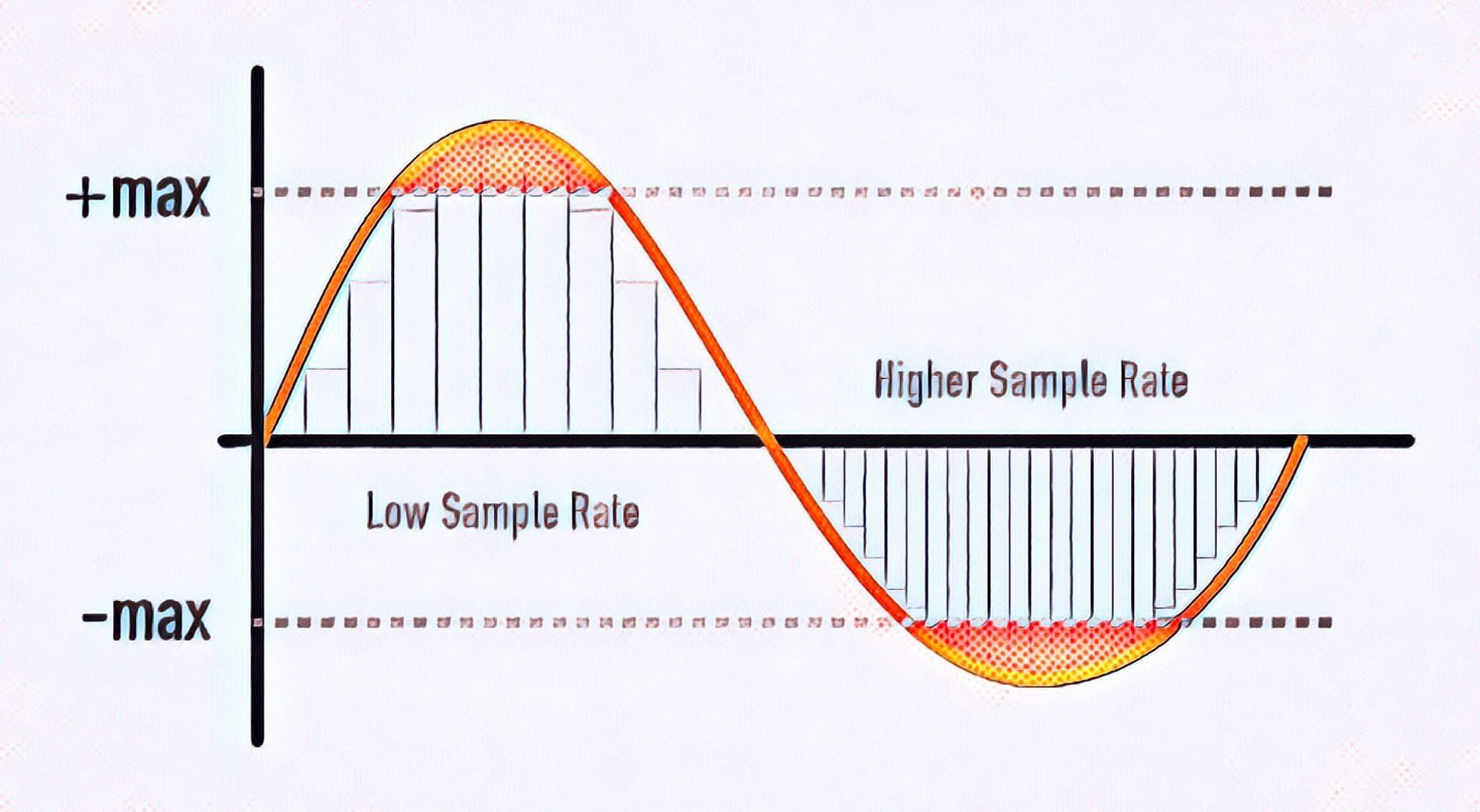
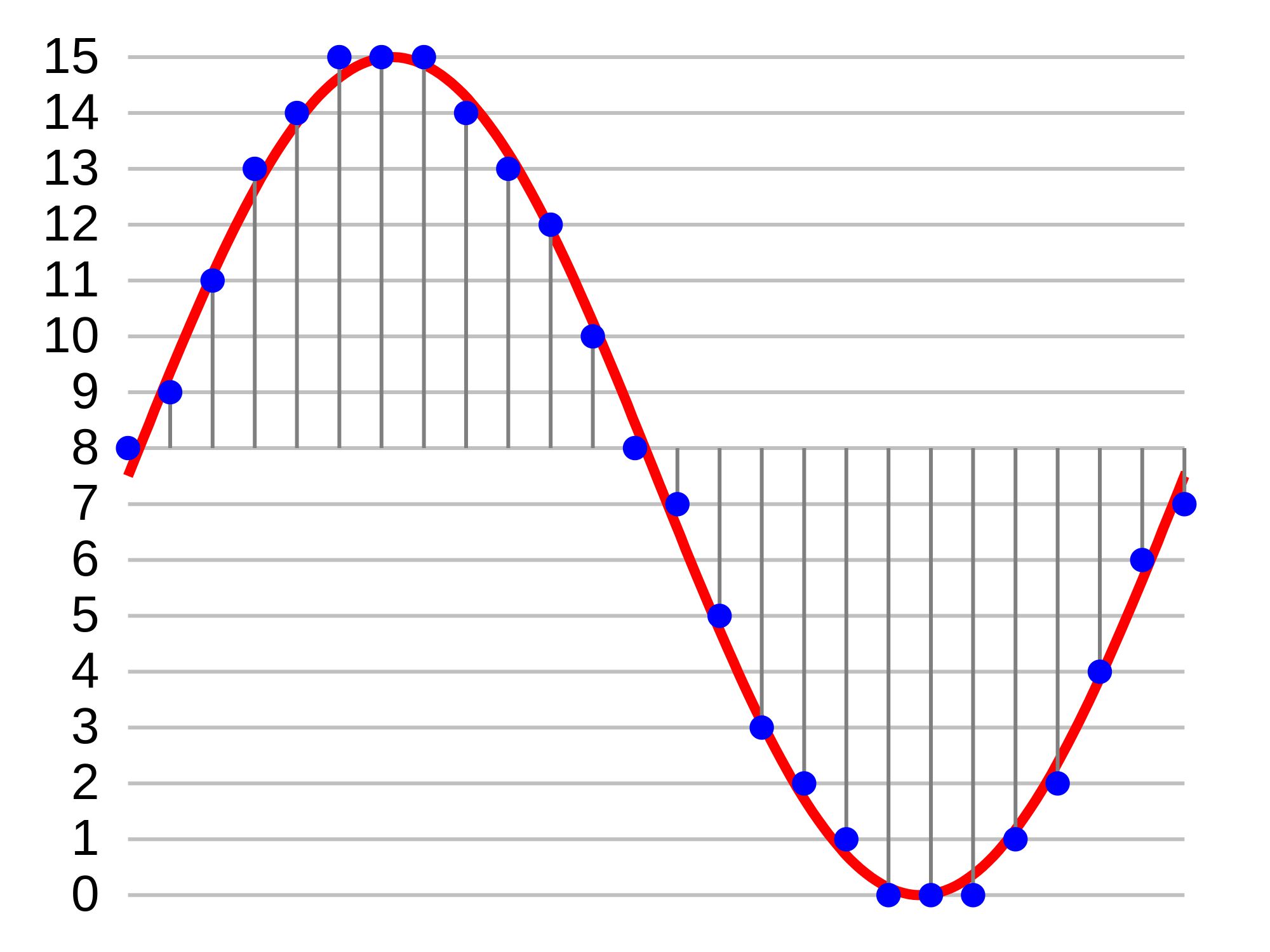
For digital technology to store, process, and reproduce sound, it is converted to digital form by an analog-to-digital converter (ADC), which converts an analog signal into a sequence of numbers. This is called Pulse Code Modulation (PCM or PCM). It happens like this: the ADC many times per second measures the amplitude of the analog signal and outputs the results in the form of numbers. However, the measurement result does not exactly match a continuous electrical signal: it depends on the number of measurements and their precision.

The frequency at which measurements are taken is called the sample rate, and the precision of the amplitude measurement indicates the number of bits used to indicate the result of the measurement. This parameter is called bitness. For example, if the sampling frequency is 44.1 kHz, this means that the signal is measured 44 100 times per second. For the analog signal to be accurately reconstructed from its samples, the sample rate must be twice the maximum audio frequency. That is, if the analog signal contains frequency components from 0 Hz to 20 Hz, then the frequency of its sampling must be at least 40 kHz.

Digital audio formats

Of course, for digitized sound to be stored, transmitted, and converted, there must be certain digital sound standards – audio formats. Today, there are many such formats, each of which uses its own sound processing algorithm. They also differ in the information carriers. The most popular and widespread today in the field of home use are ordinary music CDs – CDs. Relatively new recording formats have also appeared Super Audio Compact Disk (SACD) and DVD-Audio (or simply DVD-A). Also, formats that use digital data compression have become widespread. The most popular among them is MPEG-1/2 / 2.5 Layer 3 (MP3). Microsoft also did not stay away from the sound industry, as it developed its own compression algorithm: WMA,

CD

It was created in 1979 by Philips and Bayer. The disk storage format known as “Red Book” allows you to record 2-channel audio with 16-bit pulse code modulation (PCM) and a sample rate of 44.1 kHz. Mass production of CDs started in 1982 in Germany. The first CDs contained up to 650 megabytes of information, which is equivalent to 74 minutes of audio. There is an assumption that the developers calculated that volume to fit Beethoven’s Ninth Symphony, the most popular piece of music in Japan in 1979, on a compact. Since about 2000, discs with a volume of 700 megabytes, which record 80 minutes of audio, and 800 megabytes, 90 minutes, have become more common.

Pros: widespread, compatible with a large number of devices, acceptable sound quality.
Disadvantages: Lack of multi-channel support.

Compressed audio formats

Scientific development of the compression algorithm has taken place since the late 1970s, and the general standard was approved in 1994 at the Fraunhofer Institute (Germany). Signal coding technology has a mechanism to ignore sound frequencies that are not distinguishable by the human ear. And the distinguishable ones, that is, the remaining ones, shrink. Compression ratio: the bit rate (the amount of information in a unit of time; the lower the bit rate, the less information is in the file) can range from 8 to 320 kbps (the data stream of a normal CD is 1411.2 kbps at 44100 Hz sampling rate). It should be noted that it will be quite difficult for an inexperienced listener to hear these losses, especially if the encoding is done at a high bit rate. A musical composition in MP3 format, recorded with a fairly acceptable quality, “weighs” about 10 times less than uncompressed.