What sound quality is better than 320 or 128?


Free Download Mp4Gain
picture

What sound quality is better than 320 or 128?
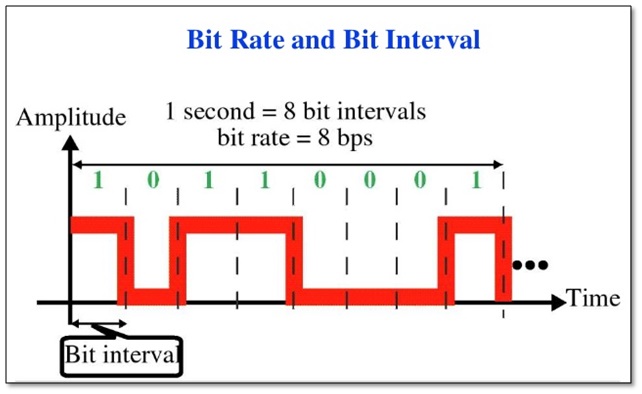
Bit Rate

What are bit rates? How do they affect the quality of music and video? Optimal bit rate for various musical styles

Bit Rate

There is a lot of talk these days that we have lost real music with the advent of compressed audio formats like MP3, AAC and the like. Is it really so? Will lossless music save music? Can an inexperienced listener tell the difference between MP3 and FLAC music? Let’s take a look at this problem.

What is Bitrate?

You’ve probably heard the term “bitrate” before, and you probably have a basic idea of ​​what it means, but it might be a good idea to familiarize yourself with its official definition to find out how it all works.

Bit rate is the number of bits or the amount of data that is processed over a period of time. In audio, this generally means kilobits per second. For example, the music you buy from iTunes is 256 kilobytes per second, which means that every second of the song

The higher the bit rate of the track, the more space it will take up on your computer. Audio CDs typically take up quite a bit of space, so it has become common practice to compress these files so that you can burn more music to your hard drive (or iPod, Dropbox or whatever). This is where the “lossy” and “lossy” formats conflict.

Lossless and Lossy formats: what’s the difference?

When we say lossless, we mean that we haven’t really changed the original file. That is, we copy a track from the CD to our hard drive, but we do not compress it to the point of losing data. Essentially the same as the original CD track.

However, most of the time, you will probably extract your music in Lossy format. That is, you took a CD, copied it to your hard drive, and compressed the tracks so they don’t take up a lot of space. A typical album is probably about 100MB. The same lossless album as (aka Apple Lossless) will be about 300MB in size, so it has become common practice to use lossy formats for faster boot times and more hard drive savings.

The problem is that when you compress a file to save space, you are removing chunks of data. Just like when you take a high-quality image and compress it to JPEG, your computer grabs the raw data and “tricks” certain parts of the image into being basically the same, but with some loss of clarity and quality.


Free Download Mp4Gain
picture


Mp4Gain Main Window
picture


Mp4Gain Features
picture


Free Download Mp4Gain
picture

Does the birate of an mp3 affect the quality or is it just an impression?

Since the mp3 appeared, I always understood that it is a lower format than the CD quality, no matter how much bit rate it contains. When it comes to mixing and producing my personal recordings, I have used wave support and when converting it to mp3 it is impossible not to distinguish the differences: at least, the reduction of bass and treble is very noticeable. The dishes of the drums or the bass are very opaque and hidden, sometimes they even disappear. But in these assessments I think that perhaps my subconscious has betrayed me in some cases.

bitrate

First of all I will explain some basic things about mp3 and its bitrate (or bit rate). Compressing sound means loss of quality, so you have to pay attention to how much information is transmitted per unit of time: the most used encodings for mp3 are 64, 128, 192 and 320 kbps (kilobits per second). Thus, a song of 64 will occupy less space than one of 128 and so on. Nor should we forget the CBR, constant bitrate, and the VBR, variable bitrate. The latter is more advisable when compressing different parts of a recording with various bitrates.

Well, there has always been controversy and confrontation between those who prefer to save space and opt for the musical amount, claiming that the quality differences of the mp3 are almost imperceptible to our ears, and those who bet on the qualitative details of the music, preferring heavier files and with higher bitrates, emphasizing the multiple peculiarities that our auditory system loses to lower quality media. I have been a supporter of the second group, although current opinions about it make me doubt my choice.

volume booster

I recently informed myself about a study conducted by programmer Jeff Atwood through his blog, in which he tried to discover if normal people, fond of music (but without becoming music experts) notice the differences between mp3 formats . More than 3,500 people participated in the study, who had to listen to 5 different audio files (with bitrates between 128 and 320 Kbps and one without compression) and vote from 1 to 5 depending on the quality they had received. Naturally, users were unaware of the characteristics of the media so as not to influence their objectivity. The results were as follows: the 128 Kbps CBR mp3 was undoubtedly considered the worst; the one of 160 Kbps VBR would be the one of better quality, surpassing even the one of 320 CBR (the variable bit rate would be higher than the fixed one). This is very curious since it is assumed that an original CD would house a quality between 192 and 256 Kbps. According to the study cited, the mp3 of 160 would have more quality than the compact, which seems absurd, so I tend to think that the Most people, after 160, do not distinguish some sounds from others, also taking into account that the subconscious can deceive us and make us imagine what it is not.

In short, the best way to compress, saving on storage and with optimal sound, would be thanks to the 192 Kbps VBR bitrate. From there, onwards, it is very difficult to appreciate nuances and alterations.

We must also consider something logical: if we recompress a file of 128 and convert it to 192 Kbps, improvements will not be achieved and we will lose space. If we do the opposite, go from 192 to 128 Kbps, we will reduce the quality somewhat but reduce the weight of the file.

I think this experiment obviates interesting data such as knowing the player or equipment from which the music was broadcast (computer, speakers, headphones, hi-fi equipment, etc.), listening time (our senses do not lend the same attention for 5 minutes than during 20) or musical style (electronic, rock, classical, etc.), since all these factors can greatly influence the final result.

Even, and this is proven: the volume (if the file is normalized) and the dynamics (a normalization like the one that only Mp4Gain does) manage to make one perceive the music as with higher quality.