Analog vs Digital Audio


Free Download Mp4Gain
picture

Analog vs Digital Audio: Understanding the Differences

Analog vs Digital Audio

Analog Audio: The Old School Sound

Analog audio refers to a sound signal that is continuous and unbroken. It is the old school way of recording sound, and it has been around for a long time. In the early days of audio recording, analog technology was the only option. Record players, cassette tapes, and reel-to-reel tapes were all analog formats that produced a unique sound.

One of the main advantages of analog audio is the warmth and depth of the sound. Analog recordings have a certain character that digital recordings simply can’t match. As author Salman Rushdie once said, “Analog is warm, digital is cold.”

However, analog audio is also subject to degradation and noise. Over time, the signal can deteriorate, resulting in a loss of quality. Analog recordings also tend to have more background noise and hiss than digital recordings.

Digital Audio: The Modern Sound

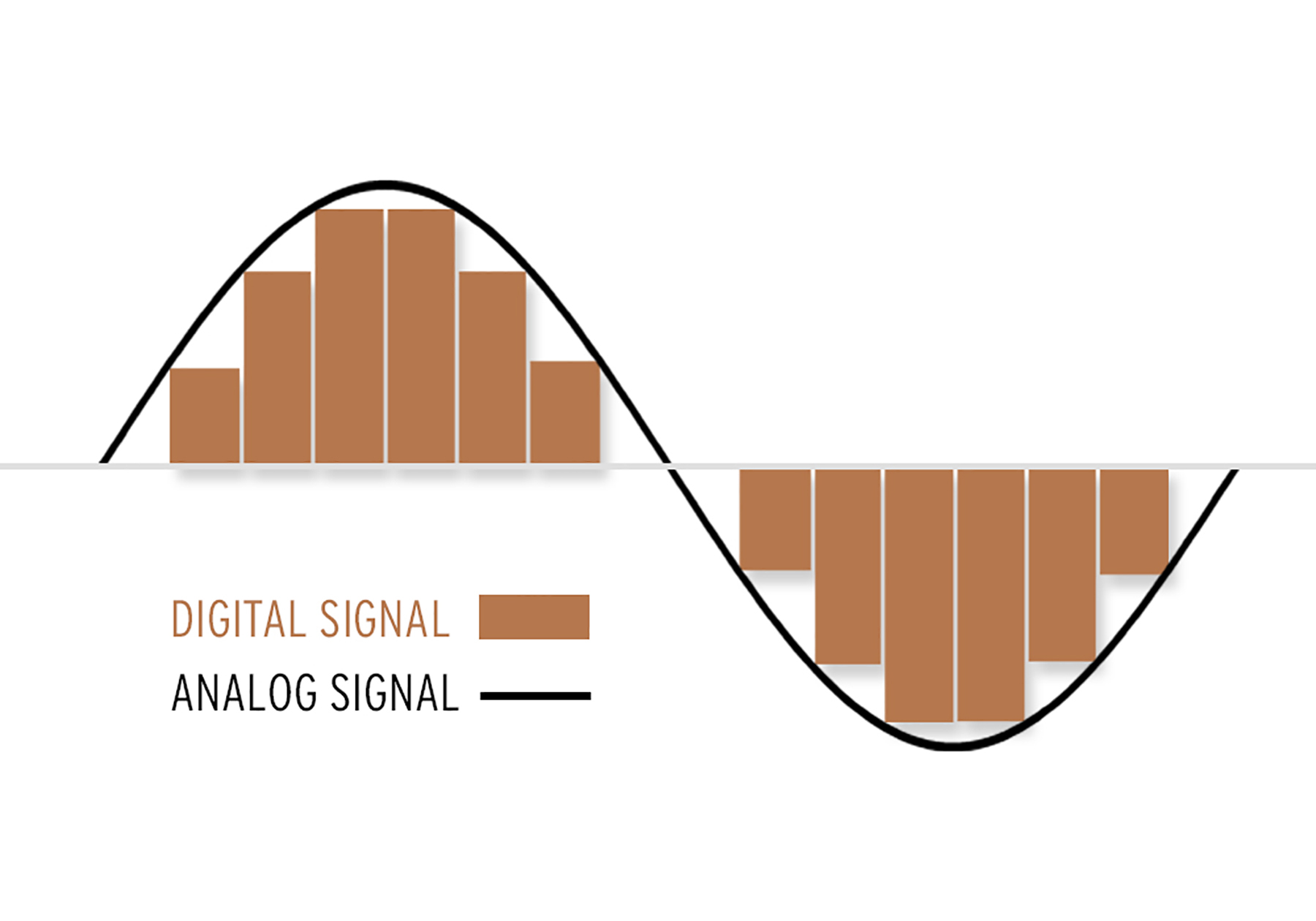
Digital audio, on the other hand, is a more modern method of recording sound. It involves converting sound waves into a series of numbers that can be stored and manipulated. The digital format has become increasingly popular in recent years, and it is now the standard for most audio recordings.

One of the main advantages of digital audio is its precision and clarity. Digital recordings are much more accurate and can reproduce sound with much greater fidelity than analog recordings. They are also immune to the degradation and noise that can affect analog recordings.

However, some people argue that digital recordings lack the warmth and character of analog recordings. As musician Jack White once said, “Digital sounds like it has a condom on it.”

Analog vs Digital: Which is Better?

So, which is better, analog or digital? The truth is, it depends on who you ask. Some people prefer the warmth and character of analog recordings, while others prefer the precision and clarity of digital recordings.

At the end of the day, the choice between analog and digital comes down to personal preference. Both formats have their advantages and disadvantages, and it ultimately comes down to what kind of sound you prefer.

Conclusion: The Best of Both Worlds

At mp4gain.com, we understand the importance of sound quality. That’s why we’ve developed a powerful audio normalization and conversion software that can work with both analog and digital formats. Our software can help you get the best of both worlds by optimizing your audio for clarity and warmth.

As technology continues to evolve, we can expect to see new and innovative ways of recording and manipulating sound. But no matter what the future holds, we will always be dedicated to providing our customers with the highest quality sound possible.

Final Words:

In the end, whether you prefer analog or digital audio comes down to personal preference. Both formats have their advantages and disadvantages, and it’s up to you to decide which one is best for you. But with the right tools and techniques, you can achieve great sound quality no matter what format you choose.


Free Download Mp4Gain
picture


Mp4Gain Main Window
picture


Mp4Gain Features
picture


Free Download Mp4Gain
picture

Digital Music vs Analog Music – A Comparison

Digital Music vs Analog Music – A Comparison

Analog Vs. Digital Audio

Digital music and analogue music have many differences. From the way audio information is stored to the quality of playback, there are many things to consider when choosing between these two audio formats. Below, we’ll discuss some of these differences to help you decide which one is best for your needs.

Digital vs Analog Audio

Storing music

The most common way to store digital music is in a compressed file format. This means that the music is compressed so that it takes up less space on your hard drive. This also means that a computer will be needed to play the music. Digital music can be stored in a variety of formats, such as MP3, WAV, and FLAC.

Analog music, on the other hand, is stored in an uncompressed format. This means that more storage space will be needed to store the same amount of music. It also means that you will need a record player or audio equipment to play the music. Analog music is stored in formats such as vinyl or cassette.

Music quality

In terms of audio quality, digital music and analogue music can be very similar. The audio quality of digital music depends primarily on the file format in which it is stored and the audio equipment with which it is played. Although compressed file formats such as MP3 may produce lower audio quality than uncompressed formats such as WAV, the difference may be imperceptible to many listeners.

When it comes to analog music, the audio quality depends on the quality of the audio equipment and the state of the music itself. For example, vinyl in poor condition can produce a very loud sound. On the other hand, well-maintained vinyl can produce incredibly good sound. The audio quality of analog music also depends on the audio equipment with which it is played. Good audio equipment can significantly improve the audio quality of analog music.

Ease of use

In terms of ease of use, digital music is much easier to use than analogue music. With digital music, you only need a computer to play the music, which means you don’t have to worry about maintaining audio equipment. Also, digital music is much easier to share than analog music.

Analog music can be a bit more difficult to use than digital music. To get started, you’ll need audio equipment to play the music. This means that you will need to perform regular maintenance to ensure that the equipment is working properly. Also, analog music is much more difficult to share than digital music, since it cannot be sent via email or shared online.

Recording music

Another important difference between digital music and analogue music is the way the music is recorded. To record digital music, you’ll need a computer and audio recording software. This will allow you to record the music and save it in a compressed file format, such as MP3. This means that digital music can be easily recorded, edited and shared.

To record analog music, you’ll need audio recording equipment. This will allow you to record the music onto a vinyl record or tape. This means that analog music is much more difficult to record, edit and share than digital music.

Cost

Due to the difference in equipment needed to play and record music, there is a big difference in costs between digital music and analogue music. Digital music is much cheaper as you only need a computer to play and record the music. Analog music, on the other hand, can be much more expensive, since you’ll need audio equipment to play the music and recording equipment to record it.

Conclusion

As you can see, there are many differences between digital music and analogue music. Depending on your needs, one may be better than the other. If you need an easy way to share and record music, digital music is the way to go. If you are looking for superior audio quality, analog music may be the best option.

Difference between digital and analog

Difference between digital and analog

Analog vs. Digital

The sound is analog. And sound is the vibration of the air. How is this sound vibration transmitted?

Analog vs Digital

For example, when a stone is thrown into a calm water surface, the ripples spread around it, but if
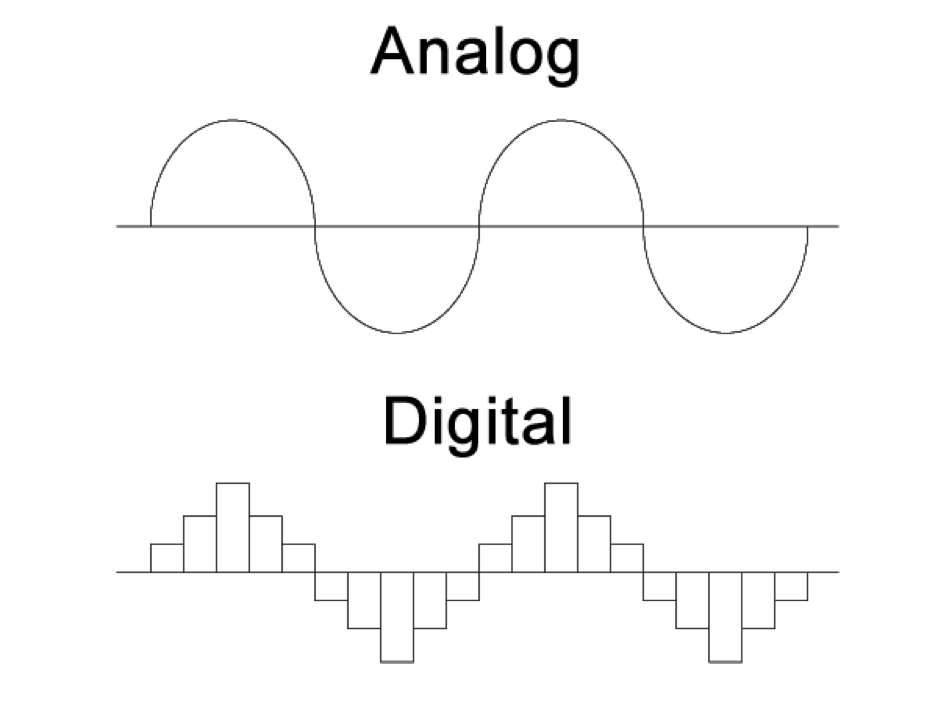
Cut in the direction of the waves and look at the cut end, the waveform is as shown in Fig.1.

Air waves spread from the point where sound is emitted even in air. Although invisible to the eye, it has a
similar waveform. This is the analog waveform of sound.

Therefore, although it is digital, when such a sound waveform is recorded or communicated by phone or wireless, as
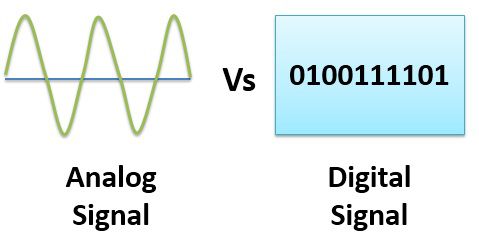
shown in Fig. 2, the change in the analog waveform is electrically replaced with a series of numerical values ​​according to a certain promise. ..

When recording or communicating, if you handle it as analog, it is easy for noise to enter and the sound quality to deteriorate, but when trying
the waveform of the sound as digital = numerical data, you can eliminate that worry and
maintain a certain quality. You can do various processing while maintaining it.

(2) What is convenient when it is digital

Digital audio signals are convenient because they can be recorded and edited using a personal computer, for example.

In addition, 74 minutes of music can be recorded on a CD with a diameter of only 12 cm, and through digital compression processing
, music of the same length can be recorded on an MD with a smaller diameter.

Since digital signals can be compressed in this way, it is also convenient for storing large amounts of information.
Not only sound, but also video signals with a higher amount of information can be recorded and communicated at high speed through the use of compression technology.

Especially in communication, a two-way digital multiplex communication can be realized communicating multiple pieces of information with a single wire.
In addition to electrical signals, laser light can also be used for optical communication, making communication possible at extremely high speeds.

(3) What is the sampling frequency?

Digital signals are processed at predetermined fixed time intervals.
The sample rate (sample rate) indicates how many times a second is processed and is expressed as Fs or fs.

The sampling frequency unit is Hz (Hertz), and the
44.1 kHz (kilohertz) sampling rate means 44,100 pieces of data are processed per second.
(K represents 1000 times)

AD conversion converts a continuous analog signal into a digital signal,
measures the size of the signal at each moment determined by the sampling frequency (sampling) and converts
the result in a binary number (quantization).

On the other hand, DA conversion converts a digital signal into an analog signal,
It reads the digital signal in the sample rate time interval and connects it smoothly.

Since digital signals can be reproduced up to half the sampling frequency, how much
The higher the sample rate, the higher the playable frequency and the better the sound quality.
In familiar areas, 44.1 kHz is used for CD, and 48 kHz is used for DAT and B modes of satellite transmission.

In addition, recent professional equipment uses high sampling frequencies (high sampling), such as 88.2 kHz and 96 kHz,
and are designed to faithfully reproduce even higher frequency sounds to improve sound quality.