
Digital Audio vs. Analog Audio

Introduction Digital vs Analog audio
The debate between digital audio and analog audio has been ongoing for decades. Both methods have their advantages and disadvantages, and the choice between them ultimately depends on the specific needs and preferences of the listener. In this article, we will explore the differences between digital and analog audio, and provide an in-depth analysis of their respective strengths and weaknesses.
What is Analog Audio?
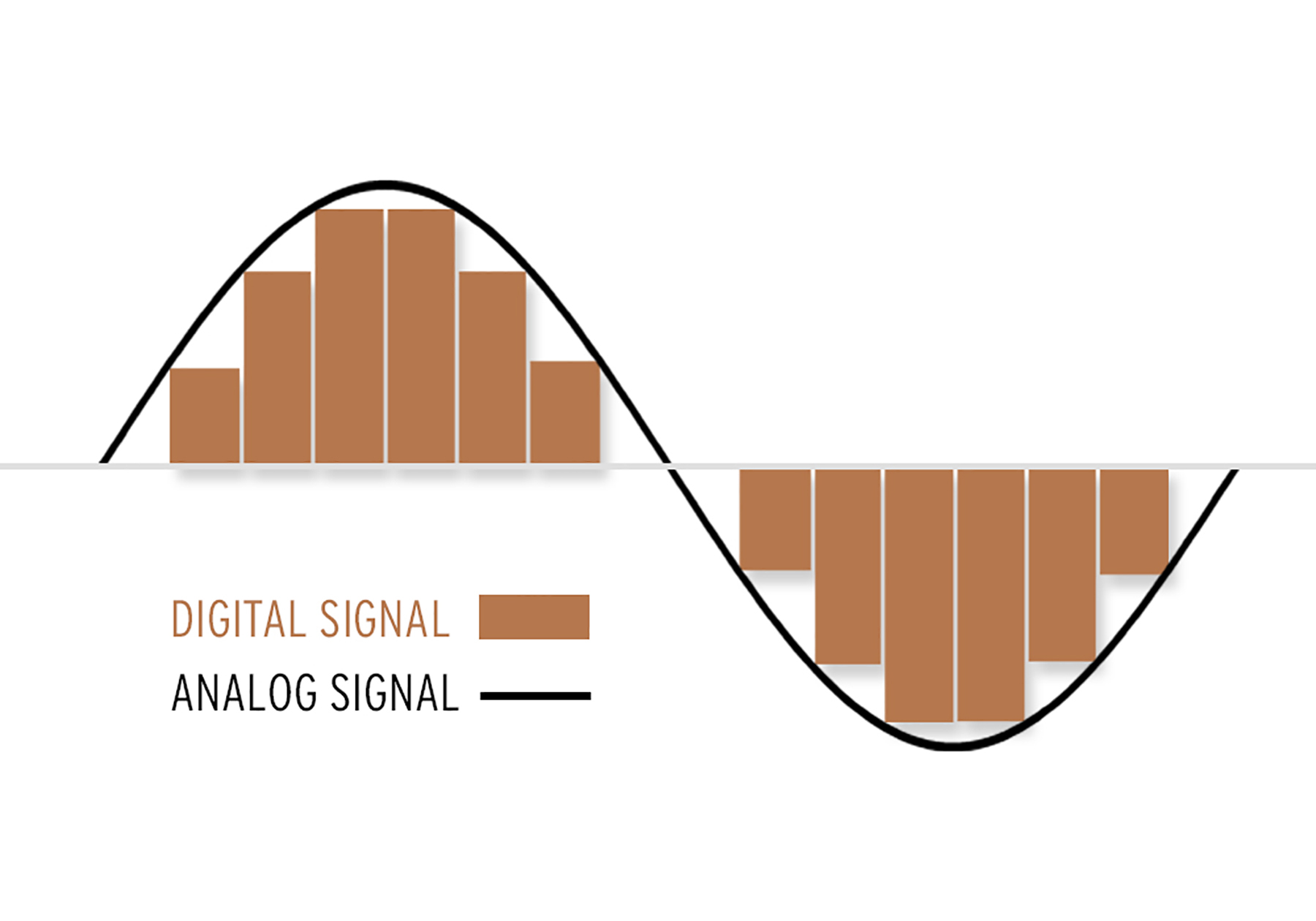
Analog audio is the original method of recording and reproducing sound. It involves capturing sound waves as continuous, analog signals and storing them on physical media, such as vinyl records, cassette tapes, or magnetic tapes. To play back the recorded sound, an analog signal is sent through an amplifier and converted into sound waves by a speaker.
One of the primary advantages of analog audio is its warm, natural sound. Because analog signals are continuous, they can capture subtle nuances and variations in sound that can be lost in digital recording. However, analog audio is also susceptible to distortion and degradation over time, which can cause the sound quality to deteriorate.
What is Digital Audio?
Digital audio, on the other hand, involves converting sound waves into a series of binary code, which can be stored and manipulated on electronic devices such as CDs, MP3 players, and computers. Unlike analog signals, digital signals are discrete and quantized, which means they can be precisely controlled and reproduced without loss of quality.
Digital audio also has the advantage of being easily editable and shareable, as it can be manipulated and transferred between devices with minimal loss of quality. However, some argue that digital audio lacks the warmth and character of analog audio, and can sometimes sound harsh or clinical.
Advantages and Disadvantages of Analog Audio
Advantages:
- Natural, warm sound
- Captures subtle nuances and variations in sound
- Can be played on analog equipment without conversion
Disadvantages:
- Susceptible to distortion and degradation over time
- Limited editing and manipulation options
- Less convenient for storage and transport
Advantages and Disadvantages of Digital Audio
Advantages:
- Precise, high-quality sound
- Easily editable and shareable
- Can be compressed for efficient storage and transport
Disadvantages:
- Lacks the warmth and character of analog audio
- Can sometimes sound harsh or clinical
- May require conversion to be played on analog equipment
Which is Better: Digital or Analog Audio?
The answer to this question ultimately depends on the specific needs and preferences of the listener. While some people prefer the warm, natural sound of analog audio, others prefer the precise, high-quality sound of digital audio.
It’s worth noting that many modern recordings are made using a combination of both analog and digital methods, with analog equipment used to capture the initial sound and digital methods used for editing and manipulation. This hybrid approach can often provide the best of both worlds.
FAQ
What is the difference between analog and digital audio?
Analog audio involves capturing sound waves as continuous signals and storing them on physical media, while digital audio involves converting sound waves into binary code and storing them on electronic devices.
What are the advantages of analog audio?
Analog audio has a warm, natural sound that some people prefer over digital audio. Analog signals can also capture subtle nuances and variations in sound that can be lost in digital recording.
What are the disadvantages of analog audio?
Analog audio is susceptible to distortion and degradation over time, which can cause the sound quality to deteriorate. Analog recordings are also limited in terms of editing and manipulation options, and can be less convenient for storage and transport.
What are the advantages of digital audio?
Digital audio provides precise, high-quality sound that can be easily edited and shared between devices. Digital audio can also be compressed for efficient storage and transport.
What are the disadvantages of digital audio?
Some people argue that digital audio lacks the warmth and character of analog audio, and can sometimes sound harsh or clinical. Digital audio may also require conversion to be played on analog equipment.
Can analog audio be converted to digital?
Yes, analog audio can be converted to digital using an analog-to-digital converter (ADC).
Can digital audio be converted to analog?
Yes, digital audio can be converted to analog using a digital-to-analog converter (DAC).
What is the difference between lossless and lossy audio compression?
Lossless audio compression retains all of the original audio data, while reducing the file size through compression algorithms. Lossy audio compression, on the other hand, sacrifices some of the audio data in order to achieve greater compression and smaller file sizes.
What is the difference between bit rate and sample rate?
Bit rate refers to the amount of data used to represent one second of audio, while sample rate refers to the number of samples taken per second to represent the audio.
What is the difference between a codec and a file format?
A codec is a software algorithm used to compress and decompress audio data, while a file format specifies how the compressed audio data is stored in a file.
What is the difference between WAV and MP3 audio files?
WAV files are uncompressed, lossless audio files that retain all of the original audio data, while MP3 files are compressed, lossy audio files that sacrifice some of the audio data in order to achieve greater compression and smaller file sizes.
Can digital audio be as high quality as analog audio?
Yes, digital audio can be of high quality, but it may not have the same warmth and character as analog audio.
What is the future of audio technology?
The future of audio technology is likely to involve advancements in digital audio processing, such as higher bit rates and sample rates, improved compression algorithms, and more efficient storage and transmission methods.
Is it possible to improve the sound quality of analog audio recordings?
Yes, it is possible to improve the sound quality of analog audio recordings through various techniques, such as remastering, noise reduction, and equalization.
How important is the quality of audio equipment?
The quality of audio equipment can have a significant impact on the sound quality of audio recordings and playback. High-quality equipment can capture and reproduce audio more accurately, while lower-quality equipment may introduce distortion and other artifacts.


