Digital Music vs Analog Music – A Comparison


Free Download Mp4Gain
picture

Digital Music vs Analog Music – A Comparison

Analog Vs. Digital Audio

Digital music and analogue music have many differences. From the way audio information is stored to the quality of playback, there are many things to consider when choosing between these two audio formats. Below, we’ll discuss some of these differences to help you decide which one is best for your needs.
Digital vs Analog Audio

Storing music

The most common way to store digital music is in a compressed file format. This means that the music is compressed so that it takes up less space on your hard drive. This also means that a computer will be needed to play the music. Digital music can be stored in a variety of formats, such as MP3, WAV, and FLAC.

Analog music, on the other hand, is stored in an uncompressed format. This means that more storage space will be needed to store the same amount of music. It also means that you will need a record player or audio equipment to play the music. Analog music is stored in formats such as vinyl or cassette.

Music quality

In terms of audio quality, digital music and analogue music can be very similar. The audio quality of digital music depends primarily on the file format in which it is stored and the audio equipment with which it is played. Although compressed file formats such as MP3 may produce lower audio quality than uncompressed formats such as WAV, the difference may be imperceptible to many listeners.

When it comes to analog music, the audio quality depends on the quality of the audio equipment and the state of the music itself. For example, vinyl in poor condition can produce a very loud sound. On the other hand, well-maintained vinyl can produce incredibly good sound. The audio quality of analog music also depends on the audio equipment with which it is played. Good audio equipment can significantly improve the audio quality of analog music.

Ease of use

In terms of ease of use, digital music is much easier to use than analogue music. With digital music, you only need a computer to play the music, which means you don’t have to worry about maintaining audio equipment. Also, digital music is much easier to share than analog music.

Analog music can be a bit more difficult to use than digital music. To get started, you’ll need audio equipment to play the music. This means that you will need to perform regular maintenance to ensure that the equipment is working properly. Also, analog music is much more difficult to share than digital music, since it cannot be sent via email or shared online.

Recording music

Another important difference between digital music and analogue music is the way the music is recorded. To record digital music, you’ll need a computer and audio recording software. This will allow you to record the music and save it in a compressed file format, such as MP3. This means that digital music can be easily recorded, edited and shared.

To record analog music, you’ll need audio recording equipment. This will allow you to record the music onto a vinyl record or tape. This means that analog music is much more difficult to record, edit and share than digital music.

Cost

Due to the difference in equipment needed to play and record music, there is a big difference in costs between digital music and analogue music. Digital music is much cheaper as you only need a computer to play and record the music. Analog music, on the other hand, can be much more expensive, since you’ll need audio equipment to play the music and recording equipment to record it.

Conclusion

As you can see, there are many differences between digital music and analogue music. Depending on your needs, one may be better than the other. If you need an easy way to share and record music, digital music is the way to go. If you are looking for superior audio quality, analog music may be the best option.


Free Download Mp4Gain
picture


Mp4Gain Main Window
picture


Mp4Gain Features
picture


Free Download Mp4Gain
picture

Is it true that vinyl record players have better sound quality? (Part 2)

Is it true that vinyl record players have better sound quality? (Part 2)

Vynil vs digital

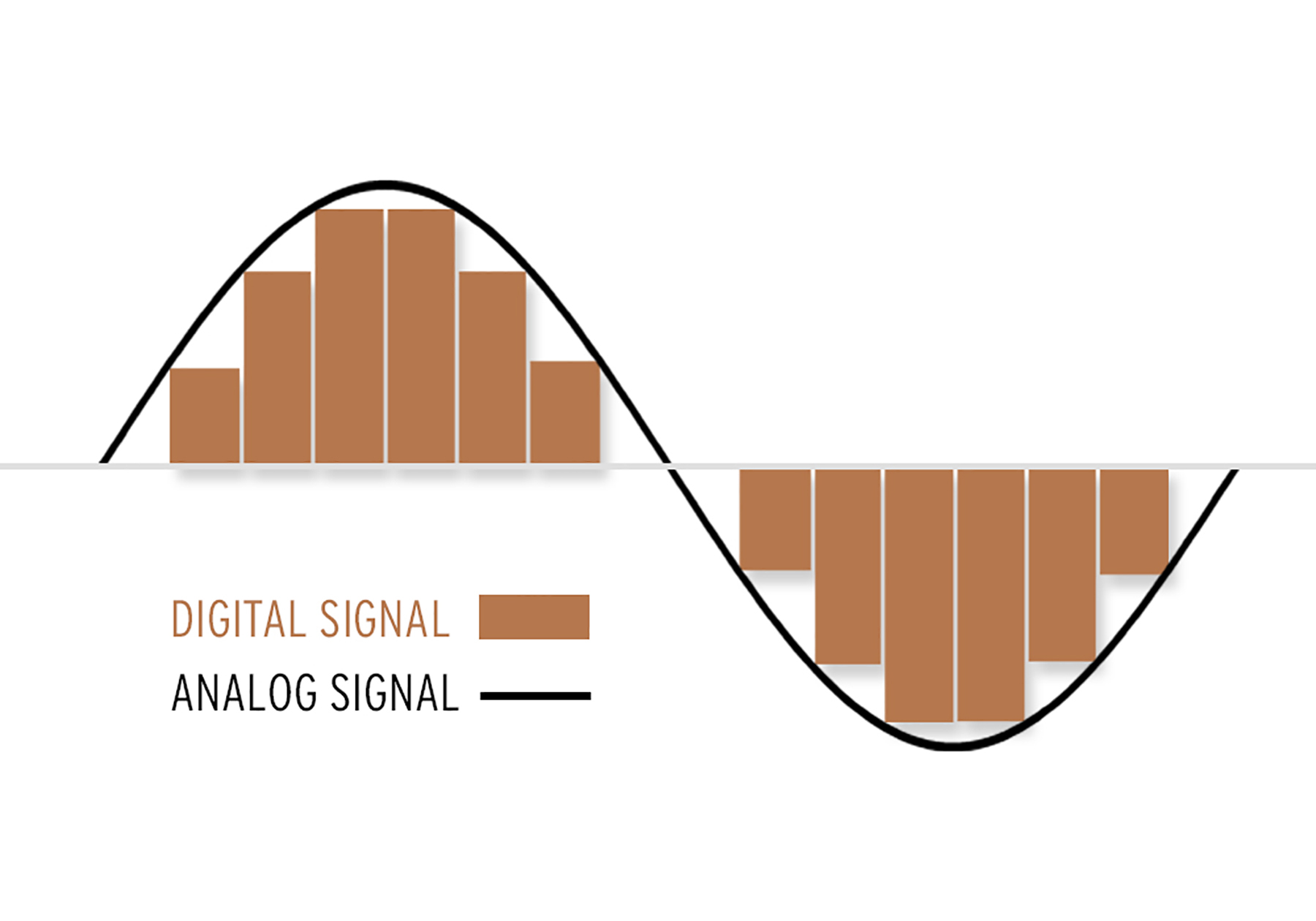
Note 2: This is why you can immediately dismiss anyone who nonchalantly says “analog is better” on the grounds that digital music somehow has “gaps” or less information than analog signal: output from a properly designed digital music player. analog signal, and this signal is a complete and accurate version of the original signal (within the frequencies specified by Nyquist).

Analogue vs Digital


It is mathematical. Also note that almost every new record coming out on vinyl today (i.e., the hipster-preferred LP version of a new Decembrists set) went through many stages of recording and digital processing before getting into those vinyl beats. .

Note 3: I’m limiting my discussion here to CDs and I’m not trying to cover both the bottom of digital audio (i.e. low-bandwidth MP3) and the top (high-definition formats like SACD) that reduced rates of distribution. In fact, bad MP3s will have artifacts and sound worse than recordings; the higher formats are mostly gold, but at least as good as the CD technology I’m focusing on. High-performance MP3 (320kbps and above) and lossless digital formats have been shown to be indistinguishable from CD originals in double-blind studies, and therefore the discussion here applies to these cases as well.

Note 4: Many of the early CDs also had a number of other sins, including sources using the wrong types of master tapes (for example, 3rd and 4th generation dubbing masters optimized for cassette production) and mastering with very old equipment that does a poor job. digitization. These deficiencies, often described in terms of “hard”, “grainy” or “metallic” sound as opposed to the “warm” or “soft” sound of discs, were mostly corrected during the first 2 years of CD production. , but they damaged the reputation of the CD itself. carrier among many audiophiles, in some cases forever.

Note 5: There is an additional possibility that the recording player (the signal chain of the stylus, the cartridge and the audio pre-amplifier) ​​can change the sound in a pleasant way. This is an ironic possibility as the stated purpose of audiophile playback is to avoid any possibility of distortion or coloration of the original sound, but this may explain part of the preference for analog. Of course, to the extent that artists want their music to sound a certain way, they can align or colorize their work to make it sound the same on a CD.

Note 6: Of course, you can have an active and focused listening experience regardless of the media. This is why double-blind studies (where, by definition, listeners are fully engaged and unaffected by psychological biases) tend to disprove theories that analog formats are inherently better than digital.

Is it true that vinyl record players have better sound quality? (Part 1)

Is it true that vinyl record players have better sound quality? (Part 1)

Vinyl vs. Digital

The short answer is no.

Vinyl vs Digital

Human hearing ranges from 20 Hz to 20,000 Hz (Note 1); The sample rate of CDs is sufficient to fully capture audio in this range; Digital sampling allows you to fully restore the original analog signal with correct decoding (according to the Nyquist-Shannon sampling theorem) (Note 2); The dynamic range (the difference between high and low sounds) is greater than that of a record.

Thus, CDs can perfectly capture and restore sound beyond recording capabilities.

In other words, if an LP recording and a CD are created from the same primary source with no differences in configuration, and each is played on properly designed equipment, the CD will provide at least the same accurate representation of the original. as LP (and will be immune to transmitted mechanical noise, surface noise, and wear that can affect LP sound).

I mentioned earlier that CDs can handle a wide dynamic range; that’s true, but bigger isn’t always better in this case. The early CD engineers were determined to take advantage of this entire range. In this way, we ended up with recordings whose quiet parts could only be heard when listening carefully with the volume turned on in a very quiet room, while loud sounds, more than 90 decibels above the audible baseline, would damage your hearing and their relationships. These recordings are suitable for audiophile demonstrations, but are mostly useless in “normal” listening environments, such as cars or personal devices.

Over time, the trend in digital mastering has shifted towards lower and lower dynamic range and higher and higher average signal levels (a phenomenon known as loudness warfare). This also results in poor recordings, as some dynamic range is required to maintain the impact and realism of the music.

Interestingly, the dynamic range capability of analog LP recording (between 50-65dB depending on various factors chosen by the mastering engineer) seems to have chosen a good enough dynamics to be enjoyable, but not so dynamic as to require control constant volume. listen comfortably. Also, over the years, LP mastering trends have been much less volatile and more consistent. (Note 5).

As a result, the recordings on many CDs (for one reason or another) are worse than their records. But keep in mind that this is not a feature of technology, but rather a way to use (and abuse) it.

But there is another factor here. Digital music CDs or MP3s optimized for mobile use. Most of us listen to digital music on the go, through cheap headphones at the gym, or through our car stereo on a noisy highway, while traffic or other distractions compete for our attention. Playing a recording, on the other hand, requires much more dedication and concentration. By definition, you are in a place (where the player is). You actively select and initiate the experience, don’t “let it get mixed up.” You are most likely using the best equipment you own or have access to to listen to, and you are more likely to be distracted. You have a big sleeve with a cool pattern. Is to miss you?

In the end though, you can grab that same LP, use it to master a CD, clap, click and all, play it on a decent CD player through the same stereo, sit back and listen and get that. the same is audible. (Note 6). And if you sit down with a very well recorded and mastered CD and listen carefully, you will discover details and subtleties that can easily be lost on a worn, dirty or scratched LP.

But I don’t favor anyone’s preferences; This is what music is all about, and if the vinyl brings you closer to it, you will get more energy.

Note 1: LPs can contain signals with a frequency higher than 20 HKz; some recordings contain content up to 35 kHz. Most adults cannot hear at nearly 20 kHz, however some audiophiles agree with theories that these “supersonic” can be detected in other ways and / or may subtly interact with audible sounds to alter the nature of the feeling. Neither of these theories have been tested in double-blind studies.