What is digital audio
Digital audio is a numerical representation of sound.

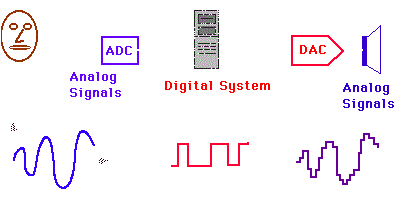
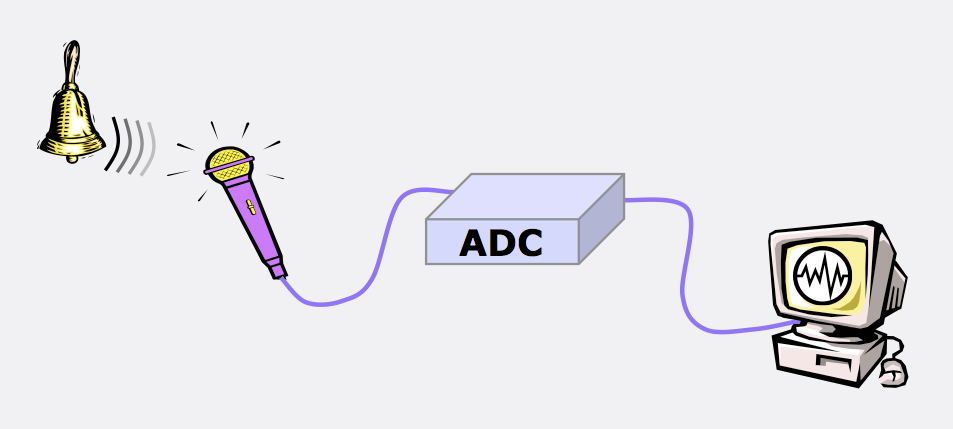
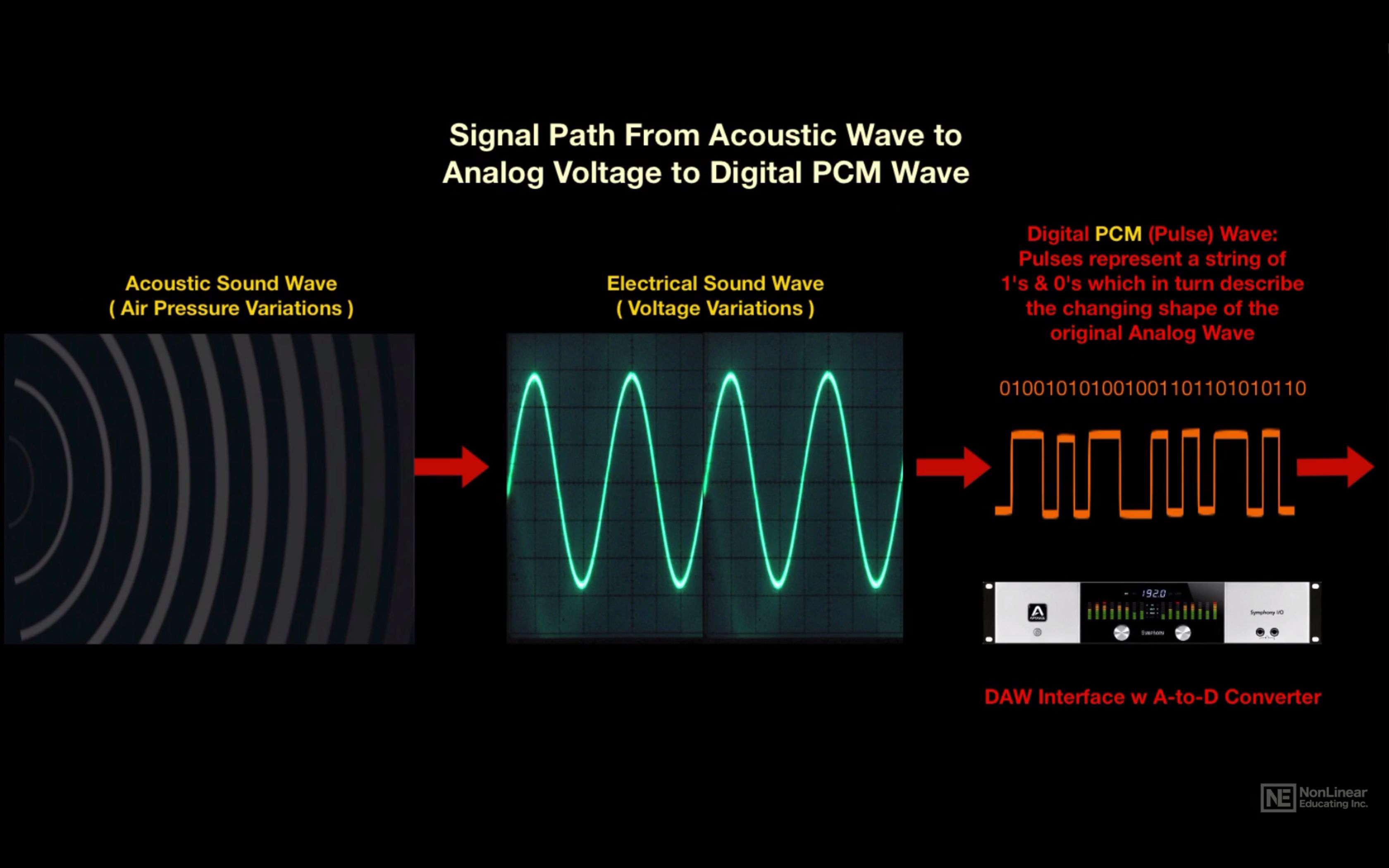
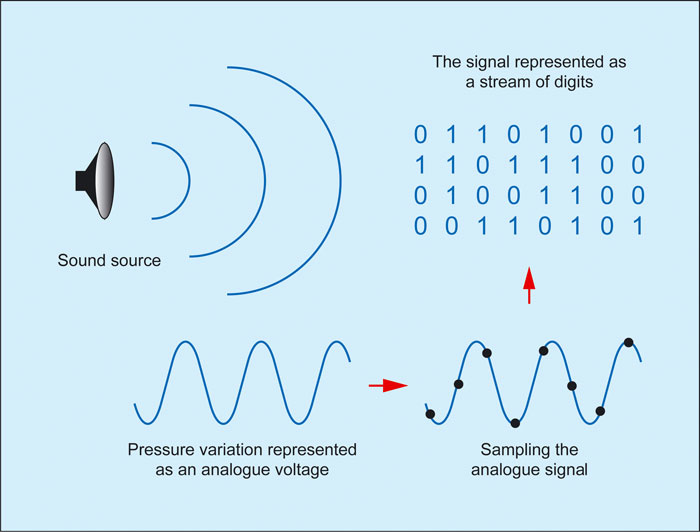
Recording sound as digital sound is similar to recording sound on a tape recorder. Let’s say you have a microphone connected to your computer. Whenever a sound is heard (speaking, singing, playing a musical instrument or just any noise), the microphone “hears” it and converts the sound into an electrical signal. The microphone then sends the signal to the computer’s sound card, which converts the signal into numbers. These numbers are called samples.
A sound card is a device that is inserted into a computer that allows it to understand the electrical signals from any sound device. You can think of a sound card as a “translator”. When an audio device (such as a microphone, electronic musical instrument, CD player, or other device capable of outputting an audio signal) sends signals to the computer, the sound card receives the signals and converts them into numbers that computer can understand.
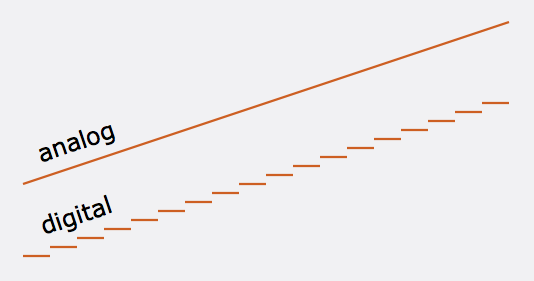
The samples contain information that tells the computer what the recorded signal sounded like at specific times. The more samples that are used to represent the signal, the higher the quality of the recorded signal. For example, to create a digital sound recording that has the same quality as a CD recording, the computer must receive 44,100 samples per second. The number of samples taken per second is called the sample rate.
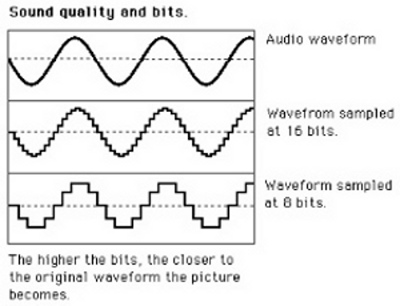
The size of each individual sample also affects the quality of the recorded sound. This size is called the bit depth. The higher the bit depth, the higher the sound quality. For example, to create CD-quality digital audio, each sample must be 16-bit.
Computers use the binary form to represent numbers. The place of a binary number is called a bit, each bit represents one of two numbers: 1 or 0. By combining bits, computers can display any number. For example, any number between 0 and 255 is represented as an eight-bit number. With 16 bits, it can represent numbers in the range 0 to 65,535.
Your computer can save all submitted samples. The temporal characteristics of the sample are also saved. Later, the computer can send samples to the sound card at the same intervals, so you hear the sound exactly the same as what was recorded. The basic concept is as follows: a sound card records an electrical signal from an audio device (such as a microphone or a CD player). The sound card converts the signals into sets of numbers, called samples, that are stored on your computer. During playback, the samples are sent back to the sound card, which converts them into an electrical signal. The signal is sent to the speakers (or other audio device) and you hear the sound exactly as you recorded it.
So what is the difference?
After reading the description of MIDI and digital audio, you may still be confused about the difference between the two. After all, both processes record the signals sent to the computer and then reproduce them, right? The point is, when you record MIDI data, you are not recording actual sound. Just record the instructions for playback. It is like a musician playing notes, where the notes are MIDI data and the musician is the computer. The musician (or computer) reads the notes (or MIDI data) and then stores them in memory. The musician then plays a melody on a musical instrument. What if the musician takes another instrument to play? The game will remain the same, but the sound will change. The same is true for MIDI data.
A keyboard synthesizer can produce any sound, but playing the same MIDI data using the keyboard will be exactly the same.
When you record digital audio, you are recording real audio. If you record a performance of a piece of music as digital sound, you cannot change the sound of that performance as described above. Due to these differences, MIDI and digital sound have their own advantages and disadvantages. Since MIDI is recorded as data for playback, rather than actual sound, you have much more freedom to manipulate the sound than with digital sound. For example, you can easily correct the error by changing the pitch. MIDI data can be converted to standard music notation, which is not possible with digital sound.