Digital audio formats: how to choose the best one (Part 2)


Free Download Mp4Gain
picture

Digital audio formats: how to choose the best one (Part 2)

Digital Audio

The higher the bit rate, the better the sound quality. For example, at a bit rate of 128 kilobits per second, five minutes of music will require only about five megabytes on a hard drive or flash drive. The optimal bit rate for storing MP3 music files is believed to be 256 or 320 kilobits per second.
Digital Audio

Another popular lossy compression format is OGG Vorbis. Unlike MP3, it was originally free and open source, so it quickly gained popularity among independent developers. In terms of quality, it is in no way inferior to MP3, although it does use its own psychoacoustic model for file compression.

WMA is a lossy audio compression format developed by Microsoft Corporation. It can be found on any Windows operating system, but it is not very popular with users. Another relatively common lossy audio compression codec is AAC, which differs from MP3 in slightly less quality loss at the same bit rate.

Audio codecs for music lovers
Newer formats provide lossless audio compression. The most popular among users is the free FLAC format, introduced in 2001. FLAC is perfect for archiving your audio collection, as well as for listening to music on high-quality sound reproduction equipment.

In so-called lossless codecs, encoded data can always be retrieved with bit precision. The encoding is carried out using a mathematical scheme: a certain regularity is found in the initial data and, taking this regularity into account, a second sequence is generated, which fully describes the original.

The second most popular lossless compression format is Monkey’s Audio, which is distributed as free software for Microsoft Windows. The WavPack format has support for multi-channel streaming and a slightly better compression ratio. Apple introduced its own lossless ALAC codec in 2004, which resembles FLAC.

Digital audio has huge advantages over analog files. The user can store and replicate their material for an infinitely long time without losing the original quality. At the same time, storing the “digit” is more cost-effective, because it takes up much less physical space, unlike a collection of records or cassettes.
Thus, a powerful ZIP archiver can compress a WAV file by only 10-20%, while FLAC achieves compression rates of 30-50% for most audio files. At the same time, the audio codec allows the recovery of partially corrupted data and the decoding process itself is very undemanding on processor resources.

To archive your music collection, it is now optimal to use lossless compression formats, for example FLAC, which is supported by most players. However, to store audiobooks, where high fidelity of the original sound is not required, you can use cheaper MP3 or OGG.


Free Download Mp4Gain
picture


Mp4Gain Main Window
picture


Mp4Gain Features
picture


Free Download Mp4Gain
picture

Digital audio formats: how to choose the best one

Digital audio formats: how to choose the best one

Digital Sound

Most users store music and other audio files in various digital formats. There are about a hundred digital audio encoding algorithms, but they all have their own characteristics. What format to choose to store your home audio collection and why is the well-known MP3 losing popularity?

digital sound

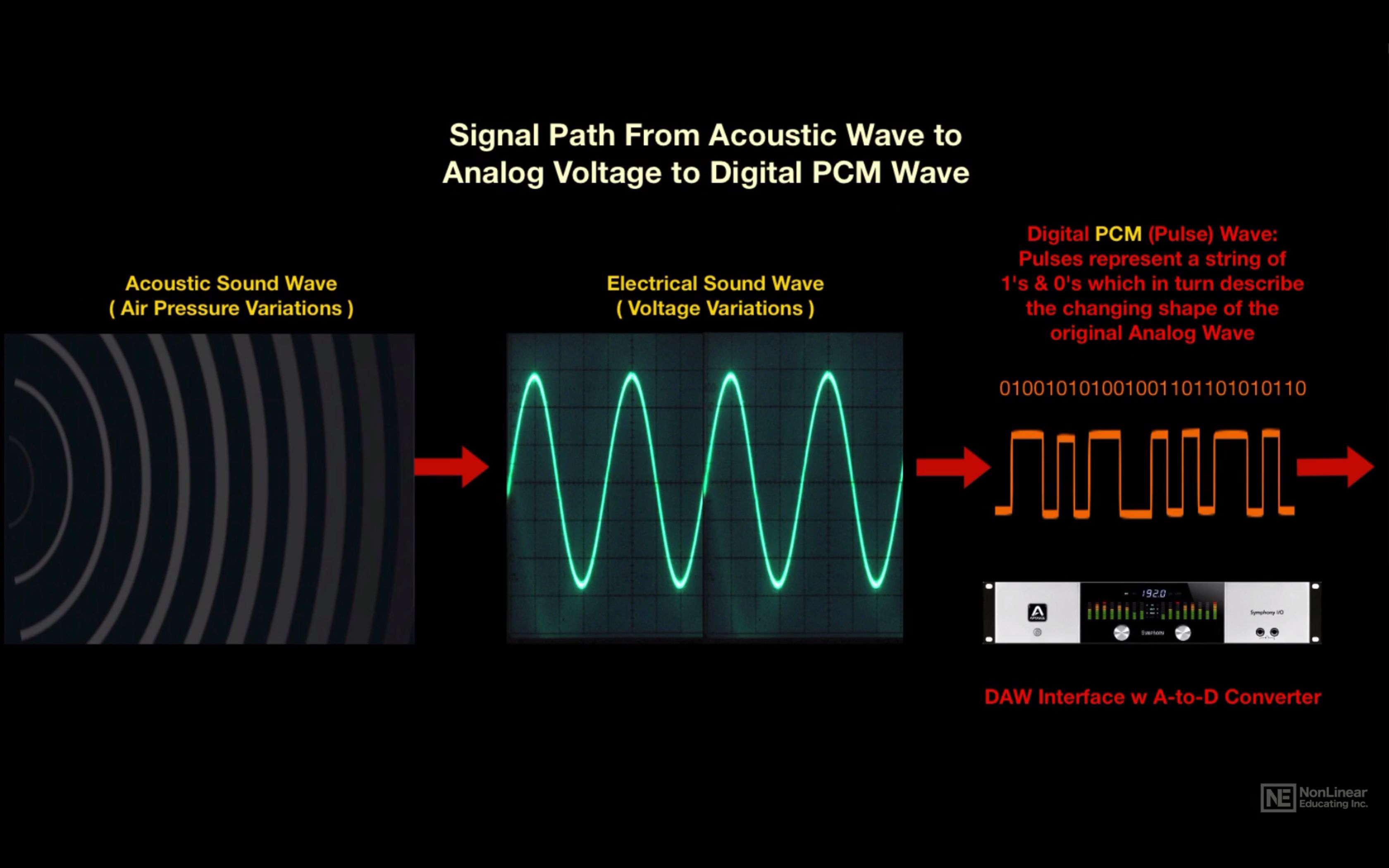
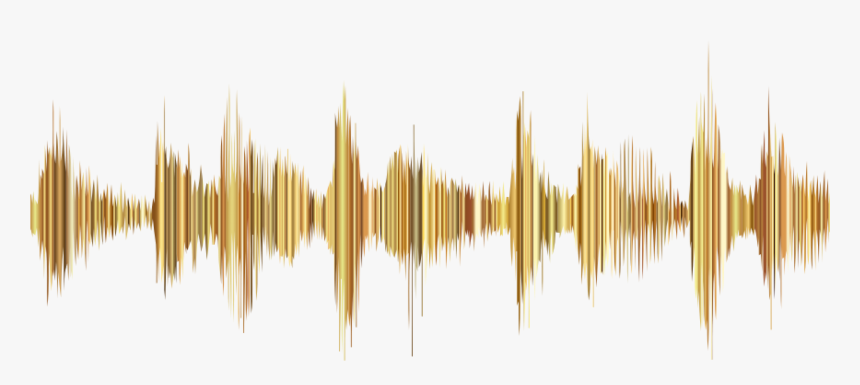
Analog audio is a wave. Almost every process in our world can be described using mathematics. Digital audio is the description of an analog waveform using a sequence of numbers. For example, more than 44,000 digital values ​​are used to digitize one second of music on a CD.
How digital sound was born
The theoretical foundations of digital sound in 1928 were laid by Harry Nyquist in his work “Certain problems in the theory of telegraphic transmission”, where for the first time it was possible to determine the “width” of the communication line for the transmission of a signal pulse without distortion. Regardless of the American, the Soviet scientist Vladimir Kotelnikov published similar studies in 1933.

Kotelnikov and Nyquist independently discovered that restoration of any analog signal can be guaranteed using a certain mathematical algorithm from discrete samples, that is, fragmentary data. So instead of full data for the sake of economy, you can encode only a small part, and then restore the original.

They began to digitize analog sound using pulse code modulation; today this technology is still the most widespread. The sound wave is converted into numbers by three sequential operations: time sampling, amplitude quantization and final coding. Battery calibration: how to extend the life of the smartphone

What is sampling? This is a sample of values ​​at regular time intervals. The algorithm reads the levels of the analog waveform at an incredible speed: 44,100 readings per second for the CD standard. This indicator is called the sample rate. For example, audio in movies is standardized to a sample rate of 48,000 Hertz.

To achieve this speed, all values ​​are slightly rounded to previously calculated values. This process is called quantification. The more often the algorithm reads the readings, the better the digital recording will sound. However, microscopic quantification error is unavoidable.

Computers use memory to store information – billions of tiny electrical switches that can only be in two positions: on or off. The position of one of those switches is a bit informative. The CD standard provides 16 bits for audio, which provides 65,536 different values ​​for encoding.

How are digital audio formats different?
Digital sound is a very long sequence of numbers. However, these numbers can be encoded in different ways. For example, on a CD, music files are stored in WAV format. Its main problem is that it takes up too much space, since all the information is digitized without using compression algorithms.

To reduce the amount of space taken up, mathematical algorithms have been invented – audio codecs that compress digital audio data according to certain psychoacoustic models. However, there are two main types of compression: lossless compression and lossy compression.

The most famous lossy compression format is MP3. Its developers have relied on the fact that the human ear is imperfect and a lot of redundant information is transmitted in uncompressed sound. The algorithm divides the entire frequency spectrum into small parts and then eliminates sounds that are practically not perceived by humans.

The quality of MP3 files is irretrievably degraded compared to the original, but the file itself can be 10 times “lighter” than the original. In this case, the user can choose the degree of compression of the file. For this, there is a bit rate; in fact, this is the space needed to store one second of music.

Files with digitized audio

Files with digitized audio

Digital audio

Sound files in which the original continuous (“analog”) waveform is recorded as a sequence of short discrete values ​​of the amplitudes of the sound signal, measured (“selected”) at equal time intervals and with an interval very small between them.

DIGITAL AUDIO

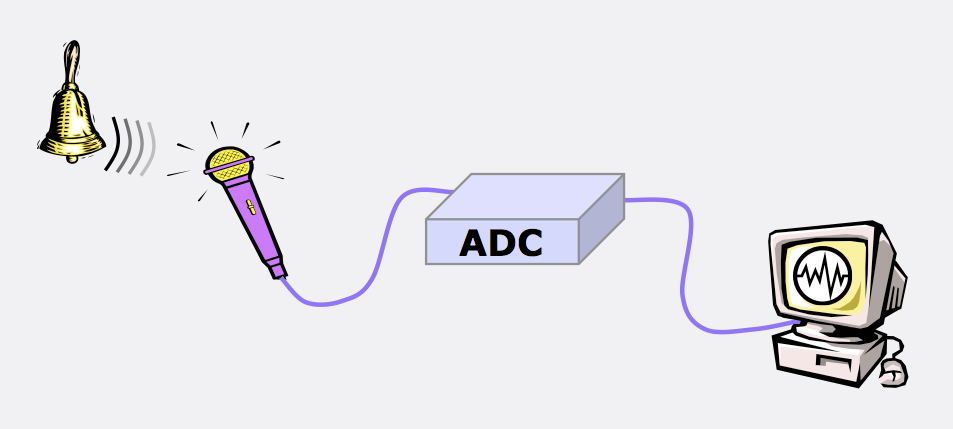
The process of replacing a continuous signal with a sequence of its values ​​is called sampling, and this form of recording is pulse code. The hardware implementation of digital audio processing is that an analog-to-digital converter (ADC) converts an analog signal into a set of digital measurements and, during playback, a digital-to-analog converter (DAC) performs the reverse process: convert a digital signal into analog. There are two types of files with digitized audio: header and no header.

Files with music notation (song file, music file): sound files that contain a sequence of commands indicating which note and by which instrument and for how long to play at any given time. The format can foresee the simultaneous execution of several musical instruments, in this case it speaks of the corresponding number of voices.
Edit Basic standards for multichannel audio

Dolby Stereo is a standard for digital movie sound recording / playback technology for cinemas that allows four channels to be encoded into two movie soundtracks: left, center, right, and rear. The signal read from the film is converted by the decoder into four channels, which gives a surround sound effect. Without a decoder, the sound is played as normal two-channel stereo. The standard was proposed by Dolby Laboratories in 1976.

DDS (Dolby Surround Sound) is a standard for digital recording / playback of movie soundtracks in the frequency range 100-7000 Hz for home theater systems. The standard allows encoding three channels in two soundtracks of a movie: left, right and rear. The signal read from the film is decoded into three channels. Without a decoder, the sound is played as normal two-channel stereo. The standard was proposed by Dolby Laboratories in 1982.
DPL (Dolby Surround Pro Logic) is an evolution of the DDS standard for home theater systems with three to four sound channels: left, center, right and surround. The standard was proposed by Dolby Laboratories in 1987.
Dolby Digital is a standard for encoding / decoding six-channel (5 + 1) audio recording in the 20 Hz to 20 kHz range: 5 surround channels and one low-frequency channel (subwoofer). The standard was proposed by Dolby Laboratories in 1992. The frequency range of the five channels is 3 Hz to 20 kHz, the subwoofer is 3 Hz to 120 kHz.
Dolby Digital AC3 is an addition to the Dolby Digital standard with a scheme that provides an audio recording compression density of 12: 1 or more at a 64 to 640 Kbps bit rate with high quality playback.
Dolby Surround AC3 is a simplified version of the Dolby Digital home theater standard with reduced bit rates.
DTS (Digital Theater System) is a standard for six-channel (5 + 1) sound recording on music DVDs, close to Dolby Digital, with a lower compression ratio (4: 1) and a faster data rate. high (bit rate – 882 Kbps). Due to this, in addition to the use of a perfect compression algorithm, it is characterized by high-quality sound recording and reproduction. The recording uses a 48 kHz sample rate, making it the highest quality DVD audio standard ever recorded.
Dolby Pro Logic II is an evolution of the Dolby Surround Pro Logic standard, which breaks down normal stereo sound into six channels: 5 + 1.
Dolby Pro Logic Iix is ​​an evolution of the Dolby Surround Pro Logic standard, which provides stereo sound decomposition into 7 (6 + 1) or 8 channels (7 + 1). Possible decoding modes: Movie: mirroring the center channel or rear channels; game (Play): the signal is also sent to the “new channels”; Music).
Dolby Digital EX is a home theater variant of the Dolby Pro Logic Iix standard.
Dolby Digital Surround EX is an expanded version of up to 7 channels (6 + 1) of the Dolby Digital Surround standard, in which there is an additional rear channel (rear) that doubles the center channel if the sound is recorded in 5 + 1 format. If the sound is recorded in 6 + 1 format, the additional channel becomes a full surround channel.
DTS-ES is an analog of the Dolby Digital EX standard developed by DTS; allows you to encode audio in 6 + 1 and 7 + 1 formats and decompose audio encoded in DTS (5 + 1) format into 7 (6 + 1) or 8 (7 + 1) channels.