Parameters that affect the quality of digital audio. (Part 1)

The best music formats for sound quality Minimum and maximum sound quality

The main parameters that affect the quality of digital audio recording are:
§ The capacity of the ADC and DAC.
§ Sampling frequency of ADC and DAC.
§ Jitter ADC and DAC
§ Resampling
In addition, the parameters of the analog path of digital sound recording and playback devices are still important:
§ Signal to noise ratio
§ Total harmonic distortion
§ Intermodulation distortion
§ Inequality of the amplitude-frequency response
Channel interpenetration
§ Dynamic range
Digital sound recording techniques
Digital sound recording is currently done in recording studios, under the control of high-quality, expensive personal computers and other equipment. In addition, the concept of “home studio” is quite developed, in which professional and semi-professional recording equipment is used, allowing you to create high-quality recordings at home.
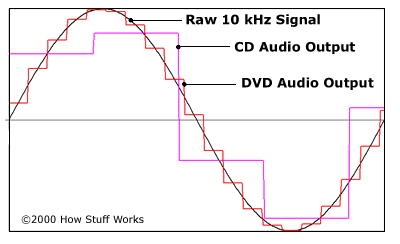
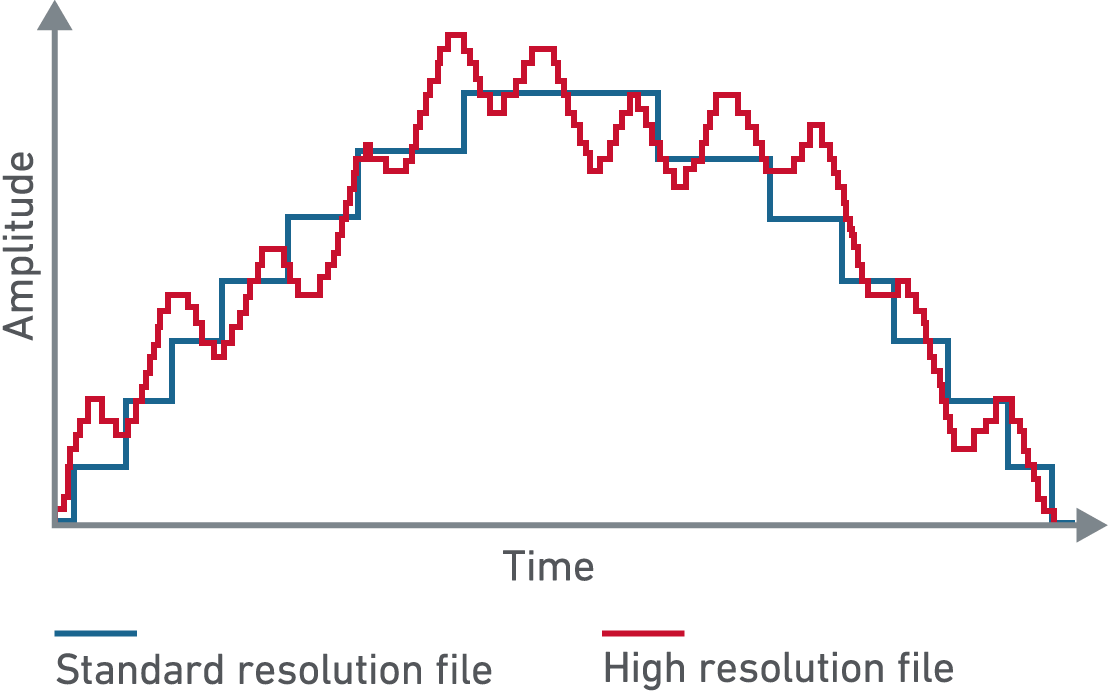
Sound cards are used as part of the computers that perform processing on your ADCs and DACs; Most of the time at 24 bit and 96 kHz, a further increase in bit rate and sample rate hardly increases the recording quality.
There is a whole class of computer programs: sound editors that allow you to work with sound:
Record incoming audio stream
§ create (generate) sound
§ modify an existing recording (add samples, change timbre, speed of sound, cut parts, etc.)
§ rewrite from one format to another
Convert convert different audio codecs
Some simple programs only allow converting formats and codecs.
Varieties of digital audio formats.
There are several concepts of audio format.
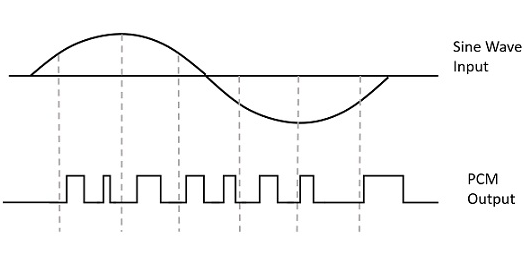
The digital representation of the audio data depends on how the digital-to-analog converter (DAC) quantizes. In sound engineering, two types of quantization are currently the most common:
Pulse code modulation
Sigma-delta modulation
Quantization bit depth and sample rate are often specified for various audio recording and playback devices as a digital audio rendering format (24-bit / 192 kHz; 16-bit / 48 kHz).
The file format determines the structure and presentation characteristics of the audio data when stored on a PC storage device. To eliminate the redundancy of the audio data, audio codecs are used, with the help of which the audio data is compressed. There are three groups of audio file formats:
§ uncompressed audio formats like WAV, AIFF
Lossless audio formats (APE, FLAC)
Lossy compression audio formats (mp3, ogg)
Modular music file formats are highlighted. Created synthetically or from prerecorded live instrument samples, they are primarily used to create modern electronic music (MOD). Also, this can be attributed to the MIDI format, which is not a sound recording, but at the same time, using a sequencer, it allows you to record and play music using a certain set of commands in the form of text.
Digital audio media formats are used for both mass distribution of sound recordings (CD, SACD) and professional sound recording (DAT, minidisc).
For surround sound systems, sound formats can also be distinguished, which are mainly multi-channel sound accompaniments for movies. These systems have complete format families from two major competitors, Digital Theater Systems Inc. – DTS and Dolby Laboratories Inc. – Dolby Digital.