
First of all, remember that “MP3” is short for the term “Audio MPEG-1/2 Layer 3 Compression”, which is an audio data encoding format that allows you to divide the weight of a computer file by more than ten.
The word MP3 also refers by extension to portable audio players that play the audio in MP3 format.
The main role of the MP3 format is to compress music so that it is lighter (to store more in our player) without the listener noticing the differences.
Therefore, we will remove everything considered “superfluous” from the audio signal, but this is the whole controversy: what is really superfluous or unimportant or superfluous in the sound to be encoded?
Some people who oppose this method of storage speak of signal mutilation. Others describe this operation with a nice comparison: “The more potatoes you put in a pan? It’s simple, we make it puree!
In fact it is not that simple, the compression method is much more complex than you think.

Music compression
To make MP3 music lighter, it is compressed, but without the user hearing or perceiving the difference. The principle is to eliminate sounds that are inaudible to the human ear, such as ultrasound (treble) or infrasound (bass). But be careful, this “light” music (12 times less heavy than the standard format music) should remain “of good quality” to satisfy listeners.
To achieve this, MP3 does not encode all the data necessary for full sound reproduction, but only what is perceived by the human ear. This is how we achieve what we call the “skinny”.
1st phase: the first skimming takes place in all sounds that are not perceived by the ear. They are simply removed.
Compression allows the spectrometric components of an audio signal to be analyzed and a psychoacoustic model applied to them, so that only “audible” sounds are preserved.
The human ear can distinguish sounds on average between 0.02 kHz and 20 kHz, knowing that the sensitivity is maximum for frequencies between 2 and 5 kHz, according to a curve given by Fletcher and Munson’s law. Therefore, this first compression phase consists of determining the sounds we do not hear and eliminating them, therefore it is a destructive compression, that is, with loss of information.
2nd step: Next we will more accurately encode the sounds to which the ear is most sensitive (those between 2 and 5 kilohertz). The rest of the sounds contain the frequencies that are less perceived by the ear and will be encoded with less precision. Then they will be of lesser quality, and, that is the goal, they will take up less space because they are almost undetected. The listener will not notice this “degradation” of the original sound because these are frequencies to which the ear is not sensitive.
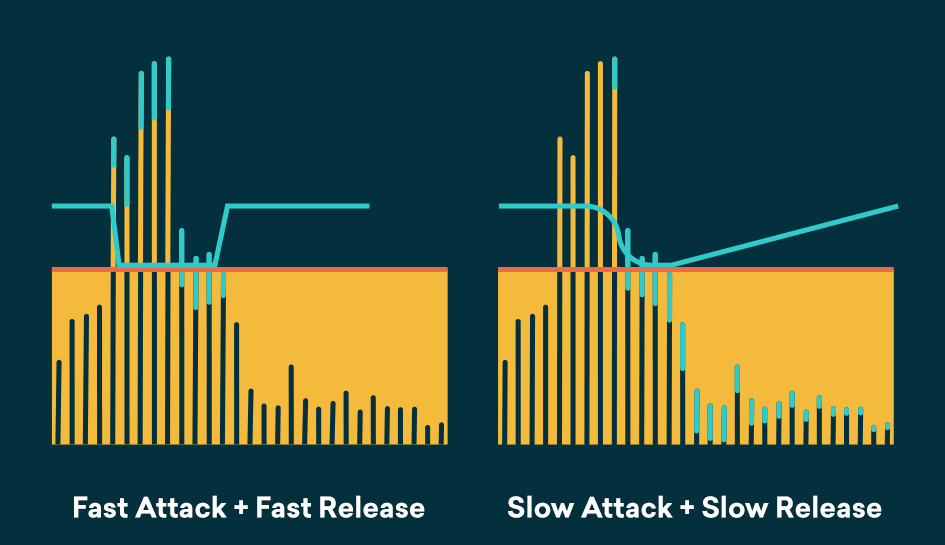
In this same phase, a second treatment is added: dynamic compression. Dynamic compression consists of raising the weak levels and the low levels to keep them lower, to erase the contrasts the music has.
These two stages will lighten music without altering the perception of sound.
Sound masking
After heavily compressing the sound, the MP3 continues using the masking phenomenon. When a sound reaches a certain intensity, it masks the sounds with the lowest intensities closest to it. The ear does not detect the weakest sound and MP3 will therefore easily remove these so-called “masked” sounds.
If you look at the sun and a bird goes along its axis, you will not see it because the light from the sun is too important. It is the same in acoustics. If there are loud sounds, you cannot hear the weakest. For example, if a sound of 80 dB with a frequency of 1000 Hz is followed by a sound of 20 dB and has the same frequency, formatting in MP3 will preserve the sound of 80 dB and hide the others
Therefore, the blue sound is masked by the black sound.
The danger of this size
The MP3 format poses two kinds of danger to our hearing: – The first is that it encourages the listener to increase the volume of the sound from his player.
Second, our ears are getting used to this type of sound, which we could describe as “dematerialized,” and it is getting slow.
Special hearing disorders related to MP3 formatting. The human ear is used to perceiving strong dynamic contrasts and is not made for compressed MP3 format signals. In fact, the compression of the music will act as an optical illusion. If we listen to this compressed music, we will unconsciously


