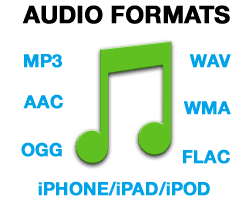
What is the best video and movie quality? Part 2


Free Download Mp4Gain
picture

What is the best video and movie quality? Part 2

Video Formats

What is the difference between 1080i and 1080p?

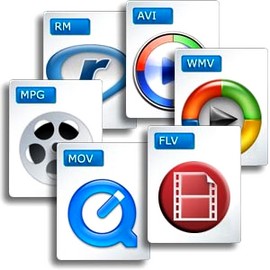
Video File Formats

Each of these video formats uses a different way to convert a series of still images into movies. In interlaced scanning (“i” symbol), a still image or “frame” is reproduced by scanning 2 sets of alternating lines or “fields” (half frames). With progressive scan (“p” symbol), a frame is created in a single pass (sweep). That is, if the image scanning in both video formats (“i” and “p”) is performed at the same speed, then an equal number of runs per second occurs, then the advantage of progressive scan (“p”) becomes obvious (image quality is better) as the entire image (frame) is scanned and not half of the image (field). This progressive (“p”) scan generates fewer dots and lines, but doubles the speed.

Bottom line: 1080i and 1080p video formats look best in different conditions. The 1080i video format is designed to reproduce fine image details with little movement or in frames and still images. This video format is much better suited for “spatial resolution”. The 1080i video format works fine as long as there is no frame movement. When objects begin to move, the path of movement between alternating fields (half frames) begins to change. This is called “motion artifacts,” that is, visible image noise or video distortion that resembles an uneven pattern. 1080i video quality is considered outdated.

1080p video quality takes priority in motion. It does not introduce visible distortions in the image, regardless of the speed of moving objects, so it has the best “temporal resolution”. However, still images will not look very clear when the image is frozen, because there are far fewer dots and lines in 1080p video compared to 1080i.

Long-distance transmission of HDTV video signal (satellite TV – S2, cable TV) is generally done using compression methods to reduce bandwidth requirements for data transmission (from 1.485 Gbps to 8-25 Mbps ), while the video quality is still good.


Free Download Mp4Gain
picture


Mp4Gain Main Window
picture


Mp4Gain Features
picture


Free Download Mp4Gain
picture

What is the best video and movie quality?

What is the best video and movie quality?

Video Formats

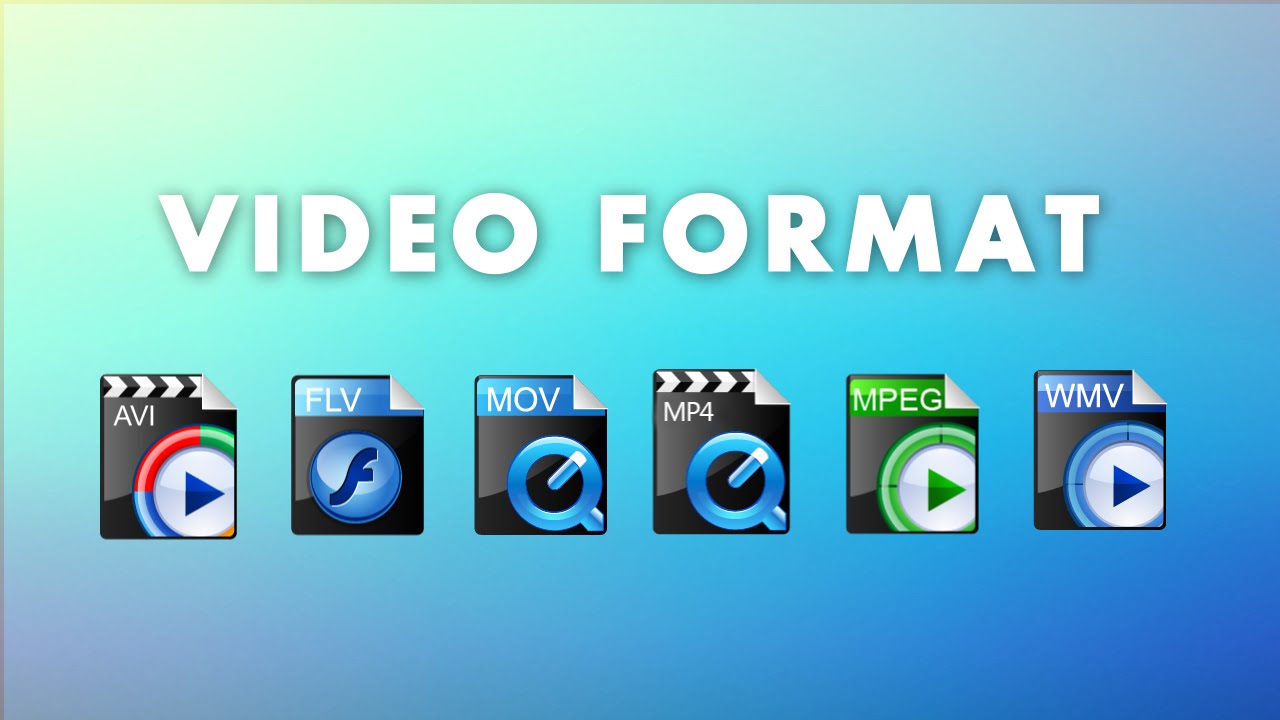
What video formats are there?

Video formats

Video (video – watch, watch) is the transformation of an image by a recording device into a sequence of electrical signals recorded in storage (storage).

In addition, video is a great variety of technologies for recording, processing, transferring, storing and reproducing visual or audiovisual material (cinema, films, video recordings, music, video, etc.). Video differs from film and cinematography only in that it uses any medium other than film for its reproduction and recording, although the modern development of digital technologies in filming and digital cinema projectors eventually blurs the line between the video, movies and cinema. The video format determines the structure of the video file, how the file will be stored on the storage medium (CD, DVD, Blu-ray Disc, flash memory cards, hard drives or communication channels).

The best highest quality video today is HDTV (High Definition Television in English): high definition television, high definition television. HD is a high definition video format, a modern format with a high definition of the image.

The most popular HD video formats are:
1) 720p – 1280 × 720 pixels (dots), progressive scan (progressive scan, all lines of each frame are displayed sequentially), 16: 9 aspect ratio, frequency – 24, 25, 30, 50 or 60 frames per second ;

2) 1080i – 1920 × 1080 pixels, interlaced (each frame is divided into two half frames, consisting of lines selected with a line separating, 2 times the frame rate compared to progressive), 16: 9 aspect ratio , frequency – 50 or 60 fields per second;

3) 1080p – 1920 × 1080 pixels, progressive scan, aspect ratio 16: 9, frequency – 24, 25 or 30 frames per second.

MP3 and FLAC audio formats Part 6

MP3 and FLAC audio formats Part 6

Audio Formats

At the conclusion of this article, I cannot ignore one of the most popular questions from locals: which is better, FLAC or MP3?

Audio Format

The questioner generally wants to get a simple, unequivocal, and fair answer in all cases. However, there is no such thing and it cannot be. Below, I will give my opinion on when and why each of the discussed formats should be used.

In terms of sound quality, experience shows that with a competent approach to the MP3 compression process, the difference between MP3 and non-hearing loss formats is very small in the vast majority of situations. Only well-trained people can reliably record differences when listening to proper music on high-end equipment. Yes, there are specially selected test samples where the lossy compression artifacts are clearly visible to everyone, but ask yourself a question: are you planning to listen to these samples or is it just ordinary music? Overall, the bottom line is clear: MP3 is more than adequate as a music storage format for high-quality playback. But I will repeat once more: this thesis is true only if the audio files are prepared correctly. Unfortunately, the web is full of MP3s,

To form your own unbiased opinion on the topic under discussion, I strongly recommend that the reader personally try different formats in blind tests. This is not only educational, but also quite an exciting activity.

Now let’s see the advantages of using FLAC or other lossless formats.

Unlike the situation with MP3, where the quality of the output is highly dependent on the encoder ratings, in principle it is impossible to spoil the sound with compression in FLAC. Therefore, the question of how and how the material was coded loses its relevance (with the exception of the clinical cases of FLAC production by loss described above, but this is easily verified). When listening to lossless music, you can be sure that imperfections in the sound, if any, are not the result of someone’s crooked hands at the compression stage, but rather a property of the original phonogram that you have to accept with.
The same confidence that the registry is stored “as is”, without irreversible loss, provides some people with psychological comfort. In an area as subtle as audio, this factor can be quite significant.
The lossless material is ideal for a variety of processes: it can be compressed into any other format, edited, cut into samples without fear of getting “canned meat” at the output. For those who are serious about sound, this is important.
Isn’t all of the above about you? Then there is no point in bothering with lossless formats, feel free to use MP3 or other lossy formats.

Personally, at home, I save and listen to music mainly in FLAC, and I make MP3 myself if necessary, for example to use on portable devices.

MP3 and FLAC audio formats Part 5

MP3 and FLAC audio formats Part 5

Audio File Format

FLAC encoding and decoding

audio file format

Let’s consider file compression with the FLAC encoder, which can be downloaded here. For it to work, we need the flac.exe file. If you run it without parameters, you will get a short help on using the encoder. For detailed help, type flac –help (the information will be displayed) or flac –help> usage.txt (the information will be displayed in the uses.txt file).

WAV to FLAC encoding with default compression ratio (5):

flac infile.wav

WAV to FLAC encoding with specified compression ratio:

flac -n infile.wav where n is a number from 0 (minimum compression) to 8 (maximum compression).

FLAC to WAV decoding:

flac -d infile.flac

To ensure that FLAC compresses the data without loss, you can use any software that can compare files bit by bit, for example the built-in Windows utility fc. For the experiment, select any WAV file and perform the following transformations on it: original.wav (original file)> compressed.flac (encode file to FLAC)> decompressed.wav (decode FLAC back to WAV). Next, compare original.wav and decompressed.wav using fc in binary comparison mode:

fc / b original.wav decompressed.wav

After the verification is complete, the utility will display the message “No differences found between files”, indicating your full identity. This means that when converting to FLAC and vice versa, not a single bit was lost, which needed testing. If you do the same experiment with MP3, the result will be completely different, there will be a lot of differences between the files.

MP3 and FLAC audio formats Part 4

MP3 and FLAC audio formats Part 4

Audio File Formats

Does the encoder setting affect the sound quality when compressing in FLAC? What compression ratio should I choose?

Music File Formats

The FLAC encoder settings do not affect the sound quality at all. Only the size of the resulting files and the time spent on compression can depend on them, and even that is negligible. So most of the time I don’t bother and code in FLAC with the default settings, which I advise you to do as well. In rare cases, when you need to get files of the minimum size and have to save every byte, it makes sense to increase the compression ratio to the maximum value.

Does the cable box affect the sound quality when listening to FLAC material? What is the best way to play FLAC on your PC?

In the case of FLAC and other lossless formats, the decoder does not affect the sound quality, the original audio data is restored with bit precision during playback. Therefore, to listen to FLAC, you can use any player that supports this format and you personally like it. However, I will once again recommend foobar2000 as a time-tested all-in-one solution for playing music on Windows.

MP3 encoding and decoding with LAME
As mentioned above, in the case of MP3, the sound quality of the resulting files is directly dependent on the choice of the encoder and its settings during compression. To date, the LAME encoder provides the best results for this format. The original project site seems a bit confusing, so I’ll immediately give a link to the files. From the archive, we need the lame.exe file. We open the command line.

For a quick reference on using LAME, type lame –help (the information will be displayed) or lame –help> usage.txt (the information will be displayed in the uses.txt file). For detailed help, replace –help with –longhelp.

Let’s get straight to the compression functionality. Should bit rate and other compression settings be specified separately? No, this is completely optional, the developers did most of the work for us, making it as easy as possible to use the encoder. LAME has a set of presets (presets) that allow the user to obtain excellent results with a minimum of technical knowledge. Almost all presets use VBR (Variable Bit Rate) mode, which provides an optimal balance between sound quality and file size. The command invokes help for the lame presets –preset help. Let’s consider the most relevant presets.

The preset standard. Description of built-in help:

This preset should be “transparent” to most people in most music, with a fairly high quality.

The average bit rate when using the standard is 170-210 kbps, the HF cutoff starts at about 18.7 kHz. I recommend using this preset as the default mode, it is the most balanced in terms of combination of features.

Encode WAV to MP3 with this preset:

lame –preset standard infile.wav outfile.mp3, where infile.wav is the name of the source WAV file, outfile.mp3 is the name of the resulting MP3 file (the latter can be omitted).

Extreme preset. Description of built-in help:

If you have extremely good hearing and the same equipment, this preset will give you slightly higher-than-standard quality.

The average bit rate when extreme is used is 220-260 kbps, the high pass filter is not used. I recommend using this preset when you want to get MP3 with very high sound quality. When listening to music on an average computer, this preset, compared to the standard, generally does nothing more than increase the file size.

Encode WAV to MP3 with this preset:

lame –preset extreme infile.wav outfile.mp3

MP3 and FLAC audio formats Part 3

MP3 and FLAC audio formats Part 3

Audio File Formats

Is it possible to compress material from loss to loss, eg MP3 with lower bit rate to MP3 with higher bit rate?

audio file formats

If you want to get an improvement in the quality of such a clamp, then no, you do not need to do this: the sound will not only not improve, but will even slightly deteriorate. If your goal is to reduce file size and sound quality is not very critical, then compressing from a higher bit rate to a lower one is quite justified.

Which lossless format is the best in terms of sound quality: FLAC, Monkey’s Audio, WavPack?

As mentioned above, lossless formats compress data losslessly. This means that, in terms of sound quality, they are all absolutely identical. You should choose a lossless format to use in each specific case, focusing solely on its compatibility with the software / equipment and your personal preferences.

Does the choice of encoder and its settings affect the sound quality when compressing material to MP3?

It affects significantly. About which encoder and with what settings provides the optimal result, I will tell you below.

Does the cable box affect the sound quality when listening to MP3 material? What is the best way to play MP3 on PC?

The MP3 decoder can affect the sound quality. Some decoders (especially older ones) noticeably distort the sound when playing MP3, which can create a false impression of the inferiority of this format as such. To play music on a PC, you must use proven playback programs, preferably the latest versions. I use foobar2000, which I recommend to everyone; it has no problem with the quality of playback of MP3 and other supported formats.

Does the encoder setting affect the sound quality when compressing in FLAC? What compression ratio should I choose?

The FLAC encoder settings do not affect the sound quality at all. Only the size of the resulting files and the time spent on compression can depend on them, and even that is negligible. So most of the time I don’t bother and code in FLAC with the default settings, which I advise you to do as well. In rare cases, when you need to get files of the minimum size and have to save every byte, it makes sense to increase the compression ratio to the maximum value.

Does the cable box affect the sound quality when listening to FLAC material? What is the best way to play FLAC on your PC?

In the case of FLAC and other lossless formats, the decoder does not affect the sound quality, the original audio data is restored with bit precision during playback. Therefore, to listen to FLAC, you can use any player that supports this format and you personally like it. However, I will once again recommend foobar2000 as a time-tested all-in-one solution for playing music on Windows.

MP3 and FLAC Audio Formats Part 2
MP3 and FLAC Audio Formats Part 2

Audio Formats

MP3 (MPEG-1 Layer 3) is historically the first and most widespread lossy compression format.

AUDIO FORMAT

Despite the fact that, due to the era of MP3, today it does not shine with the efficiency of compression, its popularity is still very high due to its versatility: any plate can reproduce this format. At the same time, if a suitable encoder and decoder are used, the MP3 sound quality is at a very decent level. The combination of these two factors justifies the use of the format today. The MP3 compression ratio while maintaining high sound quality is 6 to 9 times. The average bit rate of such an MP3 with 16-bit / 44.1 kHz / stereo parameters is 150-240 kbps, the file size of a five-minute recording in this form is 6-9 MB.

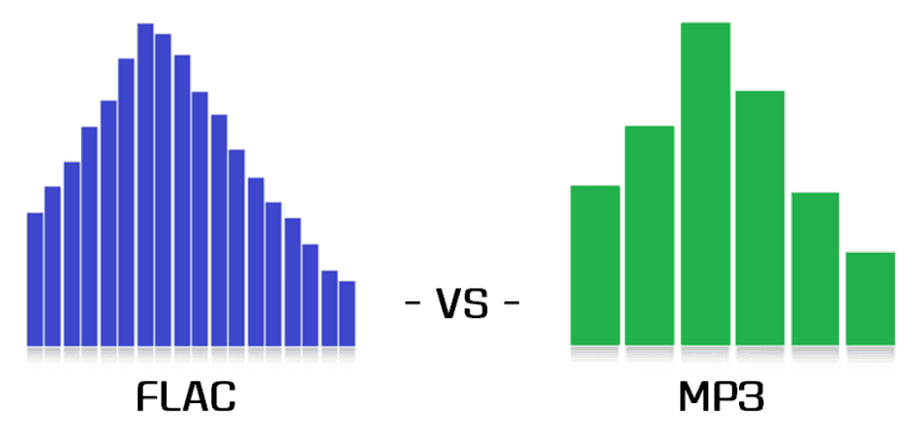
FLAC (Free Lossless Audio Codec) is currently the most popular lossless audio compression format. If lossless support is claimed for any software or hardware, this software / hardware can almost certainly play FLAC. The format is the de facto standard among lovers of high-quality sound. The FLAC compression ratio is 1.2 to 3.5 times. FLAC bitrate with 16 bit / 44.1 kHz / stereo parameters – 400-1200 kbps, the file size of a five minute recording in this form is 15-44 MB. For lossless formats, of which FLAC is a representative, the rule “higher bit rate – higher sound quality” does not work, the quality always remains identical to the original. The compression ratio and bit rate vary depending on the complexity of the material to be compressed; for example, singing on a guitar lends itself to compression better than recording a symphony orchestra.

Is it possible to compress material without loss to loss, for example from FLAC to MP3?

It is possible and often necessary. For example, if you want to listen to music in “field” conditions from a portable device without audiophile habits, and your source material is stored in lossless format, then it makes sense to make the desired tracks lossy before transferring them to the laptop. . This will reduce the file size and save much more music on your mobile device. Most likely, you won’t feel the sound degradation from such a transformation at all.

Is it possible to compress material from lossy to lossless, eg from MP3 to FLAC?

This should not be done in any case, as the sound quality will not improve and the file size will increase significantly. Also, such a pseudo-lossless, then caught by other people, will deceive them. How to rule out such fakes when downloading losslessly from the network, read this article.

Is it possible to compress material from loss to loss, eg MP3 with lower bit rate to MP3 with higher bit rate?

If you want to get an improvement in the quality of such a clamp, then no, you do not need to do this: the sound will not only not improve, but will even slightly deteriorate. If your goal is to reduce file size and sound quality is not very critical, then compressing from a higher bit rate to a lower one is quite justified.

Which lossless format is the best in terms of sound quality: FLAC, Monkey’s Audio, WavPack?

As mentioned above, lossless formats compress data losslessly. This means that, in terms of sound quality, they are all absolutely identical. You should choose a lossless format to use in each specific case, focusing solely on its compatibility with the software / equipment and your personal preferences.

Is it possible to compress material without loss to loss, for example from FLAC to MP3?

It is possible and often necessary. For example, if you want to listen to music in “field” conditions from a portable device without audiophile habits, and your source material is stored in lossless format, then it makes sense to make the desired tracks lossy before transferring them to the laptop. . This will reduce the file size and save much more music on your mobile device. Most likely, you won’t feel the sound degradation from such a transformation at all.

Is it possible to compress material from lossy to lossless, eg from MP3 to FLAC?

This should not be done in any case, as the sound quality will not improve and the file size will increase significantly. Also, such a pseudo-lossless, then caught by other people, will deceive them. How to rule out such fakes when downloading losslessly from the network, read this article.
MP3 and FLAC audio formats

MP3 and FLAC audio formats

FLAC vs MP3

In this post, I want to talk about how to get the best results when compressing music in FLAC and MP3 formats.

FLAC vs MP3

In the age of mass distribution of audio and video streaming services, this topic may seem of little relevance, however, as practice shows, this is not the case. First of all, not everyone wants to depend on third-party resources, which at any time can behave as they please, from the introduction of various access restrictions to content to its complete removal. Second, there are many places in the world where the Internet is slow, dreary, and with lunch breaks. Third, the sound quality when listening online is generally quite acceptable to most users, but it can make sophisticated listeners with good equipment bleak. Taking into account all of the above, we can assume

Since this article will focus on Windows console applications, it is assumed that the reader is familiar with the basics of working on the command line on this operating system.

Basic concepts
PCM (pulse code modulation), also known as PCM (pulse code modulation) is a method of representing an analog signal in digital form. It works like this: electrical oscillations are fed into the input of a device called ADC (analog to digital converter), which is an analog audio signal. The ADC measures the level of this signal with a certain frequency and transmits the obtained values ​​to the outside, where they are stored. Thus, a data matrix is ​​formed, which is a sequence of values ​​of the amplitude of the original signal. The process described is called “digitization”. The main problem with storing PCM data in “naked” form is its rather large volume, therefore, for a more rational use of space on the carrier, various digital audio compression algorithms are used.

CDDA (Compact Disc Digital Audio) is a good old audio CD, historically the first mass digital media standard for audio recordings. Despite the fact that in our time the CDDA itself is no longer very relevant, the sound presentation parameters in it (PCM 16 bit / 44.1 kHz / stereo) are still basic for almost all published musical phonograms.

WAV is an audio format commonly used to store uncompressed PCM audio in Windows. The format can also contain compressed data, but in practice this is extremely rare and, one might say, rude. Playing WAV files requires minimal system resources, as no additional information processing is required for this. Saving material in this format is almost always an intermediate step in sound processing in audio editors, CD grabbers, and other similar software. The bit rate of uncompressed WAV with 16-bit / 44.1 kHz / stereo parameters is 1411 kbps, the file size of a five-minute recording in this form is approximately 52 MB.

Encoder (or “encoder” from English “encoder”) is software designed to convert WAV to any other format in order to reduce the amount of stored data.

Decoder – Software or hardware used to play files compressed in the appropriate format or convert them to uncompressed format.

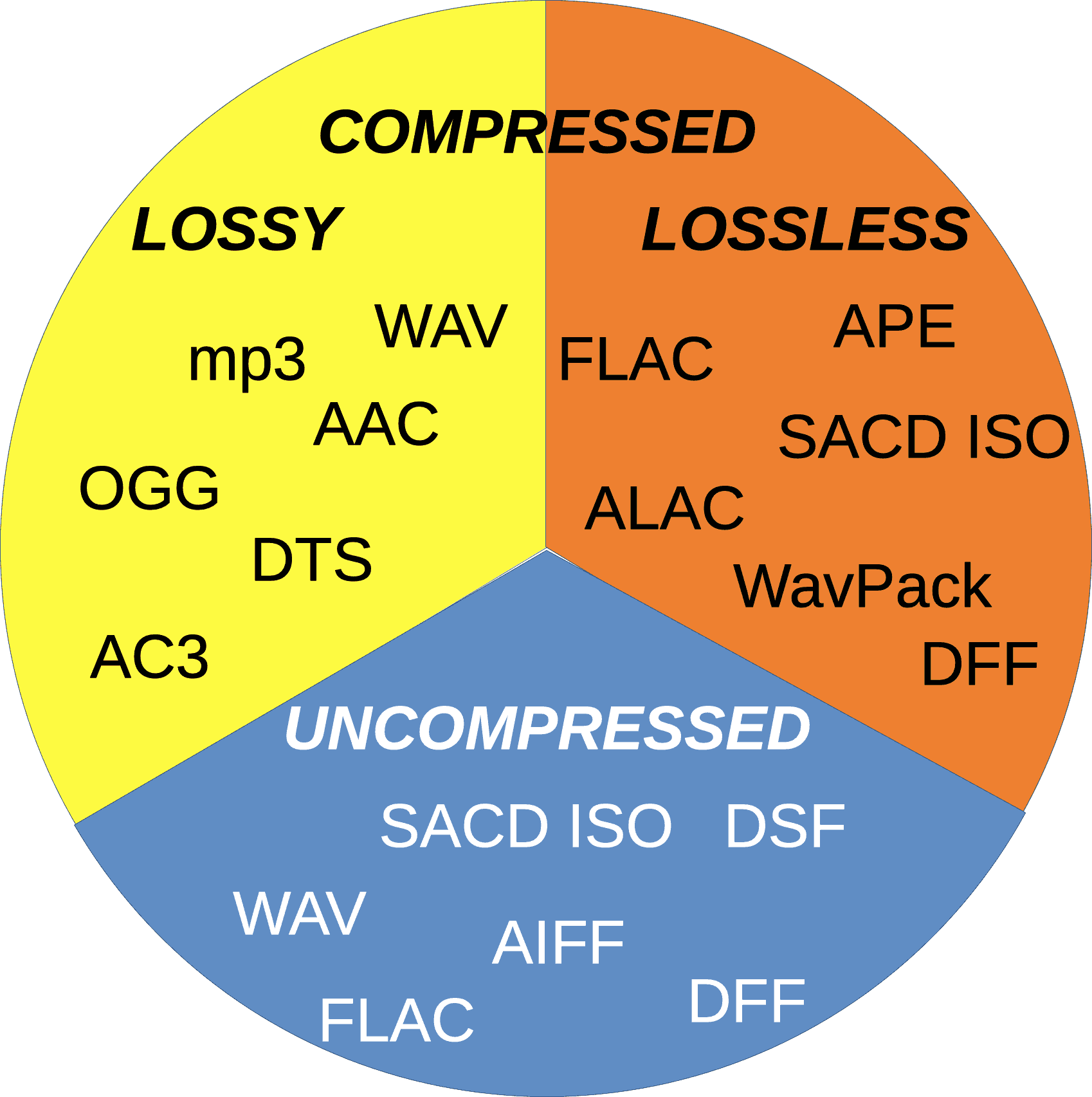
Lossy is the generic name for a family of audio formats that use lossy data compression. Typical family members are MP3, AAC, WMA, Ogg Vorbis. The main characteristic of lossy formats is that when the material is compressed in any of them, a significant part of the original audio information is irretrievably lost and cannot be restored later in any way. Because of this, a high degree of compression is achieved, while the loss is barely perceptible or even invisible to the ear, as only data that is not critical to human perception is discarded.

Lossless is the generic name for a family of audio formats that use lossless data compression. Typical family members: FLAC, Monkey’s Audio (APE), ALAC, WavPack. Unlike lossy formats, here no information is lost during compression, everything happens in the same way as in normal filing cabinets. Paying for complete data security is a significantly lower compression ratio compared to loss.

Highest quality audio format. Part 3

Highest quality audio format. Part 3

Audio Formats

Music formats: which is better

audio file format

What devices support it?

There are several formats that support high definition music. The quality of each format may vary depending on how it was recorded and at what frequencies.

There are many other brands that are already flirting with portable devices that are supposedly capable of HD audio. It is good to note that it is not enough to play high resolution audio with the file. It requires adapted audio electronics and is compatible with these frequencies and bit rates. Of course, a high-end output device is also required.

The first audio format in computer games
The first mention of computer sound came from the creation of primitive games at the time, in which sound was played through the speaker of the system. But no matter how hard the developers of such software (software) have been, the required quality, compatible with tape or reel recordings or recorders, could not be achieved.

High definition digital music has been around for a long time. Why does it seem that it is now catching on? In addition to traction, they can have devices like one, the answer on the market. The author of this disappearance does not have to look very far. Except in special cases, most of the users are more than enough for their smartphone to listen to music. Even the players that have settled down, you see, they’re reducing the ground that they hit from year to year.

That is why many manufacturers have started looking for solutions on how to change the audio format so that the sound is natural. Frankly, this has led to more competition than we have now. This applies not only to the material being played, but also to studio sound, live performances, quality or basic parameter settings in terms of knowledge of physics, acoustics, etc.

We come to the millionth question. This requires a sensitive ear and some education. If you’re a high-profile foodie, you’ll probably know the difference first, but for ordinary mortals who only listen to music with a background meter, it’s probably too hard to pay the difference just to have that kind of quality.

It is not just a music player. Those that combine with this equipment are not cheap. To top it all, there is music that is sold in high definition formats, which is also a bit more expensive.

Finally, this is the technical section. There is not even consensus among audio professionals themselves on whether these devices make such an important distinction. At least on paper, it seems that HD music sounds better, but there is a strong marketing component behind it. Are we willing to pay to see the audience as music lovers?

Highest quality audio format. Part 2

Highest quality audio format. Part 2

audio file formats

Music formats: which is better

Audio File Format

For comparison, I will give information about the Wav format, which supports high-quality sound. With a sampling frequency of 44100 Hz, its bit rate is 1411 kb / s and 1 minute of a file recorded in this format occupies approximately 10 m of hard disk space.

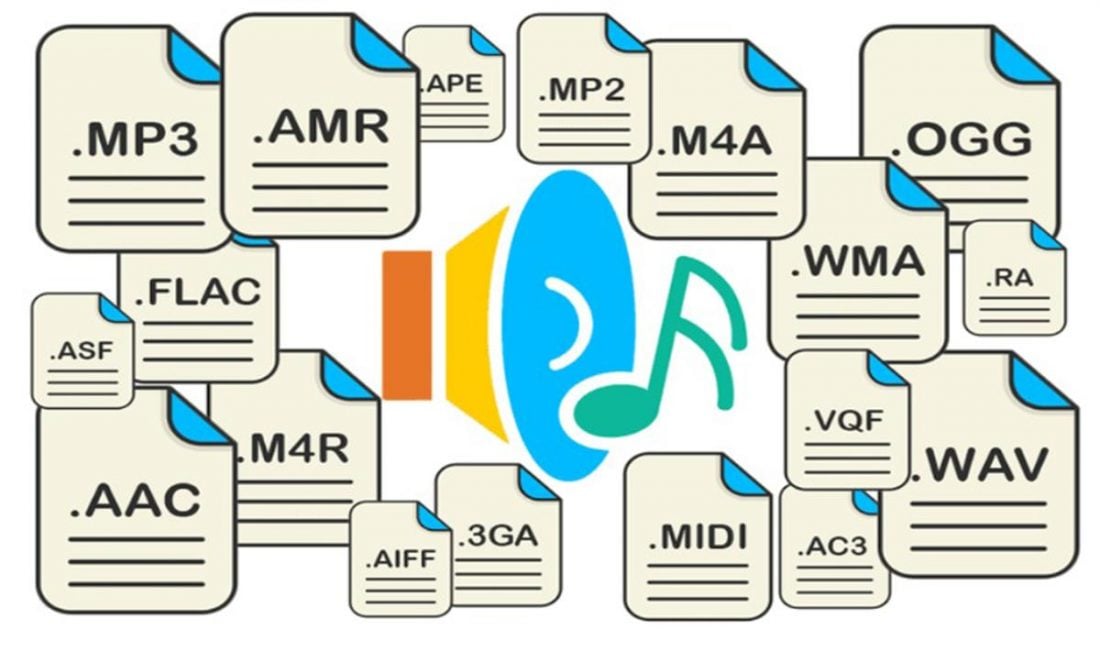
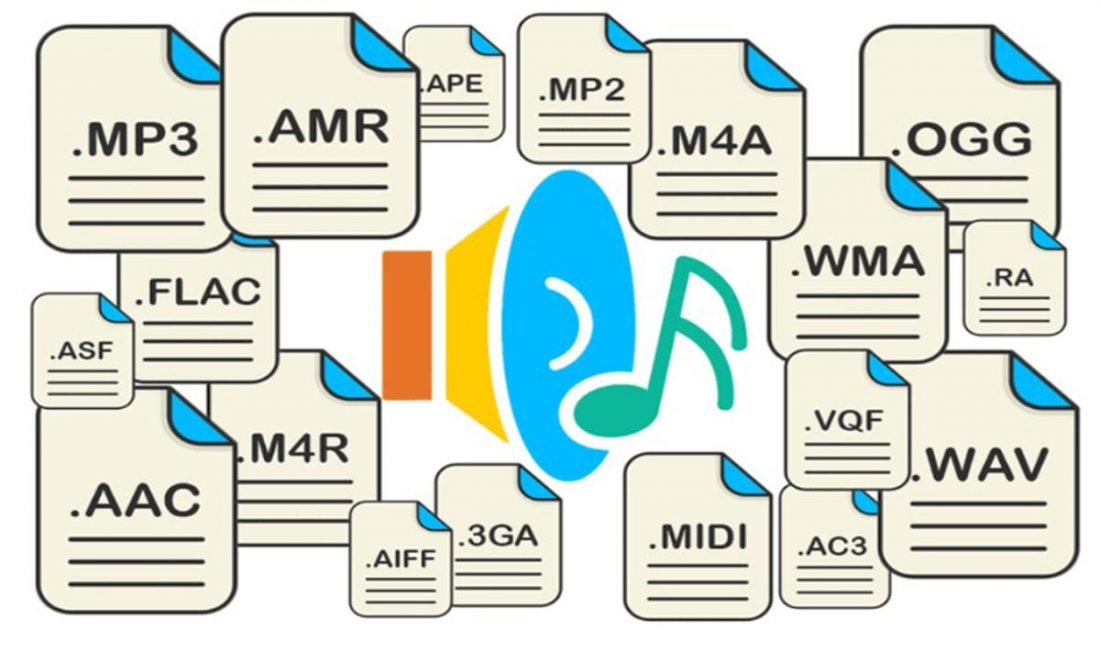
So what are the most common audio formats today?

This group of formats records and compresses audio in a way that preserves its exact original quality when decoded. In lossy compression, the sound undergoes some modification. For example, compression cuts audio frequencies that are not audible to the human ear. When decoded, the file will differ from the original in terms of the information stored in it, but it sounds almost the same.

Learn more about the most common audio formats.
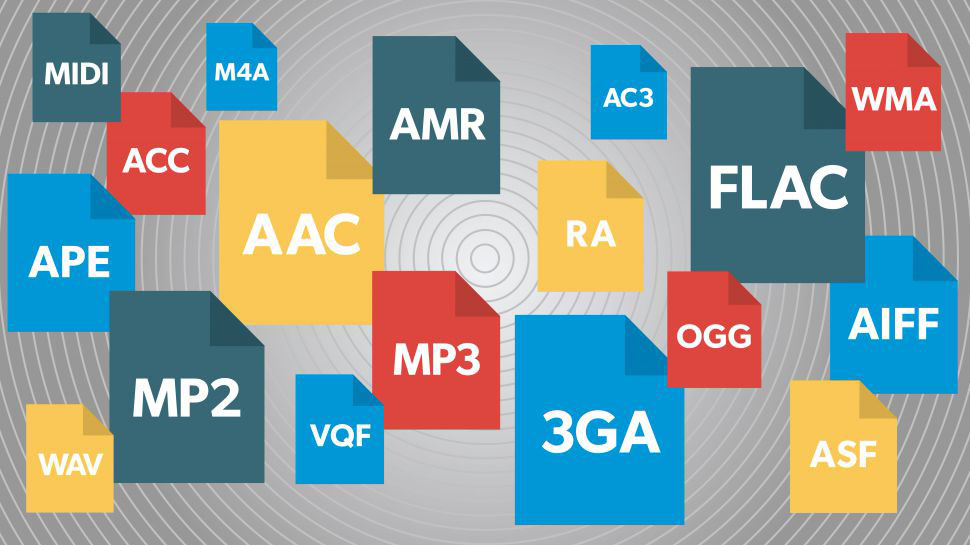
Some of the most common loss formats. However, this has been compromised by some independent tests. It generally provides better sound quality with the same file size. The sound sequence does not change and the sound encoded in this format is identical to the original. It is often used to reproduce sound in high-quality audio systems. Playback compatibility on devices and players is limited, so it is often converted to other formats if desired before playing on the player.

AAC (advanced audio coding) – other names – MPEG-2 AAC and MPEG-2 NBC. Evolution of MP3 files. With a lower bit rate, they are not inferior to MP3 quality.
AIFF is a file format for Mac OS, uncompressed data. High quality sound.
ASF (Advanced Streaming Format) is the standard format for Mac OS. Large file size with high sound quality comparable to AudioCD.
AudioCD (CDA): analog audio, high quality sound.
FLAC (Free Lossless Audio Codec) is a free audio codec that compresses audio by up to 50 percent without losing sound quality.
Liquid Audio (LQT, LA1) is a secure format for paid music downloads over the network.
MP2 (MPEG-1, Layer2) is a legacy audio format, predecessor of MP3.
MP3 (MPEG-1, Layer3) is an audio format that provides acceptable sound quality with a high compression ratio. One of the most popular formats in the world.
VQF is an audio format, an outdated analog of MP3.
WAV is a standard Windows file, high quality sound is supported. It takes up a lot of disk space.
WMA (Windows Media Audio) is an emerging format from Microsoft. With smaller file sizes and lower bit rates, it is not inferior to MP3 quality.

As a rule, today the term “audio” refers to everything that is connected with sound, whether it is playing, processing, mixing, mastering or listening to recordings. But few people know that audio formats since their inception have constantly undergone many significant changes, sometimes for the better and then for the worse. The problem is that, compared to the original formats, the creators of the new formats tried to improve the sound quality, and this invariably affected the size of the played file. Downsizing, on the contrary, led to a loss of quality. But it was not always like this.