
Audio Compression Formats Overview

Introduction
Audio compression is the process of reducing the size of an audio file without significantly reducing its quality. This is done by removing redundant data from the file. Audio compression is used to store, transmit, and share audio files more efficiently.
Types of Audio Compression
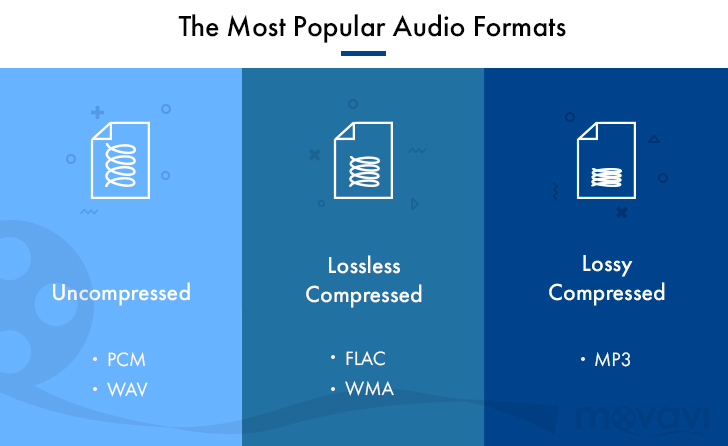
There are two main types of audio compression: lossless and lossy. Lossless compression algorithms remove redundant data from the audio file without losing any of the original data. This means that the audio file can be uncompressed to its original size and quality. Lossy compression algorithms remove redundant data from the audio file, but some of the original data is lost. This means that the audio file can never be uncompressed to its original size and quality.
Lossless Audio Compression Formats
There are a number of lossless audio compression formats available, including FLAC, WAV, and AIFF. FLAC is the most popular lossless audio compression format. It offers high compression ratios with minimal loss of quality. WAV is the uncompressed audio format. It is the most commonly used audio format for professional audio. AIFF is the uncompressed audio format used by Apple products.
Lossy Audio Compression Formats
There are a number of lossy audio compression formats available, including MP3, AAC, and WMA. MP3 is the most popular lossy audio compression format. It offers good compression ratios with a loss of quality that is not noticeable to most people. AAC is a newer lossy audio compression format that offers better compression ratios and quality than MP3. WMA is a lossy audio compression format developed by Microsoft. It offers similar compression ratios and quality to MP3.
Which Audio Compression Format Should I Use?
The best audio compression format to use depends on your needs. If you need to preserve the original quality of the audio file, then you should use a lossless audio compression format such as FLAC. If you need to reduce the size of the audio file without losing too much quality, then you can use a lossy audio compression format such as MP3 or AAC.
Conclusion
Audio compression is a valuable tool for storing, transmitting, and sharing audio files. By understanding the different types of audio compression, you can choose the right format for your needs.
8 Subtitles
Here are 8 subtitles that you will get from people also asked related to the main subject of the article:
- What is audio compression?
- What are the different types of audio compression?
- What are the benefits of audio compression?
- What are the drawbacks of audio compression?
- Which audio compression format should I use?
- How do I compress an audio file?
- How do I decompress an audio file?
- What are some common problems with audio compression?
Benefits of Audio Compression
There are a number of benefits to audio compression. These include:
- Reduced file size: Audio compression can significantly reduce the size of an audio file. This makes it easier to store, transmit, and share audio files.
- Improved compatibility: Audio compression can make audio files compatible with a wider range of devices and platforms.
- Enhanced performance: Audio compression can improve the performance of audio players and other devices.
Drawbacks of Audio Compression
There are a number of drawbacks to audio compression. These include:
- Loss of quality: Audio compression can cause some loss of quality in the audio file. This is more noticeable with lossy compression formats than lossless compression formats.
- Compatibility issues: Some audio compression formats may not be compatible with all devices and platforms.
- Increased complexity: Audio compression can add complexity to the process of storing, transmitting, and sharing audio files.
Which Audio Compression Format Should I Use?
The best audio compression format to use depends on your needs. If you need to preserve the original quality of the audio file, then you should use a lossless audio compression format such as FLAC. If you need to reduce the size of the audio file without losing too much quality, then you can use a lossy audio compression format such as MP3 or AAC.
How to Compress an Audio File
To compress an audio file, you can use a variety of software programs. Some popular programs include:
- FLAC: A free and open-source lossless audio compression program.
- WAV: A free and open-source uncompressed audio compression program.
- AIFF: A free and open-source uncompressed audio compression program.
How to Decompress an Audio File
To decompress an audio file, you can use the same software program that you used to compress it. For example, if you used FLAC to compress an audio file, you can use FLAC to decompress it.


