
What is digital audio?
Today we hear everywhere: high-quality digital sound, digital photography, digital video.

What does this buzzword mean: digital? The key lies in modern methods of recording, processing and storing a wide variety of information, which appeared simultaneously with the advent of personal computers. The first PCs were designed only for settlement operations, but later they discovered that they can operate with texts, images, sounds and videos. You just need to translate everything into the computer language.
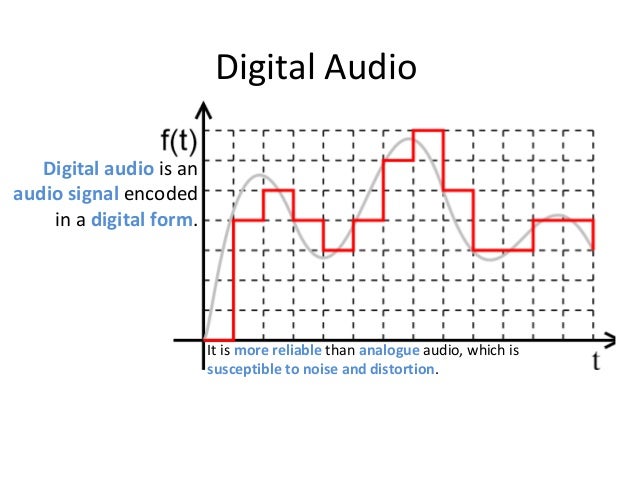
Let’s take a look at how you can record and play sound with a PC. First, the sound vibrations are converted to an alternating voltage using a microphone. This voltage is fed into the input of a special computing device – a sound card. The computer cannot register voltage. Like any electronic device, it can only record the voltage value of two levels: “there is voltage” (we should say a logical unit) or “there is no voltage” – logical zero.
It is in the form of combinations of logical zeros and ones that the PC records numbers, letters, words, or formulas. It is clear that recording a large amount of information requires many memory cells, because only one binary number can be written in a cell: 1 or 0. To write a digit or letter, 8 memory cells are needed. The number 3 is written as 00000011, the number 5 is 00000101, the letter k is 01101001, and the like.
How to record sound?
PC audio processing device control panel Very simple! The alternating voltage that reaches the sound card receives multiple measurements, the results of which are carefully recorded by the PC in memory. The computer measures the voltage approximately 44,000 times per second at any given time and records its value in memory. This is similar to how students keep a weather calendar: every day, at the same time, they record the readings of a thermometer, a barometer. The PC also records voltage values, but it does so much more frequently. How do you manage? Easy! Modern computers can do more than a billion simple operations per second, so the 44 or even 98,000 measurements required to record high-quality audio are not a problem for a computer. At the same time, the PC has to do a lot of work: drawing on the screen, writing the measurement results to disk, keeping an eye on which key you pressed, where the mouse moved, measured new voltage values, etc. Despite the fact that a voltage measurement consists of several dozen simple operations, the speed of modern processors is sufficient for it.
Large amounts of memory are required to store digital audio. One second of sound takes up the same space as 88,000 letters! This is how sound is recorded: voltage measurements are recorded on a large CD. Compare: You can record in text format a small library of 4-5 thousand books for several hundred pages or … 76 minutes of quality music.
Modern computers have learned to “cheat.” They record very quiet sounds with less precision, the ear will not yet hear them clearly. Sounds that are masked as loud sounds are also digitized less precisely. Why record in detail how smooth the violin sounds when the drum is struck hard? Therefore, the amount of memory occupied by sounds can be reduced ten times. This (and not only this) is done in the popular MP3 computer audio formats, which are common on the Internet, and in portable MP3 players, and Atrac, which is used in minidisc players.
How do I play the sound?
How is digital sound recreated? Even easier than typing it! In math lessons, you probably had to graph a function by points, and in physics lab work, you had to draw a graph based on measurements. During playback, the PC reads the voltage value from memory at all times and, using a sound card, resumes almost the same alternating voltage that was digitized.
These methods of recording and reproducing sound are used not only by computers, but also by various CD, MD and MP3 players, which, in fact, are also microcomputers, albeit without the usual keyboards, mice and monitors.
It is convenient not only to record and store digital sound, but also to transmit it remotely. The convenience lies in conserving airtime and battery life. During a conversation on a mobile phone, the voice is converted into digital form and memorized. When, say, 1/5 of a second of sound has accumulated, the phone’s transmitter turns on and the sound is transmitted for 1/100 of a second.


