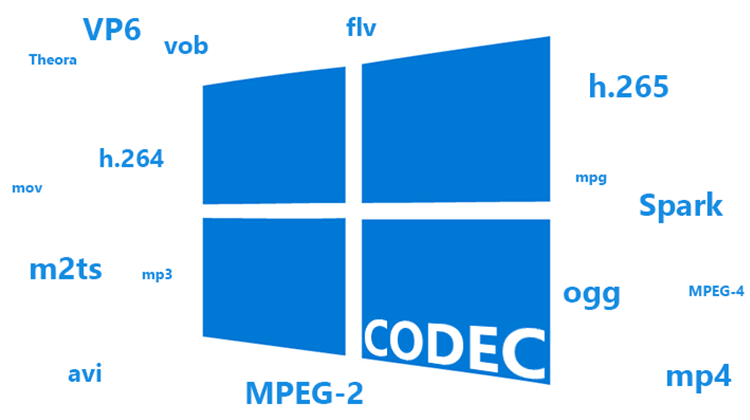
MP4 Codec


Free Download Mp4Gain
picture

The MP4 Codec: A Comprehensive Guide

MP4 Codec
MP4 Codec
MP4 Codec
MP4 Codec

What is the MP4 Codec?

The MP4 codec is a compression algorithm used to compress digital audio and video files into a smaller size. The MP4 file format is a popular container format used to store compressed video and audio files. The MP4 codec is widely used in the multimedia industry due to its efficiency, high-quality output, and compatibility with different devices and operating systems.

How Does the MP4 Codec Work?

The MP4 codec uses a lossy compression method to reduce the size of digital video and audio files. In lossy compression, some data is lost during the compression process, resulting in a smaller file size. The MP4 codec uses various compression techniques, such as intra-frame and inter-frame compression, to reduce the size of digital video and audio files.

In intra-frame compression, each frame of video is compressed independently of the other frames. In inter-frame compression, the codec looks for similarities between frames and compresses the data that is redundant. This method results in a smaller file size than intra-frame compression, but it requires more processing power.

Advantages of the MP4 Codec

The MP4 codec offers several advantages over other codecs. Firstly, it provides high-quality output with a relatively small file size, making it ideal for streaming and sharing content online. Secondly, the MP4 codec is compatible with different devices and operating systems, making it easy to share and play multimedia files across multiple platforms.

Thirdly, the MP4 codec supports multiple audio and video streams, enabling users to add different languages, subtitles, and alternative audio tracks to their video files. Fourthly, the MP4 codec supports a wide range of video resolutions, from low-resolution videos to 4K and 8K videos, making it versatile for different use cases.

Disadvantages of the MP4 Codec

While the MP4 codec offers several advantages, it also has some disadvantages. Firstly, the compression process can result in some loss of data and quality, especially when compressing videos with high resolutions or high bitrates. Secondly, the compression process requires significant processing power, which can be a challenge for low-powered devices such as smartphones and tablets.

Thirdly, the MP4 codec is not suitable for archival purposes as the compressed files may degrade over time, resulting in data loss or corruption. Lastly, the MP4 codec may not be compatible with some older devices or media players that do not support the format.

Applications of the MP4 Codec

The MP4 codec has various applications in different industries. It is widely used in the entertainment industry for streaming videos, films, and TV shows on different platforms such as Netflix, Hulu, and Amazon Prime Video. The MP4 codec is also used in online gaming and e-sports for live streaming and recording gameplays.

In addition, the MP4 codec is used in education and training for creating e-learning courses, tutorials, and webinars. The MP4 codec is also used in the security and surveillance industry for recording and streaming CCTV footage.

FAQ

Q: Is the MP4 codec the same as the H.264 codec?

A: No, the MP4 codec is a container format that can use various compression algorithms, including the H.264 codec. The H.264 codec is a video compression algorithm used in different file formats, including MP4.

Q: Can I edit MP4 files without losing quality?

A: Yes, To minimize this loss, it’s recommended to work with a high-quality original file and export in the highest possible quality settings.

Q: Is MP4 the best format for video?

A: It depends on your needs and intended use. MP4 is a widely used and versatile format that works well for most purposes. It offers a good balance between file size and quality, making it ideal for streaming, sharing, and storing videos. However, for professional or high-end video production, other formats such as ProRes, DNxHD, or RAW may be more suitable.

Q: How do I convert other video formats to MP4?

A: Using Mp4Gain.

Q: How can I improve the audio quality of an MP4 file?

A: One way to improve the audio quality of an MP4 file is to use MP4Gain, a specialized software that analyzes and adjusts the volume and gain of the audio track without re-encoding the video. MP4Gain can also equalize the sound and add a ReplayGain tag for compatibility with other players. Other options include using a dedicated audio editor or adding an external audio track.


Free Download Mp4Gain
picture


Mp4Gain Main Window
picture


Mp4Gain Features
picture


Free Download Mp4Gain
picture

What is a codec? – clearly explained

Codecs are crucial to the quality and efficiency of data encoding. In this practical tip we explain exactly what a codec is.

What is a video codec

What is a codec? – 10 facts

The following information will help you understand what a codec is. The following example shows the differences between format, encoder, and decoder and shows how quality and efficiency depend on the codec.

What Is A Codec

-A codec is a combination of encoder and decoder.
-The objective of a codec is usually to reduce the amount of data for transmission or storage.
-Codecs are used in particular for audio, video and image data, as well as for text compression and encryption.
-In the audio sector there are special codecs for voice or music. -Video and graphics codecs are specially designed for comics / cartoons and real pictures / movies.
Lossy data reduction primarily uses psychophysical tricks to inaccurately encode those parts of image and sound that humans can barely or barely perceive.
-The most popular audio codecs are FLAC and MP3, where FLAC specifies both the format and the codec. MP3 is a codec for audio in MPEG I or MPEG II format.
-The MP3 decoder side is standardized by Fraunhofer and can be obtained without a license. However, the encoder is paid. Therefore, many use the free LAME encoder.
-G.722.2 and Full Rate (FR) voice codecs are used especially in telephony.
-The most popular video codecs are H.265 for UHD TV, DivX and XviD in MPEG-4 Part 2 and H.264 for QuickTime.
-Often various encoded formats like MP3 and JPG are combined into one container file, for example in AVI, MKV, MP4 and FLV.

A simple codec example

The principle of a codec is clarified with an example. An abbreviation codec reduces typed text to abbreviated text and uses it to generate typed text:

-Format: Your digital font format might dictate how all the letters and characters you use are encoded in binary.
-You define the type of encoding in a specification, for example, the rule that each character consists of 8 bits. To do this, write a table showing which bit sequence is assigned to which letter or character.
-Codec: You can now create an abbreviation codec to convert typed text into font formatted abbreviated text.
-To do this, your codec must specify which words will be abbreviated and how, for example, through a set of rules, a large list of abbreviations or a combination.
Encoder – An encoder can now convert typed text to abbreviation format using the rules and directory.
Decoder: a decoder can convert it to written text.
-The efficiency of data reduction is highly dependent on your codec.
-If you only created a directory with three abbreviations, most of the texts will not be noticeably shorter. Compression is low.
-If your list of abbreviations is huge, the device that is going to encode and / or decode the text must have a large memory and a high reading speed.
-However, if you set up a smart set of rules for encoding, your codec is ideally small and the end device doesn’t have to do a lot of computing or reading work.
-If a word can be abbreviated in more than one way, that’s fine. A good encoder would use the most efficient abbreviation.
-However, if an abbreviation can have multiple meanings, you have lost information. This will probably render your codec unusable.
-However, if only the words that you know you are omitting were abbreviated ambiguously, you would have invented a lossy psychophysical encoding. This takes advantage of the fact that you do not visually perceive every existing word optically.
-This idea is not entirely false. Because, as this example shows, we don’t necessarily read exactly what is written.

What is a Codec? Clarifying concepts

What is a Codec? Clarifying concepts

Speaking of multimedia terminology, there is a fairly widespread confusion between the concept of image and / or sound format and that of audio and / or video container format (also called multimedia container format) To finish bundling it, it is very common to refer to both with the term codec that does not express any of the two previous concepts.

The image, video, audio format… is the way in which this type of information is encoded so that it can be treated by computer, which includes both being able to store it and transmit it. That format, therefore, would be a series of rules to describe images and sound in a computer way; a mathematical model, if you want to see it that way.

A codec (or codec, with tilde, in its Spanish version) is a program that encodes or decodes multimedia information according to a certain format. Once the data is encoded, it can be processed, for example stored or transmitted. As you may have guessed, the word codec is an acronym formed by the English words coder and decoder: encoder and decoder in Spanish.

An audio / video container format (or multimedia container format) is a computer file structure according to which audio and / or video is stored or transmitted as well as information associated with them (such as subtitles or bookmarks) The same container You can include together (multiplexed) the different components (tracks) in a single document. It is very common to add an extension to the name of the documents (those few letters that are at the end of the name separated by a period) that usually refer to the type of document. If you are rigorous in establishing that extension, it can serve as a clue to know which container is the document.

Considering the above, we could say that the document «feature film.avi» is a container in AVI format that includes video in MPEG4 format encoded using the Xvid codec. As the orthodox version is a very long phrase, it is common, for example, to say colloquially that the document “short.avi” is an MPEG4: it is obvious that it is an AVI container and everyone will know what codec has installed in their system for what formats

Most of the time, when packaging the information according to a certain format, it is compressed, that is, it is transformed so that the resulting information requires less memory to be stored or less bandwidth when transmitted than the original information.

There are two ways to compress information, with or without losses. Lossless (or lossless) formats allow you to reconstruct the information as it was originally, before compressing, without any difference from the original. In most cases the lossless coding usually allows (much) less compression (takes up much more) and is reserved for the documents that are going to be edited, that is, that they are not final documents.

The most frequent image and sound coding is with losses (lossy) Of course, the coding system seeks to make these losses as less noticeable as possible, considering for this, for example, the movement (What changes the image between a frame and another) The level of quality-compression is usually configurable so you can choose the degree you want between occupying more and having more quality. In line with what has been said about lossless formats, it is not a good idea to code according to a material loss format that is going to be edited since the successive recompressions cause more and more quality information to be lost to images and sound. Do not compress again and again using a lossy format!

One moment, you said that it is better to encode the original material using a lossless format but also that it will take up more. Then I must give the button on my camera that records video without compression? For starters, unfortunately, it is quite rare for your camcorder to have that button (in those of taking pictures and in audio systems it is something that is usually possible) Only in some cameras you can do something like that, they will usually be professionals and of the highest range. On the other hand, be prepared to spend a lot of memory and quickly, since you will need to store a lot and at full speed. So, what should I do? Our advice is that you choose, if you can, the best possible quality, even with losses, for the images you are going to edit and suitable for those that do not require more editing than the “cut” assembly since, properly processed , does not have to be compressed again.