FLAC 【Free Lossless Audio Codec】


Free Download Mp4Gain
picture

FLAC 【Free Lossless Audio Codec】

FLAC

FLAC is one of the lossless compression methods and file formats for audio data.

FLAC

It can be saved without loss of sound quality. The standard file extension is “.fla” or “.flac”.

FLAC

Most audio data compression methods use lossy compression, which dramatically increases the compression ratio rather than allowing the original data to be modified or lost, but FLAC is so fully compressed that the sound quality does not deteriorate in any way. absolute in principle.

The compression rate cannot be determined unequivocally because it is greatly affected by the audio content, but when a general music CD is used as the sound source, a lossy compression method such as MP3 is reduced to about 1/ 10 while maintaining sound quality. While it can be compressed, FLAC has half to a third of the amount of data that other lossy compression methods have.

The sampling frequency of the corresponding audio data is 1 to 655 350 Hz (655 kHz), the number of quantization bits is 4 to 32 bits, and up to 8 channels can be superimposed and recorded. The compression/decompression method is open to the public, and the standard compression/decompression software (codec) is open to the public under the BSD license.

It also defines a container format (.flac file) that records compressed data to a file, but can also be adopted as a codec for other container standards, such as the Ogg format (.ogg/.oga) and the Matroska format (.mka ). ) In /.mkv), FLAC can be used as one of the audio formats. The FLAC container format also defines the “FLAC uncompressed” format, which allows you to specify uncompressed as an option and records audio to WAV format as is without compression.


Free Download Mp4Gain
picture


Mp4Gain Main Window
picture


Mp4Gain Features
picture


Free Download Mp4Gain
picture

Why are WAV and FLAC making a fool of themselves by saying “sound quality is different”?

Why are WAV and FLAC making a fool of themselves by saying “sound quality is different”?

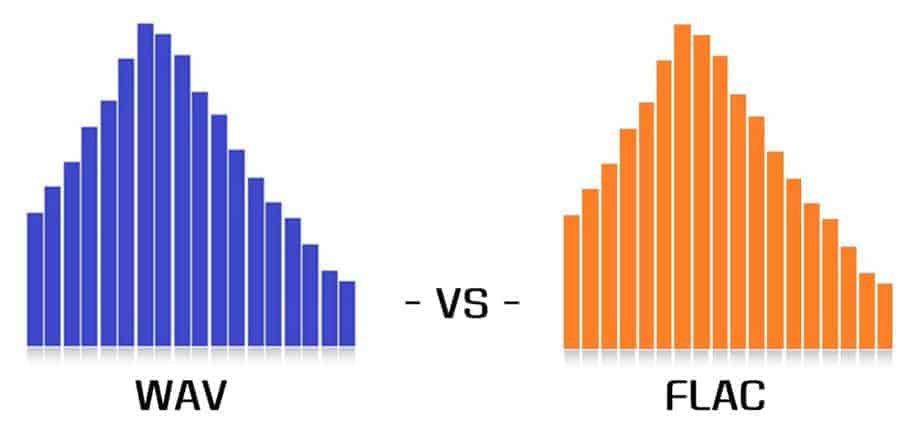
WAV vs FLAC

When looking at the audio file ( audiophile ; so-called audiophile in Japan) area, the sound quality is different between WAV and FLAC! There are people who scream. In this article I would like to consider whether it is true.

FLAC vs WAV

Differences between
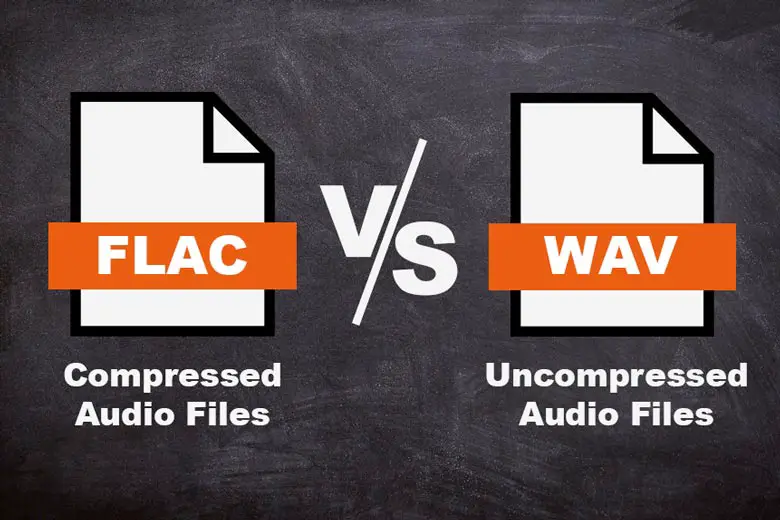
WAV (WAVE) is a file format that can store linear PCM, and FLAC is a format that can store audio by lossless compression (ie, compression can be performed without loss of sound quality).
According to the FLAC standard, formats up to 32 integer bits/655 350 Hz can be stored, but the encoder itself supports up to 24 integer bits.
WAV is an old standard created in 1991, and is actually a kind of container standard called RIFF. Various waveform data can be stored in WAV, and 64-bit floats, etc. can also be stored.
In other words, if they are both in the 24-bit range, the exact same waveform can be saved. This is a perfect match at the waveform level.
If you’re using a music player called foobar2000 , you can confirm that there is no 1-bit difference between WAV and FLAC using a plugin called Binary Comparator .
FLAC has a CRC checksum for each frame and the file has an MD5 hash to detect file corruption. WAV may not be noticeable even if it is corrupted, such as distorted data.
By the way, if you want to save 32 bits or more, you can use a lossless compression format called WavPack.
“Decode gar load”
The logic of those who argue that there is a difference in sound quality between WAV and FLAC is generally “FLAC requires decoding to PCM for playback, and since there is a need for decoding, the CPU load is high and the audio quality is high. sound is high”. It gets worse. ”
The first half of this logic is correct. FLAC is lossless compression and must be decoded for playback. However, when discussing the second half, questions arise.
Although FLAC is a compressed format in the first place, the load during decoding is one of the lowest among all lossless compressed audio formats.
The CodecPerformanceComparison site has decoding speeds by format. Among them, FLAC is much faster than Monkey’s Audio, WAVPACK, AAC and MP3. The decoding speed is almost the same regardless of whether the compression ratio is 5 or 8.
FLAC is said to only be able to decode using integer arithmetic (source), and it’s pretty fast. Although WAV does not require decoding, it is just using the CPU in the sense that it reads the file, stores it in memory, and the CPU processes the driver and sends the data to the sound card.
Also, WAV is not compressed, so there is a problem that the file size increases. This means that reading files from storage is clearly more frequent than FLAC. This is nothing more than using more of your computer’s bus bandwidth. How do you explain the electromagnetic noise generated by these warehouses and buses? Has anyone checked it out?
Importance of the ABX test (double-blind test)
I think most people in audio files (Ota, audiophiles) downplay science and think of things with various guesses, relying solely on their own senses.
“Clear sound” “Smooth and elegant treble” “Natural bass”
These words sound good, but they have to do with falsifiability, and I can’t even start an argument.
I want to compare A and B. At that time, “ABX test” or double-blind test (double-blind method) is useful.
Suppose there is A and B. I want to compare A and B. They can be WAV and FLAC, oxygen free copper cables and Amazon Basics cables. It may be the sound that electricity generated by hydroelectric power reproduces and the sound that sunlight reproduces, or the difference between iPod and Walkman, cassette tape and record.
If you really want to make a comparison, hide A and B and ask. There is another collaborator on this. When the test starts, the collaborator first prepares the equipment of A and B, and clearly plays each sound as A or B. Then the collaborator hides A or B and plays the sound. It can be of the order of AABBABAA or ABABAAB. Anyway, play random. And the collaborator asks, “What was the random sound I originally submitted, A or B?” He can request and replay sounds A and B at any time during the test.

WAV, FLAC and more: the best audio formats for your music

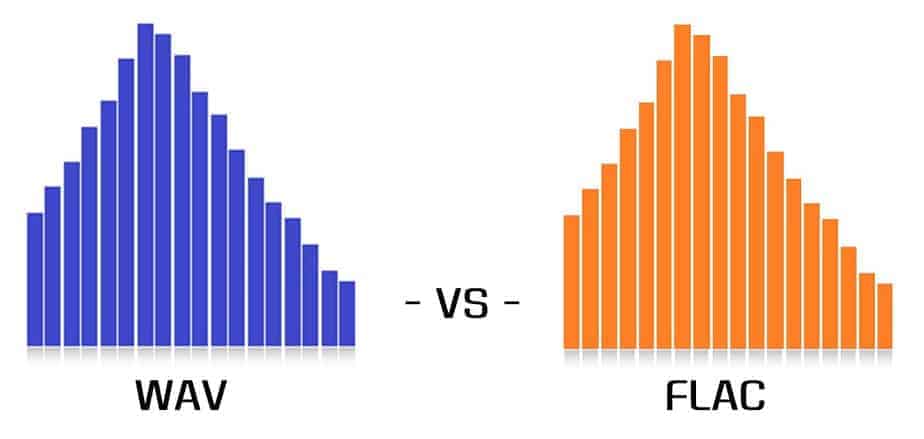
WAV vs FLAC

What audio format is best for music? Image: What audio format is best for music? Image: Unsplash
AAC is not the size of a battery, nor is FLAC an anti-aircraft weapon. With these and many other abbreviations, we find ourselves in the dense jungle of audio formats. In this guide, we’ll explain what these abbreviations mean, what each music file format is for, and which one is the best to use in your music collection.
WAV vs AIFF vs ALAC

Lossless uncompressed audio formats
In uncompressed audio formats, the analog source material was converted to a lossless digital format. Uncompressed and lossless means no information was lost during the transfer and you get the best possible sound quality, at the expense of storage space, of course.

PCM
PCM stands for Pulse-Code Modulation and represents a digital image of the raw audio signal. Since analog sound is in wave form, it must be “sampled” at certain intervals (pulses). This results in the sample rate (frequency in Hertz) and the bit rate (number of bits per sample). PCM is an uncompressed, lossless audio format that is closest to analog source.

Usage: Music Industry: Basis for Lossless Uncompressed Audio Formats

Wav
WAV (Waveform Audio File Format) is a standard developed by Microsoft and IBM in 1991 for various audio formats. This waveform audio file format is actually a file container that generally contains uncompressed audio signals in PCM format, allowing Windows and Mac systems to process them more easily.

The result is excellent sound quality, but also very high storage space requirements. Another disadvantage of the WAV format is that only rudimentary metadata (artist, album, song title) is available and can be saved. You cannot store an album cover, for example.

Use: Music CD, among others

TAD D1000mk2
The TAD D1000 MK2 can play SACD and thus reproduce high-resolution audio signals. | Image: TAD
AIFF
The AIFF (Audio Interchange File Format) was developed by Apple in 1988 and is Apple’s equivalent to the WAV container. Similar to this, AIFF can contain different audio formats and is populated with the PCM format by default.

Use: Apple systems

Lossless compressed audio formats
Those who do not want to produce CDs or have an infinite amount of storage space can switch to high resolution audio formats. They are used for Super Audio CD (SACD) and streaming services like Tidal and, thanks to very good codecs, they provide lossless compression.

DSD
DSD (Direct Stream Digital) follows a similar principle to PCM, but works differently. The DSD codec uses fewer bits at a much higher sample rate to reduce the storage space required for a music file.

Usage: super audio CD

FLAC
FLAC (Free Lossless Audio Codec) is considered a very good alternative to WAV. The format requires up to 50 percent less storage space and can store more metadata. This makes FLAC a popular format for the highest quality music downloads, but with the downside that it is not compatible with Apple’s iTunes.

Usage: Hi-Res Music Downloads for Standalone Apple Systems

A THE C
As is often the case, Apple has also developed its own alternative called ALAC (Apple Lossless Audio Codec). FLAC is considered the more efficient of the two formats, but with ALAC Apple users can also enjoy a lossless audio format.

Usage: High-resolution music downloads for Apple systems

MQA
Unlike the other formats, MQA (Master Quality Authenticated) is not a real audio format, but a codec system consisting of an encoder and a decoder. Behind this is a complex piece of software that, according to the developer, should be able to reproduce the original master quality of the studio.