FLAC 【Free Lossless Audio Codec】


Free Download Mp4Gain
picture

FLAC 【Free Lossless Audio Codec】

FLAC

FLAC is one of the lossless compression methods and file formats for audio data.

FLAC

It can be saved without loss of sound quality. The standard file extension is “.fla” or “.flac”.

FLAC

Most audio data compression methods use lossy compression, which dramatically increases the compression ratio rather than allowing the original data to be modified or lost, but FLAC is so fully compressed that the sound quality does not deteriorate in any way. absolute in principle.

The compression rate cannot be determined unequivocally because it is greatly affected by the audio content, but when a general music CD is used as the sound source, a lossy compression method such as MP3 is reduced to about 1/ 10 while maintaining sound quality. While it can be compressed, FLAC has half to a third of the amount of data that other lossy compression methods have.

The sampling frequency of the corresponding audio data is 1 to 655 350 Hz (655 kHz), the number of quantization bits is 4 to 32 bits, and up to 8 channels can be superimposed and recorded. The compression/decompression method is open to the public, and the standard compression/decompression software (codec) is open to the public under the BSD license.

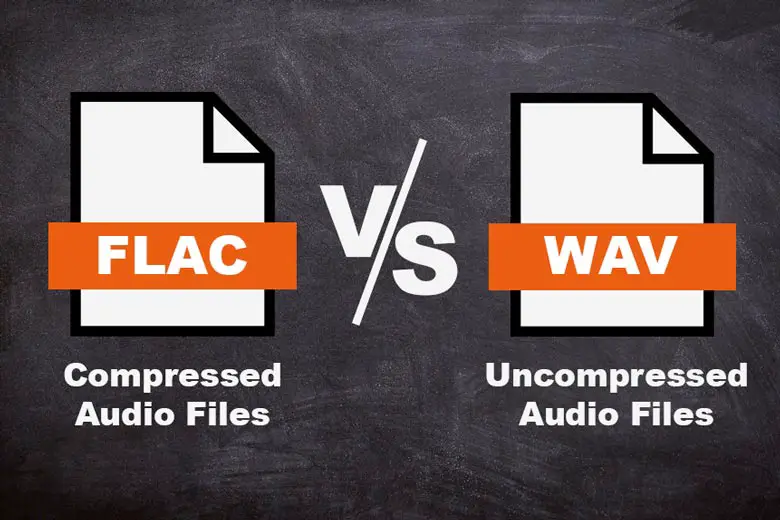
It also defines a container format (.flac file) that records compressed data to a file, but can also be adopted as a codec for other container standards, such as the Ogg format (.ogg/.oga) and the Matroska format (.mka ). ) In /.mkv), FLAC can be used as one of the audio formats. The FLAC container format also defines the “FLAC uncompressed” format, which allows you to specify uncompressed as an option and records audio to WAV format as is without compression.


Free Download Mp4Gain
picture


Mp4Gain Main Window
picture


Mp4Gain Features
picture


Free Download Mp4Gain
picture

Why are WAV and FLAC making a fool of themselves by saying “sound quality is different”?

Why are WAV and FLAC making a fool of themselves by saying “sound quality is different”?

WAV vs FLAC

When looking at the audio file ( audiophile ; so-called audiophile in Japan) area, the sound quality is different between WAV and FLAC! There are people who scream. In this article I would like to consider whether it is true.

FLAC vs WAV

Differences between
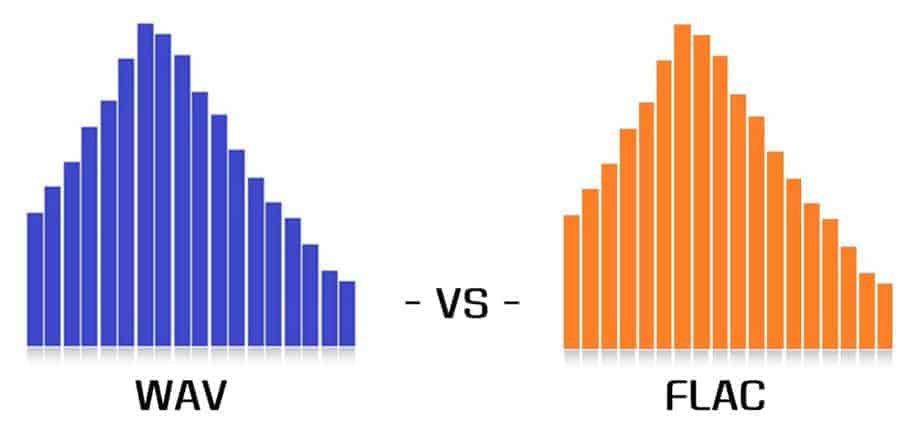
WAV (WAVE) is a file format that can store linear PCM, and FLAC is a format that can store audio by lossless compression (ie, compression can be performed without loss of sound quality).
According to the FLAC standard, formats up to 32 integer bits/655 350 Hz can be stored, but the encoder itself supports up to 24 integer bits.
WAV is an old standard created in 1991, and is actually a kind of container standard called RIFF. Various waveform data can be stored in WAV, and 64-bit floats, etc. can also be stored.
In other words, if they are both in the 24-bit range, the exact same waveform can be saved. This is a perfect match at the waveform level.
If you’re using a music player called foobar2000 , you can confirm that there is no 1-bit difference between WAV and FLAC using a plugin called Binary Comparator .
FLAC has a CRC checksum for each frame and the file has an MD5 hash to detect file corruption. WAV may not be noticeable even if it is corrupted, such as distorted data.
By the way, if you want to save 32 bits or more, you can use a lossless compression format called WavPack.
“Decode gar load”
The logic of those who argue that there is a difference in sound quality between WAV and FLAC is generally “FLAC requires decoding to PCM for playback, and since there is a need for decoding, the CPU load is high and the audio quality is high. sound is high”. It gets worse. ”
The first half of this logic is correct. FLAC is lossless compression and must be decoded for playback. However, when discussing the second half, questions arise.
Although FLAC is a compressed format in the first place, the load during decoding is one of the lowest among all lossless compressed audio formats.
The CodecPerformanceComparison site has decoding speeds by format. Among them, FLAC is much faster than Monkey’s Audio, WAVPACK, AAC and MP3. The decoding speed is almost the same regardless of whether the compression ratio is 5 or 8.
FLAC is said to only be able to decode using integer arithmetic (source), and it’s pretty fast. Although WAV does not require decoding, it is just using the CPU in the sense that it reads the file, stores it in memory, and the CPU processes the driver and sends the data to the sound card.
Also, WAV is not compressed, so there is a problem that the file size increases. This means that reading files from storage is clearly more frequent than FLAC. This is nothing more than using more of your computer’s bus bandwidth. How do you explain the electromagnetic noise generated by these warehouses and buses? Has anyone checked it out?
Importance of the ABX test (double-blind test)
I think most people in audio files (Ota, audiophiles) downplay science and think of things with various guesses, relying solely on their own senses.
“Clear sound” “Smooth and elegant treble” “Natural bass”
These words sound good, but they have to do with falsifiability, and I can’t even start an argument.
I want to compare A and B. At that time, “ABX test” or double-blind test (double-blind method) is useful.
Suppose there is A and B. I want to compare A and B. They can be WAV and FLAC, oxygen free copper cables and Amazon Basics cables. It may be the sound that electricity generated by hydroelectric power reproduces and the sound that sunlight reproduces, or the difference between iPod and Walkman, cassette tape and record.
If you really want to make a comparison, hide A and B and ask. There is another collaborator on this. When the test starts, the collaborator first prepares the equipment of A and B, and clearly plays each sound as A or B. Then the collaborator hides A or B and plays the sound. It can be of the order of AABBABAA or ABABAAB. Anyway, play random. And the collaborator asks, “What was the random sound I originally submitted, A or B?” He can request and replay sounds A and B at any time during the test.

Still using MP3? If you want to listen with real sound quality, maybe you should use “FLAC”.
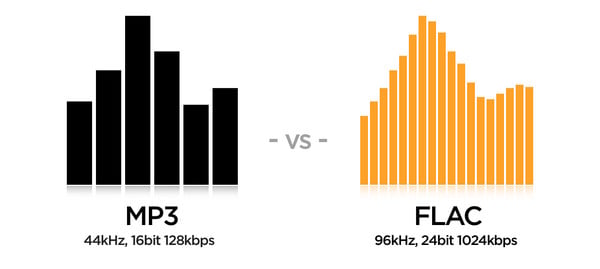
Still using MP3? If you want to listen with real sound quality, maybe you should use “FLAC”.

MP3 vs FLAC

“MP3” is said to be the most popular music file format, but few people know about “FLAC”.
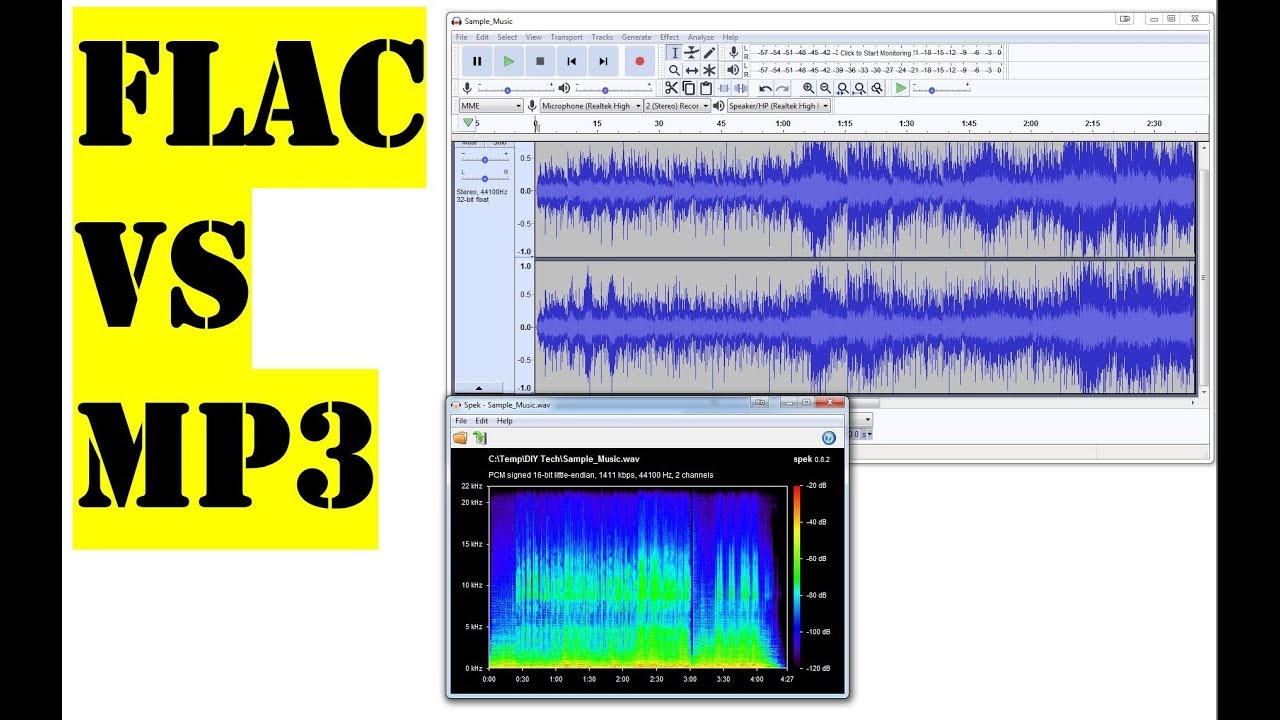
Flac vs Mp3

FLAC is great. If you still use MP3, try this FLAC.

It will surely bring you beautiful sound quality instead of poor sound quality MP3.

1 Differences in each music file format
1.1 WAV (uncompressed)
1.2 MP3 (lossy compression)
1.3 FLAC (lossless compression)
2 Which is better, “MP3” or “FLAC”?
2.1 Advantages of “MP3” over FLAC
2.2 Advantages of “FLAC” over MP3
3 Personal conclusion is that “FLAC” is recommended over MP3

Differences in each music file format
music

I will explain the following three typical in advance.

WAV
MP3
FLAC
The general picture is like “compress WAV (original data) and convert it to MP3 or FLAC”. Once you understand the basics, you’ll be able to figure it out with no problem, so let’s take a closer look.

WAV (uncompressed)
wave

This “WAV” is the original music file format.

It is recorded on music CD in this “WAV” format, a file format with the best sound quality.

However, since there is only original data that has not been compressed, the file size is quite large and the duration of one hour is about 600 MB.

Few people listen to this “WAV” format as it is.

MP3 (lossy compression)
mp3

It is a famous “MP3” file format.

This “MP3” is a wonderful format that can compress WAV, which is the original data, and reduce the file size to about 1/10.

Until recently, 2GB and 4GB of memory were common, so it was very useful due to its small file size.

However, due to compression, “sound quality” deteriorates significantly, and audiophiles who are picky about sound will not use “MP3” first.

FLAC (lossless compression)
flac

It is “FLAC” that is gaining popularity in the audio world.

The best thing about this FLAC is that the sound quality is the same as WAV (original data). Also, the file size could be compressed to about a fifth of WAV.

Recently, large-capacity memory such as 64GB has become widespread due to cost reduction, so this “FLAC” begins to be widely used. Even if you think of a song in 5 minutes, you can fit about 2000 songs in 64GB memory.

* By the way, Apple products (iPhone, etc.) do not support FLAC, and the “ALAC (Apple Lossless Audio Codec)” format is mainly used, which is the same as FLAC and does not deteriorate the sound quality.

Which is better, “MP3” or “FLAC”?
music

Advantages of “MP3” over FLAC
Since the size of “MP3” is about half that of FLAC, you can fit a lot even with a small memory capacity.
Most older music players support MP3, so you can use any device.
The advantage of “FLAC” over MP3
Since the sound quality is the same as the original data, you can enjoy cleaner and more vivid sound quality than MP3.
Since it’s “lossless compression”, it’s possible to go back from FLAC to “WAV” (I don’t use it much though).
My personal conclusion is that “FLAC” is better than MP3
music

All the files in my music player are “FLAC”.

As mentioned above, the reason is that high-capacity memory is available cheaply these days, so even FLAC is less likely to fill its capacity.

Amazon’s microSD card is sold at a very reasonable price, with 32GB memory for 1,750 yen and 64GB memory for 3,779 yen. Since the capacity of memory cards is expected to increase in the future, the number of FLAC users will continue to increase.

And finally, there is a point, “highest sound quality”.

It is not possible to clearly distinguish the sound between MP3 and FLAC, but still, the placebo effect (believing effect) is created just by saying “this is the most beautiful sound quality”. It is just that.

The difference between FLAC and MP3

The difference between FLAC and MP3

FLAC vs MP3

They are both one of the audio file data formats, but they seem to have different characteristics regarding sound quality and file size. On this occasion, I will explain the difference between the two file formats and whether the files can be converted, together with Saito Masahiro, a writer who is also a web director and a great music lover.

MP3 vs FLAC

Is the difference between FLAC and MP3 reversible?
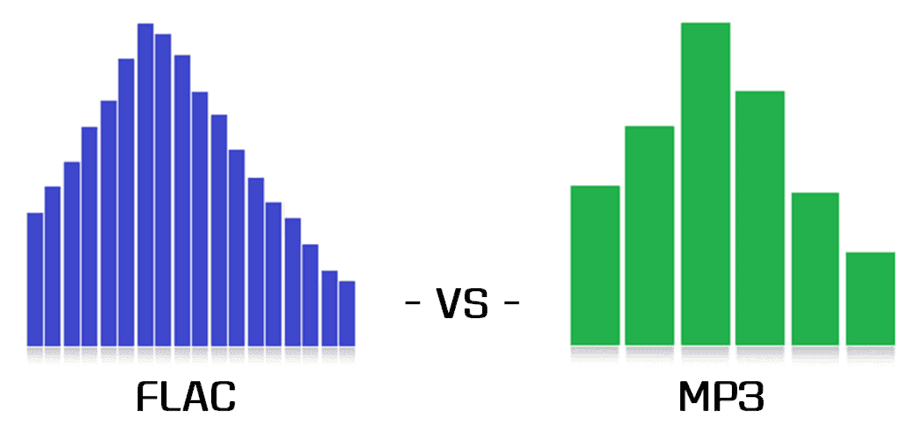
MP3 is “lossy compression”
FLAC is “lossless compression”
MP3 saves space, FLAC emphasizes sound quality!
Should I use FLAC or MP3?
MP3 if you want to save many songs
FLAC if you want to enjoy with good sound
Introducing various audio file formats!
WAV/AIFF “uncompressed”
MP3/AAC “lossy compression”
FLAC/ALAC “lossless compression”
Is it possible to convert between FLAC and MP3?
Convert with iTunes
use free software
Use free web services (no installation required)
Choose based on device capability and commitment!

A web manager or office worker who operates a membership-based web service. He is a music fan who listens to more than hundreds of albums a year and spends most of his time on weekends performing live with idols and bands.

Is the difference between FLAC and MP3 reversible?

When enjoying music while commuting to work or school or relaxing at home, many people put their favorite music on their portable music players and smartphones and play it. However, few people seem to have a good understanding of what music is like as data.

Even if it says “put music on a device”, there are actually several types of data formats.

In most cases, compressed audio files are used because the data size is too large to save the audio file as is.

Now let’s talk about the features of FLAC and MP3, which are the most commonly used compressed files.

MP3 is “lossy compression”
MP3 is one of the files compressed by a method called “lossy compression”.

Lossy compression, as its name implies, is a compression method that cannot be restored to the state before compression. In the case of MP3, the data size is obtained by cutting very high and low frequency sounds that are difficult for the human ear. to hear It gets smaller.

MP3s are characterized by huge savings in size and capacity at the cost of slightly deteriorated sound quality.

FLAC is “lossless compression”
FLAC, on the other hand, is one of the files compressed by a method called “lossless compression”.

Files in lossless compression format can be restored to the state before compression during playback, so FLAC can be saved with the same sound quality as the original sound source.

Although the capacity is larger than that of MP3, it is characterized by good sound quality.

MP3 saves space, FLAC emphasizes sound quality!
Even for the same music file, it can be said that MP3 emphasizes saving space and FLAC emphasizes maintaining beautiful sound quality.

Does FLAC really sound better than MP3?

Is FLAC really better than MP3

Those who want to budget for storage space on their cell phone, DAP, or other portable playback device often want to use the smallest music files possible. When selected, you notice that MP3s take up much less storage space than FLAC files. If you put your audio CDs on your computer, you will see WAV files that are even larger. The reason for this is that the first two are compressed and the last one uncompressed. What does this mean for the music listener?

Flac is better than mp3

Mp3 compression works on the principle of data reduction, by which information is extracted from the original material that the algorithm classifies as irrelevant. The reduction occurs mainly in the harmonic range. In short, harmonics are a physical phenomenon whereby multiple multiples (i.e. higher pitches) are added to a fundamental oscillation (a pitch). Musical instruments differ from each other by their harmonic content, which is an essential part of their sonic characteristics.

The FLAC format is also based on data reduction, so the files are smaller than WAV. Unlike MP3, this reduction is only temporary, as the original signal is 100% reconstructed during playback. It can be said that the information that is lost from the move from WAV to FLAC does not play a role for the listener, but only contains pure calculation material. The triumphant advancement of this file format can be seen above all in the fact that Apple first implemented with the iPhone X that FLAC files can be played without the use of additional software.

FLAC really sounds better than MP3

Digital audio players like the Pioneer XDP-30R can handle MP3, FLAC and WAV formats. With its 16GB device memory and two micro SD slots, the Pioneer XDP-30R offers plenty of space, even for high-resolution music.
How much you perceive the differences between highly compressed MP3 and lightly compressed FLAC files has a lot to do with your own musical preferences. Just as there are differences between instruments (a violin sounds richer in harmonics than a recorder) there are also styles in which compression is more noticeable than in others. The genres where one has to accept the greatest loss of quality with MP3s include acoustic recordings from the classical and jazz areas as well as those from the rock realm, because what we hear as distortion is nothing more than a great deal of nuances.

In the case of music with a lot of bass (techno, drum’n’bass, dubstep, raggae, etc.), on the other hand, compression often doesn’t seem to have that negative effect. However, there are also elaborate productions with these musical styles, whose quality is only known in its entirety if they have been listened to in uncompressed format.

The MP3 was a very advanced invention at the time. As data storage devices keep getting bigger and internet connections get faster and faster, its great advantage of storing a lot of music in little space compared to WAV or FLAC has become almost negligible.