The bit rate is of two types:
internal: the number of bits transmitted per second;
external: data rate and its value for real-time transmission (to watch a movie or listen to music).

Let me remind you that high bitrate usually means better quality, however this may depend on the source file.
How to find out the bit rate of a specific file?
It can usually be found right inside
And what is the difference, let’s see?
There is said to be little difference. 🙂 In my opinion)) (hearing), it is necessary to listen to music not through the speakers for 100 rubles, and certainly not through a portable speaker. C and everything fits immediately: it does not sound, but cacophony, if the bit rate is less than 120 kbps.

Different bit rates for people who work with sound. Well, to listen at home, any bitrate, even the lowest bitrate, will. Here it is, as the saying goes, an amateur.
Incidentally, one of the “representatives” of music with a high bit rate is the .flac format. . , the bit rate weighs less than 800-1000 kbps, however it takes up more space, such a song can weigh 30mb, and the album less than 400.
I hope this explanation of “What is the bit rate in music” has helped me a little? Please leave the comments below so I can reply to you.
Don’t be afraid of me and add
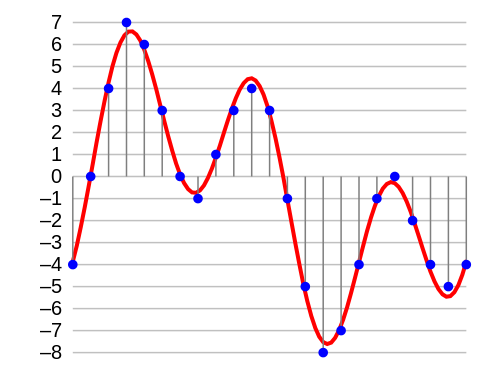
With the concept of “bit rate” we are faced with the mention of files in audio and video format. To understand the essence of this term, you must master file compression and encoding. German scientists have established the general principle of compressing files with minimal loss. Using the MP3 encoding example, the source audio file is cut into chunks lasting 50 milliseconds, each of which is analyzed separately. In the analysis, the fragment is broken down into harmonics according to the Fourier method, of which, according to the theory of sound perception, the harmonics that the person perceives worse than the rest are expelled from the human ear. These are quieter harmonics in the context of the stronger ones. As a result, sounds masked by hearing inertia are ejected (for example, if a very short beep sounds at once, with a delay of a fraction of a second, some other short-term signal is heard, then it will not be heard. ) The remaining harmonic information after filtering is recorded in an MP3 file, which results in a much smaller size than the original WAV. The WAV file stores complete information about the original sound, digitized and quantized at a frequency of 44 kHz. This information is stored on normal audio CDs. During playback, a reverse transformation is performed, in which the remaining harmonics are converted back into a sound wave. Some information about the original signal has disappeared, therefore the sound is not the same as the original. But insignificant sounds have been thrown, so the human ear cannot distinguish the signal from the original, which it was before packaging in MP3.
Bit rate is the amount of information per unit of time. Its essence: how much information about each second of the registry can we spend. Of course, the smaller it is, the smaller the files are with the same duration over time, so they have to throw more “extra” harmonics. Bit rates have units of measure: kilobits per second (Kbps) and megabits per second (Mbps). The MP3 audio compression algorithm is often used with 128 kbps compression. They are of two types: fixed and variable. So with video compression, if a constant bit rate is applied, a fixed amount of data is used to encode a second of a movie. In the case of variable bitrate, the codec sets its own bitrate value based on the scene in the movie. For example, when encoding in MPEG, in practice, the compression gain is obtained by saving only the difference between adjacent frames. With a slow scene change, the difference between the frames is small, and therefore it is possible to reduce the bit rate required to reproduce these scenes.