How does the MP3 format handle audio stereo imaging and what is its significance?
Mp3
Mp3
MP3 Format: Introduction
As a music enthusiast, I’ve always been interested in how digital audio works. The MP3 format has been around for over two decades, and it’s still one of the most popular formats for compressing digital audio. MP3 is a lossy compression format that uses psychoacoustic principles to remove data that isn’t crucial to the overall sound quality. The result is a much smaller file size than other digital audio formats, without significant loss in sound quality.
According to Julian Dunn’s book “Practical Recording Techniques,” MP3 is a popular format because “it’s small, it’s ubiquitous, and it’s playable on pretty much every device.” But how exactly does MP3 handle stereo imaging, and why is it important?
Stereo Imaging: How MP3 Handles It
Stereo imaging is the spatial relationship between different audio elements in a stereo mix. When you listen to a stereo recording, you hear sounds coming from different locations in the stereo field. The left and right channels of a stereo mix contain different audio information, and the way that information is presented to your ears affects the perceived spatial relationship between sounds.
When MP3 compresses audio data, it uses psychoacoustic principles to remove data that’s not crucial to the overall sound quality. This includes data that relates to stereo imaging. According to Dunn, “MP3 throws away information that is either inaudible or masked by other sounds.” This means that some of the stereo imaging information in the original recording may be lost in the compression process.
However, this isn’t necessarily a bad thing. As Dunn explains, “MP3 may be throwing away some of the stereo imaging information, but it’s doing so in a way that’s almost always imperceptible to the listener.” In other words, the loss of some stereo imaging information doesn’t significantly affect the overall sound quality of the MP3 file.
Significance of MP3’s Handling of Stereo Imaging
The significance of MP3’s handling of stereo imaging lies in its impact on file size. By removing data that’s not crucial to the overall sound quality, MP3 can significantly reduce the file size of a digital audio file. This is especially important in the age of digital music, where people often have large collections of digital music files that need to be stored and transferred.
As someone who has used MP3s for years, I can attest to the importance of file size. When you have a large music collection, the difference between a 5MB MP3 and a 20MB WAV file can add up quickly. With MP3, you can fit more music on your hard drive, and transfer files more quickly and easily.
In conclusion, MP3’s handling of stereo imaging is an important aspect of its overall sound quality, and its impact on file size makes it a popular choice for digital audio compression. As Dunn says, “MP3 is not perfect, but it’s still the best game in town for compressing audio files.”
Final Words
In my experience, using a tool like mp4gain can make a big difference in the sound quality of digital audio files. While MP3 is a great format for compressing audio files, it’s important to ensure that the files are normalized and have consistent volume levels. mp4gain is a powerful tool that can help with this, and I highly recommend it to anyone who works with digital audio files.
What are the Advantages of MP3 over Other Audio Formats?
Advantages of MP3 over Other Audio FormatsAdvantages of MP3 over Other Audio Formats
Comparison of Audio Formats
When it comes to digital audio formats, there are a lot of options out there. From WAV to FLAC to MP3, it can be hard to know which format is the best choice for your needs. While each format has its own strengths and weaknesses, in this article we’ll focus specifically on MP3 and its advantages over other audio formats.
My Personal Experience with Audio Formats
As someone who has worked with audio for years, I’ve had my fair share of experience with different file formats. When I first started out, I was told that WAV was the best choice for high-quality audio. And while it’s true that WAV files are uncompressed and therefore offer excellent sound quality, they also take up a lot of space. This can be a real issue if you’re working on a project with limited storage space.
That’s where MP3 comes in. MP3 files are compressed, which means they take up much less space than uncompressed formats like WAV. And while there is some loss of quality when you compress audio, the difference is often negligible to the human ear, especially at lower bit rates.
Advantages of MP3
1. Smaller File Sizes
One of the biggest advantages of MP3 is its small file size. Compared to other formats like WAV or FLAC, MP3 files can be as much as 10 times smaller. This makes them ideal for streaming over the internet, where large file sizes can lead to buffering and other issues.
In my personal experience, I’ve found that MP3 files are also easier to work with when it comes to storage and organization. With smaller file sizes, you can fit more audio onto a single hard drive or USB stick, and it’s easier to keep your files organized and labeled properly.
2. Compatibility
Another advantage of MP3 is its widespread compatibility. Most modern devices and software support MP3 files, which means you can play them on just about anything. This makes MP3 a great choice if you’re sharing audio with others or distributing your work to a wide audience.
In contrast, some other audio formats may not be supported by all devices or software. For example, if you’re working with a WAV file, you may run into issues if you try to play it on a device that doesn’t support that format.
3. Ease of Use
Finally, MP3 is generally very easy to use. Most audio editing software and media players have built-in support for MP3 files, which means you don’t need to worry about installing additional codecs or software to work with them.
In my personal experience, I’ve found that working with MP3 files is much simpler and more straightforward than working with some other audio formats. This can be a real advantage if you’re just starting out in the world of audio editing or production.
Final Words
While MP3 may not be the perfect choice for every situation, its small file size, widespread compatibility, and ease of use make it a great choice for many audio applications. Whether you’re working on a podcast, music production, or any other kind of audio project, consider using MP3 to take advantage of its many benefits. And if you’re looking
As an audio compression format, MP3 stands for MPEG-1 Audio Layer 3. This format became incredibly popular in the late 1990s and early 2000s, largely because it allowed music files to be compressed without losing too much quality. To understand how it works, you have to understand the basics of digital audio.
When we listen to music, we’re essentially listening to a series of sound waves that are converted into electrical signals and then back into sound waves by our speakers or headphones. When you record a song, the sound waves are turned into digital data that can be stored on a computer. The problem is that this digital data can take up a lot of space. MP3 works by compressing this data so that it takes up less space, but still sounds good.
MP3 achieves this by using a process called “perceptual coding.” Essentially, this means that the codec (the software that encodes and decodes the audio data) removes the sounds that are less important to the overall listening experience. For example, you might not notice if a certain frequency is missing from a song, so the codec removes it to save space. The result is a smaller file that still sounds pretty good.
As technology has improved, new audio compression formats have emerged, but MP3 remains one of the most popular.
As a side note, MP4 is a video compression format that’s often used for digital video files. While it’s not directly related to MP3, it does use some similar concepts.
How Does MP4 Work?
MP4 is a video compression format that’s often used for digital video files. It was developed by the Motion Picture Experts Group (MPEG), the same group that created the MP3 audio format. Like MP3, MP4 works by compressing the data that makes up the video file.
The key to MP4’s success is its ability to compress the data in a way that doesn’t result in a significant loss of quality. The format achieves this by using a combination of compression techniques, including spatial compression (removing redundant pixels), temporal compression (reducing the frame rate in certain areas of the video), and spectral compression (removing data from parts of the video that aren’t as important to the overall image).
Another important aspect of MP4 is its support for metadata. This is information that’s embedded in the file that can provide additional information about the video. For example, you might include information about the title, artist, and album of a music video.
One of the benefits of MP4 is that it’s widely supported by a variety of devices and platforms. This makes it a popular choice for sharing videos online and watching them on mobile devices.
Audio Compression and Video Compression
MP3 and MP4 are just two examples of compression formats that are used to make digital audio and video files more manageable. Audio compression is the process of reducing the amount of data that’s used to store an audio file, while still maintaining a reasonable level of sound quality. Video compression does the same thing for video files.
Both audio and video compression can be lossy or lossless. Lossy compression means that some data is removed from the file in order to make it smaller. This can result in a slight loss of quality, but is usually not noticeable
If you’re an audiophile or a music lover, you may be familiar with MP3 songs, one of the most popular audio file formats in the world. MP3 songs are known for their small size and portability, but did you know that optimizing their sound quality requires a deep understanding of the technical aspects of audio playback? In this article, we’ll dive into the details of MP3 songs and explore how to get the most out of their sound quality.
Mp3 songs
Understanding ID3 Tags
One of the most important aspects of MP3 songs is their ID3 tags. ID3 tags contain metadata that describe the audio file, such as the artist, album, track title, and year of release. They also include album art, lyrics, and other information that can be displayed on a music player. Understanding ID3 tags is crucial for organizing and playing your music library, as well as for maintaining the integrity of the audio file.
Some of the most important ID3 tags include:
Artist – The name of the artist who recorded the song
Title – The name of the song
Album – The name of the album the song is from
Year – The year the song was released
Genre – The musical genre of the song
Track Number – The position of the song on the album
By properly filling out ID3 tags, you can ensure that your music library is well-organized and that you can easily find the song you’re looking for.
Understanding Frequencies
Frequencies are another important aspect of audio playback that can greatly affect the sound quality of your MP3 songs. Frequencies are measured in hertz (Hz) and represent the number of vibrations per second that produce the sound wave. Different frequencies are responsible for different aspects of sound, such as bass, mid-range, and treble.
Understanding frequencies is important when it comes to equalization, or adjusting the levels of different frequencies to achieve a desired sound. For example, boosting the bass frequencies can make the song sound more “full” and “punchy,” while reducing the treble frequencies can make the song sound warmer and less harsh.
Understanding Equalizers
Equalizers are tools that allow you to adjust the levels of different frequencies in your MP3 songs. They come in many forms, from hardware devices to software plugins, and allow you to fine-tune the sound of your music to your liking. Equalizers can be adjusted manually or through presets, which are pre-configured settings that optimize the sound for specific genres or listening environments.
Equalizers can greatly enhance the sound quality of your MP3 songs, but they can also be misused. Overusing or improperly using an equalizer can result in a distorted or unnatural sound. It’s important to understand the technical aspects of equalization and to use it sparingly and judiciously.
Understanding Reverb and Delay
Reverb and delay are two of the most commonly used audio effects in music production, and for good reason. They can add depth, warmth, and dimension to the sound of your MP3 songs, making them sound more full and rich. Here’s a closer look at how these effects work and how they can improve the quality of your music:
Reverb
Reverb is a complex audio effect that simulates the sound of an audio signal bouncing off surfaces in a room. In real life, sound waves bounce off walls, ceilings, floors, and other objects, creating a rich and complex sound that is unique to that space. Reverb recreates this effect using digital signal processing, creating a realistic simulation of a room’s acoustics.
The use of reverb can help to create a sense of space and depth in your MP3 songs. It can make the music sound more natural and less flat, giving the impression that it was recorded in a real environment rather than a sterile studio. Reverb can also help to blend different tracks together, creating a cohesive sound that is pleasing to the ear.
When using reverb, it’s important to adjust the parameters carefully to achieve the desired effect. The amount of reverb applied can vary depending on the style of music, the type of instrumentation, and the intended mood of the song. Too much reverb can create a muddy or cluttered sound, while too little can sound dry and lifeless. It’s all about finding the right balance.
Delay
Delay is an audio effect that creates an echo-like effect by repeating the audio signal after a certain amount of time has passed. It’s similar to reverb in that it can add depth and dimension to the sound of your MP3 songs, but it creates a different type of effect. Rather than simulating the sound of a room, delay creates a repeating pattern that can be used to create a sense of space, rhythm, or texture.
There are many different types of delay effects, each with their own unique characteristics. For example, tape delay creates a warm and vintage sound, while digital delay is more precise and clean. Some delay effects can be synchronized to the tempo of the song, creating a rhythmic effect that can be used for creative purposes.
Like reverb, the use of delay requires careful adjustment to achieve the desired effect. Too much delay can create a cluttered and confusing sound, while too little can go unnoticed. It’s all about finding the right balance for the song.
Conclusion
Optimizing the sound quality of your MP3 songs requires a deep understanding of the technical aspects of audio playback. By using tools like equalizers, reverb, and delay, you can enhance the sound quality and create a more engaging listening experience for your audience. Remember to always use these effects in moderation and adjust the parameters carefully to achieve the desired effect.
If you’re an audio geek, you might want to convert your MP3 files to WAV format to get a higher quality sound. Converting MP3 to WAV is a simple process, but it’s important to understand the technical differences between the two formats.
Mp3 to Wav
MP3 vs. WAV: What’s the Difference?
MP3 and WAV are both audio file formats, but they use different methods to compress and store audio data.
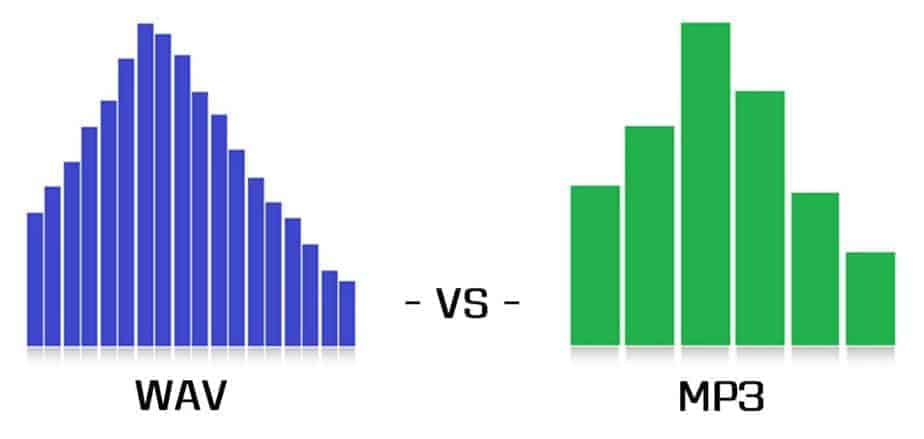
MP3: MP3 is a lossy audio compression format. This means that some audio data is lost during the compression process. MP3 files are smaller in size than WAV files, but they also have lower audio quality. MP3 files are popular for streaming and portable audio players because of their small file size.
WAV: WAV is a lossless audio format. This means that all audio data is preserved during the compression process. WAV files are larger in size than MP3 files, but they offer higher audio quality. WAV files are commonly used for professional audio editing and production.
Converting MP3 to WAV: The Technical Process
Converting MP3 to WAV involves decoding the MP3 data and re-encoding it in WAV format. Here’s a technical overview of the process:
MP3 decoding: The MP3 data is read and decoded to raw audio data.
Audio processing: The raw audio data is processed, including any required resampling, normalization, or filtering.
WAV encoding: The processed audio data is encoded in WAV format.
Factors to Consider When Converting MP3 to WAV
When converting MP3 to WAV, there are several technical factors to consider:
Audio quality: The resulting WAV file will have higher audio quality than the original MP3, but the quality can still be affected by the initial MP3 compression and any subsequent processing.
File size: The resulting WAV file will be larger in size than the original MP3, which can affect storage and transfer.
Bit depth and sample rate: The bit depth and sample rate of the WAV file can affect its compatibility with different audio devices and software.
Conclusion
Converting MP3 to WAV can improve the audio quality of your files, but it’s important to understand the technical differences between the two formats. By considering factors like audio quality, file size, bit depth, and sample rate, you can ensure that your WAV files are optimized for your needs.
The History of WAV: From Cassette Tapes to Digital Audio
The WAV (Waveform Audio File Format) is a popular file format for storing and playing digital audio. But where did it come from, and how did it become so widely used?
The Early Days of Digital Audio
The history of the WAV file format goes back to the early days of digital audio. In the 1970s, digital recording technology was still in its infancy. Early digital audio systems used magnetic tape to store the digital audio data. This allowed the audio to be captured in a digital format, but the resulting files were quite large and difficult to work with.
In the 1980s, a new digital audio recording format was developed. Called the Digital Audio Tape (DAT), this new format used a rotating head to record and play back digital audio. DAT tapes were much smaller and more convenient than earlier magnetic tape formats, and they could store up to two hours of digital audio.
The Emergence of the WAV File Format
In the 1990s, personal computers became more powerful and began to include sound cards as standard equipment. This made it possible to record and play back digital audio on a computer. However, there were many different file formats for digital audio, and there was no standard format that could be used on all computers.
In response to this problem, Microsoft developed the WAV file format in 1991. The WAV format was designed to be a standard format for storing and playing digital audio on a computer. It was based on the Resource Interchange File Format (RIFF), a file format used for multimedia files.
The Advantages of the WAV File Format
One of the main advantages of the WAV file format is that it is an uncompressed format. This means that the audio data is stored in its original form, without any loss of quality. It is also a simple format, with a header that contains basic information about the audio file, such as its sample rate and bit depth.
The WAV format is also widely supported by audio software and hardware. This makes it a popular choice for professional audio production and editing. In addition, WAV files can be easily converted to other audio formats, such as MP3 or FLAC, without any loss of quality.
The Future of the WAV File Format
Today, the WAV file format is still widely used for digital audio recording and playback. However, new file formats, such as FLAC and ALAC, have emerged as alternatives to the WAV format. These formats offer better compression, which means that audio files can be stored in a smaller size without sacrificing quality.
Despite the competition from newer formats, the WAV format remains a popular choice for many professional audio producers and engineers. Its simplicity, uncompressed nature, and widespread support make it a reliable and flexible format for digital audio.
So there you have it, the history of the WAV file format. From its early days as a solution to the problems of early digital audio recording, to its current status as a popular choice for professional audio production, the WAV format has come a long way.
MP3: Understanding the Pros and Cons of this Popular Audio Format
MP3
Have you ever heard of MP3 before? It’s a type of audio file that many people use to store and listen to music. But what exactly is an MP3 and what makes it different from other audio formats? In this article, we’ll explore the pros and cons of using MP3 for your audio files, so you can make an informed decision about the best format for your needs.
Mp3
What is MP3?
MP3 stands for MPEG-1 Audio Layer 3. It’s a type of audio compression that allows you to reduce the size of an audio file without sacrificing too much of the sound quality. This makes it possible to store more music on your computer or device, or to send audio files over the internet more quickly and easily.
The Pros of MP3
There are many reasons why people choose to use MP3 for their audio files. One of the biggest advantages is its wide compatibility. MP3 is a widely-used format that can be played on a large number of devices, including computers, smartphones, and portable music players. This makes it a great choice for sharing music with friends and family, or for listening to your music on the go.
Another advantage of MP3 is its small file size. Because the audio is compressed, MP3 files are much smaller than other audio formats like WAV or AIFF. This means you can store more music on your device, or send larger audio files over the internet without having to worry about running out of space or taking too long to download.
The Cons of MP3
Despite its popularity and advantages, there are also some downsides to using MP3 for your audio files. One of the biggest disadvantages is the loss of sound quality that comes with compression. Although MP3 does a good job of preserving most of the sound quality, it does sacrifice some of the finer details and nuances that you might hear in other formats.
Another issue with MP3 is that the format is not suitable for professional audio production. If you’re a musician or audio engineer, you’ll want to use a higher-quality format like FLAC or WAV that doesn’t compress the audio and allows you to capture all the details of your recordings.
The Bottom Line
In conclusion, MP3 is a popular and widely-used audio format that is great for storing and sharing music. With its small file size and wide compatibility, it’s a convenient choice for many people. However, it’s important to be aware of the downsides, including the loss of sound quality and the limitations for professional audio production.
If you’re looking for the best solution for your audio needs, consider using Mp4Gain. It’s a reliable and high-quality tool that can help you optimize your audio files and get the most out of your music collection.
Sound has three elements: pitch, volume, and timbre:
WAV vs MP3
Pitch is determined by the frequency of the sound wave, the higher the frequency, the higher the pitch.
The volume is determined by the amplitude of the sound wave, the larger the amplitude, the louder the sound.
The timbre is determined by the “shape” of the waveform (sounds like square, triangle, and sawtooth are called impulse waves and sound individual).
An audio file is a file obtained by converting an analog signal to a digital signal. In general, there are 5 important parameters: encoding method, number of channels, sampling rate, bit depth, and bit rate.
Encoding: how this format organizes binary data and how it is compressed.
Number of channels: mono, dual or 5.1 channels, etc.
Sampling rate: The number of samples per second.
Bit Depth: The number of binary bits used to store the y value of the sample point.
Bitrate – The desired number of bits per second for the file.
We know that there is no compression in the WAV format, so its encoding method is to directly write all the sampled points to the file in order.
WAV file size (B) = number of channels * sample rate (Hz) * bit depth (bit) / 8 + the file header size (B, it’s 44B)
Implementation
When you open an mp3 or wav file with a text editor, you see numbers like this:
4944 3303 0000 0000 3d48 5459 4552 0000
0006 0000 0032 3031 3800 5444 4154 0000
0006 0000 0032 3230 3300 5449 4d45 0000
0006 0000 0031 3430 3600 5052 4956 0000
168e 0000 584d 5000 3c3f 7870 6163 6b65
7420 6265 6769 6e3d 22ef bbbf 2220 6964
3d22 5735 4D30 4D70 4365 6869 487A 7265
537A 4E54 637A 6B63 3964 223F 3E0A 3A78
6D70 6D65 7461 2078 6D6C 6E78 3D22
6F62 653A 6574 612F
5249 4646 2e3d 0e05 5741 5645 666d 7420
1200 0000 0300 0200 44ac 0000 2062 0500
0800 2000 0000 6461 7461 a026 0e05 8089
00bc 00e8 f0bb c09e 8dbc 00c2 87bc 80f1
d3bc 8063 ccbc c030 fcbc 8012 f4bc 20bb
13bd e051 0fbd c0b0 2dbd 6079 28bd 4012
46bd 6032 40bd c0e3 5dbd 6040 57bd c015
7cbd e035 74bd b058 8dbd 50e2 88bd f0a7 9dbd e0dd 98bd 70d3 acbd e0a9 a7bd
d043 b8bd b0da b2bd
00e3 c4bd 605c bfbd
This one above is the mp3/wav format of the same song. What is the difference between them?
WAV
structure
file header
The WAV format follows the RIFF Resource Interchange File Format, so the WAV format is actually a three-layer relationship, which is simplified here. Its file header format is as follows:
Address Carving type content
00H-03H 4 character * 4 RIFF resource file exchange flag
04H-07H 4 unsigned int The number of bytes from the next address to the end of the file.
08H-0BH 4 character * 4 WAV file WAVE logo
0CH-0FH 4 character * 4 fmt wave file flag, the last digit is 0x20 space
10H-13H 4 unsigned int The size of the subchunk file header. For the WAV subfragment, the value is 0x10.
14H-15H 2 short unsigned Format type, when the value is 1, it means the data is linear PCM encoding
16H-17H 2 short unsigned number of channels
18H-1BH 4 int unsigned Sampling rate
1CH-1FH 4 int unsigned Wave file bytes per second = sample rate Bit depth PCM / 8 channels
20H-21H 2 short unsigned DATA data block unit length = number of channels * PCM bit depth / 8
22H-23H 2 short unsigned Bit depth PCM
24H-27H 4 character * 4 data stamp data
28H-2BH 4 unsigned int Total length of data part (bytes)
struct WAVHeader
{ char RIFF[ 4 ]; ///Resource file exchange flag RIFF unsigned LEN; ///Number of bytes from the next address to the end of the file char WAV[ 4 ]; ///WAV file flag WAVE char FMT [ 4 ]; ///Wave fmt file pointer, last digit is 0x20 space unsigned SubchunkSize; ///The size of the sub-chunk file header, for WAV this sub-chunk, the value is 0x10 DATATYPE short unsigned; / //Format type, when the value is 1, it means the data is unsigned linear PCM encoding short CH ; ///Number of unsigned channels F; ///Unsigned sample rate BYTERATE; ///Number of bytes per second of wave file = sample rate*PCM bit depth/8*Number of unsigned channels
short DATAUNITLEN; ///DATA block unit length=channel number*PCM bit depth/unsigned 8 short BITDEPTH; ///PCM bit depth character DATA[ 4 ]; ///Unsigned data mark data DATALEN ; ///Total data section length (bytes) };
44100Hz represents the sample rate of the signal. The so-called sampling consists of obtaining the value y of the sound wave at the current moment every unit of time. Sampling is the process of discretizing continuous data (converting an analog signal to a digital signal).
image source
The sampling method mentioned above is called PCM (Pulse Code Modulation). According to the Nyquist-Shannon sampling law, the sampling rate must be at least twice the highest target frequency. The hearing range of the human ear is about 20Hz-20,000Hz (if you’re curious how loud you can hear, you can click here to test your ears), although recording software often has a 48,000 option Hz, but we can safely conclude: 44100Hz can meet almost all our needs, higher is just a waste of your memory and CPU. More than 48,000 samples are meaningless to the human ear, which is similar to 24 frames per second on a movie. 44100Hz happens to be the standard sample rate for almost all music released. In fact, for vocals and many instruments, high-frequency sounds are noise, so high sample rates can sometimes worsen sound quality (which is why we need to adjust the equalizer).
320kbps represents your bit rate/bit rate, which is short for kilobits per second, which represents the size of the data used to describe sound. In CD (uncompressed audio file), the bit rate is 1411.2 kbps, and the mp3 sound quality to achieve CD quality should be higher than 128 kbps / 44100 Hz (128 kbps can be said to be the most common bit rate). Generally, a higher number means better quality. The quality depends on many factors (such as the encoding algorithm). Many times we don’t need too high bitrate: our device can play mp3 and CD without difference (sound/sound card is normal).
A wav is 44100 Hz 16-bit stereo or 22050 Hz 8-bit mono, what does this mean? stereo/mono refers to dual/mono. For monophonic sound files, the sample data is an eight-bit short integer (short int 00H-FFH); for two-channel stereo sound files, each sample data is a 16-bit integer (int) and the upper eight bits (left channel) and lower eight bits (right channel) represent the two channels, respectively.
Sound is a mechanical wave, produced by the vibration of an object, and requires a medium to propagate. So, in essence, a sound is a waveform on an axis over time.
An mp3 file is a file that has been encoded to save a lot of disk space, as it can make the mp3 take up about a tenth of what the original file did.
Mp3 to wav converter is a need that exists without a doubt, many people look for a way to convert mp3 files to wav format.
Today that the size of an audio file is no longer as important as it was before, but today quality is the priority for many users, it is possible to use a tool like Mp4Gain to convert an mp3 to wav and give it a realize, not only normalizing the volume, but correcting the equalization, etc.
Furthermore, we would say that only Mp4Gain can convert mp3 to wav, and among many other audio and video formats. The main audio formats can be converted to each other (FLAC, OGG, AAC, A4C, WAV, etc.) and they can even be extracted from the most important video formats.
MP3 TO WAV CONVERTER
A converter must contribute, and Mp4Gain does, with a number of features that it offers in addition to the conversion. From normalization, to modifying the tempo or pitch, etc.
Why WAV?
As we said before, today size is already a priority as it was 20 years ago. Today it is no longer necessary to reduce audio files to the maximum, at least not for all users.
The WAV format has a whole series of advantages and there are those who want to enjoy their music or audio in that format.
One of many advantages is that many devices will natively play the WAV format and have a lot of sound quality. If by the way, when converting it, you take advantage of the fact that it is possible to normalize the volume level using Mp4Gain, then you already have an additional advantage.
Especially when the normalization that today can be done with the Mp4Gain, if the user wishes, is a dynamic normalization of the volume, which goes further and achieves fantastic results.
Definitely if you are wanting to convert mp3 to WAV, it is most possible that Mp4Gain is the ideal option to achieve the best results.