How MP3 Bitrates Affect Audio Quality and File Size


Free Download Mp4Gain
picture

How MP3 Bitrates Affect Audio Quality and File Size
How MP3 Bitrates Affect Audio Quality and File Size

As an audio encoding specialist, I’ve spent countless hours experimenting with different MP3 bitrates. MP3 bitrates affect audio quality and file size significantly. Different bitrates provide different balances. Choosing the right MP3 bitrate is key. Getting this balance right is what I have strived for throughout my years of experience.

Let’s talk about How MP3 Bitrates Affect Audio Quality and File Size

The issue of how MP3 bitrates affect audio quality and file size is a key piece to be understood for audiophiles. Think of it like squeezing an orange. The higher the bitrate, the more information gets retained. I will guide you through the intricacies of MP3 encoding. My experience can help you understand. I’ll break down the relationship between these key factors. I will make this easy and understandable. My goal is to equip you with the knowledge to make informed decisions about your audio files. That way you will know how you are sacrificing some quality if you have small storage space.

Understanding MP3 Encoding

Understanding MP3 encoding is important for music production. It’s a form of audio compression that reduces the file size of music. Think of it like zipping a file on your computer. MP3 encoding does not reduce everything. Understanding this process is essential for achieving the desired balance between audio quality and file size. Here, I’ll give a broad explanation.

What is MP3?

  • MP3 is a lossy audio compression format.
  • It reduces file size by removing certain audio data.
  • It’s a widely compatible format.

As an audio specialist, I’ve seen firsthand the impact that MP3 encoding has had on the music industry. MP3 allowed music to be easily shared. It was a huge benefit for the music industry. Without MP3, it would have been difficult for artists to distribute their music. It has to be said that MP3 is a game changer for many. It became the most used audio format, so everyone understands and uses this format. It became known as the way you listen to music.

What is Bitrate?

Bitrate in audio refers to the amount of data used to encode the audio per unit of time. It is usually measured in kilobits per second (kbps). If you consider water flowing through a pipe, bitrate is the size of the pipe. I emphasize that understanding bitrate is key to grasping the relationship between audio quality and file size. It shows you why things look and work like they do.

Bitrate Explained

  • Bitrate is measured in kilobits per second (kbps).
  • Higher bitrates mean more data per second.
  • Lower bitrates mean less data per second.

I’ve always stressed the importance of bitrate selection to my clients. I had a client who ran an online radio station. They wanted to stream music to their listeners. Their listener base used different methods to listen to the audio, which led to different amounts of quality being needed. There had to be a balance between file size and audio quality to save costs. Selecting the right bitrate became a key factor in their success.

Common MP3 Bitrates and Their Impact

MP3 bitrates vary and each has its own impact. The most used include 128 kbps, 192 kbps, and 320 kbps. These are like different grades of gasoline. Let’s take a closer look at how these bitrates affect audio quality and file size. As we go over the common bitrates, I can provide my years of experience to make recommendations.

128 kbps

  • Considered the minimum acceptable bitrate for music.
  • Smaller file size, but noticeable loss of audio quality.
  • Suitable for background music or podcasts.

In my experience, 128 kbps is suitable for low quality scenarios. I had to use a low bitrate because there was limited space. The songs at 128 sounded okay. From that point on, the bitrate is perfect for any low-quality audio project.

192 kbps

  • A good balance between audio quality and file size.
  • Suitable for casual listening on portable devices.
  • Noticeable improvement over 128 kbps.

I’ve often recommended 192 kbps for casual listening. For daily music streaming, it’s ideal. That is why I prefer this bitrate. It’s just my preference.

320 kbps

  • Near-CD quality audio.
  • Larger file size.
  • Suitable for audiophiles and critical listening.

I am a big fan of 320 kbps for serious listening. It allows for an authentic recreation of the sound. The high quality makes the music feel better.

How Bitrate Affects Audio Quality

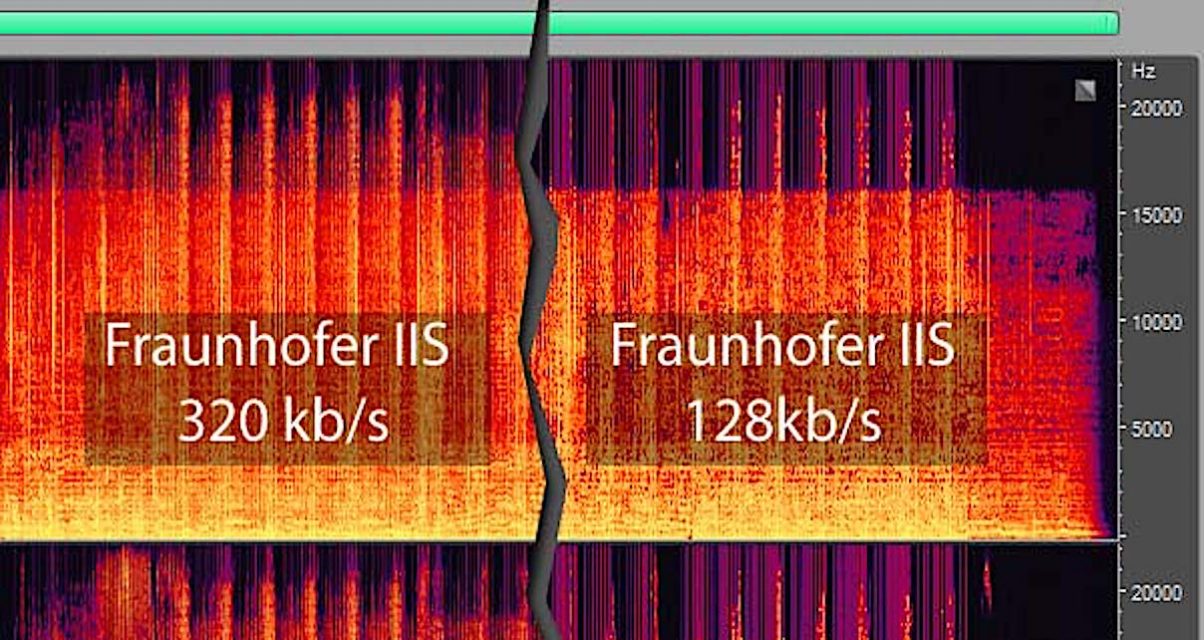
Bitrate affects audio quality and file size in a direct relationship. Higher bitrates mean more data, meaning better audio quality. It’s like taking a picture with a high-resolution camera versus a low-resolution one. The key is to choose a bitrate that preserves the most important details of the audio.

High Bitrates

  • Preserve more of the original audio information.
  • Result in richer, fuller sound.
  • Reduce artifacts and distortion.

I’ve found that high bitrates are essential for preserving the full richness and detail of music. They make for a more authentic experience overall.

Low Bitrates

  • Remove more of the original audio information.
  • Result in thinner, less detailed sound.
  • Introduce noticeable artifacts and distortion.

I’ve learned that low bitrates can be detrimental to audio quality. There’s nothing wrong with using low bitrates, but knowing the quality trade off is important.

How Bitrate Affects File Size

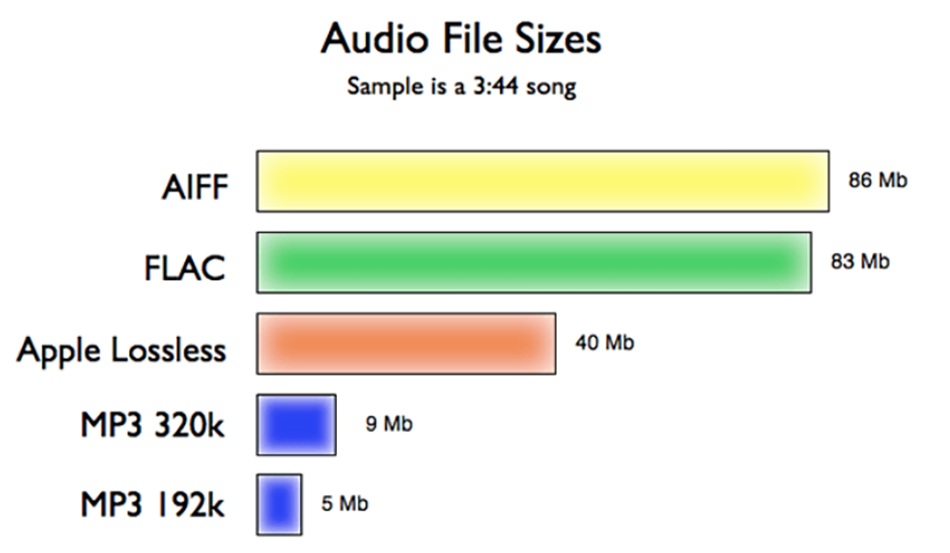
Bitrate also directly affects the file size of an MP3 file. The higher the bitrate, the larger the file size. If you consider a jar, bitrate is the amount that is inside. Balancing the music with the space is key to enjoying the music. Here, I’ll give some practical examples.

High Bitrates and File Size

  • Higher bitrates result in larger file sizes.
  • Requires more storage space.
  • Take longer to download and stream.

I’ve learned that high bitrates can quickly consume storage space, especially when dealing with large music libraries. There needs to be a solid plan. Without such a plan, you may lose a lot of storage space to high bitrates.

Low Bitrates and File Size

  • Lower bitrates result in smaller file sizes.
  • Requires less storage space.
  • Faster to download and stream.

I have had to use lower bitrates to create music files that are smaller in size to fit some capacity requirements. It is a common practice.

Choosing the Right MP3 Bitrate for Your Needs

Choosing the right MP3 bitrate for your needs requires careful consideration. Consider your listening habits. Also consider the audio that you are playing. With this information, you can determine the best type of MP3 to stream.

Consider Your Listening Habits

  • What type of music do you listen to?
  • Where do you listen to music (headphones, speakers, car)?
  • Are you a casual listener or an audiophile?

I’ve always encouraged my clients to carefully consider their listening habits when choosing an MP3 bitrate. If you listen to music critically, you will want a higher bitrate. You can maximize your music enjoyment by using high quality bitrates.

Consider Your Storage and Bandwidth

  • How much storage space do you have available?
  • How fast is your internet connection?
  • Are you concerned about data usage?

Storage and bandwidth will determine the kind of experience you will have with MP3. If there is low storage, then only a few songs can be enjoyed. Low bandwidth means the music will be slow to load.

Latest words on How MP3 Bitrates Affect Audio Quality and File Size

MP3 bitrates affect audio quality and file size in a significant manner. Understanding the relationships to pick the best MP3 configuration. It is always helpful to have another program to make the music feel more dynamic. A tool like Mp4Gain allows for audio adjustments. These adjustments are used to optimize the listening experience. Now get out there and improve the quality!


FAQ about How MP3 Bitrates Affect Audio Quality and File Size

How does the MP3 bitrate relate to the overall audio quality?

The MP3 bitrate directly correlates with audio quality. Higher bitrates preserve more audio information. It creates a richer and fuller sound, while lower bitrates remove more data, resulting in lower quality.

In which listening scenarios should a higher MP3 bitrate be favored?

A higher MP3 bitrate should be favored in scenarios involving critical listening, such as audiophile setups, professional audio work, or when using high-quality headphones and speakers, to fully appreciate the detailed and lossless audio.

In what way do lower MP3 bitrates influence the audio file size?

Lower MP3 bitrates reduce the audio file size because less audio data is stored per unit of time. This makes the files more suitable for devices with limited storage capacity and faster for downloads and streaming.

Is there a specific MP3 bitrate considered to be the minimum acceptable quality for music?

Yes, the MP3 bitrate of 128 kbps is often considered the minimum acceptable quality for music, but it comes with a noticeable loss of audio fidelity compared to higher bitrates. Some audiofiles look for higher quality.

What is the recommendation for an MP3 bitrate when balancing file size and audio quality?

For a balanced approach between file size and audio quality, an MP3 bitrate of 192 kbps is typically recommended. This bitrate provides a noticeable improvement over lower bitrates and is ideal for casual listening on portable devices.

What bitrate does nearly CD quality audio is commonly obtained?

320kbps it is commonly used in the audio industry to obtain nearly CD quality audio, and a higher bitrate than that is unlikely to enhance audio quality. But the files have a larger size.

What is the impact the encoder has when translating the music?

Its clear that a good encoder makes a bigger difference than the file size. That is why it is so relevant to check which is the most indicated encoder for each job.

Beyond selecting the ideal MP3 bitrate, are there tools for optimizing audio?

A tool like Mp4Gain allows for audio adjustments in the MP3 file. These adjustments are used to optimize the listening experience and give the audio more characteristics.

What is constant bitrate?

This is when the bitrate is kept constant (the same) over the entire file. The advantages of CBR is its easy to implement and predictable for video, But quality suffers during complex scenes and it could waste bandwidth on simple scenes.

Is there any relation between the audio’s source and which MP3 bitrate should be used?

Yes, if you’re encoding audio from a high-quality source, like a CD or a lossless file, it’s generally better to use a higher MP3 bitrate. But there are several settings that can enhance or reduce the MP3.

Comments:

This article made everything so clear! I always wondered why some of my MP3s sounded better than others. Now I get it!

Okay, I’m still a little confused about the technical stuff. Can you explain what “lossy” means in MP3 encoding? Can you help more with it?

I totally agree! The listening habits part was super helpful. Now I know I can use lower MP3 quality because I don´t appreciate high quality audio.

You’re right about storage space being a concern. I have limited space on my phone, so low quality audio it is for me! Thanks for the information!

Thanks for talking about all the numbers in terms of what they represent in the audio. Really helpful, good post!

This article made a lot of sense! Going to try out some settings now and have better understanding on how MP3 works

The MP4Gain tip changed the game for me!! I´m getting the best quality in my music files.


Free Download Mp4Gain
picture


Mp4Gain Main Window
picture


Mp4Gain Features
picture


Free Download Mp4Gain
picture

How Variable Bitrate Encoding Affects MP4 Video Quality

How Variable Bitrate Encoding Affects MP4 Video Quality

How Variable Bitrate Encoding Affects MP4 Video Quality

As a seasoned video encoding specialist, I’ve seen firsthand how variable bitrate encoding affects MP4 video quality. Variable bitrate is the technique that adjusts the data rate of a video file based on the complexity of the content. Encoding video properly is the key to achieving optimal quality and file size. There is no single answer, because understanding how VBR impacts video quality can help you make smarter choices about your encoding settings.

Let’s talk about How Variable Bitrate Encoding Affects MP4 Video Quality

Variable bitrate, also known as VBR, encoding significantly affects MP4 video quality. Think of it like this: imagine you’re painting a picture. When you get to a simple part, like a clear blue sky, you don’t need to use a lot of paint. But when you get to a complicated part, like a detailed forest, you need to use more paint to capture all the detail. VBR works the same way. High video quality can be achieved with the correct settings. I’ll break down the technical aspects of VBR. So my intention is to make it easy to understand how it works. I will share my experience about choosing the best settings. By the end, you’ll have the knowledge to optimize your MP4 video encoding for the best possible quality.

Understanding Bitrate in Video Encoding

Understanding bitrate is crucial for understanding video encoding. It refers to the amount of data used to encode a video per unit of time, usually measured in kilobits per second (kbps) or megabits per second (Mbps). Think of it like a water pipe; the bitrate is the diameter of the pipe. If the pipe is too narrow, the water flow will be restricted, and you won’t get enough water. The quality of the final result has a direct impact on the bitrate. I am keen to discuss both constant and variable bitrates.

What is Bitrate?

  • Bitrate determines video quality and file size.
  • Higher bitrates mean more data and better quality.
  • Lower bitrates mean less data and lower quality.
  • Measured in kilobits per second (kbps) or megabits per second (Mbps).

As a video specialist, I’ve always emphasized the importance of bitrate selection to my clients. I remember helping a small business create promotional videos for their website. They wanted their videos to look professional, but they were also concerned about file size. I carefully explained the trade-offs between bitrate, quality, and file size. By choosing a bitrate that was high enough to deliver good quality, but low enough to keep the file size manageable, I was able to create videos that looked great and loaded quickly on their website.

Constant Bitrate (CBR) vs. Variable Bitrate (VBR)

Constant Bitrate and Variable Bitrate are two main types of bitrate encoding. CBR maintains a constant bitrate throughout the entire video. This is like using the same amount of paint for every part of the picture. I’ve found that VBR offers more flexibility and better results for most types of video content.

Constant Bitrate (CBR)

  • CBR uses a fixed bitrate throughout the entire video.
  • Simple to implement and predictable file sizes.
  • Can waste bandwidth on simple scenes.
  • Quality suffers during complex scenes.

I vividly recall a project where CBR was not the right choice. It was a nature documentary with long periods of static scenery followed by sudden bursts of action. Using CBR resulted in wasting bandwidth during the static scenes. This meant that the complex action scenes didn’t receive enough data, resulting in noticeable quality loss. From that day forward, I always carefully considered whether CBR was appropriate for the content I was encoding.

Variable Bitrate (VBR)

  • VBR adjusts the bitrate based on the complexity of the video content.
  • Allocates more data to complex scenes.
  • Reduces data for simple scenes.
  • Provides better overall quality compared to CBR.

VBR is like a smart traffic system that directs more resources to the areas that need them most. It allocates more data to complex scenes. When I worked on a project for a local film school, the student films often contained a mix of simple and complex scenes. VBR allowed me to encode those films with excellent overall quality. Because the more complex scenes received the data they needed to shine, while the simpler scenes didn’t waste bandwidth.

How VBR Works in MP4 Encoding

VBR works by analyzing the video content and adjusting the bitrate accordingly. It is like a smart thermostat that adjusts the temperature based on the environment. Choosing the right settings for VBR is crucial to maximize the benefits of variable bitrate encoding.

Analysis of Video Content

  • The encoder analyzes each frame of the video.
  • It identifies areas of high and low complexity.
  • Complexity is determined by the amount of detail and motion.

I’ve always been amazed by the sophistication of modern video encoders. They can analyze each frame of the video. They identify areas of high and low complexity with remarkable accuracy. Think of it like a detective carefully examining a crime scene. It needs to be able to get the full picture.

Bitrate Adjustment

  • The encoder assigns a higher bitrate to complex scenes.
  • It assigns a lower bitrate to simple scenes.
  • The goal is to maintain consistent video quality.

The encoder adjusts the bitrate on a frame-by-frame basis, allocating more data to the scenes that need it most. It’s like a skilled chef adding spices to a dish. This means that the encoder is always adjusting the bitrate to optimize video quality.

The Impact of VBR on MP4 Video Quality

VBR encoding has a significant impact on MP4 video quality. Because it adapts to the complexity of the video. The result is that it delivers superior quality compared to constant bitrate encoding. VBR improves compression efficiency.

Improved Compression Efficiency

  • VBR reduces file size without sacrificing video quality.
  • Allocates data more efficiently compared to CBR.
  • Reduces bandwidth requirements for streaming.

I remember helping a small non-profit organization encode their training videos for online distribution. They were concerned about bandwidth costs. VBR allowed them to compress their videos more efficiently. This reduced file size, without significantly sacrificing video quality. This meant that they could reach a wider audience without incurring excessive bandwidth charges.

Enhanced Visual Quality

  • VBR preserves detail in complex scenes.
  • Reduces artifacts and distortion.
  • Provides a more consistent viewing experience.

VBR is like a skilled artist who knows how to use light and shadow to create a more lifelike image. When I worked on a project for a local art gallery, I encoded their videos using VBR to ensure that the fine details of the artwork were preserved. It was like bringing the artwork to life on the screen.

Factors Affecting VBR Performance

Several factors affect VBR performance in MP4 encoding. One factor is the video content itself. VBR performs best on content with a mix of simple and complex scenes.

Video Content Complexity

  • VBR is most effective with variable content.
  • Simple content may not benefit significantly from VBR.
  • Highly complex content may require higher bitrates.

I’ve noticed that VBR shines when encoding content that has both simple and complex scenes. For example, it gives a better video result. In my opinion, I have also experienced that with highly complex content higher bitrates are required.

Encoder Settings

  • Encoder settings significantly affect VBR quality.
  • Set appropriate minimum and maximum bitrates.
  • Experiment with different settings to find the optimal balance.

I’ve always emphasized the importance of experimenting with different encoder settings. I was once helping a client optimize their video encoding workflow. Through careful experimentation with different VBR settings, I was able to improve video quality by reducing file size. It was like fine-tuning an engine to achieve peak performance.

Practical Tips for Using VBR in MP4 Encoding

Several practical tips exist for getting the most out of VBR in MP4 encoding. One is to set appropriate bitrate ranges. This is like setting the temperature range on a thermostat.

Set Appropriate Bitrate Ranges

  • Specify a minimum and maximum bitrate for VBR.
  • The minimum bitrate ensures a baseline quality level.
  • The maximum bitrate prevents excessive file sizes.

I always start by setting appropriate bitrate ranges to ensure a good balance between quality and file size. Setting a minimum bitrate ensures that even the simplest scenes receive enough data. Also setting a maximum bitrate prevents file sizes from becoming too large during complex scenes.

Test Different Settings

  • Experiment with different VBR settings.
  • Compare the results visually.
  • Use metrics like PSNR and SSIM to evaluate quality.

I’ve learned through trial and error that there’s no substitute for careful testing and visual comparison. There will always be something new to discover about VBR, and there is no single “best” setting.

Latest words on How Variable Bitrate Encoding Affects MP4 Video Quality

Variable bitrate, also known as VBR, encoding significantly affects MP4 video quality. Providing a better balance between quality and file size compared to constant bitrate encoding. The right VBR settings will improve the viewing experience. For even more precise control, consider tools such as Mp4Gain, because these tools allow you to fine-tune the video and audio levels. You also improve the overall results. Therefore, the video settings will be properly encoded.

How does variable bitrate encoding improve MP4 video quality compared to constant bitrate?

Variable Bitrate (VBR) improves MP4 video quality by adjusting the data rate based on the complexity of the video content. It allocates more data to complex scenes and less to simple scenes, providing better overall quality compared to Constant Bitrate (CBR).

In what scenarios is VBR encoding most effective for MP4 videos?

VBR encoding is most effective for MP4 videos with variable content. This content includes scenes with both high and low complexity, such as action movies or mixed-content documentaries, where allocating data dynamically enhances the overall quality.

What role does video content complexity play in VBR encoding for MP4?

Video content complexity significantly impacts VBR encoding for MP4. Higher complexity scenes receive higher bitrates to maintain quality, while simpler scenes receive lower bitrates, improving overall efficiency.

How do minimum and maximum bitrate settings affect VBR-encoded MP4 videos?

Setting appropriate minimum and maximum bitrates for VBR ensures a balance between quality and file size. The minimum bitrate prevents quality from dropping too low, while the maximum bitrate avoids excessively large file sizes.

What are the key benefits of using VBR for streaming MP4 videos?

The key benefits of using VBR for streaming MP4 videos include reduced bandwidth requirements without significant loss in visual quality, efficient use of data resources, and a more consistent viewing experience for users with varying internet speeds.

Does encoder selection have an effect on the outcome of VBR MP4 video quality?

Yes, encoder selection significantly affects VBR MP4 video quality, because different encoders use varying algorithms and settings, which can lead to noticeable differences in efficiency and visual results.

What metrics can be used to evaluate the video quality of VBR-encoded MP4 files?

Metrics like PSNR (Peak Signal-to-Noise Ratio) and SSIM (Structural Similarity Index) can be used to evaluate the video quality of VBR-encoded MP4 files, as they provide quantitative measures of video fidelity.

Can VBR encoding entirely prevent artifacts and distortion in MP4 videos?

VBR encoding cannot entirely prevent artifacts and distortion in MP4 videos but reduces them significantly by allocating more data to complex scenes, resulting in a cleaner and more visually accurate output.

Are specific tools available to fine-tune video and audio levels beyond VBR encoding adjustments for MP4?

Yes, for even more precise control, consider tools such as Mp4Gain, as these tools allow you to fine-tune the video and audio levels, ensuring the settings are properly encoded for an optimized viewing and listening experience.

What kind of impact do the frame rates have on video quality, when using Variable bitrate encoding for MP4 files?

MP4 files has a huge impact of frame rates on video quality, when using Variable bitrate encoding. High frame rates needs a higher bitrate range, specially in variable bitrate encodings, if not the visual experience can be affected. Its important to consider the right configuration.

Comments:

This article was a game-changer for me! I’ve been struggling with video quality issues, and the explanation of VBR vs. CBR finally made sense. Thanks so much!

I’m still a bit confused about the “encoder settings” part. Are there any specific numbers you recommend for minimum and maximum bitrate ranges? It is very important to have a good quality for me.

I agree, the real-world examples were super helpful! Now I know why my action videos always look so pixelated. I need to switch to VBR pronto!

Great tips! Great to see people sharing this knowledge, it’s very helpful for people in the video production industry, VBR is awesome!!

Excellent article! This is great info to use. Now I can start improving all my projects!

Thanks a lot for this information! I am a filmmaker and it helped me a lot. Regards!

I used this article a lot! Great quality! This is a game changer. Thanks

The higher the kbps value of the mp3 file, the better the sound quality? Part 2

The higher the kbps value of the mp3 file, the better the sound quality? Part 2

Mp3 quality

MPEG audio encoding has a high compression ratio, MP1 and MP2 have a compression ratio of 4:1 and 6:1-8:1 respectively, while MP3 has a compression ratio of up to 10:1-12: 1, which means that one minute Uncompressed CD-quality music requires 10 MB of storage space, but only about 1 MB after MP3 compression encoding, and its sound quality is basically distortion-free.

mp3 128kbps To 320kbps

Although it is a distorted compression, its biggest advantage is a higher compression ratio in exchange for very little sound distortion. Usually a CD can only store a dozen CDs, but it can store hundreds of MP3 songs, which is why MP3 is popular all over the world. Currently, MP3 is the most common music format on the Internet. Music files of the same length are stored in the MP3 format, usually only 1/10 of the WAV format. Due to their small file size and good sound quality, they can achieve a sound effect that is closer to the original sound source. Therefore, until now, the status of MP3 format as the mainstream audio format is still hard to shake. Simply put, WMA is smaller than MP3 and MP3 has better sound quality than WMA. Currently, the music format with the best sound quality is APE, which is equivalent to the sound quality of a CD, but relatively large. A song weighs about 20 MB! 1 or so, another advantage of WMA is that content providers can add copy protection through DRM (Digital Rights Management) solutions, such as Windows Media Rights Manager 7. This copyright protection technology built-in author can limit the playback time and number of playback, and even the playback machine, etc., which is a boon for music companies that have been defeated by piracy. MP3 format: MP3 technology originated From MPEG technology, MPEG is short for Moving Picture Experts Group. MPEG audio encoding has a high compression ratio, MP1 and MP2 have a compression ratio of 4:1 and 6:1-8:1 respectively, while MP3 has a compression ratio of up to 10:1-12: 1, which means that one minute Uncompressed CD-quality music requires 10 MB of storage space, but only about 1 MB after MP3 compression encoding, and its sound quality is basically distortion-free.

The higher the kbps value of the mp3 file, the better the sound quality?

The higher the kbps value of the mp3 file, the better the sound quality?

kbps mp3

Kbps refers to the number of bits (bit rate) of mp3, and bit rate refers to the amount of information that can be transmitted per second in a data stream.

mp3 kbps

Kbps means “kilobytes per second,” so a higher value means more data, a higher bit rate, more information, and better sound quality, but it also means more processing to decode the information. the more space the file should take up. (But this is nothing compared to today’s hardware, and many people put ape directly on the hard drive!) For mp3, 128kbps is a qualified quality! As for the bit rate you use, it depends on your own needs. If the requirements are high, use CBR320kbps, CBR192kbps or VBR variable bit rate. If the file size is required to be small for network streaming or online playback, please use CBR128kbps or lower bit rate can be. Sound quality is closely tied to its compression ratio. In fact, WMA is slightly worse than MP3 at a rate of 192 kb/s or higher, but it is quite close to the effect of the original WAVE file. The difference is that the treble component of WMA in the same ratio is greater than that. of MP3 in the ratio of 96K and 64K. Simply saying that WMA is more advanced than MP3 is untenable. In fact, their principles are the same, and they are similar in the case of high ratios. Also, there is a problem with the compression software: if you use Hero Jieba to compress high-quality MP3, it will definitely be worse than WMA. Now LAME has grown considerably and is stronger than WMA at ratios above 128K. Comparing 96K WMA with 128K MP3, MP3 is definitely better. So it depends on your needs, if you need low baud, MP3 PRO or WMA is recommended (MP3 PRO is much better than WMA at 64K ratio), and if it’s high quality MP3, it doesn’t matter, but it’s still recommended. MP3, because after all it is a fairly open format, unlike WMA, which is monopolized by the Microsoft family, and can only be played with WMP. For that, I only use MP3. WMA format: WMA sound quality is stronger than MP3 format, its “body” is thinner than MP3, and it supports data transmission technology (Stream), which can be downloaded and listened to on the Internet. The characteristic of WMA is that when a song is compressed to a very small size, it can still maintain good sound quality, which is much better than RA format. It is the same as the VQF format developed by YAMAHA in Japan. Reduces data stream but maintains sound quality method to achieve higher compression ratio than MP3. The compression ratio of WMA can generally reach around 18:1. Another advantage of WMA is that content providers can add copy protection through DRM (Digital Rights Management) solutions, such as Windows Media Rights Manager 7. This built-in copyright protection technology can limit the playing time and the number of plays, and even the playing machine, etc., which is a blessing for music companies that have been defeated by piracy .MP3 Format: MP3 technology originated from MPEG technology, MPEG is short for Moving Picture Experts Group. MPEG audio encoding has a high compression ratio, MP1 and MP2 have a compression ratio of 4:1 and 6:1-8:1 respectively, while MP3 has a compression ratio of up to 10:1-12: 1, which means that one minute Uncompressed CD-quality music requires 10 MB of storage space, but only about 1 MB after MP3 compression encoding, and its sound quality is basically distortion-free. Although it is a distorted compression, its biggest advantage is a higher compression ratio in exchange for very little sound distortion. Usually a CD can only store a dozen CDs, but it can store hundreds of MP3 songs, which is why MP3 is popular all over the world. Currently, MP3 is the most common music format on the Internet. Music files of the same length are stored in the MP3 format, usually only 1/10 of the WAV format. Due to their small file size and good sound quality, they can achieve a sound effect that is closer to the original sound source. Therefore, until now, the status of MP3 format as the mainstream audio format is still hard to shake. Simply put, WMA is smaller than MP3 and MP3 has better sound quality than WMA. Currently, the music format with the best

What is bit rate, bit rate and KBPS?

What is bit rate, bit rate and KBPS?

Kbps

People often use Kbps to describe the hearing effect and audio quality.

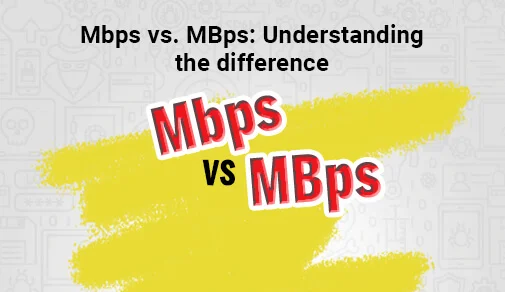
Mbps- Mbps

On Windows systems and some players, kbps is called “bit rate” and “bit rate”.
16Kbps=phone sound quality
24Kbps=Increased telephone sound quality, short wave transmission, long wave transmission, European standard medium wave transmission
40Kbps=US standard medium wave transmission
56Kbps=Voice
64Kbps=Voice boost, mobile phone ringtones the best bit rate (Kbps) setting value, mobile phone The best setting for mono MP3 players is
112 Kbps = FM FM stereo transmission 128 Kbps =
best setup for cassettes, mobile phone stereo MP3 players, best setup for low-end MP3 players
192 Kbps = the best setting for mid-range MP3 players The fixed value of
320 Kbps = the best setting for high-end MP3 players (the highest bit rate on the
MP3 format) The highest quality of the MP3 format is 320 Kbps

2. How to distinguish true and false KBPS
The maximum quality in MP3 format, the bitrate is 320Kbps, but it is not ruled out that some unscrupulous merchants convert low quality audio (such as: 40, 64, 128 kbps) to the maximum quality (320kbps);
for a long time, many people Judgment on sound quality depends entirely on the bitrate of the dance music, i.e. whether the audio file is 192k, 256k or 320k (the bitrate in the file mp3-properties-detailed information), but in fact, this parameter does not really reflect a song. The sound quality of music is data that can be falsified and cannot fully represent the actual sound quality of a song. For example, using software such as QianqianjingTing, you can convert a 64Kbps music to 320Kbps, but before conversion and conversion After the sound quality is the same, the sound quality has not really improved.

What does kbps mean? Part 2

What does kbps mean? Part 2

Kilobits Per Second (Kbps)

With the proliferation of digital storage and streaming, few people listen to music with physical objects.

kbps

Earlier I asked a high school student that he didn’t use the tape and that he didn’t know what it was. It was really shocking!

That’s the tape thank you!

Now almost all the music we listen to comes from the internet, be it Youtube or Soundcloud, Spotify or songs downloaded from iTunes or Beatport. Most of the time we don’t think that the sound transmitted by these different platforms is different, but there are times when we suddenly feel that the “sound quality” is not very good, but often we don’t know what the sound is. quality is What is the meaning?

Today we will introduce you to what this “sound quality” really means and the principle behind it.

First of all, everything we hear from the Internet are digital files, that is, the real (continuous) sound is saved by sampling (slicing) and then restored by decoding. So generally the quality of the sound we hear has two levels: one is how finely the song itself is sampled, and the other is how realistic our playback system is when playing it.

If you take a video as an example, you can see the fineness of 480p, 1080p, 4K video in the image below.

And this is similar to the finesse of the song itself: the finer the sample, the better the sound quality. But we actually see the image through the screen, so even though I have 4K HD video, I still see it on a traditional VCR. It may be the same as 480p, because your player can’t play it. Good quality. It’s like buying a CD and listening to it with the 39 yuan headphones Daiso bought.

But today we are more focused on the level of sophistication of the original song. The two most important elements that affect the sound quality of digital music are the sample rate (Hz) and the bit depth (bits), which are the horizontal and vertical axes in the figure below.

The so-called sample rate is the number of points we want to take in 1 second to sample (horizontal axis), and the bit depth is the density of the scale we want to set on the vertical axis.

The following image shows the difference between the sample rate of 100 Hz and 33 Hz, respectively. The black line is the original waveform.

Connect the sampled lines and compare them to the original waveform to learn the effect of the sample rate on the sound. 100 Hz is significantly closer to reality than 33 Hz.

At this time, someone will ask, so you can get 100 million Hz, and it is guaranteed to be the same as the real thing. Basically yes, but there will be a big problem with this, the file will be very big and it can take a year to upload a song. And the numbers are generated to speed up the transmission speed, so this is not acceptable!

To achieve a perfect balance, you need to set a suitable sample rate, which makes people sound good, but the file is not too big, and the bottom line is that it should be at least 44.1kHz. Because according to the sampling theory, the sampling frequency should be greater than twice the bandwidth of the sampled signal, and people can hear the sound up to 20,000 Hz, so we take a little more than 2 times as the standard minimum.

The object of comparison is that the general local dialect is 8000Hz. You can listen to the CD and compare the microphones.

Of course, there are 48,000 Hz and 96,000 Hz or even more, but 96,000 Hz is enough by industry standards.

The following is the common bit depth of 16 bits, 24 bits, which is the 16th power of 2 and the 24th power. What it affects is the part of the vertical axis that we just mentioned, as shown in the figure.

It can be seen that the dynamic range that 24-bit can record is larger than that of 16-bit, in other words, the sound you hear can be more vivid, in other words, it can accommodate a larger dynamic range.

What does kbps mean?

What does kbps mean?

KBPS

What does cbr320kbps mean?

kbps

When downloading music, we often see these options: lossless sound quality and normal sound quality, lossless sound quality requires members to download, otherwise only normal sound quality can be downloaded. Since it is a fee, the lossless sound quality must be higher than the normal sound quality, so what are the differences between them?

What does kbps mean?
Different compression encoding methods

Commonly seen MP3, WMA, OGG are called lossy compression. As the name suggests, lossy compression is to reduce the audio sample rate and bit rate, and the output audio file will be smaller than the original file, which is normal sound quality. we often see.

Another audio compression is called lossless compression, which can compress the volume of the audio file to a smaller size on the premise of saving 100% of all the data in the original file. Same size, same bitrate. Lossless compression formats include APE, FLAC, WAV, WavPack, LPAC, WMALossless, AppleLossless, TTA, Tak, TAC, La, OptimFROG, Shorten, while common and conventional lossless compression formats today include APE, FLAC, TTA, TAK, WAV, Generally CDs are lossless music.

What does kbps mean?
different file sizes

Common MP3, WMA and other formats occupy about 1M-5M space for single-handed songs, while for music in lossless formats such as ape and flac, the space occupied by a single song can generally reach tens of megabytes, or even more than 100M.

different bit rates

Bit rate (Kbps) refers to the transmission rate of digital signals, that is, how many thousands of bits of information are transmitted per second (K means thousands of bits, Kb means how many thousands of bits). For music, theoretically this The higher the value, the better the sound quality. Ordinary music, such as WMA, is generally 128kbps music, MP3 is mostly 128 or 192 or 320kbps/, while the bit rate of lossless music generally reaches 800-900kbps, and traditional CD even reaches 1411 Kbps. Using lossless compression, the sound quality is the most perfect.

What does kbps mean?
different sound

The feature of lossless music is that regardless of whether there is sound between the beats, its data always flows smoothly, so the fast magnetic vibration in your headphones is stable, and the sound is natural and real; while lossy formats such as MP3 are due to the loss of people The ear can not hear part of the data, so the magnetic block in the earphone vibrates unnaturally, causing it to vibrate when there is sound, and do not vibrate when there is no sound, so the magnet block vibrates excessively and unstable, which will produce burr noise. If professional equipment is used, it is easy to hear right and wrong.