The difference between progressive download and streaming delivery


Free Download Mp4Gain
picture

The difference between progressive download and streaming delivery

Streaming


When a business or organization publishes a video on the web or operates a video service, it is important to select a video distribution method.

streaming

On this occasion, we will explain the characteristics and differences between the two distribution methods, “progressive download” and “streaming distribution”.

What is progressive download?
Progressive download is a delivery technology that downloads data such as video and audio and plays them at the same time.

Sometimes referred to as “pseudo-streaming,” the video data is played back as it is saved as a temporary file on a terminal such as a PC or smartphone.

Thus, once the video data is downloaded, it can be freely viewed offline without having to go through the internet.

What is streaming distribution?
Streaming is a technology that transfers audio and video data, plays it back in sequence, and distributes the data to terminals such as PCs and smartphones without saving it.

Streaming distribution uses a dedicated streaming server for video and audio distribution and transfers only the data required for playback, making it suitable for distribution of long duration video such as movies.

Due to the technology to play while data is transferred, if the communication environment is poor, the data reception cannot be maintained and the video may stop in the middle.

Advantages and disadvantages
Let’s take a look at the pros and cons of “progressive download” and “streaming”.

Progressive discharge
merit
Even if the communication environment is bad, smooth playback is possible after the data download is complete.
Since the video data is saved as a temporary file in the terminal, the saved video data can be played repeatedly as long as the cache remains.
Operation is possible without preparing a dedicated streaming server
* Recently, streaming servers are becoming more common.
Demerit
Since the entire video file is downloaded to the terminal and distributed, it is easily copied and no copyright action can be taken.
* Recent video data security
Large video files put a strain on your bandwidth, so they take time to play.
As the number of concurrent viewers increases, the server will become overloaded and viewing will become difficult.
Transmission delivery
merit
Only the video being played is transferred to the user, so if the communication environment is stable, you can comfortably watch long and large-capacity videos.
Since there is no data left on the device, copyright-related measures such as data redistribution and falsification are higher than progressive downloads.
* Recent video data security
By using a CDN, a stable distribution is possible even if the number of concurrent viewers increases.
Reference: What is a CDN that is often used for video distribution?

Demerit
Stable playback is not possible unless the communication environment is protected.
A dedicated streaming server needs to be set up, which requires upfront and running costs.


Free Download Mp4Gain
picture


Mp4Gain Main Window
picture


Mp4Gain Features
picture


Free Download Mp4Gain
picture

Video Distribution Advantages and Disadvantages of High Bitrate Part 2

Video Distribution Advantages and Disadvantages of High Bitrate Part 2

Bitrate

Let’s think about the optimal bitrate for each video.
When creating a video, you need to think about how to set the optimal codec, resolution, frame rate, and bit rate yourself.

Bitrate

Then
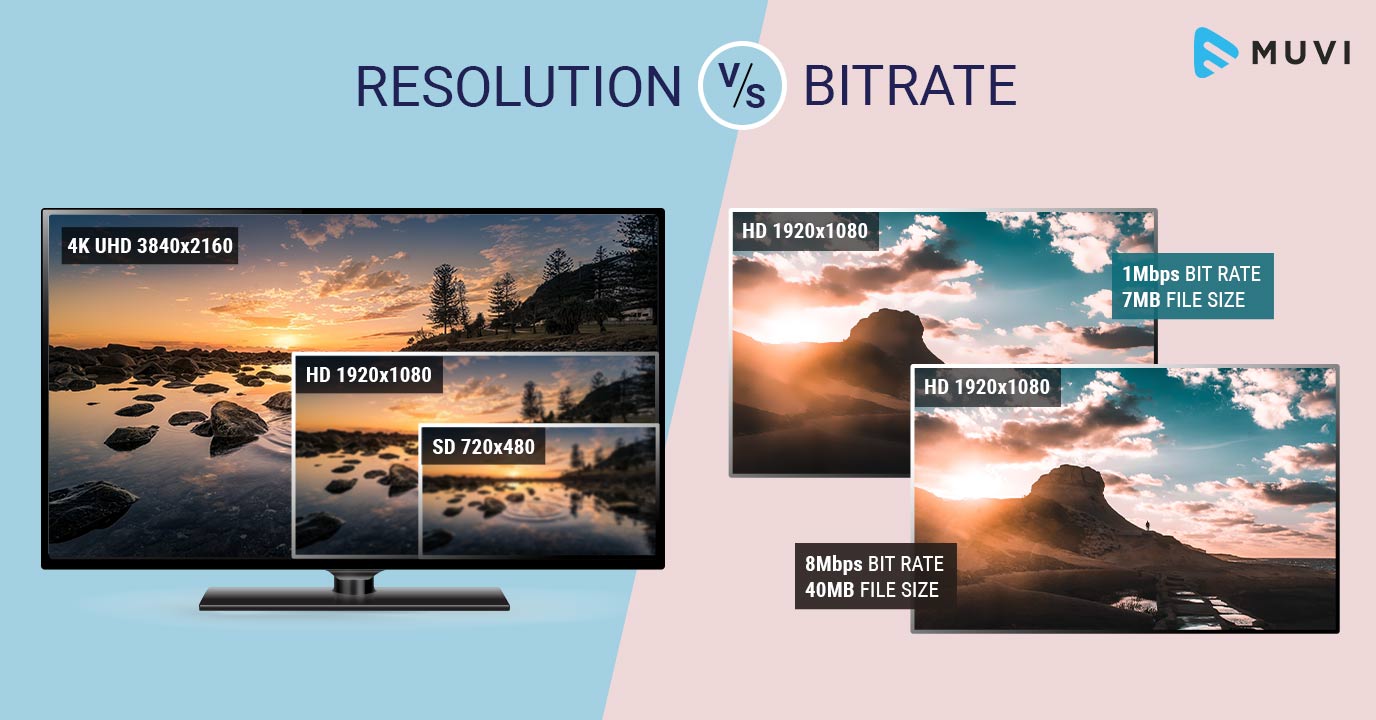
The higher the bit rate, the better the picture and sound quality.
If the bit rate is high, the network and the playback terminal will be overloaded.
Even if the bit rate is increased, the picture quality and sound quality should not be higher than that of the original video material.
It is useful to remember that.

Also, almost all video editing software, encoding software, YouTube, and other free video publishing services commonly used when creating and publishing videos have preset settings with preset codecs, resolutions, frame rates, and bit rates.

However, the image quality of the presets is not always optimal, so use this bit rate knowledge when you need to make fine adjustments.

Video distribution Advantages and disadvantages of a high bit rate

Video distribution Advantages and disadvantages of a high bit rate

Bitrate

The video bit rate is calculated separately for video and audio and added together.

Bit Rate

The sum of the video and audio bit rates is called the oval bit rate (total bit rate).

Expressed in a formula
Oval bit rate = video bit rate + audio bit rate

High bit rate benefits
The higher the bit rate, the better the picture and sound quality, and the lower the bit rate, the worse the picture and sound quality.
However, note that if the video bit rate is high, there are cases where the video bit rate is high and the image quality is good, but the audio bit rate is low and the sound quality is poor. On the contrary, there may be cases where the image quality is poor and the sound quality is good.

High bit rate video basically has the advantage of improving image quality and sound quality, but you also need to understand the disadvantages.

Disadvantages of high bit rate
The higher the bitrate, the more net bandwidth is consumed and the more playback load is applied.
For example, increasing the bit rate from 500 Kbps to 1000 Kbps doubles the net bandwidth usage and doubles the playback load or more.

It is easy to increase the bit rate for high image quality, but if you increase the bit rate too much, the CPU will become overloaded and you may not be able to reproduce it well, so be careful.

Especially when the radio wave of the smartphone is bad or the band is limited, it may not play smoothly at a high bit rate.

Even if the bit rate is increased, the image quality and sound quality do not improve above a certain level.
In fact, increasing the bit rate does not mean that the image quality and sound quality will increase without an upper limit.

For example, if the image quality of the original video material shot by the camera is 100, even if it is converted at a high bit rate by video editing software or encoding software, a high-quality video with a quality of 100 or more image of the original video will be created. You can not.

No matter how high the bit rate is, if the quality of the original video material is poor, the quality will not be better.

What is bitrate?

Good and technological days surely you have heard the word bitrate when an expert talks about videos in digital format, but if you don’t know what is what it consists of we tell you the same as the resolution and the final format of digital video another factor determinants to obtain an excellent image quality is the bitrate specifically the bit rate is the flow or the data rate, that is the amount of information when playing a video that reads on our computer per second.

For that reason and in the same way that happens with the size of the image how much the greater the data flow the greater the quality of the material in fact the bit rate can be even more decisive than the size of the image to define its quality the breed even though we have a great video size if the data flow is poor the material will be of poor quality by example a 352 x 288 resolution vcd with 1150 kilobits per second will be of higher quality than one of 720 x 576 resolution and 300 kilobits per second in this example.


If one of them has a screen size the greater its bandwidth is scarce because this data stores the information referred to the luminaire and the color of the video for that reason. When the flow of data is poor the computer will have to group a lot of pixels that contain the same information this generates a redundancy that affects the video quality but as always it is better to put a practical example.

Now we are going to lower the bit rate to this video that is the number of ones and zeros that are being used to encode it and as you can imagine youtube is going to change this as soon as we upload it to the channel but you cannot put the details again in the video, so even though you are watching it at the highest quality allowed between what you’re seeing is a version limited.


Right now we have a reasonable bit rate although it’s almost not looks so bad with modern rating and some details may be missed but still you can perfectly see what is going on now let’s add a few stars all of a sudden all those bits are not getting using to represent me but the opposite actually are used to keep track of everything around me now we add many more stars As you can see, the more things there are in the background, the more demanding the video with the bitrate we add a few more right now no matter how much I tried the encoder to optimize my face or skin tone just not it has enough if you look it’s not about if there are many or few stars but of movement if we freeze this whole scenario and what we treat as a background the quality of the video will return and if we upload again the bitrate we will have an ops video quality

What is the normal bit rate on an MP3?

What is the normal bit rate on an MP3?

A normal bit rate for an MP3 is between 128 kilobits per second, or kbps, and 320 kbps. Different bit rates in this range have different advantages; To rip music from CD to MP3, choose the bit rate that best suits your purposes. In general, the higher the bit rate of an MP3, the better the audio quality, but the larger the file size. The most common bit rates in MP3s are 128 kbps, 192 kbps, and 320 kbps.

Bit rate

The bit rate of an MP3 indicates the density of the audio information contained in the file. Therefore, every second on a 192 kbps MP3 contains 192 kilobits (24 bytes) of data. The higher the bit rate, the more information the MP3 contains; the more information it contains, the quality is closer to the original audio recording. The bit rate also determines the size of the MP3 file: a four-minute song encoded at 128 kbps takes up just over 3.5 MB, while the same song encoded at 320 kbps requires more than 9 MB of space.

Choosing a bit rate

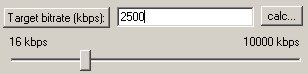
When you convert a sound file or rip your CD collection to MP3, you must specify the bit rate you want the encoder to use. Choose a bit rate based on the type of audio you are encoding and its intended purpose. If you are converting a conference or other piece of vocal audio, a 128kbps bitrate is more than enough. If you’re encoding MP3 files for use with a portable media player, a 192kbps bitrate usually provides a good balance between audio quality and file size. If you are converting your CD collection to MP3 for archiving, encode the files with a 320 kbps bit rate.

Variable bit rate

Encoding with a variable bit rate changes the MP3 bit rate depending on the type of data present at a certain point in the audio. For example, a variable bit rate encoder could encode a dense piece of information from an MP3 at 320 kbps; however, when the audio contains a mute section, the encoder lowers the bit rate to 32 kbps. If the bit rate of an MP3 has an unusual number (for example, 204 kbps), this indicates that the MP3 creator encoded it with a variable bit rate.

Bit rate conversion

Although most MP3 encoding and conversion programs can modify an MP3 at a different bit rate, this is not a good idea, generally speaking. Converting an MP3 to a higher bit rate does not add audio information to the file, so the sound quality is not increased. Converting an MP3 to a lower bit rate reduces the file size, but could also introduce audio defects, since the encoder is compressing a file that is already compressed. If you need an MP3 file to have a different bit rate, re-encode an MP3 from the original audio CD or WAV file.

MP3 Bit Rate: What Does It Mean?

MP3 Bit Rate: What Does It Mean?

Meaning of bit rate and what MP3 bit rate to use

MP3 is a popular digital audio encoding format. When looking at the bit rate of an MP3, generally the higher the bit rate, the better the sound quality. A lower bit rate is only useful when space is minimal.
What does the bit rate mean

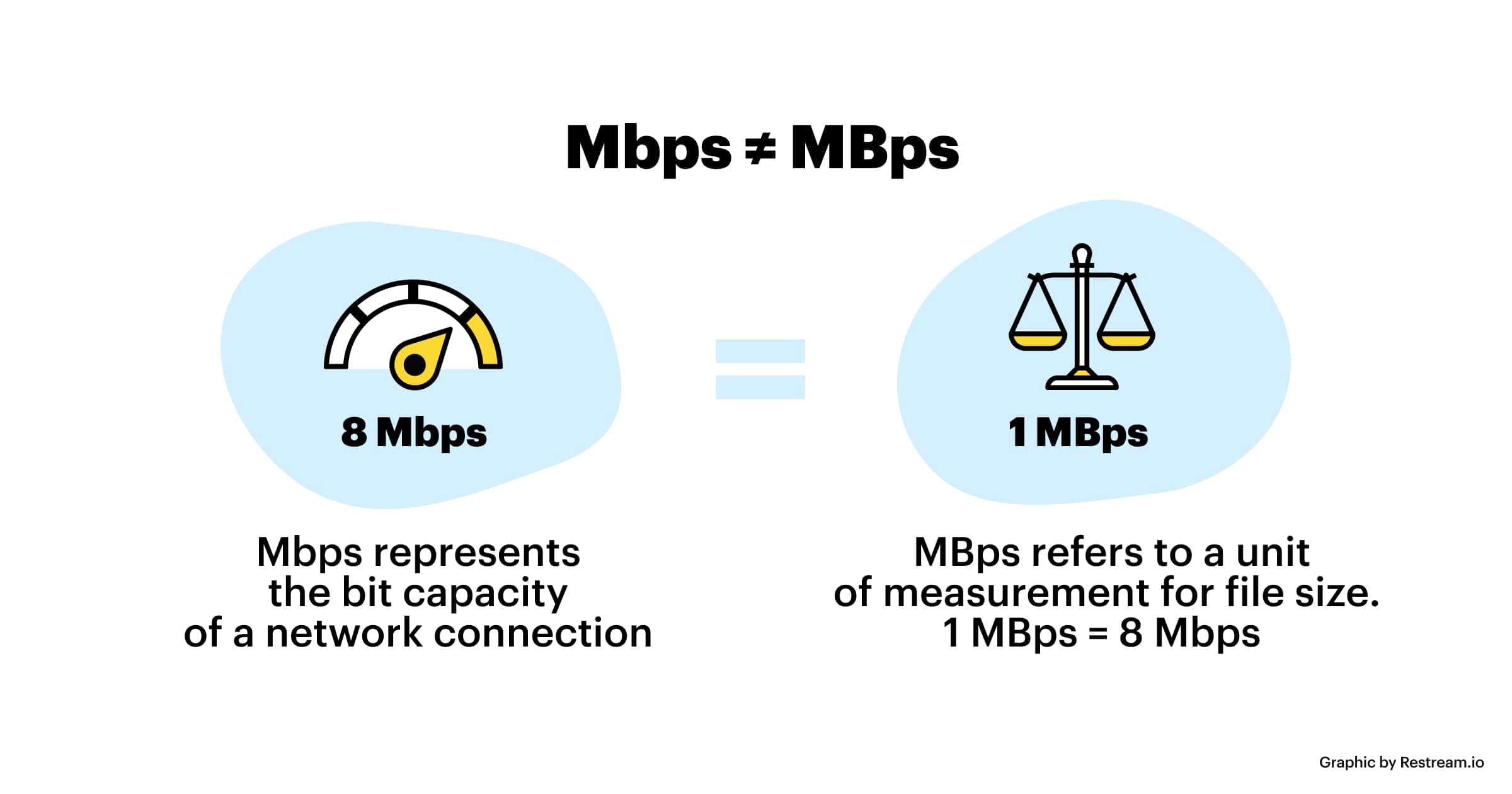
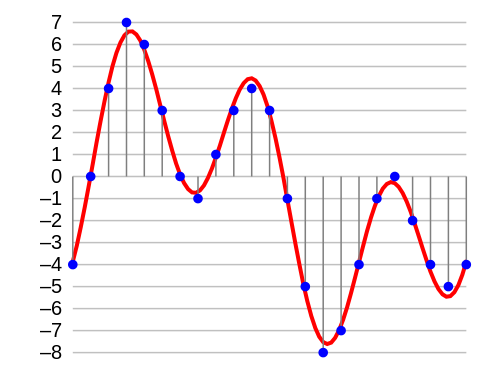
The bit rate of an MP3 file is a measure of the performance of audio data over a specified period of time. Simply put, it is the number of bits that are processed each second.
For example, audio data in an MP3 file that has been encoded with a constant bit rate (CBR) of 128 kilobits per second (kbit / s) is processed at 128,000 bits per second. For audio that has been encoded at a variable bit rate (VBR), the displayed value is an average.

The higher the bit rate, the better the sound quality will be when playing a lossy audio format tune. To put digital audio compression into perspective when it comes to bit rates, a standard audio CD, which contains uncompressed audio data, has a bit rate of 1,411 kbit / s. This is much higher than the best bit rate for MP3, which is 320 kbit / s.

Does the bit rate matter?

Unless you consider yourself an audiophile and have a top-notch pair of headphones to wear while listening to your music, the bit rate of your MP3s may not be as important.

  • If you use low-cost headphones with your iPod, you won’t be able to hear the difference in your music. Even with premium headphones, the difference between high and low bit rates is most noticeable in just a few areas:
    Some details in low bitrate MP3 may be missing.
    You may not be able to hear subtle background tracks.
    You may hear a slight distortion.
    Use an audio file converter to change the bit rate of an MP3.
    Here are some examples of how audio quality differs as bit rate increases:
    32 kbit / s: Generally used only for spoken audio
    96 kbit / s: low quality voice or transmission
    128 or 160 kbit / s: midrange bit rate quality
    192 kbit / s: medium quality bit rate
    256 kbit / s – A commonly used high quality bit rate
    320 kbit / s – The highest bit rate level MP3 supports