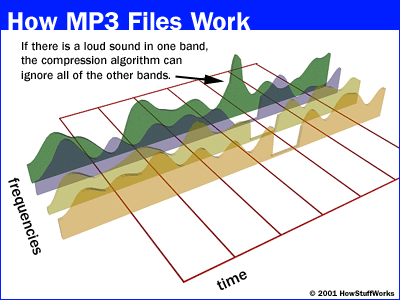
Masking in an mp3


Free Download Mp4Gain
picture

Masking in an mp3

 Masking in an mp3
Masking in an mp3

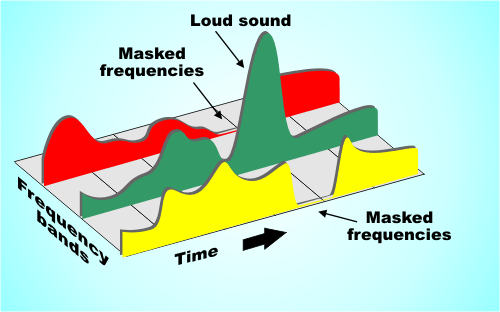
Masking is one of the main problems affecting the quality of compressed audio files.

Masking in an mp3
Masking in an mp3

This technique is used to reduce the file size by encoding the information, which causes significant loss of quality and distortion. This distortion can be so pronounced as to be audible in the resulting file. The masking effect is particularly evident in MP3 files compressed at low bitrates, since excessive compression removes much of the original information from the file.

The good news is that there are ways to deal with the effect of masking in MP3s. One way is to simply use a higher bitrate when encoding your files, as this will prevent users from experiencing distortion due to poor audio quality. Another way is to use an improved codec like AAC or FLAC to encode your files, which offers better performance and quality without sacrificing much file size. Finally, there are specialized programs designed to correct the masking effect, allowing users to recover some of the quality lost during the compression process.

In short, the masking effect can be extremely detrimental to the sound quality of MP3 files compressed at low bitrates. Fortunately, there are ways to deal with this effect if proper measures are taken when encoding the original files or if dedicated programs are used to correct the effect after encoding.

In recent years, the MP3 audio encoder has been the standard audio format for producing files of superior sound quality. Due to its nature, compression in MP3 files can cause perceptible destruction of high-quality sound if some precautionary measure is not taken. The addition of masked framing to the process removes many distortions between noise and finer details.

In simple terms, the “masking” process helps to minimize those sound frequencies that can interfere with each other. It is used to match the dynamic range of the encoded file without having a large effect on the final result. This allows the detections and artistic characteristics to remain intact to some extent during encoding to the MP3 format.


Free Download Mp4Gain
picture


Mp4Gain Main Window
picture


Mp4Gain Features
picture


Free Download Mp4Gain
picture

How to improve the sound quality in an mp3

How to improve the sound quality in an mp3

How to improve the sound quality in an mp3

Mp4Gain is the best option. In this case we will talk about the masking effect.

How to improve the sound quality in an mp3

MP3 masking is an audio processing tool that has gained popularity in recent years. This technique is used to improve audio quality by removing unwanted sound elements. Masking is a form of audio filtering used to improve sound quality by removing unnecessary sounds, such as background noise. This technique has been widely used to improve the quality of MP3 files by allowing file sizes to be reduced without sacrificing sound quality.

Masking can be an invaluable help for those who want to store audio files in a compact format without compromising sound quality. This technique can be used to reduce the size of audio files without compromising sound quality. This is accomplished by filtering out unnecessary sounds from the audio, allowing the file to be compressed without sacrificing sound quality. In addition, masking also reduces background noise in the audio, which improves sound quality.

Masking can also be a useful tool for those who want to improve the quality of their audio files. This technique can be used to improve sound clarity and sharpness, as well as to reduce background noise. This helps users to get cleaner and more detailed sound in their audio files.

In short, MP3 masking is a useful tool for those who want to improve the quality of their audio files. This technique can be used to reduce file sizes without sacrificing sound quality, as well as to improve sound clarity and sharpness. This helps users to get cleaner and more detailed sound in their audio files.

What is digital audio masking?

What is digital audio masking?

What is digital audio masking?

Digital music is a vital part of today’s culture.

What is digital audio masking?

Whether it’s a simple MP3 file or live streaming, digital music is used to relax, have fun and even inspire. One of the main concepts involved in the production and distribution of digital music is masking, which significantly affects the audio quality. The details of MP3 masking and how it hurts our digital audio experience will be explained below.

Masking is a concept used to describe how sounds are distributed between different frequencies when they are encoded for digital reproduction. This is the result of compressing files like MP3 or AAC with algorithms that remove unnecessary frequencies to reduce file size. When this frequency compression is done, the remaining frequencies are superimposed on each other, thus creating a unique sound pattern known as masking.

The effects of masking, however, can be quite detrimental, limiting the sharpness and precision with which individual musical instruments are displayed throughout the encoded audio. This difference is even more noticeable when playing wired music directly from the original compressed file; then each individual volume element loses sharpness due to the masking of existing MP3 within the group.

In fact, several consumers have reported significant differences between the sound generated by various platforms and digital servers when performing hearing tests directly from the source. The main reason lies in the type and level of masking present within the chosen container formats (MP3, AAC or OGG) to improve the overall quality of the sound delivered to the end listeners.

In general, considering only the parameters related to the compressed sound within the MP3 container by general commercial recommendations, there is an optimum level that leads to the best balance between aural definition versus set bitrate (which determines the file size). Once chosen the right speed-quality/optimal-file-size ratio to optimize your overall sound (many platforms offer customizable parameters), everyone can benefit from enjoying CD-like audio further from their own mp3 mini-converter enjoying the complete works compacted to their greatest possible thumbnail without hassle !.

What is an .MP3 file?

What is an .MP3 file?

mp3 file
mp3 file

File extension: .mp3

mp3 file
mp3 file

Format Type: Lossy Compressed

Uncompressed audio formats such as WAV and AIFF offer great sound quality at the cost of large file sizes. With the rise of Internet file sharing in the mid-1990s, people quickly realized that sending uncompressed files over a dial-up connection was impractical and often impossible. Thus, MP3 (MPEG-2 Audio Layer III encoding) was born.

A three-minute song would take about 30MB to output in WAV or AIFF format, while converting to MP3 would take a tenth of the space, about 3MB. Thanks to efficient compression algorithms, MP3 has become a staple of the Internet age and has remained strong.

PS: Previously, everyone called all music players “MP3”. For example, when they met, they said, “Did you buy an MP3?”


Like images, smaller audio files lose clarity and detail.

However, small files sacrifice sound quality. Take the image above. On the left, you can vividly see every little wrinkle and color. However, the highly compressed image (on the right) becomes very pixelated and loses all sharpness and detail (but still makes sense). The same thing happens when compressing audio files.

Different compression formats use different methods to re-encode data in a space-efficient way. However, this space-saving method means that some data must be lost in the process. High frequencies are usually the first to be lost because most people’s ears cannot hear details in the high frequencies. The lower the encoding quality, the more frequencies and details will be lost in the audio.

That said, modern compression algorithms allow for higher bit rates, which in turn means they can achieve high compression rates with very little loss in audio quality. Bitrate indicates the amount of data transferred per second of audio content, and a general rule of thumb is: smallest bitrate = smallest file size. So if you want to maintain good quality, but still take advantage of the fact that MP3s are easy to share, you should keep your bitrate above 128 Kbps (kilobits per second).


What is an M4A/MP4 file?
File extensions: .m4a, .mp4

Format Type: Lossy Compressed

M4A (MPEG-4 Part 14) files are Apple’s answer to MP3. Often considered the successor to MP3, this Mac-focused compressed audio format has gained popularity with the birth of the iTunes Store. In the iTunes Store, M4A became the main format for music purchases through the online music store. It remains the format of choice for all audio included in apps published in the Mac and iOS app stores, as well as in Nintendo and PlayStation products.

M4A files are encoded using the lossy Advanced Audio Coding (AAC) codec, which is capable of delivering the same bitrate as MP3, but with better compression. This reduces file size while providing higher audio quality.

Although many audio players can play M4A files on various platforms, the compatibility is still not as good as MP3, so MP3 is still the most viewed.