Compress mp3 with best quality


Free Download Mp4Gain
picture

Compress mp3 with best quality

Compress mp3 with best quality


Reducing the size of MP3 audio files means creating extra space on your device for more audio files.

Compress mp3 with best quality


File storage and management is a major concern for all music lovers, DJs, podcasters, and musicians. In this case, the role of MP3 compression tools becomes very important. When you want to compress MP3 files online, there is a list of options because online tools are always free and easy to use. According to your requirements, you can choose the most suitable MP3 audio compression tool. So if you are looking for the best way to reduce MP3 file size, then read the details below.

Part 1: Best Ways to Reduce MP3 Audio Volume Without Compromising Quality

Although online MP3 compression tools are simple and convenient to use, they also have certain limitations. Since most of these tools are free to use, they only support a limited number of files and sizes and have no additional features.

Mp4Gain has a lot of additional functions, from the normalizer, to eplay gain, also equalizer, also modify the pitch without altering the speed and vice versa.

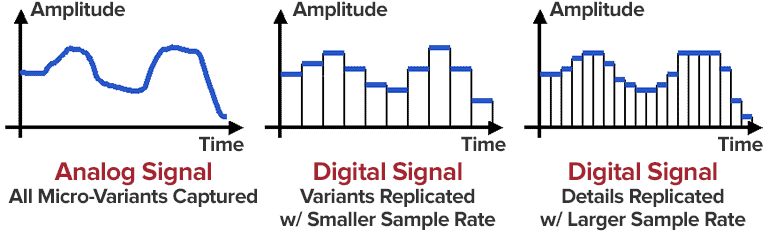
Because it is not just about converting, for example, between audio or video files, but about the possibility of obtaining a high quality result and for which we can modify the settings until we obtain exactly what we were looking for, in the sense of volume level. , quality, bit rate, sample rate, etc.

Because one of the most common current problems is finally getting the song or video we were looking for and it doesn’t sound or look like we need or want, and for that Mp4Gain is the software that offers the best options.


Free Download Mp4Gain
picture


Mp4Gain Main Window
picture


Mp4Gain Features
picture


Free Download Mp4Gain
picture

How does MP3 work?

How does MP3 work?

mp3 compression

1. The common name for portable MP3 player. a portable player
used to play music in MP3 format (now compatible with wma, wav and other formats).

MP3 Compression

Portable MP3 Player was originally developed by Korean Wenguang Su and Huang Dingxia (Moon & Hwang) Invented in 1997 and applied for related patents Detailed explanation of the
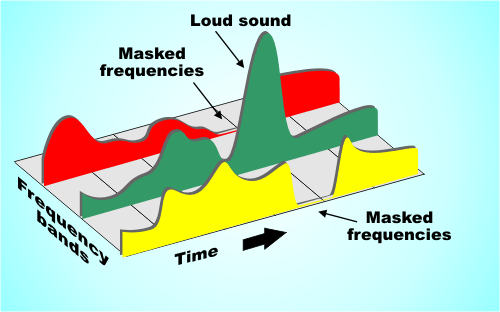
technology development of the MP3 format Format, which is designed to drastically reduce the amount of audio data, while for most users the playback quality is not appreciably degraded from the original uncompressed audio. It was invented and standardized in 1991 by a group of engineers from the Fraunhofer-Gesellschaft research organization in Erlangen, Germany. MPEG-1 Audio Layer 3, often referred to as MP3, is one of the most popular lossy compression and digital audio encoding formats today. There is no noticeable drop in sound quality compared to the original uncompressed audio. It was invented and standardized in 1991 by a group of engineers from the Fraunhofer-Gesellschaft research organization in Erlangen, Germany. General information MP3 is a data compression format. It discards pulse code modulation (PCM) audio data that is not important to the human ear (similar to how JPEG is lossy image compression), resulting in a much smaller file size. Various techniques are used in MP3, including psychoacoustics, to determine which parts of the audio can be discarded. MP3 audio can be compressed at different bit rates, providing a variety of trade-offs between data size and sound quality. The MP3 format uses a hybrid conversion mechanism to convert the time domain signal to the frequency domain signal: * 32-Band Polyphase Integrating Filter (PQF)
* Modified 36 or 12 tap discrete cosine filter (
MDCT); each subband size is independently selectable between 0…1 and 2…31 However, due to the unprecedented popularity of MP3, the success of any other format is currently unlikely. MP3 not only has extensive client software support, but also has a lot of hardware support, such as portable media players (referring to MP3 players), DVD and CD players.
The development of
MPEG-1 Audio Layer 2 encoding started with the German Deutsche Forschungs- und Versuchsanstalt für Luft- und Raumfahrt (later called Deutsches Zentrum für Luft- und Raumfahrt, German Space Center) Digital Audio Broadcasting (DAB) managed by Egon Meier-Project Engelen . This project is funded by the European Union as a EUREKA research project, and its name is commonly known as EU-147. The study period for EU-147 was from 1987 to 1994.
By 1991 there were already two proposals: Musicam (called Layer 2) and ASPEC (Adaptive Spectrum Sensing Entropy Coding). The Musicam method proposed by Philips of the Netherlands, CCETT of France, and the Institut für Rundfunktechnik of Germany was chosen due to its simplicity, robustness against errors, and lower computational effort in high-quality compression. The Musicam format based on subband coding is a key factor in determining the MPEG audio compression format (sampling rate, frame structure, data header, sample points per frame). This technology and its design philosophy are fully integrated into the definition of ISO MPEG Audio Layer I, II and later Layer III (MP3) formats. The standard was developed by Leon van de Kerkhof (Layer I) and Gerhard Stoll (Layer II) under the auspices of Prof. Mussmann (University of Hannover).
A working group consisting of Leon Van de Kerkhof from the Netherlands, Gerhard Stoll from Germany, Yves-François Dehery from France, and Karlheinz Brandenburg from Germany absorbed design ideas from Musicam and ASPEC and added their own design ideas to develop MP3 , which can play MP2. Sound quality from 192kbit/s to 128kbit/s.
All of these algorithms eventually became part of the first group of MPEG standards, MPEG-1, in 1992, resulting in the ISO/IEC 11172-3 international standard published in 1993. Further work on MPEG audio eventually became part of the MPEG-2 standard, a second group of MPEG standards developed in 1994, officially known as ISO/IEC 13818-3, first published in 1995.
The compression efficiency of an encoder is usually defined by the bit rate, since the compression rate depends on the number of bits.