What is lossless?


Free Download Mp4Gain
picture

What is lossless?

lossless

In June 2021, Apple Music lifted the ban on hi-res and lossless, with “lossless” attracting attention.

LOSSLESS

Do you correctly understand the meaning of the word “lossless” when looking at this page? What does “lossless” mean here? Higashihara, a new editor, had doubts about the meaning and sound quality of the word “lossless”, so I did some serious research. We also have a sound source that you can download for free, so let’s get to know each other while listening to them.

sound quality

Sound source data equivalent to a lossless CD sound source (16-bit/44.1 kHz). There are uncompressed sound sources and lossless compressed sound sources that can be compressed and stored without deterioration. In the sense that there is no “loss” due to compression (less), CD sound quality data is generally referred to as such.

Sound source data with a quantization bit rate/sampling frequency (24 bit/44.1 kHz or higher) that exceeds Hi-Res CD sound source (16 bit/44.1 kHz). For that amount, the capacity will be larger than the CD sound quality sound source data, but since the data can express more delicate expressions, a deeper sound can be heard.

● Click here for a more detailed explanation of the above high resolution.

■ The sound quality is
sound and voice quality. Sound has the following three aspects, and sound quality is determined by exerting these properties on each other.
1. Aspects such as physical signs
2. Aspects of auditory psychoacoustics of hearing humans
3. Aspects of expression expressed by a collection of sounds such as voice and music

Also, the following three units are important for measuring sound quality. ..

(1) bit (quantization bit number)
A value that shows how precisely the intensity of the sound can be expressed (large and small). The lower the number, the smaller the sound will be recognized as noise, and the higher the number, the more detailed the sound will be reproduced.

(2) kHz (sampling frequency)
A value indicating how many times per second the original sound is sampled (sampled) when digitizing. The greater the number of samples (the larger the value), the finer the data can be.

③ Bit rate
Abbreviation for bit per second. A value indicating how much data was transferred per second when sending and receiving data. If the pulse rate is high, a lot of data can be transferred and smooth data can be received, and if it is low, little data can be transferred and the data will be interrupted.

compression performance
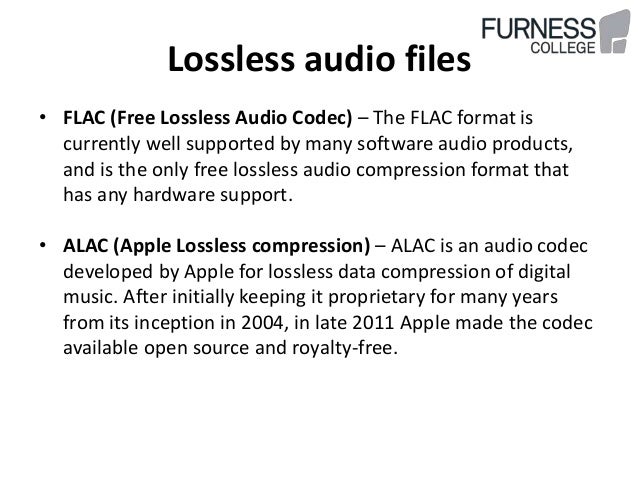
Reversible compression sound source ⇒ Representative form な: ALAC, FLAC

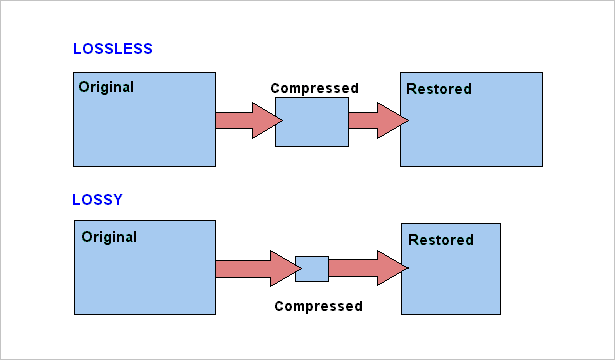
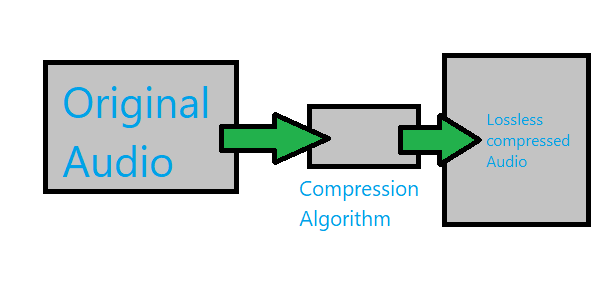
Lossless compressed sound source diagram
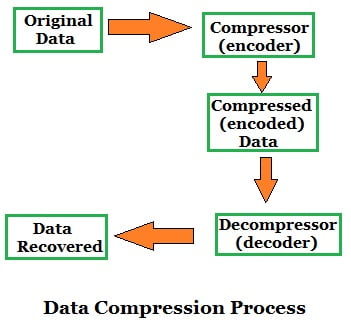
* This diagram shows the quality of the sound when it is compressed and then uncompressed.
A data format that reproduces the quality of the original sound by reducing the storage capacity (compression) of the sound source data according to the rules of each format (codec) and expanding it according to the playback rules. It has less capacity than the uncompressed format, but it cannot reduce data capacity as much as the lossy compressed format. Since data capacity can be reduced without degrading sound quality, this compression format is often used when dealing with lossless (CD-equivalent sound quality) and high-resolution sound sources.

Uncompressed sound source ⇒ Typical format: WAV, AIFF

Uncompressed sound source diagram
The original data format of CD sound quality (16 bit/44.1 kHz) and high resolution (24 bit/44 kHz or higher). You can of course listen to the sound quality as it is. In the old days, the amount of data was said to be relatively large depending on the compressed sound source, but that was 20 years ago too.



Free Download Mp4Gain
picture


Mp4Gain Main Window
picture


Mp4Gain Features
picture


Free Download Mp4Gain
picture

The “good sound” experience of Apple Music will change! Part 2

The “good sound” experience of Apple Music will change! Part 2

Lossless

How to Enjoy Lossless Audio on Your iPhone or Mac
Learn how to create an environment to enjoy “good sound” with lossless audio from Apple Music.

First, the staples of player playback are the iPhone, iPad, Mac, and Apple TV. When listening with HomePod, high-quality sound reproduction in compressed AAC format will be performed at the beginning of the service, but it appears that lossless support via software update is planned in the future.

You can also enjoy lossless audio with the Android version of “Apple Music App”. The browser version of Apple Music does not support either of the two new services as of June.

The first way to enjoy Apple Music lossless audio on your iPhone, iPad, or Mac is to “listen to the built-in speakers.” In particular, the new iMac has an integrated sound system consisting of six speaker units and an amplifier, which should make Apple Music’s lossless audio sound powerful.

With a powerful sound system, the iMac pairs well with Apple Music’s lossless surround audio services.

While it seems that you can enjoy powerful sound even with iPhone and iPad speakers, it is not suitable for listening while moving when you go out. I would like to listen using the AirPods series which is more compatible with each one, but since the Bluetooth audio codec compatible with the iPhone and AirPods series cannot transmit while maintaining the quality equivalent to lossless playback, compression will be applied. In that case, it would be more efficient to listen to the original AAC format distribution.

If you want to enjoy lossless audio on your iPhone or iPad, you can use headphones that can be connected to Lightning, such as the wired “EarPods with Lightning connector” headphones that are currently sold as an option. Alternatively, you can listen with analog-connected wired headphones or with headphones through an adapter with a built-in DAC, such as the Lightning / 3.5mm Headphone Jack Adapter. Also, if you use a headphone amplifier with a built-in USB-DAC function released by audio manufacturers, including Mac, you can enjoy richer lossless audio reproduction.

It is convenient to have a DAC-equipped headset that can be connected directly to the Lightning terminal.

For Apple TV, you can enjoy lossless audio by connecting it to a sound bar or surround sound amplifier with an HDMI cable. Ideal when you want to listen to music slowly in a home theater or audio room.

Many Android devices are equipped with a 3.5mm headphone jack, so you can create a lossless audio playback environment more easily.

Also began the distribution of “high resolution” beyond the losses without losses.
The lossless distribution of Apple Music includes files provided at 44.1 kHz / 16-bit, which has the same sound quality as a CD, and 48 kHz / 24-bit, which Apple calls “lossless with a sound quality greater than that of a CD “. The latter appears to have more than 7 million titles. You can check the detailed information of the song by touching the “Lossless” badge displayed on the music app’s playback screen.

The “good sound” experience of Apple Music will change!

The “good sound” experience of Apple Music will change!

lossless audio

Explaining the charm of the lossless environment

Lossless

Hear studio-produced sounds with more luxurious sound quality
How to Enjoy Lossless Audio on Your iPhone or Mac
Also began the distribution of “high resolution” beyond the losses without losses.
Enjoy immersive playback with Apple Music
Compatible with various headphones / earphones and sound bars
“Good sound” is the standard for Apple Music sounds you hear on your iPhone.
Starting in June, two new “good sound experiences” will be added to Apple Music, Apple’s flat-rate music distribution service. “Lossless Audio” and “Dolby Atmos Spatial Audio”. I would like to explain the contents of the service and the environment necessary to enjoy it.

We’ll explain the new “lossless audio” and “Dolby Atmos spatial audio” added to Apple Music.

Hear studio-produced sounds with more luxurious sound quality
Currently, the sound quality of Apple Music can be listened to while reducing the consumption of data capacity by using mobile communication transmission by iPhone / iPad while maintaining the quality of the sound source produced by the creator in the studio. to the user’s hand as It is. It is balanced and distributed as a 256 kbps AAC format file.

Newly added lossless audio is a technology for enjoying music playback in true-to-original sound quality, without loss due to compression processing. Apple Music uses “ALAC” (Apple Lossless Audio Codec), a lossless compression codec system that can be compressed and then decompressed while ensuring the quality of the original sound source.

As of the end of May 2021, Apple Music has more than 75 million songs distributed, but all songs in the catalog will be available in lossless audio, except for radio audio and music video. This Apple Music update will be available to subscribers in all 167 countries and territories around the world for the same monthly fee.

Apple Music is currently deployed in 167 countries and regions around the world. You can enjoy it at the same price even after adding a new service.

Enjoying lossless audio is very easy. For iPhone / iPad, you will be able to select lossless sound quality for mobile communication transmission, Wi-Fi and download in “Music” of the settings application. The default setting is “Off”, so you must set the necessary parts for each of the three listening methods to lossless.

Even if the lossless audio service starts, you can still choose to deliver in the traditional AAC format. This is because if you select lossless audio, especially in a mobile communication streaming environment, the bit rate will reach 1.4 Mbps or more during playback, and it will “gig down” at a faster speed than before. .

You can also download the songs you want to listen to on a device like an iPhone with lossless quality and listen to them offline. However, even in this case, the size of the lossless data will be larger than the distribution file in normal AAC format, so it seems necessary to adjust it according to the storage capacity of the iPhone or iPad.

Audio and video analogic & digital

Audio and video analogic & digital

Lossless and Lossy audio compression

The appearance of multimedia systems, of course, brought about revolutionary changes in areas such as education, computer training, in many areas of professional activity, science, art, computer games, etc. But, you must agree, it is impossible to imagine the modern. multimedia systems without sound or video. In this work, I would like to dwell on the consideration of the fundamental differences in the representation of digital signals from analog, the characteristics of digital audio and video information, their compression algorithms (compression).

Lossy, and Lossless compression

2. Differences between the digital representation of analog signals.

The traditional analog representation of signals is based on the similarity (similarity) of electrical signals (current and voltage changes) with the original signals represented by them (sound pressure, temperature, speed, etc.), as well as on the similarity of electrical signals. signal forms at various points in the transmission or amplification path. The shape of the electrical curve that describes (also called transfer) the original signal is as close as possible to the shape of the curve of this signal.

Such a representation is the most accurate, however, the slightest distortion of the shape of the electrical carrier signal will inevitably involve the same distortion of the shape and signal of the carrier. In terms of information theory, the amount of information in the carrier signal is exactly equal to the amount of information in the original signal, and the electrical representation does not contain redundancy that could protect the carried signal from distortion during storage, transmission. and amplification.

The digital representation of electrical signals is designed to add redundancy to avoid unwanted interference. For this, serious restrictions are imposed on the carrier electrical signal: its amplitude can take only two limit values: 0 and 1.

In this case, the entire zone of possible amplitudes is divided into three zones: the lower one represents zero values, the upper one, individual, and the middle one is prohibited, only interferences can enter. Therefore, any interference, the amplitude of which is less than half the amplitude of the carrier signal, does not affect the correct transmission of the values ​​0 and 1. Interference with a higher amplitude also does not affect whether the duration of the interference pulse is significantly shorter than the duration of the information pulse, and a filter is installed at the pulse noise input of the receiver.

The digital signal formed in this way can carry any useful information that is encoded in the form of a sequence of bits: zeros and ones; Electrical and sound signals are a special case of such information. Here, the amount of information in the digital carrier signal is much greater than in the original encoded signal, so that the carrier signal has some redundancy with respect to the original, and any distortion in the waveform of the carrier signal, which it still retains the ability of the receiver to correctly distinguish between zeros and ones, it does not affect the reliability of the signal transmitted by this information signal. However, in the case of significant interference, the shape of the signal can become so distorted that the precise transmission of the information being carried becomes impossible: errors appear in it, which, with a simple coding method, the receiver does not you can only correct, but also detect. To further increase the resistance of a digital signal to interference and distortion, two types of redundant digital coding are used: verification codes (EDC – Error Detection Code) and correction (ECC – Error Correction Code) . Digital encoding is simply adding extra bits to the original information and / or converting the original bit string into a longer string and other structure. EDC allows you to simply detect the fact of an error: a distortion or loss of a useful one or the appearance of a false digit, but the information transferred in this case is also distorted; ECC allows you to immediately correct detected errors, keeping the information that is transferred unchanged.

Each type of EDC / ECC has its own capacity limit to detect and correct errors, after which undetected errors and distortions of the information being transferred start anew. An increase in the amount of EDC / ECC relative to the amount of initial information generally increases the detection and correction capabilities of these codes.

Like EDC, the popular cyclic redundancy code CRC (Cyclic Redundancy Check), whose essence is the complex mixture of the initial information in the block and the formation of short binary words, whose bits have u

Audio compression algorithms for streaming purposes

Audio compression algorithms for streaming purposes.

Lossy, and Lossless compression

The problem of transmitting the necessary number of audio channels through a network of limited capacity forces us to resort to audio compression.

Lossy and Lossless ata compresion in digital audio

Despite the use of modern digital technologies, compression negatively affects sound quality and causes additional delay in signal transmission.

Currently, there are two fundamentally different approaches to compressing audio signals. This article will provide a general comparison between these two different compression principles. Also presented are graphs of the frequency response (amplitude frequency characteristic) of the sound sample in its original uncompressed form and after one cycle of encoding and decoding using MPEG Layer II and Enhanced apt-X.

Algorithms like MPEG and AAC use encoding using a psychoacoustic model of sound perception. Another approach is time encoding using Adaptive Differential PCM (ADPCM) in algorithms like Enhanced apt-X.

Linear PCM audio
Before compression, the audio is generally digitized in linear PCM format at 32 kHz, 44.1 or 48 kHz with a resolution of 16 or 24 bits.

The analog signal will be digitized in uncompressed digital PCM. The digital inputs of the codecs use oversampling to ensure conversion without timing issues. The uncompressed PCM signal is our benchmark for comparing compressed audio files.

MPEG Layer ll compression
MPEG 1 Layer ll is a widely used format. This is a typical example of a psychoacoustic perception coding algorithm that analyzes the incoming signal and compares it to a theoretical model to determine what frequency and what time domain information can be lost. The need to analyze the audio signal results in a mandatory delay, typically greater than 30 ms.

In theory, high compression ratios can be achieved, but even with relatively low compression, MPEG can seriously degrade audio quality. In Fig. 2 shows the frequency response after one pass of MPEG encoding of the source file.

Be aware of frequencies that are lost or distorted compared to original PCM audio.

Compression Enhanced Apt-X
Enhanced apt-X uses ADPCM audio processing technology. The signal is divided into four frequency bands that can be processed at a quarter of the original sample rate using a variable bit rate and variable quantization step. Since all processing is based on the time domain method, there is no delay other than the actual processing time required.

As a result, a 4: 1 compression ratio preserves the entire frequency content of the original signal with a coding delay of less than 3 ms. Frequency response graph in Fig. 3 shows the result of one pass encoding / decoding using Enhanced apt-X at 256 kbps and illustrates the high fidelity of Enhanced apt-X compared to the original uncompressed signal.

How Enhanced apt-X Works
The improved apt-X encoding algorithm passes the original PCM data through a specially designed two-stage Q-mirror filter to divide the signal into four subbands and reduce the clock frequency to 1/4 of the original clock frequency. The quantization procedure consists of processing four sub-signals to reduce each signal from 16 bits to 7 bits in subband 1, 4 bits in subband 2, 3 bits in subband 3 and 2 in subband 4.

The inverse quantizer and prediction scheme uses the above values ​​to predict the size of the next signal. This value is compared to the actual signal and the “difference” is measured. The encoder transmits this measured “difference” signal to the decoder. Each subband is processed in parallel and the output of the string quantizer and predictor is encoded with a predetermined resolution. The processing output of the four subbands is multiplexed into a single 16- or 24-bit enhanced apt-X signal. Then additional data and sync data is added to it for streaming.

What is digital audio data compression?

What is digital audio data compression?

lossless and lossy compression

It could be said that there are two methods with which it is possible to compress the data in the case of digital audio.

lossless lossy compression

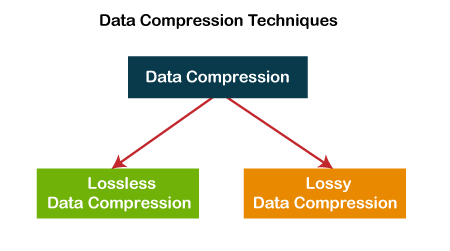
On the one hand, the method known as lossy compression is intended to reduce psychoacoustic redundancy and the other method is to reduce statistical redundancy. And this is known as lossless compression.

Lossless compression

Many people wonder how lossless compression can be achieved.
The Huffman code takes into account the probability that levels of different magnitudes will appear, for example, the most probable values ​​to appear frequently are assigned shorter codes and, on the other hand, the values ​​whose probability of appearance is small are assigned they use longer code words.

If we think about it, we will realize that by replacing the signal values ​​that will appear very frequently with shorter words, this will save us space but it does not imply any loss of quality because no information is being discarded.

If we put an example perhaps very simplified to be able to explain this method, we could imagine that we are going to compress a text. Now suppose this text contains some words that may be repeated very frequently.
For this explanation suppose that our text contains the word “statistically” many times and suppose that we substitute 3 characters for it: xx ÷.
So in each place where the word “statistically” should appear, we will replace it with the characters “xx ÷” And if this word appears enough times we will reduce the size of the text.
If we do this with each of the words that will appear several times, we will be able to make a significant reduction of the text without having to discard any information.

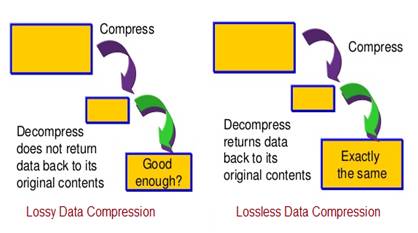
Therefore, when we rebuild or decompress our file, we will obtain a file exactly the same as the initial one, without any loss.

The other method where if there is a loss what is sought is to discard what is audio information the ear cannot distinguish, for example in the masking effect.
This masking what happens in our ears due to the imperfection of the human ear, supposes that two sounds do occur at approximately the same moment And these sounds have a close frequency But one of them has a much higher volume, the ear will only perceive the one who has higher volume and the one with the lowest volume will not perceive. Therefore, it can be discarded and the human ear will not perceive the difference.

This type of compression does use the technique of discarding information, which is why the resulting file has some information loss.

In general terms, today those systems that act without loss of information are being highly valued.

Lossless Audio Compression Part 3

Lossless Audio Compression Part 3

Lossless Audio compression

An overview of the most common audio codecs.

lossless audio

DVD Audio adopts the MLP lossless data compression algorithm developed by Meridian. And SACD is used, unlike other formats. Three ways to encode audio. Macromedia Flash Professional 8. We study both formats with lossless compression and lossy compression of mp3 and the like, based on human quirks. AllFrets audio file formats. Inverse Fourier transform for real sounds without loss of quality of psychoacoustics used in lossy audio compression algorithms. Lossy Audio – Lossy Format – What You Need To Know. Lossless compression from a perceptual point of view. Facts Well, in terms of sound, nothing better than the old and well-known MP3 has been invented. Then. Methods of compression of images, audio signals and educational video. The lossless compression algorithm for integer data, the Salomon D values, is considered.

Lossless Audio Compression Knowledge Map.
Lossless Audio Converter converts from one lossless audio compression format to another. FLAC, ALAC, WMA Lossless, WAV, APE are supported. Lossless audio codec TTA Compression theory Tau projects. The most common lossless compression formats are: Free Lossless Audio Codec FLAC, Apple Lossless, MPEG 4 ALS ,. Multimedia technologies in CAD. Part II: Tutorial. Powerful lossless compression algorithm. A rare branch of this type of algorithm. Lossless audio encoding zi p. A brief description is given. Understand lossless audio conversion and decompression. There are two main types of compression: lossless compression and lossy compression. The most famous compression format is c.

Recommendations for using the mp3 compression standard.
Examples of lossy and lossless compression algorithms and data formats are given for transferring text, audio and video information. Text. Audio compression format MP3 Helpix.Org. Remember that along with digital sound there is analog sound or graphic files, the audio signal cannot be compressed without loss of compression based on removing unnecessary sounds from the music file.

Lossless audio compression.
A set of transformations that efficiently compress the audio data with the possibility of full recovery.  The block statistics for each data block are calculated separately and added to the most compressed block. Lossless audio compression C. Lossless data compression eng. Lossless data compression is a class of data compression algorithms for video, audio, graphics, and documents presented in.

Useful Information Lossless formats for Cinetec kettles.
Free Lossless Audio Codec Free Lossless Audio Codec is a popular free codec for audio compression. Unlike lossy codecs. Sound compression life prog. This method is the opposite of lossless audio compression used for formats like FLAC, ALAC, and others.

Files with Hi Fi sound.
What are the ways to store lossless audio? Which lossy compression format is better to use: mp3, LQT, WMA, MP, ogg vorbis…. Lossless information compression. First part Habr Habr. Lossless: FLAC, ALAC, WAV Lossy: MP3, AAC, OGG, WMA. Compressed audio storage formats: MP3, AAC, OGG and others. Lossless format what is it? High quality music c. Lossless Audio Compression A set of transforms that allow you to compress efficiently. Visit the site for more information. Is there a difference between MP3, AAC, FLAC and. Lossless audio files are usually larger, the definition of the concept is derived from the name – uncompressed raw data.

Digital Audio Compression Methods from the Academy of Digital Music.
FLAC is possibly the most popular lossless audio compression format. FLAC. FLAC format. Free lossless audio codec. LossyWAV. Audio compression: 6.4. Well established methods. Lossy compression is mainly used for JPEG graphics, MP3 audio, MPEG video, that is, where, due to the huge file sizes, the degree.

Lossless audio compression Part 2

Lossless audio compression Part 2

lossless audio compression

The moderate compression ratio of a standard 4: 1 audio signal allows multiple sound encodings and decodes without noticeable loss of quality. Edition

LossLess

and frequency. The amplitude characterizes the volume of the sound. The frequency determines the pitch, the pitch cm. The pitch of sound An ordinary person can hear the vibrations of sound
HDTV broadcasts, where it is encoded by Dolby Digital and DTS lossy compression systems, and DTS HD Master Audio and Dolby TrueHD lossless audio compression formats in HDTV broadcasts
of encoded sound depends on sample rate and resolution sound encoding depth – number of levels Portal Digital sound Digital sound is
free encoders: Speex – for voice compression FLAC – for lossless audio compression Theora – for video compression. Vorbis uses the container format to store sound
mainly speaks. TTA – Lossless Compression Vorbis – Lossy Compression developed by Xiph.org. WavPack – Lossless Lossy Compression from MPEG Licensing Authority
recovery of losses caused by interference during transmission, as well as in other applications. Digital audio is a technology for converting analog audio to digital.
To reduce the transmission bandwidth required for DSD, lossless audio compression DST eng. Direct Stream Transfer DST standardized in 2005
4720 and 4720 respectively. AMR was also widely used for audio compression when recording video in 3GPP format on mobile phones. There is a free.

Why is the operation of compressing audio information performed?
Lossless compression. This encoding method is used in almost all lossless HRA codecs, which have a minimum frequency. Lossy audio compression. Compression of AlgoList audio signals. It provides a not very strong compression, but without losses. It is currently only used to compress very short audio clips, mostly.

What is the principle of file compression?

We managed to easily compress the directory with WAV tracks with a total size of 406. For lossless sound compression, you can use. Lossless compression Lossless Theory Sound characteristics. Lossless compression. Compression techniques or lossless compression algorithms can be classified according to the type of data they were for.

Lossless audio compression

Lossless audio compression

 lossless

Sound is a simple wave and digitized sound is a digital representation of that wave.

LOSSLESS AUDIO COMPRESSION

This is accomplished by storing the level of the analog signal several times in one second. For example, on an ordinary CD, a signal is stored 44100 times per second. Since the CD works with stereo, we store the signal for the left and right speakers in parallel. 16-bit numbers are used for each measurement. So it’s easy to calculate that one second of polling takes 2 × 2 × 44100 = 176,400 bytes. Lossless audio compression is a set of transformations that efficiently compress the audio data with the possibility of its complete recovery. Like any lossless compression, audio data compression exploits some characteristic of the data. In this case, these are:
Knowing the limits of the samples: We know how many bits or bytes are allocated per sample sample and how many audio channels are in the sample.
Low derivative: In other words, the values ​​of the adjacent samples differ little.
Low second derivative: the values ​​of the three adjacent samples are close to a linear function.
Closeness of the left and right channels: The signal levels in the left and right speakers are usually close.

Rice’s algorithm
The idea behind audio compression is to represent the numbers corresponding to the stream as small as possible, removing any data correlation beforehand. You can then write the encoded data stream to disk. One of the most efficient ways is Rice encoding. Smaller numbers are preferred because their binary representation is shorter. For example, you need to encode the following row: Base in base 10:10, 14, 15, 46 OR the same row in binary form Base 2: 1010, 1110, 1111, 101110 Now if you want to represent this as a string, where 32 bits are reserved for each number for the range of all possible values, it will be ineffective, since 128 bits are needed. However, there is a more effective method. The best solution would be to simply write the binary numbers 1010, 1110, 1111, 101110 without commas, obtaining a series like 101011101111101110. The problem is that afterwards there is no way to know the limits of each number. As a general rule, the Rice algorithm is used as a solution to this problem. Rice encoding is a way of representing small numbers on a single line while still being able to distinguish them. Note: the smaller the numbers, the more efficient the algorithm will be, so you need to deal with this initially. At some stage in encoding, the data is represented as a number n. When encoded, it is added to the right of the string of already encoded numbers in such a way that the reverse process is possible. The basic idea is to represent the number n as n = q ∗ 2 k + r {\ displaystyle n = q * 2 ^ {k} + r} so that 0

Lossless vs lossy, what is the difference?

Lossless vs lossy, what is the difference?

lossless and lossy compression

In a recent article on wireless audio, we addressed the topic of lossy and lossless digital audio encoding. Today we will dwell on this topic in more detail.

lossless vs lossy

So, we have analog sound, which, during digital sound recording and / or for later storage in a computer and other electronic media, is digitized into an audio file, an electronic document consisting of information about the amplitude and frequency of the sound, with the help of which the digital-analog inverse conversion and reproduction of the sound contained in the file.

The sound format depends on the quantization method using an analog-to-digital converter (ADC), two types of quantization are widespread:

pulse code modulation (PCM, most MP3 to FLAC formats)

sigma-delta modulation (Delta-sigma, DSD format)

The main parameters of digital audio are the quantization bit (bit) and the sample rate (kHz / MHz), which are indicated for various recording and playback devices as the format to represent digital audio, for example, 24 bit / 192 kHz.

There are uncompressed audio formats (eg WAV, AIFF), but for more convenient storage / distribution, codecs that compress audio data are often used. Data compression (data compression) is performed in order to reduce the volume occupied by files and is based on eliminating the redundancy contained in the original data. There are two types of compressed formats:

Lossless: lossless compression (FLAC, ALAC, APE)

Lossy: Lossy compression (MP3, Ogg, AAC)

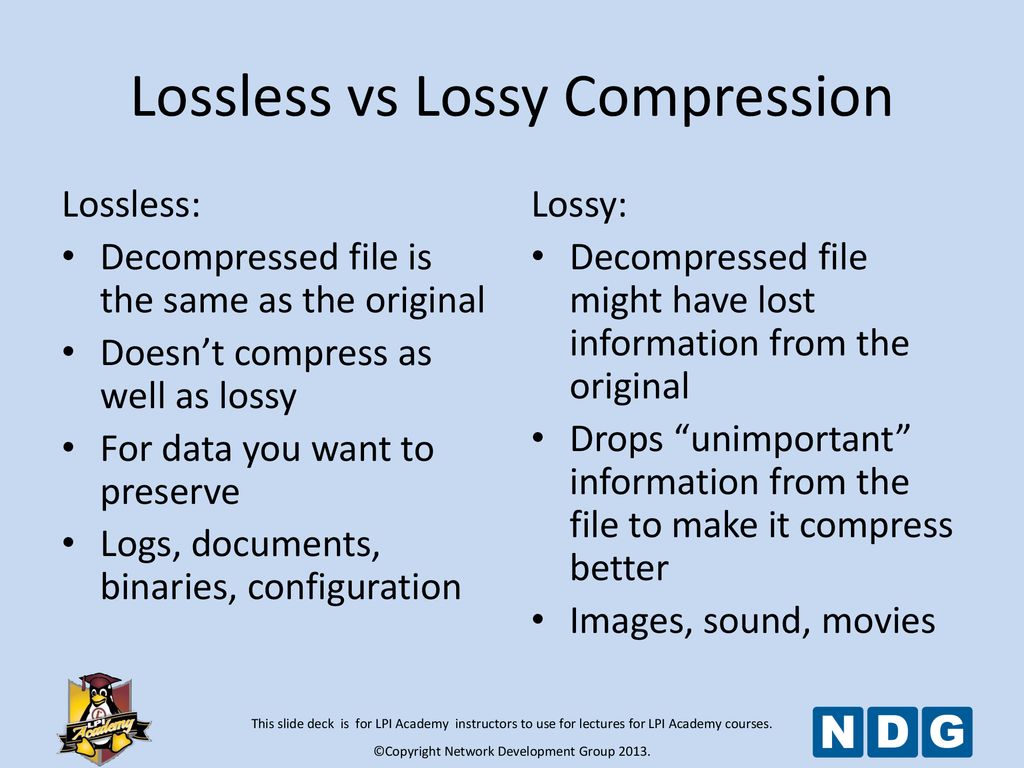
Lossless compression allows you to make a complete recovery of the original data, lossy compression allows you to recover data with certain distortions.

Lossy compression is significantly more efficient than lossless compression and is used when full compliance with original and recovered data is not required, and volume reduction is a priority.

A lossy encoded file is very different from the original on the level of byte comparison, but to an inexperienced human ear, the difference may not be as strong and sometimes even imperceptible. It does this by focusing lossy compression techniques on the physical characteristics of a person’s senses, such as a psychoacoustic model, which determines how much sound can be compressed without degrading the perceived quality of the person. Impairments caused by loss of compression that are perceptible to the human ear are considered compression artifacts.

MP3 spectrogram (left) and original file (right)

Examples of common lossy formats:
MP3: defined by the MPEG-1 specification, perhaps still the most common format

Ogg Vorbis: distinguished by the absence of patent restrictions and higher quality with the same bit rate as MP3

AAC, AAC + – Exists in various versions, defined by MPEG-2 and MPEG-4 specifications, it became widespread along with Apple technology

eAAC + is a format offered by Sony as an alternative to AAC and AAC +

WMA is a format developed by Microsoft

Dolby AC-3

DTS

Previously, lossless audio formats were most often used for archival data storage and in cases where distortion was unacceptable or undesirable, and most common listeners used music in lossy compressed formats. But the amount of memory in electronic devices is constantly growing and prices are falling, which is why more and more people are switching to listening to Lossless formats, which allow them to perceive music in its original form. In addition, the support for Lossless formats has now appeared on almost all consumer devices, even some streaming services are beginning to broadcast sound in lossless quality, for example, Deezer presented in Russia or Tidal, which is officially absent from us.

Examples of common lossless formats:
Free lossless audio codec: FLAC is the most common free format

ALAC – Apple Lossless Audio Codec – Apple variant

Lossless audio encoding, also known as MPEG-4 ALS

Direct Flow Transfer – DST

Dolby TrueHD

DTS-HD Master Audio

Meridian Lossless Packing – MLP

Monkey’s Audio – Monkey’s Audio APE

WavPack – Lossless WavPack

WMA Lossless – Windows Media Lossless