How digital compression works. Part 3

In most cases, there is another pin, Master Clock (MCLK or MCK), which is used to synchronize the transmitter and receiver from the same clock to reduce the transmission error rate.

For the external synchronization of the MCLK, two clock generators are used: with a frequency of 22 579 kHz and 24 576 kHz. The first, 22,579 kHz, is for frequencies that are multiples of 44.1 kHz (88.2, 176.4, 352.8 kHz), and the second, 24,576 kHz, is for frequencies that are multiples of 48 kHz (96, 192, 384 kHz). There may also be generators at 45,158.4 kHz and 49,152 kHz; You’ve probably already noticed how in the digital sound world they like to multiply everything by two.
Frame or I2S frame
Frame or I2S frame
In I2S, three contacts are necessarily used: SCK, WS, SD; the rest of the contacts are optional.
Synchronization pulses are transmitted through the SCK channel, under which the frames are synchronized.
The length of the “word” is transmitted over the WS channel and logical states are also used. If the WS pin is a logical unit, then the right channel data is transmitted, if it is zero, the left channel data is transmitted.
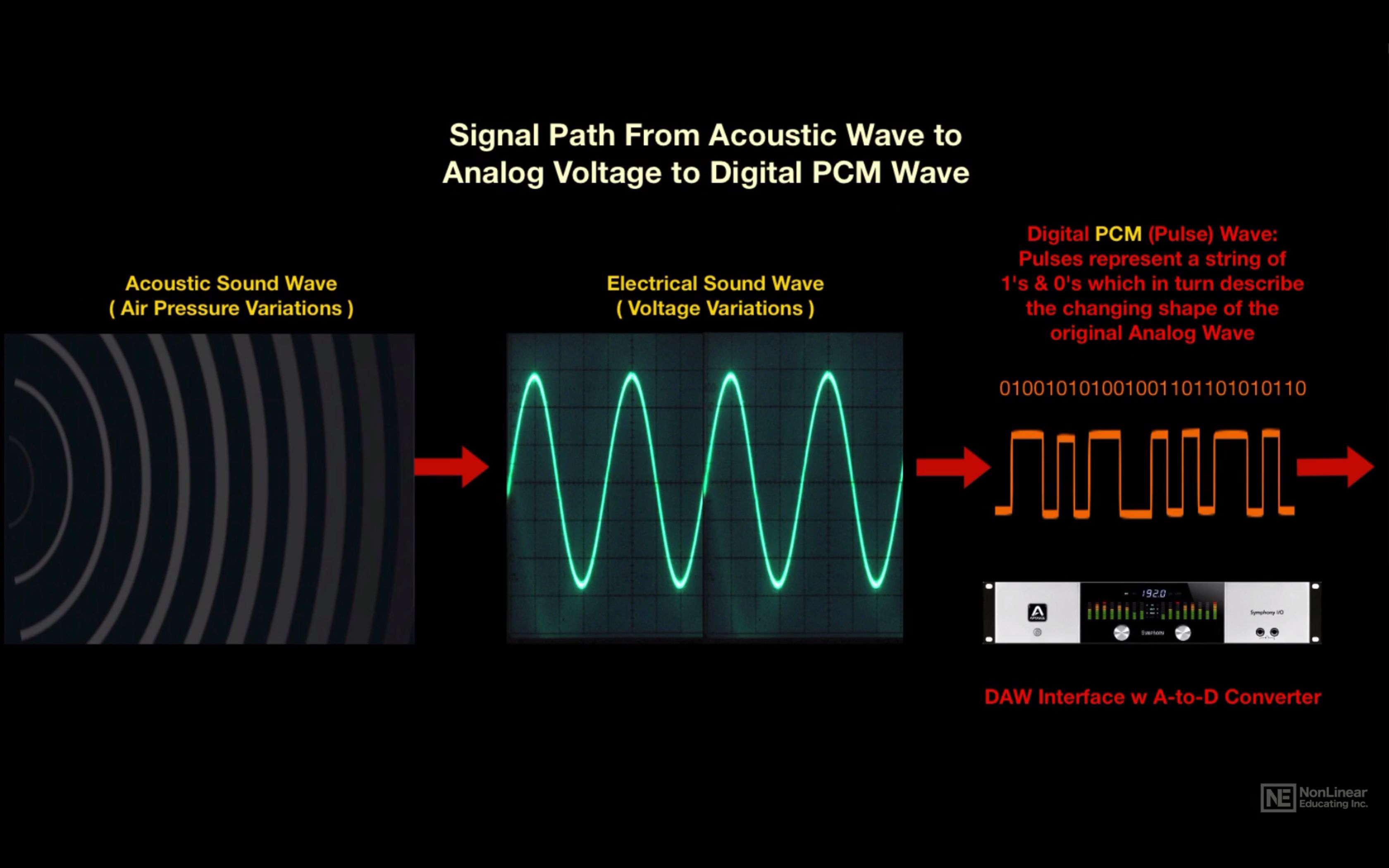
The data bits are transmitted via SD: the values of the amplitude of the audio signal during quantization, the same 16, 24 or 32 bits. No checksums or service channels are provided on the I2S bus. If data is lost in transit, there is no way to get it back.
Expensive DACs often have external connectors to connect to the I2S. The use of such connectors and cables can have a bad effect on the sound, even the appearance of “artifacts” and stuttering, everything will depend on the quality and length of the cable. Still, I2S is a hard-wired connector and the length of the wires from the transmitter to the receiver should tend to zero.
Let’s see how the PCM data stream is transmitted through the I2S bus. For example, when transmitting PCM 44.1 kHz at 16 bits, the length of the word on the SD channel will be these sixteen bits and the length of the frame will be 32 bits (right + left). But most of the time, the transmitters use a 24-bit word length.
When playing PCM 44.1×16, the most significant bits are simply ignored as they are filled with zeros or, in the case of older multi-bit DACs, they can go to the next frame. The length of the “word” (WS) may also depend on the player through which the music is played, as well as the driver for the playback device.
An alternative to PCM and I2S would be to record the audio signal in DSD. This format was developed in parallel with PCM, although Kotelnikov’s theorem also played a role here. To improve sound quality compared to CDDA, the emphasis was not on increasing the quantization bit, as in the DVD Audio format, but on increasing the sample rate.
DSD
DSD stands for Direct Stream Digital. It originates from Sony and Philips labs, however, just like the other formats discussed in this article.
SACD
DSD first saw the light of day on Super Audio CDs in 2002.
At the time, SACD seemed like a masterpiece of engineering, it applied a completely new way of recording and playback, very close to analog devices. The implementation was simple and elegant at the same time.
The media was even equipped with copy protection, although without it, no pirate was afraid. Under the Sony and Philips brands, they began to produce “closed” devices exclusively for playback, with no possibility of copying discs. Manufacturers sold recording equipment to studios, but kept control over the SACD launch.
Who knows, perhaps the SACD format could gain popularity comparable to Audio CD, if it weren’t for the cost of the playback devices. By unreasonably selling out player prices, Sony and Philips’ own leaders hampered the popularity of their format. And the next mistake completely put an end to the sale of specialized devices. To promote Sony’s PlayStation, Sony engineers have added the ability to listen to SACD on it. Hackers immediately hacked the set-top box and began copying SACD discs into ISO images that can be burned to a regular DVD and played on any competing player; others simply ripped out tracks to play on a computer.







/bitstream-binary-5807f60f3df78cbc28b94614-a90cf1c6655b4a29b047234bfcdf9892.jpg)