Dissecting Audio Lossy Formats


Free Download Mp4Gain
picture

Dissecting Audio Lossy Formats: Technical Mechanisms and Trade-offs

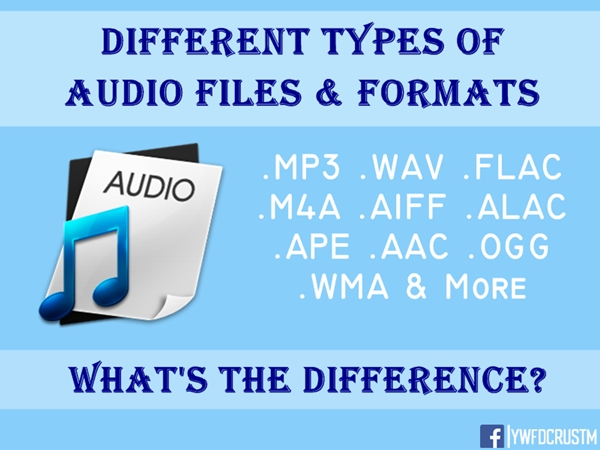
Audio Lossy Formats
Audio Lossy Formats
Audio Lossy Formats
Audio Lossy Formats

Understanding Audio Compression

As an audio enthusiast, I have always been fascinated by the technology behind audio compression. Audio compression is the process of reducing the size of an audio file by removing or reducing redundant or irrelevant information. This is done to make the file smaller and more manageable, especially for streaming and other bandwidth-limited applications.
There are two types of audio compression: lossless and lossy. Lossless compression preserves all of the original audio data, while lossy compression removes some of the data to achieve a smaller file size. Lossy compression is the most common type of audio compression used today, and it is used in a wide range of applications, from music streaming services to podcasting.

Audio Compression Techniques

There are many different techniques used in audio compression, each designed to optimize audio quality and reduce file size. One of the most important techniques is perceptual coding, which involves analyzing the human perception of sound and using that information to remove or reduce irrelevant information.
Another important technique is psychoacoustic modeling, which is used to identify and remove sounds that are not perceptible to the human ear. As the book “The Art of Digital Audio” explains, “Psychoacoustic modeling is a technique that takes advantage of the limitations of human hearing to remove sounds that are not perceptible to the listener.”
In my experience, understanding these techniques and how they work together is essential for optimizing audio quality and reducing file size. By using the right combination of techniques, you can achieve excellent audio quality while minimizing file size.

Audio Compression Trade-offs

One of the key trade-offs of audio compression is the balance between audio quality and file size. As the book “The Audio Programming Book” explains, “The more you compress an audio file, the smaller it becomes, but the more audio quality you lose.”
In my experience, this trade-off is particularly important for musicians and sound engineers. By understanding the trade-offs between audio quality and file size, you can make informed decisions about how to compress your audio files for different applications.
Overall, dissecting audio lossy formats is essential for anyone working with audio. By understanding the technical mechanisms and trade-offs of audio compression, you can optimize your audio quality and file size, making it ideal for a wide range of applications.
Final words:
In conclusion, audio compression is a powerful technology that offers excellent audio quality at reduced file sizes. By understanding the techniques and technologies behind audio compression, you can optimize your audio quality and file size, making it ideal for streaming and other bandwidth-limited applications. And if you’re looking for a powerful tool to help you normalize and convert your audio and video files, be sure to check out mp4gain.


Free Download Mp4Gain
picture


Mp4Gain Main Window
picture


Mp4Gain Features
picture


Free Download Mp4Gain
picture

Sound files with loss

Sound files with loss:

MP3 or MPEG-1 Audio Layer 3

It is a standard compressed digital audio format with loss, the loss of information from the mp3 format is not audible by the human ear, so we will not distinguish the difference between an uncompressed audio file and an mp3 file. In addition an mp3 file manages to reduce the size of the sound file without influencing its quality, approximately 1 minute of audio in mp3 format occupies 1 MB with a quality almost equal to the quality of a
CD. These advantages have achieved that the mp3 format can be played in almost all audio players, that is the format par excellence for the exchange through the internet, one of the best options at this time to store music with good quality, and also The audio format that is most used in portable players is a standard and therefore compatibility with all media is guaranteed.
The mp3 audio format allows you to select the quality of the audio that we are going to compress, the CD quality would be equivalent to 128 Kbps (Bit rate), but we can select the compression between 8 Kbps and 320 Kbps taking into account that the higher data transmission (Kbps), more space will occupy the file. The sample rate of the mp3 is between the 16 Hz and 48 KHz ranges. And it only supports 2 channels (stereo).

ACC or Advanced Audio Coding

It is a standard digital audio format as an extension of MPEG-2 compressed with loss, and offers more quality than mp3 and is more stable for the same number of Kbps and the same size. Its compression is based on the same principles as MP3 compression, with the difference that it offers the possibility of using sampling frequencies ranging from 8 Hz to 96 KHz. The coding method automatically adapts the number of Kbps (Bitrate) needed depending on the complexity of the audio transmission at any time. ACC supports a maximum of 48 different channels, which makes it suitable for surround or surround sound and polyphonic sounds, that is, it would be a good option in case of not listening to the audio in any two-channel (stereo) audio system, and in In the case of movies, video or if you have a compatible player, we will reduce the file size. It is more efficient than MP3 in almost all aspects, offers higher quality and smaller files, but does not enjoy the compatibility and popularity of MP3 at the moment. It is compatible with Apple brand devices, iTunes, iPods, Winamp, Ahead Nero, MP4 etc. But there may still be compatibility issues.

Ogg

It is a compressed digital audio format with loss. Normally the Ogg files are compressed with the Vorbis codec, which is a free audio codec that allows maximum flexibility when choosing between the wide range of bitrate according to the complexity of the audio transmission, in the quality-bitrate ratio, It is even with MPEG-2 and in most bitrates it is comparable to the ACC format. This format is intended to encode from 8kHz telephony quality up to 192 KHz high definition quality, and for monaural, stereo, polyphonic, quadraphonic, 5.1, ambisonic and up to 255 discrete channels. The available bitrates range from 32 Kbps to 500 Kbps. The Ogg format offers better sound fidelity between 8 KHz and 48 KHz than the mp3 and its files take up less space. As for compatibility, it is not a format yet as universal as the mp3 but more and more devices and programs recognize it and can work with it.

Real Audio or RM

It is a file format designed for internet transmissions in real time, for example the radios that broadcast online or when a server has a stored sound file and we listen to it without the file being fully loaded or stored on our computer , this is possible thanks to the Buffering process that basically is to receive a sound package in our player in this case (Real Player) while the next one is stored in the temporary folder until it is required by the player. With this system the files cannot be copied. Unlike MP3 encoding that maintains its sampling frequency range (Kbps), coding with Real Audio allows it to be adapted to the user’s reception capacity depending on its internet connection speed. If the user can receive high quality audio packets without interruptions, he sends them, if he does not lower the sampling rate until he can receive them without interruptions even if the audio quality decreases.
WMA or Windows Media Audio

It is a lossy audio compression format although there is also this format with lossless compression.