
What are “bit depth” and “sample rate”?

What are “bit depth” and “sample rate”?
What are “bit rate” and “sample rate”?
I wrote it in the DTM project file settings and audio interface specs, but I don’t understand the meaning …
This time, we will answer those questions.
Here’s a quick rundown of “What is a Bit Rate / Sample Rate ?,” Explained by Professional Drummer / Engineer / Producer Ed Thorne.
Once you know this, you will be able to export the sound source in the appropriate format and you will be able to understand the standards for the equipment that you will buy in the future.
Please take a look to the end!
What is bit-deapth?
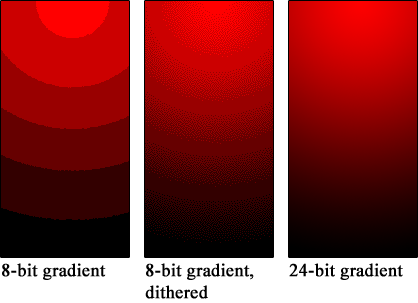
Bit depth refers to the range in which the dynamics (inflection) of the sound can be processed.
For example, if the bit depth is “16-bit”, the range of up to 96 dB can be reproduced and processed from the silent state.
96dB is all about the volume when the audience is excited at the live venue.
On the other hand, if the bit depth is “24 bit”, the 144 dB dynamics can be reproduced and processed.
144dB is roughly the volume of a jet airplane.
Dynamics in the age of streaming
Not long ago, there was no volume limit like current streaming services like YouTube and Spotify.
The louder the sound, the better the music itself, which is why the producers always wanted to make the song louder and bigger than any other music.
Today, many platforms where you can listen to music have volume restrictions, so the idea that “the more music you can play loud sounds, the better” has changed, and times have changed.
So, in this age, 16-bit or 24-bit might not make much of a difference.
The amount of data also changes
By the way, if the bit depth is high, the amount of data will change as well.
When recording a lot, it may be better to consider this a bit.


