
Digital audio formats: how to choose the best one

Most users store music and other audio files in various digital formats. There are about a hundred digital audio encoding algorithms, but they all have their own characteristics. What format to choose to store your home audio collection and why is the well-known MP3 losing popularity?
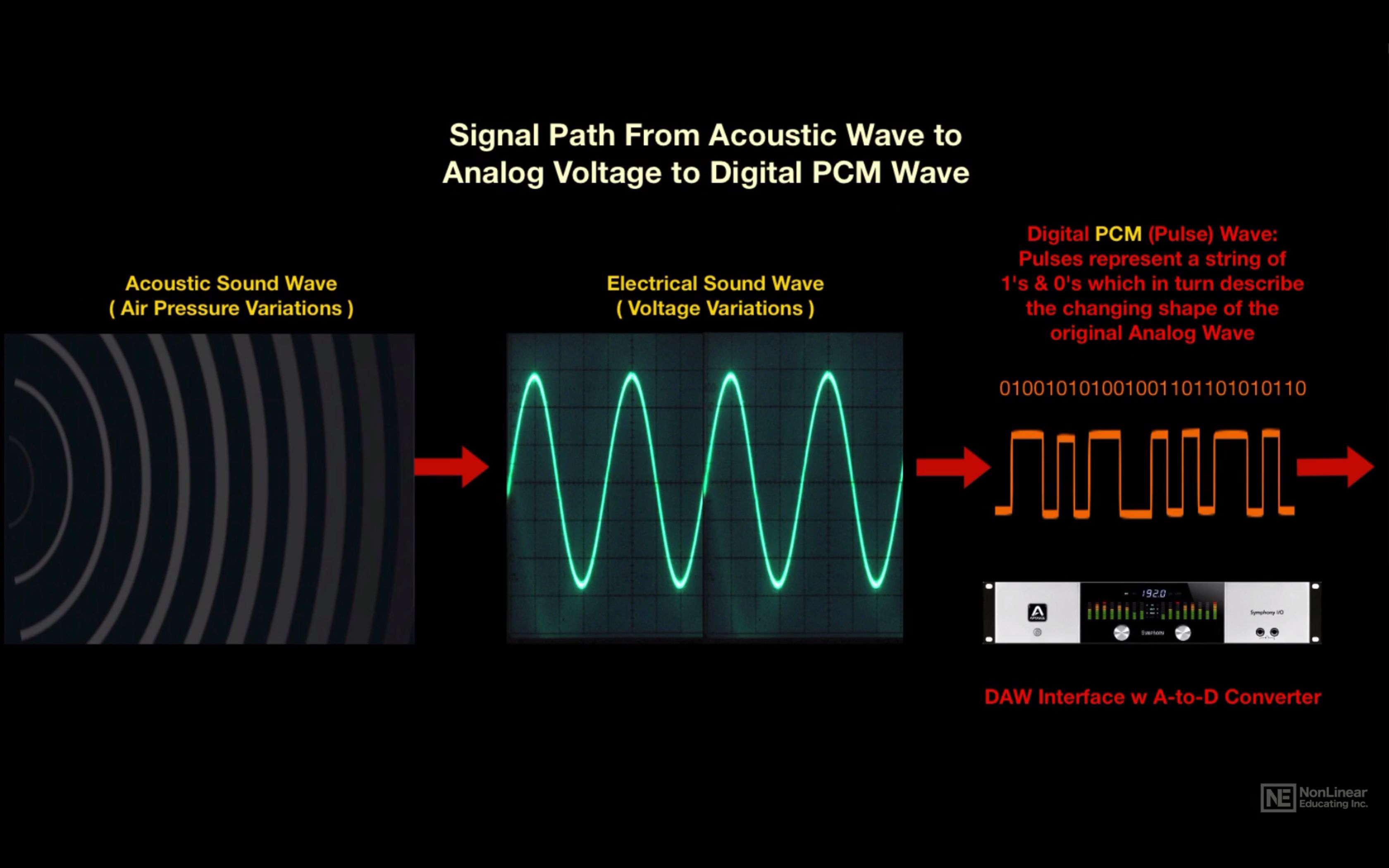
Analog audio is a wave. Almost every process in our world can be described using mathematics. Digital audio is the description of an analog waveform using a sequence of numbers. For example, more than 44,000 digital values are used to digitize one second of music on a CD.
How digital sound was born
The theoretical foundations of digital sound in 1928 were laid by Harry Nyquist in his work “Certain problems in the theory of telegraphic transmission”, where for the first time it was possible to determine the “width” of the communication line for the transmission of a signal pulse without distortion. Regardless of the American, the Soviet scientist Vladimir Kotelnikov published similar studies in 1933.
Kotelnikov and Nyquist independently discovered that restoration of any analog signal can be guaranteed using a certain mathematical algorithm from discrete samples, that is, fragmentary data. So instead of full data for the sake of economy, you can encode only a small part, and then restore the original.
They began to digitize analog sound using pulse code modulation; today this technology is still the most widespread. The sound wave is converted into numbers by three sequential operations: time sampling, amplitude quantization and final coding. Battery calibration: how to extend the life of the smartphone
What is sampling? This is a sample of values at regular time intervals. The algorithm reads the levels of the analog waveform at an incredible speed: 44,100 readings per second for the CD standard. This indicator is called the sample rate. For example, audio in movies is standardized to a sample rate of 48,000 Hertz.
To achieve this speed, all values are slightly rounded to previously calculated values. This process is called quantification. The more often the algorithm reads the readings, the better the digital recording will sound. However, microscopic quantification error is unavoidable.
Computers use memory to store information – billions of tiny electrical switches that can only be in two positions: on or off. The position of one of those switches is a bit informative. The CD standard provides 16 bits for audio, which provides 65,536 different values for encoding.
How are digital audio formats different?
Digital sound is a very long sequence of numbers. However, these numbers can be encoded in different ways. For example, on a CD, music files are stored in WAV format. Its main problem is that it takes up too much space, since all the information is digitized without using compression algorithms.
To reduce the amount of space taken up, mathematical algorithms have been invented – audio codecs that compress digital audio data according to certain psychoacoustic models. However, there are two main types of compression: lossless compression and lossy compression.
The most famous lossy compression format is MP3. Its developers have relied on the fact that the human ear is imperfect and a lot of redundant information is transmitted in uncompressed sound. The algorithm divides the entire frequency spectrum into small parts and then eliminates sounds that are practically not perceived by humans.
The quality of MP3 files is irretrievably degraded compared to the original, but the file itself can be 10 times “lighter” than the original. In this case, the user can choose the degree of compression of the file. For this, there is a bit rate; in fact, this is the space needed to store one second of music.


