
What is the ALAC audio format?

If you use iTunes to organize, store, and listen to your music collection, it is most likely stored in AAC format.
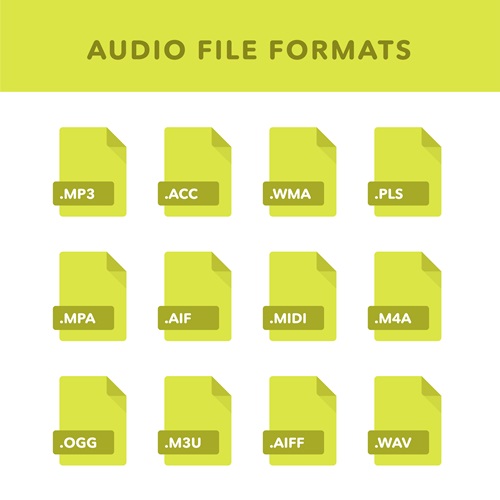
If you buy music from the iTunes store, it is definitely stored in AAC format, because this format is the standard for storing audio on Apple devices.
ALAC (Apple Lossless Audio Codec) is a format that stores sound in its original form, that is, without loss of sound quality. Yes, ALAC involves some compression of the music, but not by ruling out those sounds that a person apparently cannot hear, but by using data compression algorithms, so by decoding the music during playback, you will hear the original recording.
The ALAC format is very similar to another audio format that stores lossless FLAC audio.
The most curious thing is that the extension of files that are processed by different codecs, such as ALAC or AAC, have the same extension – m4a. This can be confusing, because it is visually impossible to determine which music file is compressed with which codec.
Of course, this can be done by looking at the amount of memory the file occupies. A normal song, compressed in AAC format, will take up less than 10MB or slightly more, while a melody stored by the ALAC codec may require 60MB or more to store a song.
You can also find out about the file’s encoding type by looking at the file’s properties. For example, in iTunes, this can be done by selecting a file and then following the following path: View Options – Show Columns – Type.
Benefits of the ALAC format
One of the main advantages of using the ALAC format is the quality of the music.
There is no loss of quality when ripping music from a CD; If you want to keep the original playback quality when ripping music from a CD, ALAC is great for that.
Conversion to any other audio file format: This point is a consequence of the fact that the music is stored in its original form. Those. You can convert the ALAC format to any other, even mp3, although AAC and the output will get very high quality output, while converting from one lossy format to another will make the quality noticeably worse.
Restoring your CD collection: If you like to listen to high-quality music and have not yet lost the sense of beauty that awakens every time you hold a physical disc of music in your hands, then you have an audio library at home. The ALAC format allows you to recover damaged CDs by burning a new one to replace the lost one without losing sound quality. This may not be a very popular reason for storing music in the ALAC format these days, however you have to admit that it is very curious.


